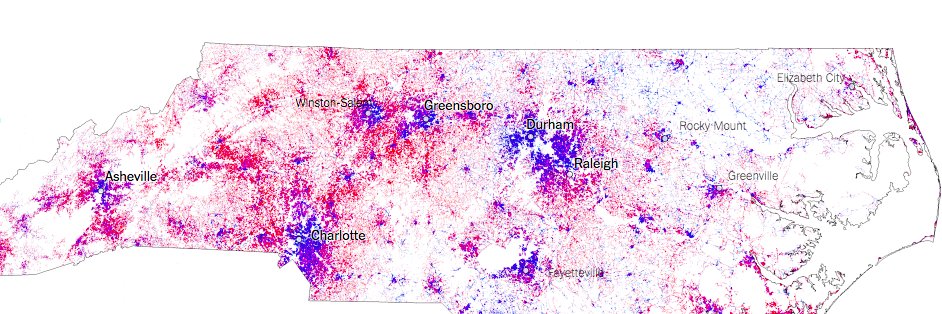
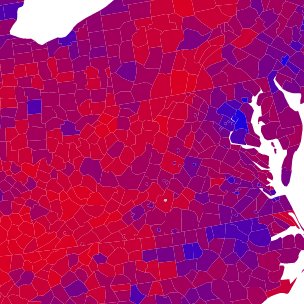
Job opportunity: NYT fellowship in Election Analytics, 2027.
A great early career opportunity for someone with a demonstrated interest in nonpartisan election data and analysis
https://t.co/YXLKlCmCCM
@b_schaffner hmm? i'm just looking at what's published, but here's what i see:
2024: 71% white, 11% black, 11% hispanic
2026: 73% white, 9% black, 10% hispanic
how does this square with what you're saying?
https://t.co/tN71SZjouS
https://t.co/bKzxqcqsKU
The differences are pretty modest -- ex: right now, we're D69-R29 among Hispanic voters v. 64-34 in the exits -- but they can add up to some significant differences in the storyline
https://t.co/OaxfshZfWm
For yrs, the exit polls & AP/VoteCast offered competing versions of how Americans voted. Now the @nytimes has created a competitor to the merged VoteCast/exit "Voter Poll." The good news: they produced almost identical results, except NYT showed Latinos & NCNW slightly more blue
Another example: the makeup of the electorate. The exits say the electorate got whiter; our estimate is that it did not. Exits say Black share of the electorate fell to 9%; we think it ticked up.
By state it can be even more striking. In GA, we preliminarily estimate Black % went up from 29 to 33%; the exits show it staying stable at 29.
One example: the longer term trend. we show Dems doing better among Hispanic voters than Biden in 2020; the exits show Dems merely reaching 2020 levels. That's not just bc of 2026, but we also estimate Biden did worse in 20 w Hispanics than exits
I should also note that it's not actually guaranteed that we did enough to tackle nonresponse bias. It's possible we underestimated Democratic turnout, for example, which might have cancelled it out. We'll learn more as turnout data becomes available.
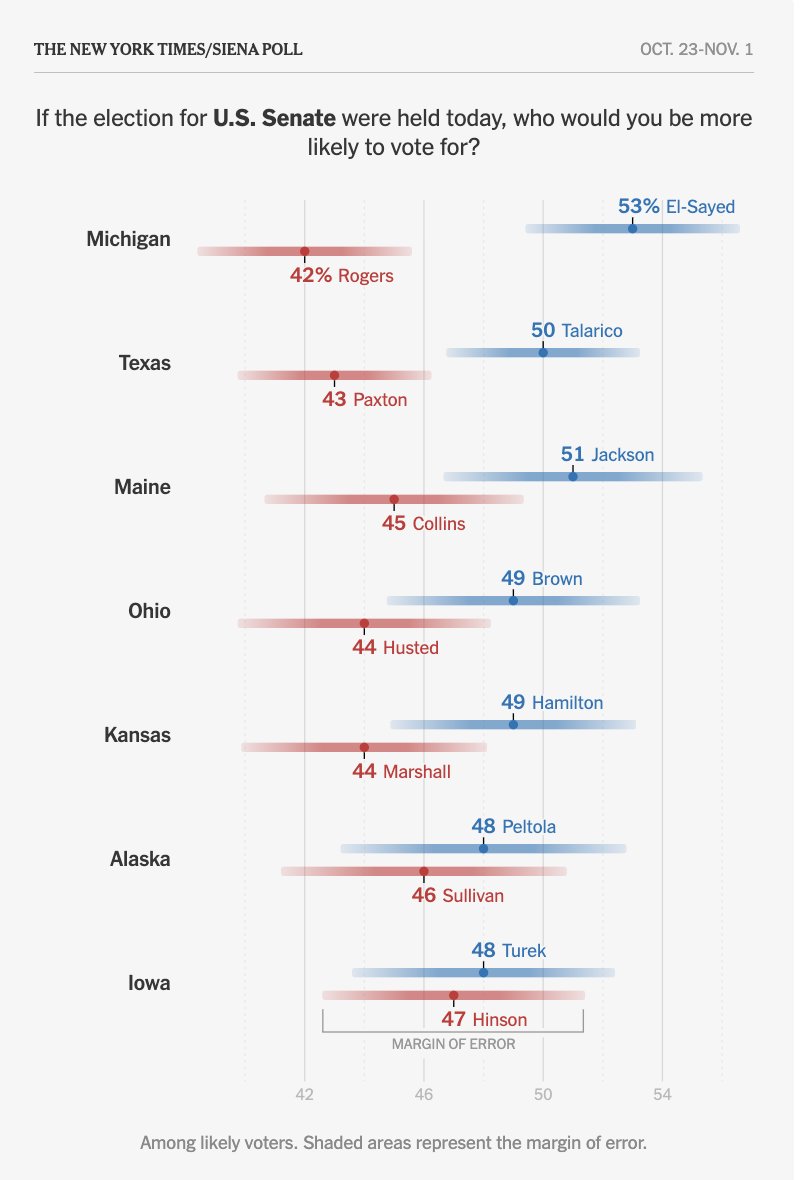
The final polls show a blue surge. Can we trust them?
(including what our results would be using the weighting approach from prior cycles)
https://t.co/vcPi3vnuAB
It is worth noting our final results were by self-reported recall vote. If we pretend there's not colossal measurement error (lol), this is substantial Democratic turnout edge -- with our errors loosely correlated with the places where we found a larger (MI) or smaller Dem turnout edge (TX) than average
A stunner could be brewing in South Carolina, where the needle gives Annie Andrews a narrow edge. It's still early, but she's running ahead of our estimates for early, absentee and election day votes.
https://t.co/RndE3JZsw5
Sometime in the early AM hours, we'll publish our preliminary Times Voter Trends estimates for 2026
We've published 2020 and 2024 (below)
https://t.co/kkPgJj9Wyh
@PoliticalKiwi that harris margin could be inflated by nonresponse bias too, ofc, but among validated voters - and esp if you impute missing resopndents on recall - those groups look pretty typical