Excited to share our recent publication in @NatureMedicine that identifies 205 genomic loci that disentangle #obesity from its #cardiometabolic comorbidities!
paper: https://t.co/27SOaXIrSp
press release: https://t.co/nhXp6fkHHS
Genotype-phenotype data from over 450,000 people was analyzed to find 205 genomic loci where an allele associated with increase adiposity was associated with a lower cardiometabolic disease risk to an individual, according to a paper in @NatureMedicine. https://t.co/YDXFGrlaCs
Genotype-phenotype data from over 450,000 individuals was analysed to discover 205 genomic loci where an allele associated with increased adiposity was associated with a lower cardiometabolic disease risk to an individual https://t.co/IRvwKQtrwE
@NatureMedicine The description given is for another manuscript published a month ago by our team. The new study linked is addressing why obesity affects people differently and identifies genetic subtypes of obesity that disentangle obesity from cardio-metabolic risk.
Genetic subtyping of obesity reveals biological insights into the uncoupling of adiposity from its cardiometabolic comorbidities https://t.co/4vSe6DELlX
2025
Genetic subtyping of obesity reveals biological insights into the uncoupling of adiposity from its cardiometabolic comorbidities
@DanielJDrucker
https://t.co/LArsUaTnJa
A new #obesity paradox informed by #genetics 266 variants across 205 genomic loci where adiposity-increasing alleles were simultaneously associated with lower cardiometabolic risk https://t.co/QXsBlmrOrK
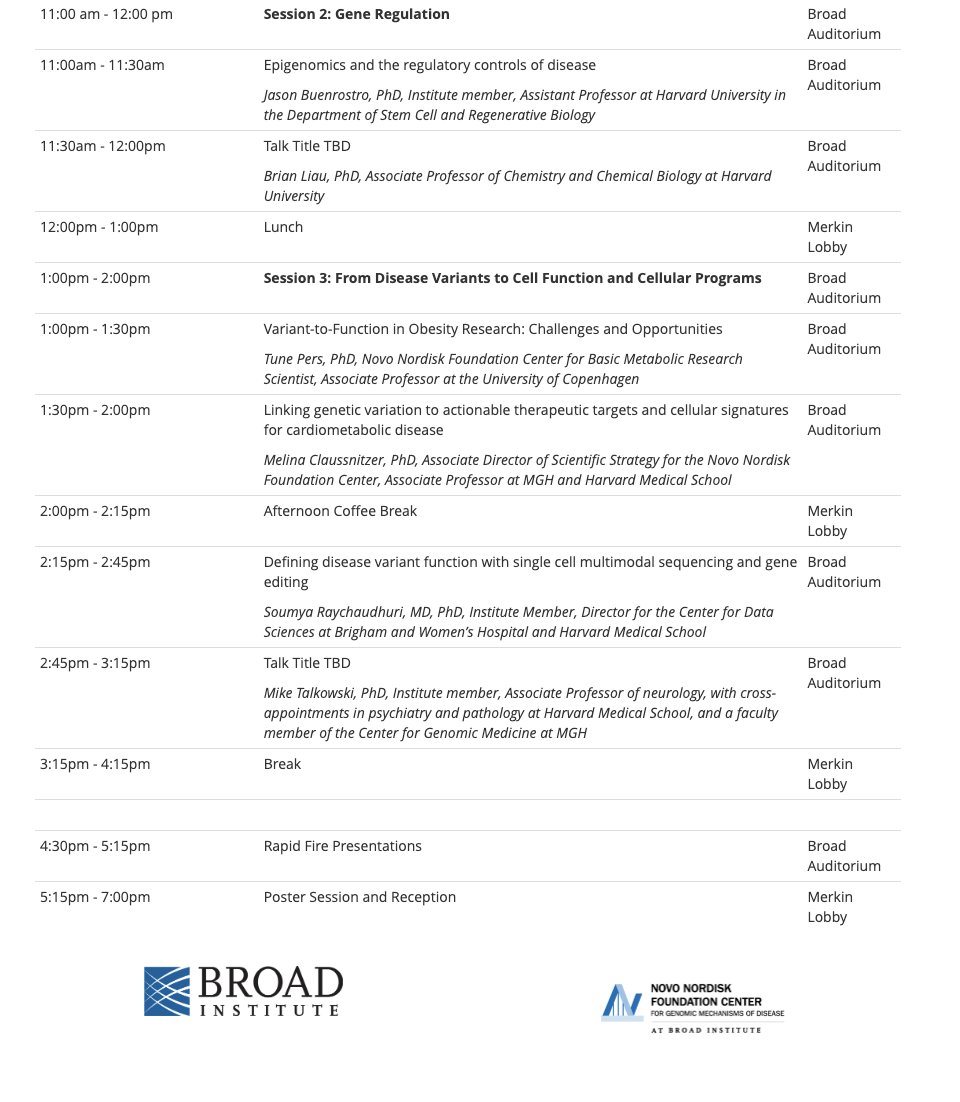
Extremely excited to open the registration for the 2nd Annual Variant to Function Symposium hosted by the @novonordiskfond Center @broadinstitute co-Chaired by @MelinaClaussnit. A stellar (!!) lineup of speakers & virtual+physical attendance. Please share! https://t.co/iVetU6aAJ9
It was super exciting to be back in the UK and to present at #GRD23 earlier today on the classification of rare variants in monogenic obesity genes! Really enjoyed the discussions that followed!
Natalie Charmin from Mount Sinai now presents on refining the pathogenicity of rare variants in monogenic obesity using large-scale population data from UK Biobank & implications for precision medicine Looked at the ORs and penetrance in the main 6 monogenic obesity genes. #GRD23
Nathalie Charmi (@Nathalie_Chami) #GRD23: There are rare forms of obesity that are monogenic (typically early onset), which are to be distinguished from syndromic obesity.
Leptin-Melanocortin pathway regulates energy balance -> disruptions in this can lead to overeating
First tweet ever! Super excited to share our work on type 2 diabetes, and the interplay with rare variant risk. (I don't know if it counts if its a retweet...🤷🏼♀️)
Now that I have 100K followers, I want to talk about #OvarianCancer. Specifically my gritty story. The goal is awareness. I hope you find this narrative informative.
The first few articles from our Obesity Special Issue are publishing today! Ruth F Loos and colleagues investigate the penetrance of previously reported MC4R mutations at a population level using UK Biobank data .@IcahnMountSinai https://t.co/jOqWmTDMtN
Our new lab in @broadinstitute@StanleyCenter is hiring! Come join our patient-driven mission to develop drugs for prion disease in our lifetime. Seeking a postdoc https://t.co/044iRuow9h and research associate https://t.co/fXhL7LmmV1 — help us prevent neurodegeneration!
Sonia announces the collaboration between our team at @broadinstitute and @ionispharma to develop an antisense oligonucleotide (ASO) drug for prion disease https://t.co/qAYZOW5HPQ
"On ne peut plus tourner le dos à ces enfants qui se débattent comme ils peuvent dans ce capharnaüm qu'est devenu le monde". Le discours poignant de Nadine Labaki, lauréate du Prix du Jury.
🎬 Vivez le 71ème #FestivalDeCannes sur myCANAL> https://t.co/Mpovrrs0az #Cannes2018