New cross-cultural mix of genres of Tibetan electronic dance music, with the Tibetan dramyin(སྒྲ་སྙན་) lute and influences from American bluegrass music.
Been listening on repeat all day yesterday.
credit to: handhat from tibet.
This argument by @deanwball is being badly misunderstood. It's OK to disagree with it, but first you have to actually understand what he's saying.
He's saying: releasing the weights for a frontier-level model is effectively dumping.
Dumping is when you sell a product at significantly below cost in order to corner market share. It's illegal. The reason: dumping results in short-term consumer surplus, but long-term it prevents the formation of a competitive market and discourages capex outside of the dumper. Standard Oil famously did this in order to consolidate the oil market before it was broken up.
So why is he claiming releasing the weights of a frontier level model is basically dumping? Isn't he just describing open source?
His argument: it's not financially sustainable to train a frontier model and release the weights. In the long run, you will not be able to internalize enough of the gains given the cost of training a frontier model, because neoclouds and other inference providers will be able to outcompete you at actually serving the model. It costs an astronomical amount of money to train frontier models, and if everyone else can serve them, you don't capture enough of the surplus to pay for the training and R&D.
It's not like normal open source when you build some software and then release it and sell services on top of it. The amount of capex required for frontier-level models is an order of magnitude higher than normal software, which is why doing this at frontier level is so economically irrational.
Right now the Hong Kong stock market is ebullient enough that Chinese AI companies are not getting punished for the fact that they're all deeply, deeply unprofitable. Releasing model weights is great marketing, intellectually appealing, and strikes fear into the hearts of their opponents. We can assume the status quo continues for a while because of the AI supercycle. But eventually the AI market will correct, the Hong Kong market will dump, and suddenly these Chinese labs won't be able to afford to training super expensive models without internalizing more of the gains.
But what if China, seeing that this strategy is successfully kneecapping the US lead (by discouraging further capex and lowering valuations), says no--don't stop. And so the Chinese government starts buying up the shares of these companies and demanding that they continue releasing frontier-level weights, profitable or not.
In that case, it becomes a genuine space race. For-profit companies cannot continue to compete on either side. US labs valuations fall, and the White House realizes that to keep their advantage in the AI race, they cannot rely on the free market to maintain their lead. They nationalize the labs and fund them off government subsidies.
Now you have government-controlled and distributed models on both sides. That's what Dean is calling the "dystopian hellscape."
The best analogy is drug development: if China were to sell American drugs back to us really cheaply, that would result in a large short-term consumer surplus. Cheap Viagra and Ozempic is obviously great. But in the long run, this would discourage investment in developing new drugs. That's the sense that Dean is saying it's long-term "decel."
Now, I happen to disagree with Dean. I think the consumer surplus of having frontier-level open weight models is huge, even at the current capabilities. I also think China is going to defect from this strategy soon (there's been reporting along these lines, that Beijing will stop allowing large models to be open-weight; I think there are other reasons for this aside from competition). I also suspect that nationalization of labs is inevitable as they take on more geopolitical and cyber capabilities.
But he's not wrong--releasing frontier-level weight models is weird.
The question of how long this market will remain profit-driven is a very coherent question to ask.
@earth2travis From what I’m gathering here, apparently I look at identity as socially constructed but irreducible to systems of society which would be mean how they coincide in space depends on how they were historically conditioned in time.
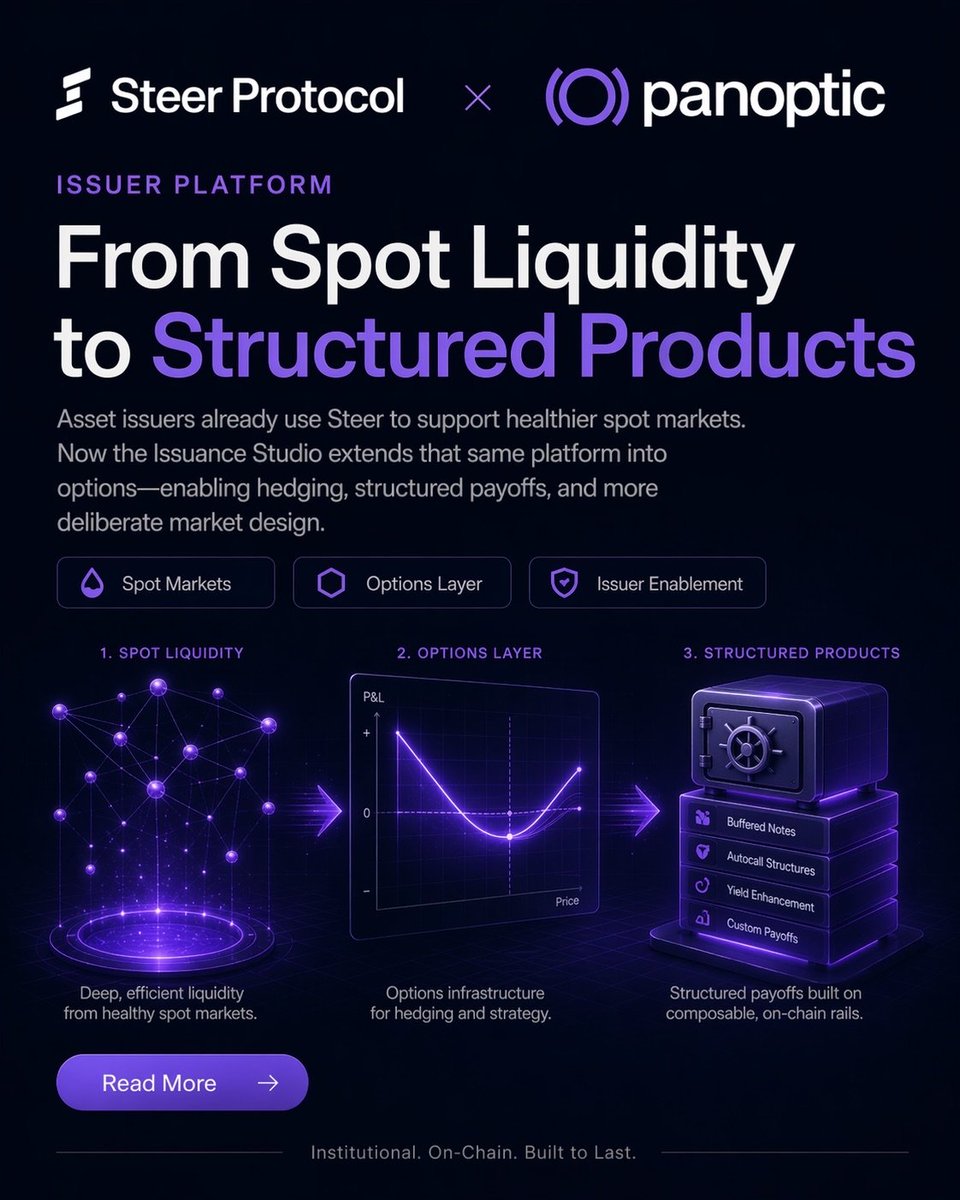
Asset issuance does not end at the spot market.
Steer’s Issuance Studio is expanding from liquidity infrastructure into options-powered structured products through Panoptic.
Healthier markets. Better hedging. More deliberate onchain product design.
https://t.co/DfiFJKdWpW
Introducing USVC - a single basket of high-growth venture capital, for everyone.
No accreditation required, SEC-registered, and a very low $500 minimum.
Includes OpenAI, Anthropic, xAI, Sierra, Crusoe, Legora, and Vercel. As USVC adds more companies, investors will own a piece of that too.
Liquidity typically comes when companies exit, but we’re aiming to let investors redeem up to 5% of the fund every quarter. This isn’t guaranteed, but if we can make it work, you won’t be locked up like in a traditional venture fund.
It runs on AngelList, which already supports $125 billion of investor capital.
And I’ve joined USVC as the Chairman of its Investment Committee.
—
Go back to the 1500s, you set sail for the new world to find tons of gold - that was adventure capital.
Early-stage technology is the modern version. It says we are going to create something new, and it’s risky. It’s daring.
But ordinary people can’t invest until it’s old, until it’s no longer interesting, until everybody has access to it. By the time a stock IPOs, most of the alpha is gone. The adventure is gone. Public market investors are literally last in line.
This problem has become farcical in the last decade. Startups are reaching trillion dollar valuations in the private markets while ordinary investors have their noses up to the glass, wondering when they’ll be let in.
Investing in private markets isn’t easy. You need feet on the ground. You need judgment built over years. Most people don’t have the patience to wait ten or twenty years for an investment to come to fruition.
But there is no more productive, harder-working way to deploy a dollar than in true venture capital.
USVC enables you to invest in venture capital in a broad, accessible, professionally-managed way, through a single basket of innovation, focused on high-growth startups, at all stages.
It is how you bet on the future of tech: the smartest young people in the world, working insane hours, leveraged to the max, with code, hardware, capital, media, and community. Your dollar doesn’t work harder anywhere.
There is an old line - in the future, either you are telling a computer what to do, or a computer is telling you what to do. You don’t want to be on the wrong side of that transaction.
USVC lets you buy the future, but you buy it now. Then you wait, and if you are right, you get paid.
Get access here:
https://t.co/pAj1sqUsG0
Over the past few years i've tried very hard to bring options markets which are viable within onchain strategies live within our platform. Simply put, the tech wasn't there.
We needed atomic settlement. No RFQs.
We also needed the ability to stand up options for ANY market. No if, ands, or buts.
There are very few protocols who can offer this and drives the main the reason we are proud to partner with a team like @Panoptic_xyz to bring one of the most important primary instruments in finance to life onchain.
We're excited to announce our strategic partnership with @steerprotocol.
Together, we are building the infrastructure for onchain structured yield.
The next phase of DeFi isn’t access, it’s infrastructure. And it's being built right now.
It's time for the industry to have a BIG unlock. Options shouldn't be stuck behind private market makers. The broader industry deserves more than just spot and lending markets.
Steer Protocol × @Panoptic_xyz is about changing that.
We are excited to bring options into Steer's Issuance Studio - expanding what issuers can launch and what investors can access onchain.
Together, we’re building toward a permissionless system where spot, lending, vaults, strategies, and options can work together inside one broader issuance framework.
More tools for issuers. Better structured products for investors. A bigger design space for onchain markets.
https://t.co/kQBDTbCqKO
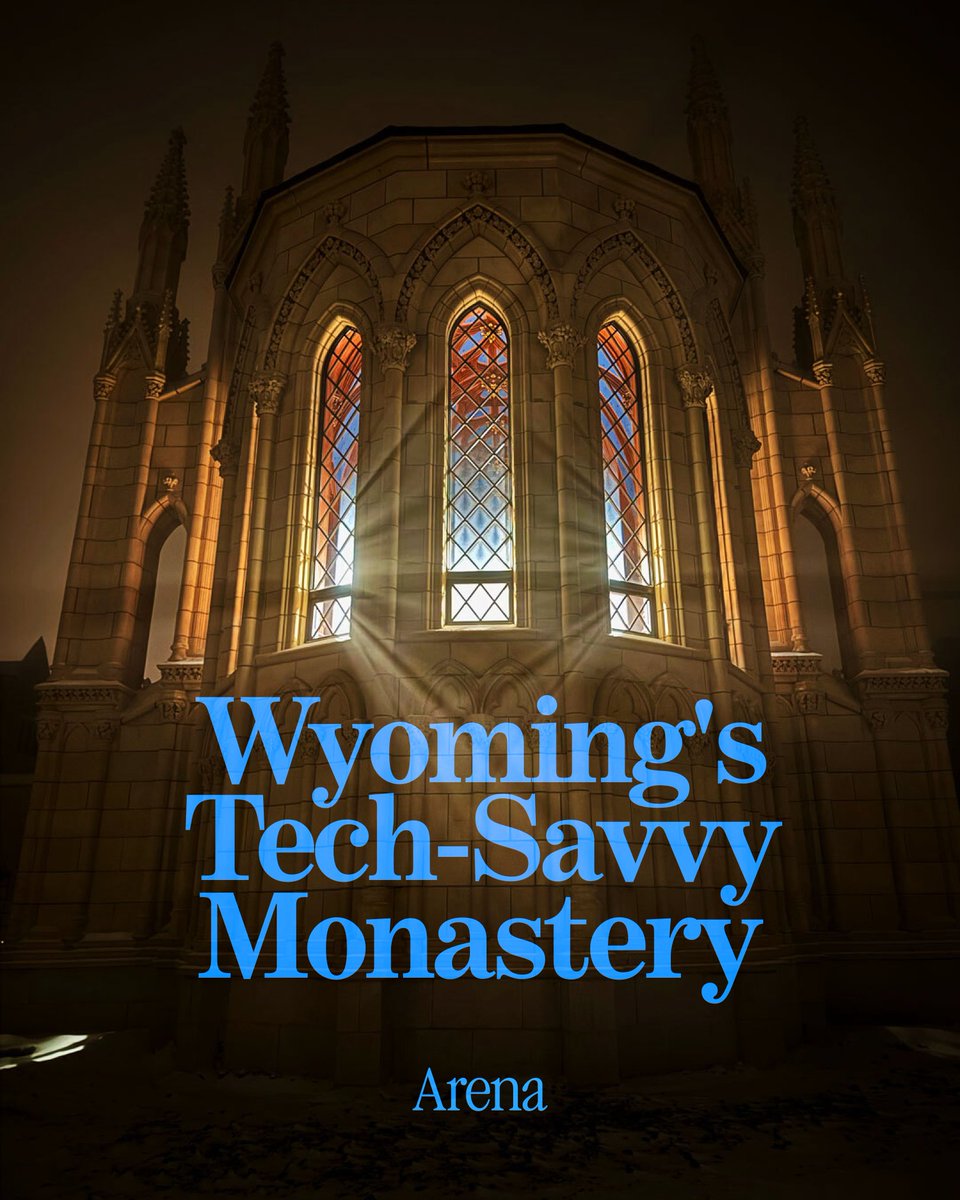
Cloistered Carmelite monks in Wyoming are carving a Gothic cathedral with robotic arms. They tend cattle on horseback and use CNC stone-cutting machines.
In today's article from Arena 007, @keegan_mcnamara argues that this monastery is not anachronistic but the inheritors of a deep tradition of putting technology in service of the transcendent. Read his essay in print or online at @arenamag