🚨 AFRICA CDC HAS NOW EXPANDED THE NUMBER OF COUNTRIES CONSIDERED AT RISK FROM EBOLA — FROM 3 TO 10
Health officials warn the outbreak in DR Congo involves the Bundibugyo strain:
▪︎ No approved vaccine specifically for this strain
▪︎ High regional concern due to conflict and population movement
▪︎ Healthcare systems already under pressure
▪︎ WHO says global risk remains LOW — for now
Meanwhile:
Enhanced screening measures have expanded for some travellers entering the United States.
Starcloud (@Starcloud_Inc1) recently made history by launching a satellite with an NVIDIA H100 into orbit — the first time a GPU that powerful has ever operated in space. It's the first step toward building AI data centers in orbit, powered by continuous sunlight and cooled by radiating heat into deep space.
Their approach could one day rival the world's biggest data centers while using less energy, zero fresh water, and far lower emissions.
YC's @aaron_epstein visited Starcloud's HQ, where co-founders @philipjohnston, @EzraFeilden, and @Adi_Oltean explained how they built a working prototype in just 15 months — and why big tech is racing to space for AI compute.
Autonomous Snow Blower Update:
The @yarboglobal completed the first pass of the driveway and went back to the charging dock.
After about 1.25hrs, it will be 80% charged and will automatically return and continue to clear the driveway.
I plan to run it during the entirety of the storm and will post my review video on @stateofcharge this week.
So far, it's kicking A$$!
KKR just released an 88 page report on their 2026 outlook for public and private markets
A few charts that caught my eye
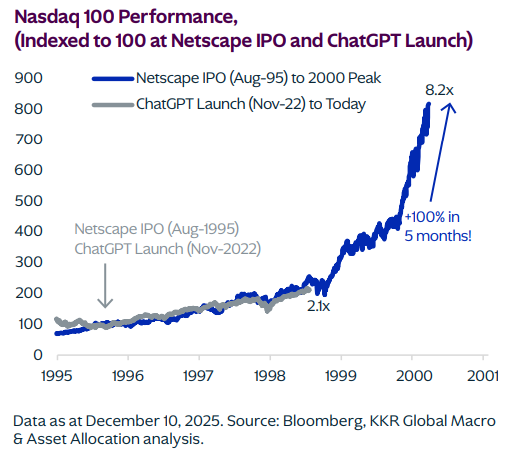
1/ Nasdaq 100 performance following Netscape IPO and ChatGPT launch are following similar trajectories
TODAY'S AI NEWS: Researchers just developed an AI that detects certain cancers with 99% accuracy!
Plus, more news from Tencent, Anthropic, Perplexity, Zapier, and more.
Here's everything you need to know:
Privileged to share initial data for BEAM-302 today in alpha-1 antitrypsin deficiency (AATD)!
AATD is a severe, progressive disease impacting both lung and liver function that affects 100,000 people in the US
https://t.co/wZcQvAblR0
The last few days in AI is insane 🤯
12 most incredible developments from Google, OpenAI, Alibaba, Unitree, Manus and more
1/ China unveils new Quantum Computer ‘Zuchongzhi-3’—a 105-qubit machine that performs calculations one million times faster than Google's Supercomputer.
Top 5 advances in medicine this week (🧵)
1. A vaccine to prevent recurrence of kidney cancer
This is a small trial – 9 patients – all of whom had stage 3 or 4 renal cell carcinoma removed by surgery (removal of the primary tumour, any positive lymph nodes, and any visible metastases)
Tumours were then sequenced, and personalised vaccines made based on the tumour's mutations (its neoantigens)
There was no control group, but in the years that followed it would be expected that cancer would recur in ~50% of patients
In these patients, 0 had recurrence of their cancer
A larger, randomised study is underway
https://t.co/cRLAj3Nn3W
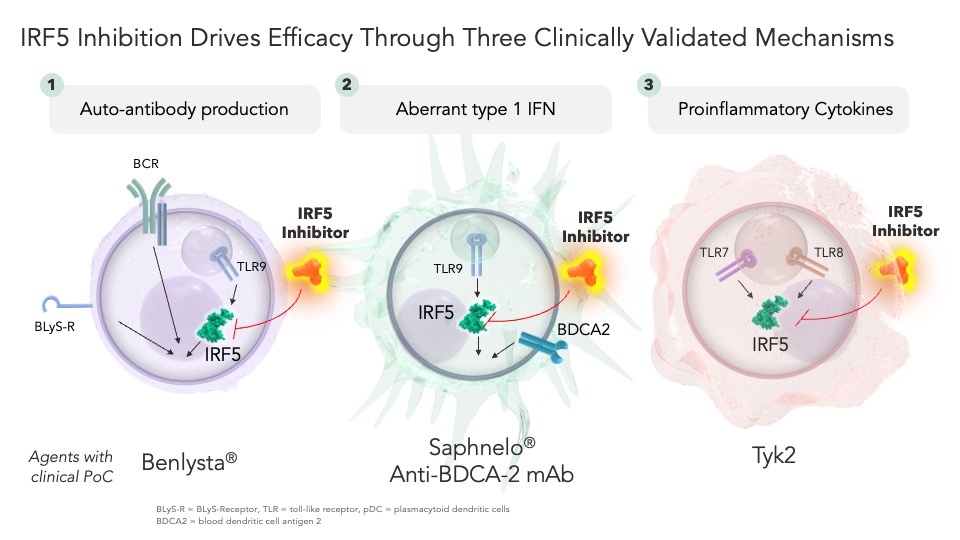
"A New Wave of Therapeutic Innovation Through Targeting Transcription Factors"
New blog post from @JDMontagu CEO of @hotspotthera, highlighting IRF5 among others
https://t.co/ctMXMUytgK
That's a wrap for day 2 of the world's largest consumer tech event, CES 2025.
The top 10 tech and gadget reveals from day 2:
1. A stretchable Micro LED display that turns 2D into 3D by Samsung
Calibr at @scrippsresearch is tackling challenges like "off-tumor" effects with next-gen CAR-T cells that activate when paired with an antibody, enhancing precision & safety. #Biotech is changing the #FutureOfCancerCare!
#Medicine https://t.co/Olss4GplN5
As a founder, I've learned that #growth isn’t linear—it's a winding road with twists and turns. And as a result, I've learned to embrace failures as valuable lessons. This keeps ambition thriving! #entrepreneurship@Entrepreneur https://t.co/WlK4fmoxsT
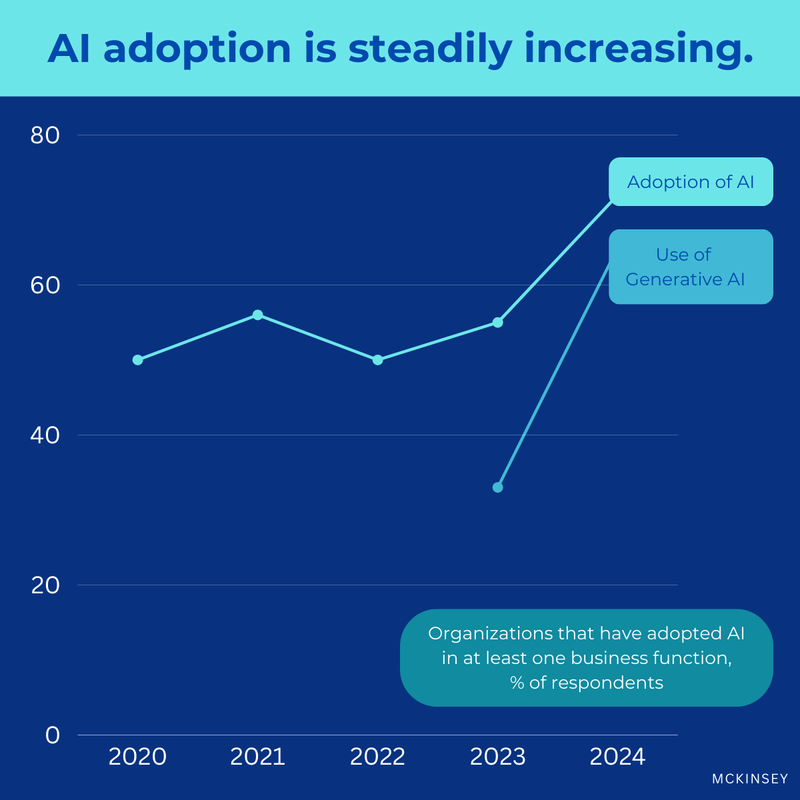
As someone deeply involved in #healthcare, I’ve seen firsthand how adopting #AI is changing how we organize & manage #data.
It's easier to sift through vast amounts of information, helping us spot trends, predict patient needs & personalize treatments.
Cell therapy is in the middle of a huge shift...
...and everyone from small biotechs to big pharma want in on the next big thing: autoimmune disorders
Here's how I think this goes down:
First, I charted the programs of 37 companies in this space, segmented by cell source and modality
Exhibit 1: Cell Therapy I&I Landscape
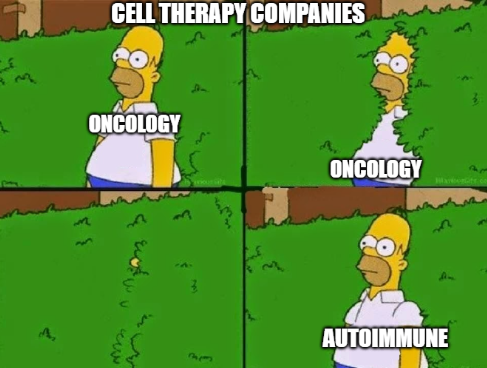
This is one of the fastest growing spaces in the industry - dozens of formerly oncology-focused cell therapy companies have pivoted their portfolios entirely, and you have to imagine that dozens more are having serious conversations
At minimum, it seems everyone needs to have some presence given investor enthusiasm. And it makes sense why:
• There are 100+ known autoimmune diseases with rising incidence due to lifestyle, environmental factors and improved diagnosis - this equals 15-20M Americans and 4.5% of the world's population
• Most indications have suboptimal treatments and those that do have a large base of refractory patients for whom existing MoAs don't work well
• Unlike most cancers, I&I patients can be young, meaning a near-curative therapy option has a lifetime of benefit and cost savings
• It's a massive market with $100B in aggregate economic burden; for context, the US has 80K annual NHL cases vs. >1M SLE cases
And the oncology cell therapy space is tough right now - an explosion of funding has created way too many companies pursuing similar innovations. Cheaper novel alternatives such as BsAbs + persistent supply & manufacturing issues have dampened enthusiasm of ever reaching frontline patients
Autoimmunity is comparably a blue ocean - not only with no approved therapies, but essentially no assets in late-stage development. A lot of the learnings around B-cell mediated diseases can be ported over, and first movers could get a nice M&A premium that the space has been missing
For all of those reasons, I think we'll see more new companies spin up platforms around this + retooling of existing platforms. Big Pharma will not take a wait-and-see approach either: I expect them to continue to prioritize their internal programs (we already see a few) and lean into their manufacturing and supply chain edge + commercial learnings
The rules of the game are a bit different than in oncology: safety is paramount given this is not life-or-death. Similarly, vein-to-vein time is not as important - it's not a race against a growing tumor to get the drug to patients
Initially, we'll see companies start with validated targets and indications - of the 70+ programs, >70% involve CD19 or BCMA and most target SLE, since PoC data has already emerged there. Autologous CAR-Ts are a popular choice.
As the space becomes more crowded, we'll quickly see more innovation, including:
• Larger indications without PoC (i.e. RA, IBD, MS)
• Alternate modalities, such as Tregs or NK cells
• Allogeneic and in vivo approaches, which offer significant manufacturing advantages
Let me know how you think this space evolves!
Thank you for sharing @celinegounder. This supports one of the earliest concerns I’ve expressed w/ milk supply & limitations of normal pasteurization. As more cows are infected, more virus is going into the pasteurization process, making it harder to inactivate all virus. More tests needed.
This is important finding that should motivate @US_FDA to accelerate real pasteurization experiments, from infected milk collected directly from farm, w/ varying virus titers. This testing must be ongoing, not a snapshot in time. @NEJM@EricTopol@DrEricDing
This is very concerning. Efforts to change to narrative in any way to soften this important data are reckless. Ferrets are the animal model used frequently for human infection. The fact that they got so severely ill, virus infected most of their internal organs and brain, and they died, is a strong signal that every effort to stop this virus from spreading should be considered seriously.