A simple dietary change could completely reverse the dementia-like decline. .
A medical case report published in BMJ Case Reports outlines the dramatic recovery of a 61-year-old woman who lived with a misdiagnosis of dementia for five years. The patient had exhibited severe behavioral changes, psychotic hallucinations, and seizures. Her family observed her talking to spirits and walking naked in public. Initial neurological testing and CT scans showed no typical abnormalities, leading doctors to treat her with standard anti-seizure medication while her cognitive decline worsened. However, when she was referred to psychiatry specialists in Lisbon, a routine blood test revealed the root of her severe neurological distress was not an irreversible brain disease, but an extreme vitamin B12 deficiency.
The deficiency had triggered pernicious anemia, hindering her body's ability to produce healthy red blood cells and damaging the protective myelin sheath around her spinal cord. Following targeted B12 injections and antipsychotic therapy, the patient made a stunning and complete recovery. Her speech became coherent, her psychosis disappeared, and she regained full independence in her daily life. While cognitive decline paired with seizures is an incredibly rare presentation of vitamin B12 deficiency, doctors urge clinicians to rule out vitamin levels in patients presenting with unexplained cognitive deterioration, noting that even prolonged neurological damage can sometimes be entirely reversed.
source: Silva, B., Velosa, A., & Barahona-Corrêa, J. B. Reversible dementia, psychotic symptoms and epilepsy in a patient with vitamin B12 deficiency. BMJ Case Reports, 12(5).
BREAKING: A new study published yesterday, July 1st, 2026, in Nature Medicine adds a powerful new tool to the Alzheimer's early-detection toolkit.
And it's forcing us to rethink what Alzheimer's "risk" even means.
Here's what changed, and why your family history isn't the whole story. 🧵👇
#Alzheimers #Biomarkers
WHO to launch updated Risk Reduction Guidelines on dementia
In 2019, The WHO issued guidelines on risk reduction in line with evidence that modifiable risk factors through life course interventions can delay or reduce cognitive decline and dementia.
Since their publication, the scientific evidence base has expanded, including multidomain interventions, population-level policies and additional risk factors. In light of strengthening evidence, WHO developed updated dementia risk reduction guidelines.
The guidelines will be launched on 16 July during a webinar taking place at 15:30-17:00 CEST.
Register for the launch today: https://t.co/83BO1rHYqg
#DementiaRiskReduction
Fiber isn't just for gut health—it’s for your mind, too. 🧠
Our latest research shows that even under the intense stress of the COVID-19 pandemic, dietary fiber maintained a protective association with mental health in women.
Full study here:
https://t.co/tsJ4CJp8G5
Nelvagal et al. used machine learning and disease modelling to study 399 brains from people with Lewy body diseases and controls. The findings reveal multiple pathways to dementia shaped by pathology burden, APOE genotype, and clinical factors. https://t.co/ttt8q6qWpf
The craziest study ever - The Minnesota Starvation Experiment
32 young men were put on a 40% calorie-restricted diet for 6 months, while staying physically very active
They lost 25% of their body weight by the end of it
Here's what this study contributed to longevity research
Thrilled (and a bit surprised!) to hit h-index 10 on Google Scholar! Grateful to collaborators, mentors, and everyone who's cited or built on my work. Onward! 📈🙏 [screenshot attached]
#AcademicTwitter#hindex#ResearchMilestone
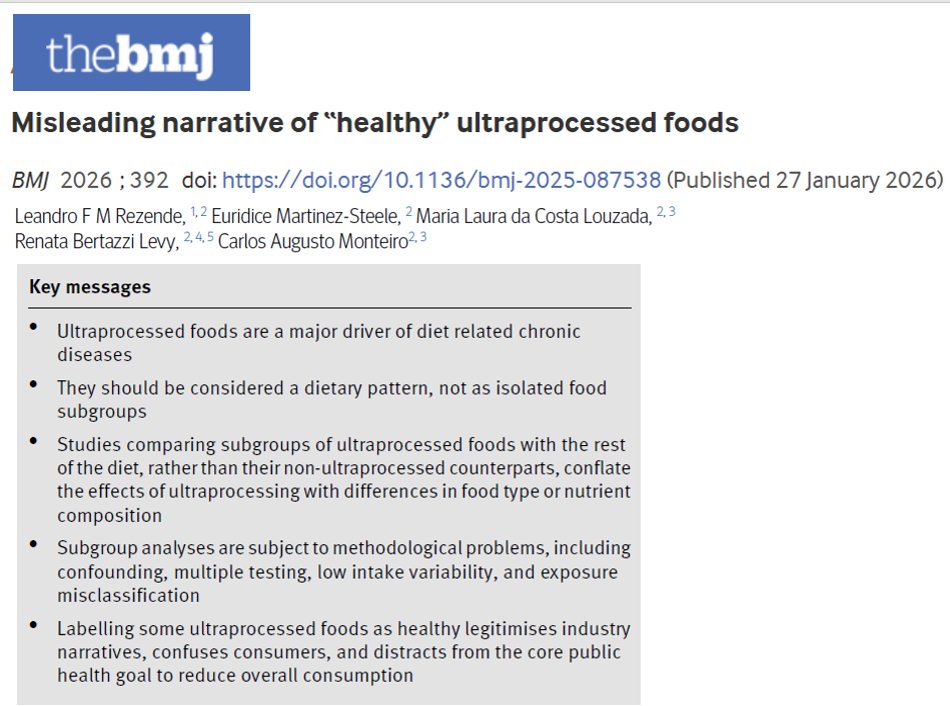
Hot off the press! 🔥 Our new BMJ piece shows how the focus on “healthy” UPFs—promoted by industry and nutrient-centric academics—inflates benefits, legitimizes industry narratives, and distracts from the real priority: cutting overall UPF consumption.
https://t.co/aATV5LnTZJ
23 benefits of OMAD (One Meal A Day) intermittent fasting:
1. Save money
2. Save time
3. Improves digestion
4. Improves immunity
5. Promotes autophagy
6. Live longer
7. No hunger
8. No more cravings
9. Better skin
10. Increased energy
11. Increased mood
12. Increased cognitive function
13. Decreased inflammation
14. Decreased blood pressure
15. Decreased heart disease
16. Improved dementia
17. Decreased risk of diabetes and insulin resistance
18. Decreased risk of fatty liver
19. Turning your body into a fat-burning machine (especially losing belly fat)
20. Improves self-discipline
21. Improves your muscles
22. Fixes a slow metabolism
23. Mental clarity
.@WHO has issued new recommendations on the use of GLP-1s to treat obesity in adults as a powerful clinical tool offering hope to millions.
But let me be clear: medication alone will not solve the obesity crisis, and cannot replace the need for healthy diet and physical activity.
These therapies must be part of a holistic strategy built on three pillars:
1.creating healthier environments through robust policies;
2.protecting individuals at high risk through screening and early intervention;
3.ensuring access to lifelong, person-centred care for those living with obesity.
Our greatest concern is equitable access. We need to ensure that scientific progress benefits #HealthForAll - everyone, everywhere.
https://t.co/8NEmzSBE4u
Ultra-processed foods now make up at least half of all food sold in UK supermarkets. The Lancet has described them as a “corporate-engineered public health crisis.” That is exactly what they are: industrial products designed for profit, not nutrition. They override appetite control, promote over-consumption, and push out real food alternatives.
These foods are cheap because wages are low, access to fresh food is unequal, and corporate concentration has eliminated choice. The result is a society burdened with obesity, diabetes, heart disease and cancers — and an NHS stretched to breaking point. None of this is accidental. In this video,
I explain how ultra-processed food became unavoidable, why it is a systemic economic issue rather than a personal failure, and what the government can do now: from food labelling and advertising bans to taxing ultra-processed products and subsidising real food. We can change this — but only if we confront corporate power.
https://t.co/syGfQm1MsH
The UPF industry and those they pay frequently claim that criticising harmful food generates shame and stigma. What this series makes unequivocally clear is that the true source of shame/stigma around diet related disease is a food environment that forces so many people to eat harmful food. If you are living with diet related disease just remember - it’s not you, it’s the food








![NebyuAmaha's tweet photo. Thrilled (and a bit surprised!) to hit h-index 10 on Google Scholar! Grateful to collaborators, mentors, and everyone who's cited or built on my work. Onward! 📈🙏 [screenshot attached]
#AcademicTwitter #hindex #ResearchMilestone https://t.co/qqOJieb0jT](https://pbs.twimg.com/media/HBmnI5MW8AA4WpS.jpg)