Georges St-Pierre achieved remission from ulcerative colitis with fasting.
Diagnosed and on heavy medication with little improvement, he started intermittent fasting (16:8) and moved to prolonged water fasts (up to 4 days). Within weeks, his symptoms vanished and he was able to stop the medication completely.
Clinical research shows fasting can significantly reduce gut inflammation and induce remission in some ulcerative colitis patients by lowering inflammatory markers and promoting autophagy.
Hearing one of the greatest fighters of all time talk openly about using fasting as a serious tool is eye-opening.
When standard treatments fall short, simple, evidence-based approaches like fasting (always under medical guidance) can sometimes offer real hope.
Have you ever tried fasting for health reasons?
Take whatever number of people you thought might be in jobs related to AI deployment in the enterprise and multiply it by 10. Then probably 10 again.
A major topic that keeps coming up in talking to CIOs across enterprises of all sizes and industries is the implementation gap for getting agents to work at scale and organizations on mission critical work.
As the task goes from implementing a chat system that’s basically an LLM plus search, to connecting to real production systems that both can deliver meaningfully better productivity gains but also introduces meaningfully more risk, a whole new set of work has to be done.
You have to ensure the right level of protection of data, updates to access control controls, migration of legacy systems to common modern platforms, create observability across what agents are doing, implement new workflows, figure out the human in the loop moments, drive the change management of the new workflows, and more.
Then, all of a sudden the model capabilities get updated and you have to do a set of the above steps over again. Half of what you’ve done is obsolete, and the other half needs to be upgraded to take advantage of new capabilities. Or, token budgets run hot and you have to peel off some of the workloads to lower cost models that will be more cost effective. But then you have to go through those same steps.
Enterprise are trying to figure out what is the right set of roles to go and implement the systems in their organization to ensure that the workflows are actually being executed properly, ensure it’s not just slop being produced, and to make sure their organization remains safe and secure.
Many companies are starting by repositioning existing IT talent in these functions, but there’s also a growing need for the equivalent of internal FDEs to go take on these tasks in an enterprise. The looks incrementally closer to software engineering than it does traditional IT implementation.
Next, almost all AI vendors (labs and the software players) will have some form of next-gen FDE or Applied AI architecture functions to help support these use-cases. The benefit here will be these companies have an incentive to make their capabilities work well so they can bring best practices from a range of customers they’re seeing and directly from the product innovation.
And finally, we’re seeing the rise of all new AI services firms or major parts of existing services firms move into AI implementation. Companies will often want to bring in ostensibly neutral players that can work across their tech stack but also have seen best practices across their vertical. There are going to be tons of new service providers that get launched to do this, and many will eventually go and disrupt (or get acquired) by the larger player.
Either way, all told, we’re in for years of AI diffusion, and along with it tons of new roles and areas of work to be done to deploy AI at scale.
A meaningful portion of enterprises I talk to outside of Silicon Valley generally are looking to hire while also adopting agents.
There’s a huge wave of technical and engineering talent needed inside originations, building software or acting as FDEs for agents. And as AI drives efficiency in areas like the customer lifecycle, companies are leaning in even more heavily to client-facing jobs.
In a world where AI did everything for you with no human oversight needed, maybe we’d be having a different conversation. But that’s not how AI works.
Even for the areas that have the most automation potential, agents are automating tasks, not whole jobs. As they automate tasks, the agents need to be steered, their work reviewed, the outputs incorporated and more. All of this is requiring people to do the work.
And for the areas that have less automation potential, companies are freeing up dollars from efficiency gains elsewhere to hire in those areas now.
Yes, maybe AI lets you respond to front line support tickets automatically, but the companies (instead of just dropping the profit to the bottom line) will go and invest in new areas of sales and customer success that will add more differentiation for clients.
Companies don’t remain static. They automating tasks where they can and free up dollars to move onto the next thing that matters.
My laptop screen looks pretty much like this all day now and same on my iPhone when I work (which could be anywhere now)
It's just tabs for my sites, all on a VPS, synced with my iPhone via @TermiusHQ (unaffiliated) and usually with Claude Code open to fix or build new things
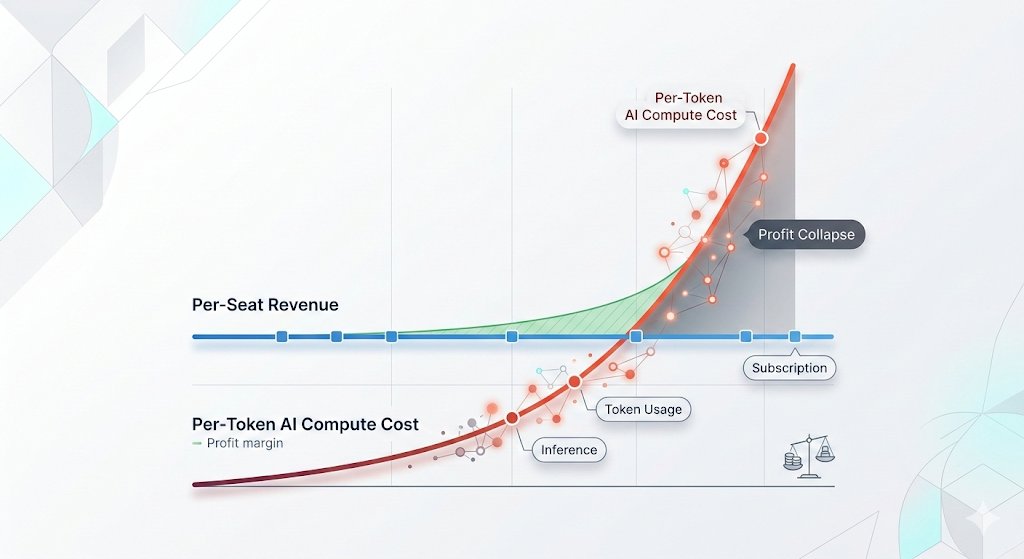
🦔Microsoft canceled its internal Claude Code licenses this week after token-based billing made the cost untenable, even for a company with effectively infinite cloud resources. Uber's CTO sent an internal memo warning the company burned through its entire 2026 AI budget in just four months. American AI software prices have jumped 20% to 37%, and GitHub (owned by Microsoft) is dropping flat-rate plans for usage-based billing across its products.
My Take
The AI subsidy era is ending in real time. The same company that put $13 billion into OpenAI and built the Azure infrastructure powering most of Anthropic's compute just looked at the bill from a competitor's coding tool and decided it was not worth paying. That is not a productivity failure on Anthropic's end. Token-based pricing is forcing every enterprise customer to confront the actual cost of running these models at scale, and the number turns out to be far higher than the flat-rate experiments suggested.
This ties directly to my Gemini Flash post yesterday. Anthropic, OpenAI, and Google all raised effective prices in the last six months. Enterprises that built workflows assuming AI costs would keep falling are now watching annual budgets evaporate in months. Two outcomes look likely from here. Either enterprises scale back AI usage to fit budgets, which slows the revenue ramp the labs need to justify their valuations ahead of IPOs, or the labs cut prices and absorb the losses, which makes the unit economics worse at exactly the wrong moment. Both paths land in the same place, the numbers stop working, and somebody has to take the writedown.
Hedgie🤗
I was doing it wrong. I should have been using @opencode in the terminal and not in the desktop mac app. Such a better experience and way better performance!
@simonklee@psyccotoxicc@opencode Same here, on the mac desktop app it seems to get hung up on `Thinking` and just spins there for 30+ minutes just draining resources without any output.