Rights & empowerment for Indigenous Peoples & local communities is the change the world needs. Environmental justice @UniEastAnglia, IUCN CEESP. Scotland (YES)
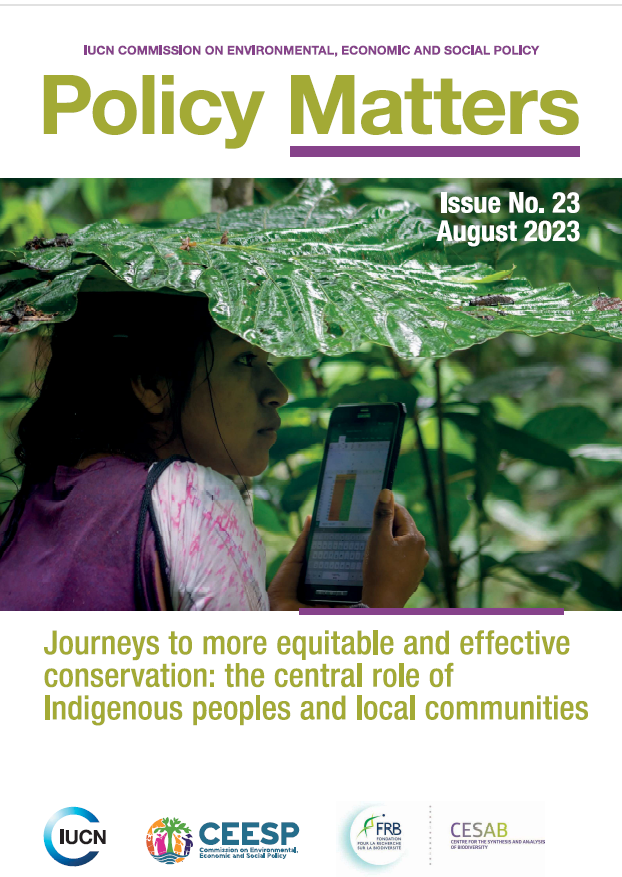
New @IUCN_CEESP Policy Matters shows how communities resist external intervention & work together to take back control over their territories + ecosystems they are deeply connected to, generating positive #biodiversity outcomes. #TransformativePathways https://t.co/PwhDIgHUZd
🔊 Two open faculty positions at the School of Global Development, University of East Anglia. An excellent department, University, and city! Please spread the word!
‼️ More than 50 civil society organizations and human rights defenders in #Tanzania have published a statement on the state of human rights in Ngorongoro District affecting +110,000 residents. #LandRightsNow
Read their recommendations and share widely👇🏽
https://t.co/fDPsuTOrbU
In this new paper led by @emvansant with @Bowydb, @madasascientist, F Reiner, C Hall, and J Kamoto, we show the positive effect of tree cover on people's micronutrient adequacy in Malawi, explained by people sourcing food from on-farm trees. https://t.co/CcFL91MUNA
A privilege to have @AFrontlines involved in this research through @EcocideGenocide & fantastic to see in this blog how our findings resonate with the amazing & crucial work they do in the #Amazon for #Indigenous peoples + nature in such challenging circumstances.
Scientific studies are increasingly finding that #IndigenousPeoples are the most effective at conserving #biodiversity compared to ‘western’ forms of #conservation, such as protected areas (ie. national parks).
A blog talking about our two latest scientific articles. the latest uncovered the production of conservation #knowledge, strong biases in knowledge production, persistent colonial power dynamic in conservation science and potential conflicts of interest
https://t.co/Sahujr9dZv
#IndigenousKnowledges
✍️🏾The authors of this article were on a team commissioned by the federal government 🇦🇺to advise on ways to enhance Aboriginal and Torres Strait Islander peoples’ voices in the IPCC process.
Go to https://t.co/Vj7cZAgBfv
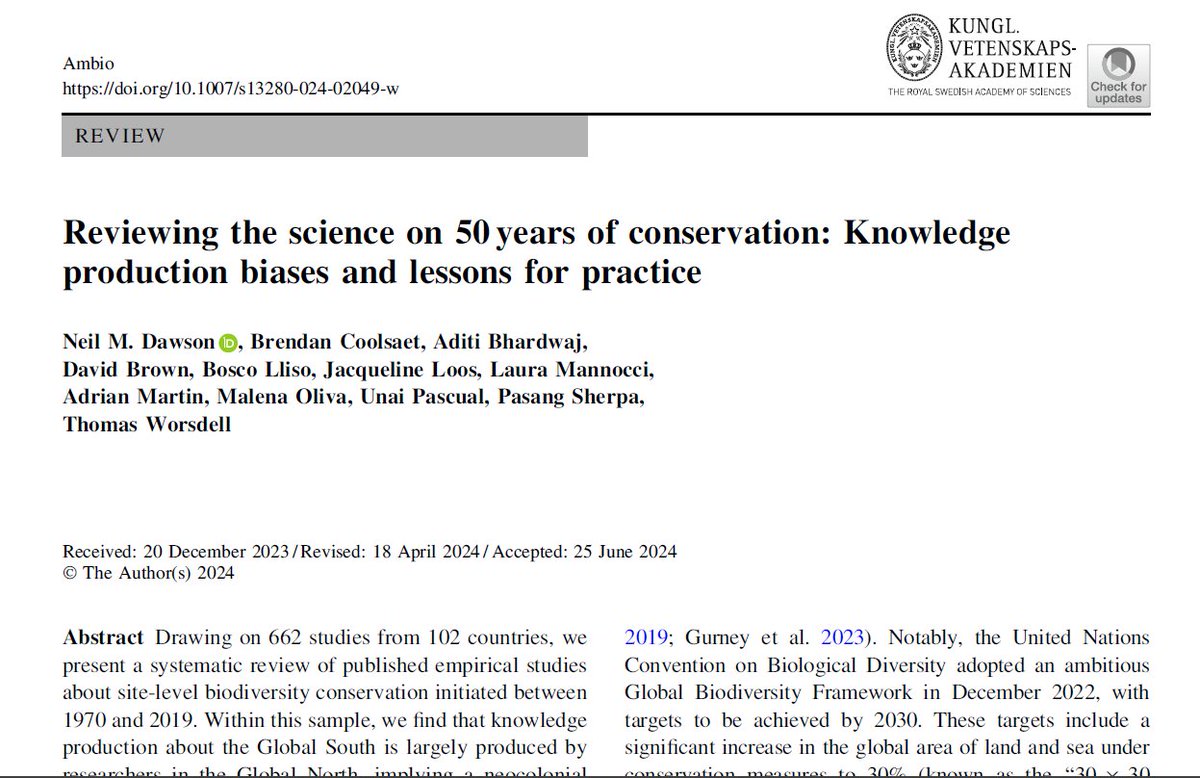
Reviewing the science on 50 years of #conservation: Through 662 studies in 102 countries, we find independence issues can suppress the otherwise clear link between Indigenous & local leadership & conservation success @FRBiodiv@developmentuea@IUCN_GovRights@Ambio_Journal
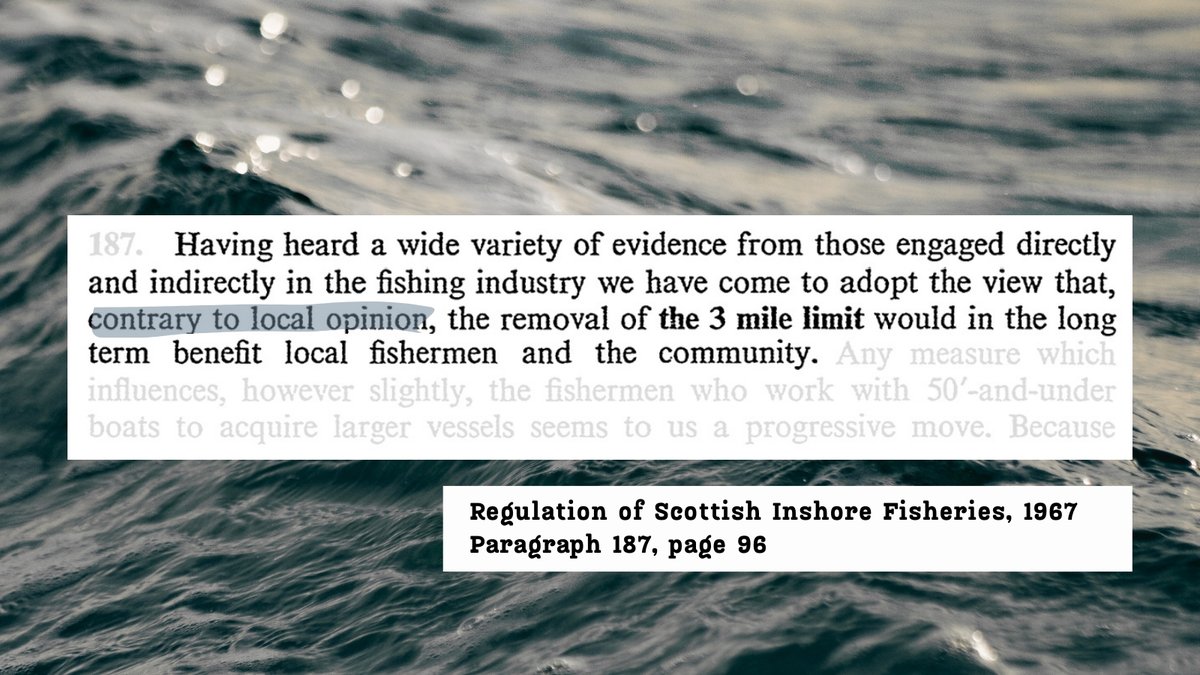
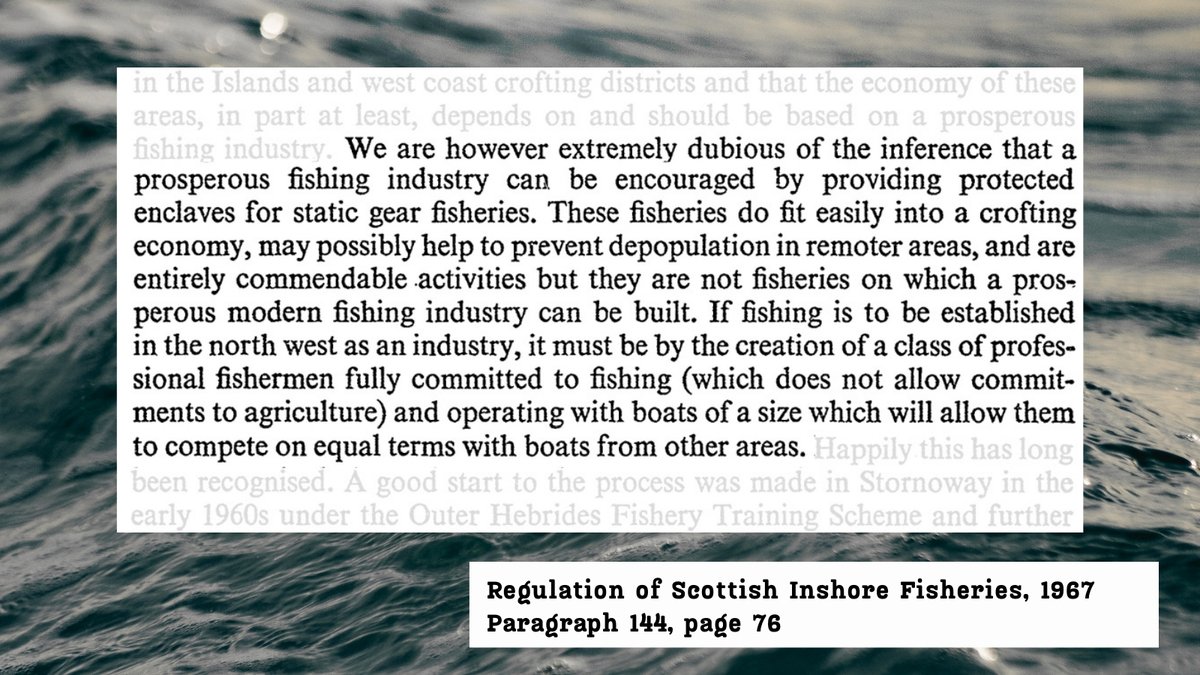
Today is the 40th anniversary of the removal of Scotland's 3-mile fishing limit by the Thatcher government. Our fisheries' capacity to keep local people on both sea & land has never recovered. That is why @TheOpenSeas campaigns to restore the limit. Read: https://t.co/8oP8NvDnG9
New release!! Participation is not the answer: epistemic violence and authoritarian practices in conservation-forced displacement by Jessica Milgrooom & Priscilla Claeys on how participation in fact legitimises displacements in Mozambique.
https://t.co/J6kxcJRtU0
This really is an extraordinary graphic. While we agonise over the impact of releasing a few Beavers back in the landscape, about 50 million non-native Pheasants are released into the environment each year with not much debate at all.
“Advancing #equitable governance in area-based #conservation” – in a new paper, led by Phil Franks, we provide guidance on how to ensure #equity in achieving the #30x30
https://t.co/zbjcLVTFlg
Our latest blog dives into a fascinating meta-analysis by @NeilMDawson et al. of governance in community conservation efforts around the world. What they found is powerful: greater power to communities = better conservation and social outcomes! 1/3 https://t.co/vQobjpH4TE