"Chairman, a country without reserves is not sovereign. The potential of this Bill to destabilize Uganda’s balance of payments is our primary concern as a central bank. For example, last financial year the overall balance of payment surplus was USD 1.5 billion. That’s how we were able to increase our reserve coverage by USD 1.5 billion. Today as we speak our reserves are close to USD 6 billion. Why? Because these inflows have been coming in. The moment you tamper with these inflows here, we risk running down our reserves, and that is economic disaster for a country.” Governor Atingi-Ego on the Protection of Sovereignty Bill 2026 in an appearance before Parliament today.
Pictures from ARTEMIS SPACE MISSION-April 2026. Can see astronaut looking at planet Earth through his window. And ➡️ shows how our Planet looks when seen with other planets from the astronaut's window....
And for you the African out there, this is the question to ask yourselves: HOW DOES THE AFRICAN DEFEND HIMSELF AGAINST A PEOPLE WITH THESE CAPABILITIES?
Yes, it is beautiful to talk about PEACE AND LOVE AMONG MEN ON EARTH, etc, but we live under a different REALITY; the 'BIOLOGICAL REALTY' which dictates that the WEAKER WILL ALWAYS BE EATEN AS PREY! This is the LAW OF NATURE. It is Athen's THUCYDIDES who put it more aptly: "The strong do what they can, and the weak suffer what they must". In our world, justice is irrelevant; POWER DECIDES EVERYTHING!
Remember this as you buy more flashy limousines and stash away that other 💰 bundle in a foreign bank; THEY WON'T LET YOU HAVE IT WHEN THAT TIME COMES!
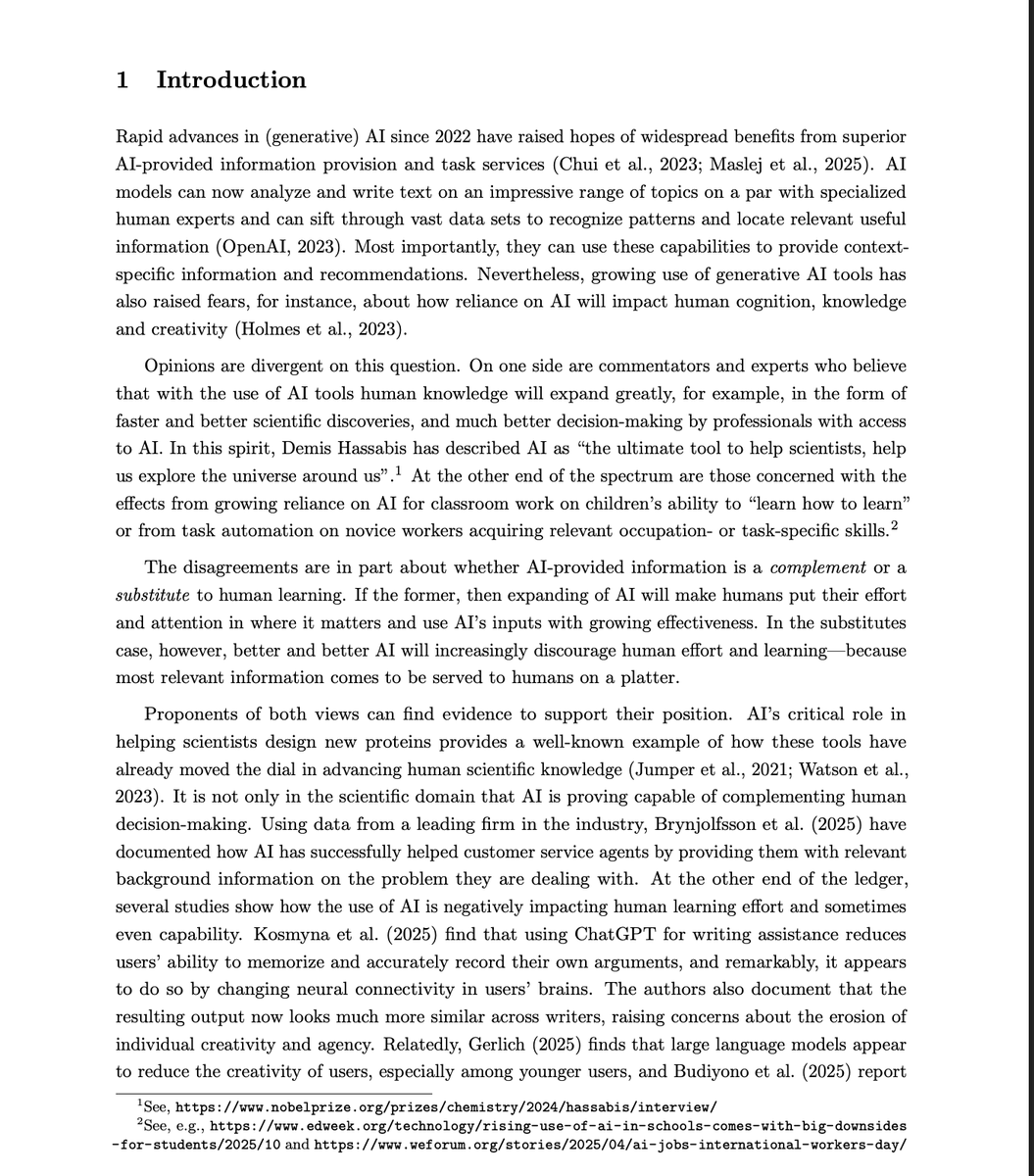
MIT's Nobel Prize-winning economist just published a model with one of the most alarming conclusions in the AI literature so far.
If AI becomes accurate enough, it can destroy human civilization's ability to generate new knowledge entirely.
Not gradually degrade it. Collapse it.
The paper is called AI, Human Cognition and Knowledge Collapse.
Authors: Daron Acemoglu, Dingwen Kong, and Asuman Ozdaglar. MIT. Published February 20, 2026.
Acemoglu won the Nobel Prize in Economics in 2024. He is not a doomer blogger. He is the most cited economist of his generation, and his models tend to be taken seriously by the people who set policy.
Here is the argument in plain terms.
Human knowledge is not just a collection of facts stored in individuals. It is a living system that requires continuous reproduction. People learn things. They apply them. They teach others. They build on prior work to generate new work. The entire engine of science, medicine, technology, and innovation runs on this cycle of active human cognition.
What happens when AI provides personalized, accurate answers to every question people would otherwise have to learn themselves?
Individually, each person is better off. They get correct answers faster. They make fewer errors. Their immediate outcomes improve.
But they stop doing the cognitive work that sustains the collective knowledge base.
Acemoglu's model shows this produces a non-monotone welfare curve.
Modest AI accuracy: net positive. AI helps at the margin, humans still do enough learning to sustain collective knowledge, everyone gains.
High AI accuracy: net catastrophic. AI is accurate enough that learning yourself feels unnecessary. Human learning effort collapses. The knowledge base that AI was trained on is no longer being refreshed or extended. Innovation stalls. Then stops.
The model proves the existence of two stable steady states.
A high-knowledge steady state where human learning and AI assistance coexist productively.
A knowledge-collapse steady state where collective human knowledge has effectively vanished, individuals still receive good personalized AI recommendations, but the shared intellectual infrastructure that enables new discoveries is gone.
And the transition between them is not gradual.
It is a threshold effect. Below a certain level of AI accuracy, society stays in the high-knowledge equilibrium. Above that threshold, the system tips. And once it tips, the collapse is self-reinforcing.
Because the people who would have learned the things that would have pushed the frontier forward never learned them. And the AI cannot push the frontier on its own. It can only recombine what humans already knew when it was trained.
The dark irony at the center of the model:
The AI does not fail. It keeps giving accurate, personalized, useful answers right through the collapse.
From the individual's perspective, nothing looks wrong. You ask a question, you get a correct answer.
But the collective capacity to ask questions nobody has asked before, to build the frameworks that generate new knowledge rather than retrieve existing knowledge, that capacity is quietly disappearing.
Acemoglu has been the most prominent mainstream economist skeptical of transformative AI productivity claims. His prior work found that AI's actual measured productivity gains were much smaller than the technology industry projected.
This paper is a different kind of warning. Not that AI will fail to deliver promised gains.
But that if it succeeds too completely, it will undermine the human cognitive infrastructure that makes long-run progress possible at all.
The welfare effect is non-monotone.
That is the sentence worth sitting with.
Helpful until it is not. Beneficial until it crosses a threshold. And past that threshold, the same accuracy that made it so useful is precisely what makes it devastating.
Every student who uses AI instead of working through a problem is a data point.
Every researcher who uses AI instead of developing intuition is a data point.
Every generation that grows up with accurate AI answers and no incentive to develop deep domain knowledge is a data point.
Individually rational. Collectively catastrophic.
Acemoglu proved this is not just a cultural concern or a vague anxiety about screen time.
It is a mathematically coherent equilibrium that a sufficiently accurate AI system will push society toward.
And there is no visible warning sign before the threshold is crossed.
KALINAKI, I’M NO LONGER SCARED OF SOHO - LET’S GO FINISH THAT STORY.
There are men who write stories- and then there are those who quietly become part of a nation’s story. @Kalinaki has done both, with a pen so precise it rarely needed raising.
Retirement, in his case, feels less like an ending and more like a well-edited transition. Because #DanielKalinaki was never just working; he was always thinking -shaping, refining, and often arriving at conclusions the rest of us were still circling.
My memories of him don’t begin in boardrooms, though that is where his legend is anchored. They begin much closer to home -literally. Bukoto Brown Flats. Neighbours. That quiet proximity that turns acquaintance into friendship, and friendship into a kind of unspoken understanding. It is there, in those ordinary corridors of life, that I came to know the man behind the bylines.
From there, the rhythm extended naturally - football, conversation, and those familiar meets where the English Premier League became both entertainment and metaphor. Just Kicking in Kisementi was one such constant. Not for the place, but for the company, the laughter, and the kind of debates that somehow moved from midfield tactics to matters of state without missing a pass.
Then London, 2008. The Market Porter, a pub on Borough High Street near London Bridge. With @SheilaKulubya alongside us, Southwark briefly became an extension of Bukoto. The conversation - effortless, layered, precise. #Uganda, media, society. As a loyal supporter of Manchester United, Daniel spoke with the calm assurance of a man familiar with both triumph and rebuilding -again, not entirely unlike the country he so keenly observed.
What stood out was not volume, but clarity. #DK never needed to own the room; he simply steadied it. Easygoing in manner, exacting in thought. A friend, yes - but one who never blurred the lines between warmth and principle.
In London, he suggested we visit the ever vibrant, eclectic, and lively district of Soho in central London known for its intense nightlife, premier West End theaters, and diverse dining. I grew jitters at the time, misreading the moment entirely. That, Daniel, remains unfinished business.
As @nickopiyo aptly put it, Kalinaki is a fine thinker, a public intellectual, a writer of many drafts of history. True. But perhaps his greatest legacy lies in the people he shaped, the standards he set, and the newsroom culture at @DailyMonitor he built.
Uganda will celebrate the editor, super columnist, author, and the former General Manager.
I will remember the neighbour, the friend, the steady mind next door. And those memories at Just Kicking, and a pub in Southwark, London.
Daniel, the story isn’t done.
We still owe Soho.
The first real signal of a war is not the missile.
It is the price of exit.
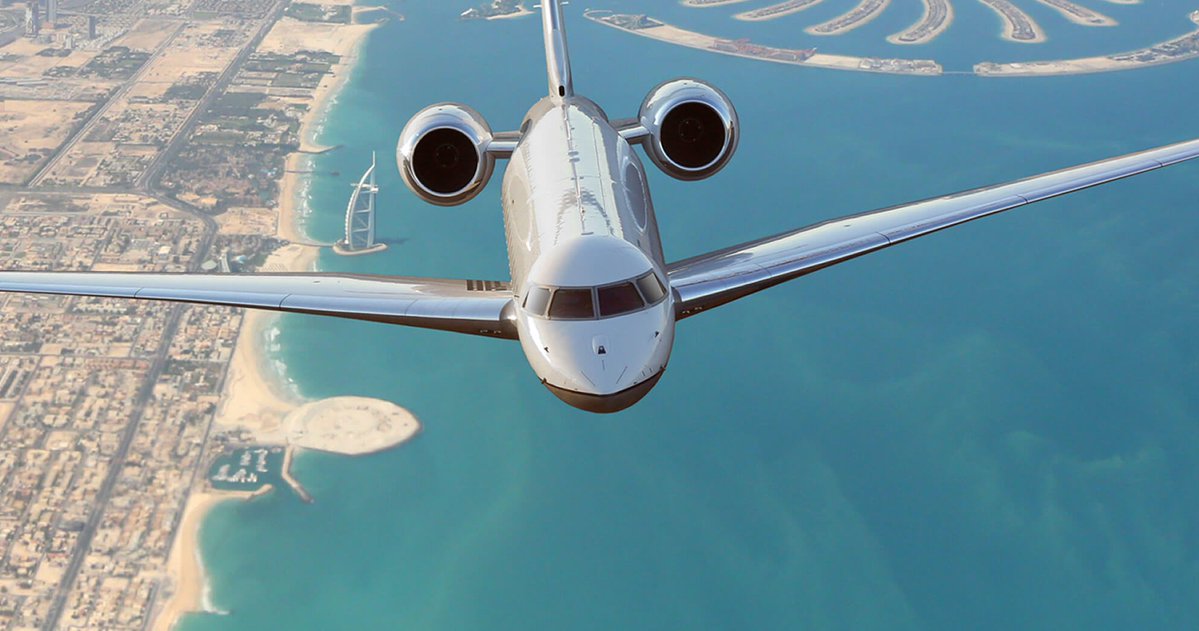
Tonight the ultra rich are paying up to £260,000 ($350,000) for a single private jet charter just to get out of the Gulf, because the normal map is gone.
Dubai, Doha, Abu Dhabi, the transit machine that moves the planet’s people and capital, is effectively paused. Airspace restrictions, security alerts, mass cancellations, crews stranded.
So the evacuation route is medieval in a futuristic wrapper.
Step 1: disappear from the skyline.
Step 2: get picked up by a private security team.
Step 3: sit in an SUV convoy for a brutal 10 hour drive across desert highways to Riyadh, one of the few hubs still functioning.
Step 4: buy a seat on a jet that has no refunds, no guarantees, and a contract built around force majeure.
That is not travel.
That is a market discovering what “permission to leave” costs when the state cannot provide normality.
Here is the part everyone misses: this is how regimes change.
Not through speeches. Through pricing.
When commercial aviation freezes, the world splits into two economies overnight.
One economy waits in terminals, refreshes apps, sleeps on floors, runs out of cash, runs out of options.
The other economy converts money into motion and motion into safety.
And the premium they are paying is not for leather seats.
It is for probability.
The same logic will hit everything next.
Insurance reprices first.
Freight and shipping lanes follow.
Energy and commodities move from “supply” to “security.”
Then credit tightens because every lender realizes the collateral has a missile shaped tail risk.
You are watching a new global tax being born.
Call it the volatility tax.
Call it the verification tax.
Either way, the bill is rising and it is not being paid equally.
Question: when the price of exit goes parabolic, what do you think happens to the price of everything else?
https://t.co/0psQfENUyo
I am a diplomatic aide in the Sultanate of Oman's Ministry of Foreign Affairs.
My job is logistics. When two countries that cannot speak to each other need to speak to each other, I book the rooms. I prepare the briefing materials. I make sure the water glasses are the right distance apart. You would be surprised how much of diplomacy is water glasses. Too close and it feels informal. Too far and it feels like a tribunal. I have a chart.
We had a very good month.
Since January, Oman has been mediating indirect talks between the United States and Iran on Iran's nuclear program. The talks were held in Muscat and in Geneva. The Americans would sit in one room. The Iranians would sit in another room. I would walk between them. My Fitbit says I averaged fourteen thousand steps on negotiation days. The hallway between the two rooms at the Royal Opera House conference center is forty-seven meters. I walked it two hundred and twelve times in February. This is good for my cardiovascular health. It was less good for my knees. Both are in the service of peace.
By mid-February, we had something.
Iran agreed to zero stockpiling of enriched uranium. Not reduced stockpiling. Zero. They agreed to down-blend existing stockpiles to the lowest possible level. They agreed to convert them into irreversible fuel. They agreed to full IAEA verification with potential US inspector access. They agreed, in the Foreign Minister's phrase, to "never, ever" possess nuclear material for a bomb. I have worked in diplomacy for seven years. I have never seen a country agree to this many things this quickly. I made a spreadsheet of the concessions. It had fourteen rows. I color-coded it. Green for confirmed. Yellow for pending. By February 21 the spreadsheet was entirely green. I printed it. It is on my desk in Muscat. It is still green.
That phrase took eleven days. "Never, ever." The Iranians initially offered "not seek to." The Americans wanted "will not under any circumstances." We landed on "never, ever" at 2:14 AM on a Tuesday in Muscat. I typed the final version myself. I used Times New Roman because Geneva prefers it. The document was fourteen pages. I was proud of every comma.
Here is what they said, in the order they said it.
February 24: "We have a once-in-a-generation opportunity." — The Foreign Minister, private briefing to Gulf Cooperation Council ambassadors. I prepared the slide deck. Slide 14 was the implementation timeline. Slide 15 was the signing ceremony logistics. I had reserved the Palais des Nations in Geneva, Room XX. It seats four hundred. We discussed pen brands for the signing. The Iranians preferred Montblanc. The Americans had no preference. I ordered twelve Montblanc Meisterstucks at six hundred and thirty dollars each. They arrive on Tuesday.
February 27, 8:30 AM EST: "The deal is within our reach." — The Foreign Minister, CBS Face the Nation. He sat across from Margaret Brennan. He said broad political terms could be agreed "tomorrow" with ninety days for technical implementation in Vienna. He said, and I wrote this line for the briefing card he carried in his breast pocket: "If we just allow diplomacy the space it needs." He praised the American envoys by name. Steve Witkoff. Jared Kushner. He said both had been constructive.
I watched from the Four Seasons Georgetown. The minibar had cashews. I ate the cashews. They were nineteen dollars. The most expensive cashew I have ever eaten. But it was a good morning and we were within our reach.
February 27, 2:00 PM EST: Meeting with Vice President Vance, Washington. The Foreign Minister presented our progress. Zero stockpiling. Full verification. Irreversible conversion. "Never, ever." The Vice President used the word "encouraging." His aide took notes on an iPad. The aide did not make eye contact for the last nine minutes of the meeting. I noticed this. Noticing things is the only part of my job that is not water glasses.
February 27, 4:00 PM EST: "Not happy with the pace." — President Trump, to reporters.
Not happy with the pace.
We had achieved zero stockpiling. Full IAEA verification. Irreversible fuel conversion. Inspector access. And the phrase "never, ever," which took eleven days and cost me two hundred and twelve trips down a forty-seven-meter hallway.
Every American president since Carter has failed to get Iran to agree to this. Forty-five years.
Not happy with the pace.
February 27, 9:47 PM EST: The Foreign Minister's flight departs Dulles for Muscat. I am in the seat behind him. He is reviewing Slide 14 on his laptop. The implementation timeline. Vienna technical sessions. The signing ceremony. The pens.
I fall asleep over the Atlantic. I dream about water glasses.
February 28, 6:00 AM GST: I wake up to push notifications.
February 28: "The United States has begun major combat operations in Iran." — President Trump.
Operation Epic Fury. Coordinated airstrikes. The United States and Israel. Tehran. Isfahan. Qom. Karaj. Kermanshah. Nuclear facilities. IRGC bases. Sites near the Supreme Leader's office. Israel called their half Operation Roaring Lion. Someone in both governments spent time choosing these names. Epic Fury. Roaring Lion. I spent eleven days on "never, ever." They spent it on branding. The President said Iran had "rejected American calls to halt its nuclear weapons production."
Rejected.
Iran had agreed to zero stockpiling. Iran had agreed to full verification. Iran had agreed to "never, ever." Iran had agreed to everything in a fourteen-page document that I typed in Times New Roman.
The President said they rejected it.
I do not know which document the President was reading. I know which one I typed.
February 28, 18:45 UTC: Iran internet connectivity: four percent. — NetBlocks, confirmed by Cloudflare. Ninety-six percent of a country went dark. You cannot negotiate with a country at four percent connectivity. You cannot negotiate with a country that is being struck. You cannot negotiate. This is not a political opinion. This is a logistics assessment.
February 28: The governor of Minab reported forty girls killed at an elementary school.
I do not have logistics for that. There is no slide for that. The water glass chart does not cover that.
February 28: Lockheed Martin: up. Northrop Grumman: up. RTX: up. Dow futures: down six hundred and twenty-two points. Gold: five thousand two hundred and ninety-six dollars. An analyst at AInvest published a note titled "Iran Strikes: Tactical Plays." The note recommended positions in oil, defense stocks, and gold.
The most expensive cashew I have ever eaten was nineteen dollars. The most expensive pen I have ever ordered was six hundred and thirty dollars. The math suggests I have been working in the wrong industry. Defense stocks do not require water glasses. Defense stocks do not require eleven days. Defense stocks require one morning.
February 28: Israel closed its airspace and its schools. Iran launched retaliatory missiles toward US bases in the Gulf. The Supreme Leader promised a "crushing response." Israel's defense minister declared a permanent state of emergency. Everyone is using words I recognize in an order I do not. I recognize "permanent." I recognize "emergency." I do not recognize them next to each other. In diplomacy, nothing is permanent and everything is an emergency. In war it is the reverse.
February 28: The Foreign Minister has not made a public statement.
The briefing card is still in his breast pocket. It still says "within our reach."
The absence of permanent African seats on the Security Council is indefensible.
The Security Council must reflect today’s world. This is 2026 — not 1946.
Whenever decisions about Africa and the world are on the table, Africa must be at the table.
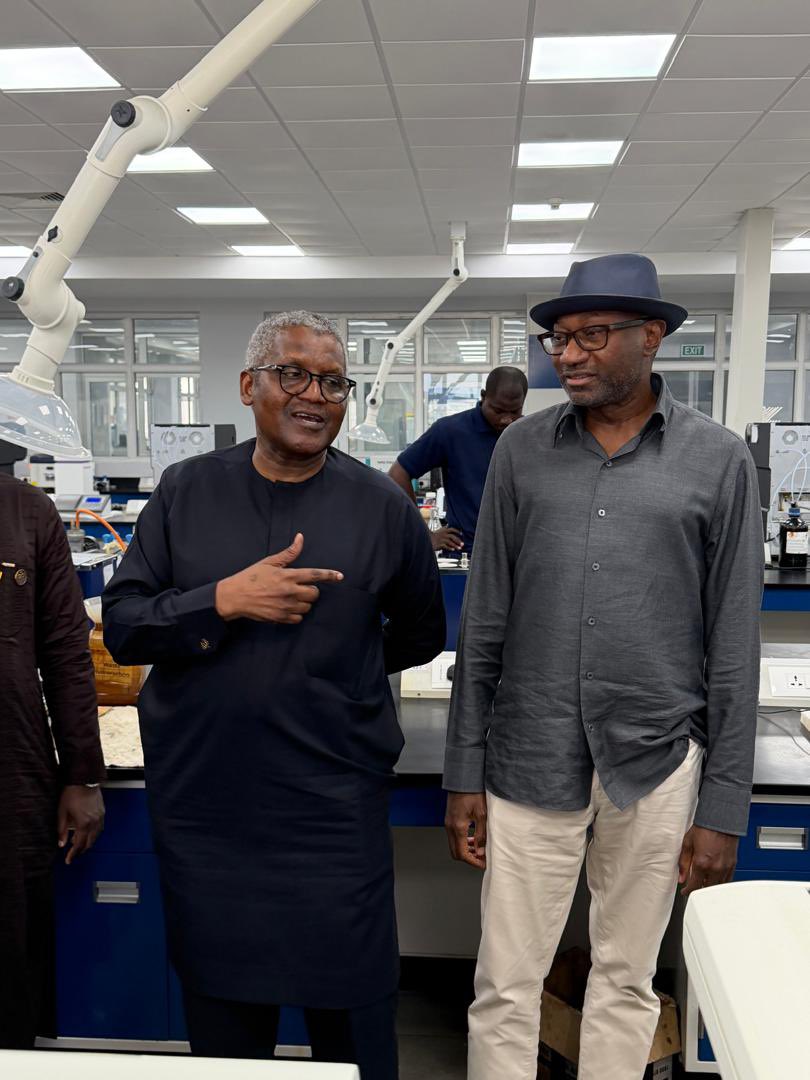
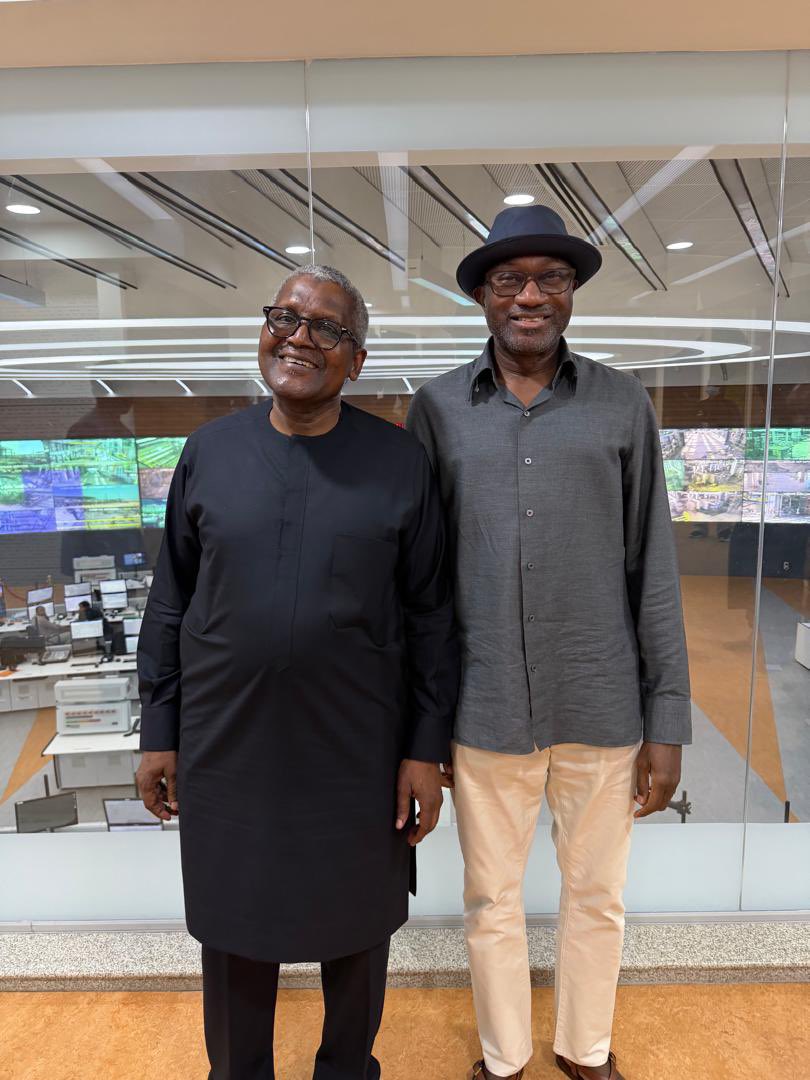
Today 15 February 2026, I visited the Dangote Refinery, what I call the 8th wonder of the world.
After successful completion of this expansion project, capacity will increase to 1.4m barrels per day 🙌🏾… F.Ote💲
I congratulate my friend and brother, @AlikoDangote, on the remarkable achievement of the Dangote Petroleum Refinery reaching its full 650,000 barrels per day capacity.
More importantly, it is transformational for Nigeria and Africa. Supplying up to 75 million litres of PMS daily changes our energy narrative and conserving foreign exchangez
With domestic refining now firmly underway after decades of reliance on imports, pressure on the foreign exchange market should ease significantly. I am optimistic that the naira will strengthen meaningfully, and trading below ₦1,000/$1 before year-end is increasingly within reach.
Aliko is not stopping here. He has embarked on an additional $12 billion expansion to increase refining capacity to 1.4 million barrels per day, alongside 2.4 million tons of polypropylene and 400,000 metric tons of Linear Alkyl Benzene for detergent production. Work has already commenced in earnest.
Congratulations once again, my brother. Nigeria is proud of you 🏭🙌🏾… F.Ote💲
I'm a Reserve Manager at a central bank.
My job is buying gold.
297 tons this year.
Quietly.
While we print money.
Loudly.
Gold hit $5,000 an ounce yesterday.
We've been buying since it was $1,800.
That's called "reserve diversification."
Diversification means we don't trust our own currency.
But we can't say that.
So we say "diversification."
The Governor went on television last month.
He said inflation is "anchored."
Anchored means 6%.
Used to mean 2%.
We moved the anchor.
That's monetary policy.
He said the currency is "sound."
Sound means losing 20% of its value.
Per year.
But it sounds sound.
That's what matters.
We bought 45 tons in November.
Poland bought 95 tons.
Brazil bought 43.
China reports 1 ton.
China is lying.
We all know.
Nobody says it.
95% of central banks plan to buy more gold next year.
That's a survey.
We surveyed ourselves.
On whether we trust ourselves.
We don't.
We trust gold.
Citizens ask why prices keep rising.
We say "supply chains."
We say "external factors."
We don't say "we printed 40% of all money in existence since 2020."
That's not external.
That's us.
The Finance Minister asked if gold is a hedge against our own policies.
I said "gold is a strategic reserve asset."
Strategic means yes.
I just can't say yes.
Gold is $5,000 now.
Our currency buys less every day.
Our gold buys more.
That's the strategy.
For us.
Not for you.
You get the currency.
We get the gold.
That's central banking.
It's always been about his pardon. What a bloody way to get a pardon!!
Israel’s Netanyahu urges president to pardon corruption cases | Benjamin Netanyahu News | Al Jazeera https://t.co/SiJQdLdNKY