More are (slowly, projectively, memetically, and mimetically) coming to realize that “capitalism” is just metabolism recapitulated in the domain of conscious representation.
The dynamics one loves or hates about these patterned relations characterize both the origins of life itself, and the processes by which life generates increasingly complex order as it converts otherwise entropic outputs into novel energetic affordances.
Specifically, such dynamics constitute what I’ve called Catalytic Closures, as opposed to Binding Closures, and play an essential role in discovering novel autocatalytic relations that achieve a metastable morphodynamic with respect to their ecological embedding.
I used to work 6am - 6pm, 6 days a week, on a construction site in my early 20s.
Honestly? It fucking sucked, dude. I would sit in my car outside the site at 530am, desperately drinking a coffee, telling myself over and over again, "god I wish I was in sciences"
Because every night when I got home what did I do? Watch Walter Levin MIT Open Courseware physics lectures. I had already exhausted all the popular science books long before so just started on undergrad level physics. The alternative was drinking a six pack of beer like everyone else and watching bullshit TV.
The construction site job was actually better than what I was doing before. Landscaping, stone masonry shit. Backbreaking labor, truly. Breaking concrete slabs up with a sledgehammer and carrying bricks all day. That's literally a punishment in prison.
There was a company event for the property development Corp doing the construction I was working for where everyone talked about their degrees. Most people had been at the company for almost a decade, did random unrelated degrees.
I realized. If I didn't take control of my life the years would tick by. So I went back to school for engineering physics at age, like, 25. I probably wouldn't graduate until I was 30, but shit.
You're going to turn 30 one day anyway. Might as well be doing something you chose.
A year into schooling I had my first paying job in a physics lab, basically minimum wage, but my god. I was getting paid to work in a physics lab. I could drink coffee and read papers, build cool stuff. It was insane.
The kids around me had no idea how lucky we were to be there. They hadn't suffered being trapped in dead end jobs that leave you too exhausted to really think, plan, get ahead. So I viciously worked my ass off through out engineering physics to play the game as best I could. Get the best internships, connections, etc. By the end of undergrad I was taking graduate level classes and outperforming the PhD students at them.
Everything since then had gone better than I could've imagined. I used to think - wow, the dream would be designing fusion reactors, if only. Now I have patents in fusion reactor design. I've worked on particle accelerators, LEO satellite communications, beam driven fusion devices, finite element analysis for RF source design at SLAC.
So no. Fuck mind breaking manual labor. Leave it for the robots. Choose your own path.
I will say though. There are few things as therapeutic and full body workout as shoveling sand. I can show you at least a dozen different sand shoveling techniques to work every muscle in your upper body. Also wheelbarrow technique.
How to build muscles:
• Progressive overload
Always challenge your muscles by adding weight or doing more reps over time. Your body needs a reason to grow.
• Track your workouts
Write down your weights, sets and reps. Everything that gets tracked needs to be improved.
• Train to failure or close to failure
Go insane or remain the same.
• Mind muscle connection
Control the motion and don’t ego lift.
• Eat well and high in protein
Aim for 0.8-1g protein per pound of body weight.
• Don’t overtrain or skip rest days
Muscles grow when you’re recovering, not when lifting.
• Get enough sleep
• Have a good training plan and stick to it (Dm to get your own personalised plan 💌)
• BE PATIENT AND CONSISTENT
Changing your life is not a glow up. It is drywall dust in your throat and a calendar you keep even when no one is watching. The amount of locking in it takes will make you feel strange to yourself. You will think you are becoming boring. You are becoming accurate.
Morning at 5:43. The phone wants to be a god. You make it a brick. Face down, silent. You drink water that tastes like nothing and call it medicine. The kettle clicks. Your stomach argues. You write three lines that are not for beauty, only for honesty. Today I will do this. Today I will not do that. You put the paper where your eyes cannot avoid it.
Discipline is a door you lock from the inside. It is not anger. It is not romance. It is a hand on the knob every time your own nerves try to run. At 7:08 you say no to an invitation that would feed your vanity and starve your work. You do not write a paragraph to be forgiven. You put a plate in the sink and hear how steady the water sounds when it hits porcelain. That is what a boundary sounds like.
You build lanes so your thoughts do not swerve. Two hours for focus. Forty minutes for the body. Ten minutes to breathe without turning it into a ceremony. You hate the first fifteen. You keep going. Your mind flails like a fish and then remembers it is in a river. The clock becomes less of an enemy and more of a metronome. The cursor blinks. You put in the reps no one claps for.
At 13:20 you eat real food at a table. Not a celebration, a promise. Protein, something green, salt that doesn’t flirt. You chew until you remember you have a jaw. The small pain at your temple relaxes. You put your phone in a drawer and the drawer does not scream. You are training your life to stop biting you back.
There is the breaking point time. 16:37. You want the old sugar. The old scroll. The old person. You stand up. You walk to the sink. Cold water on wrists until the skull cools half a degree. You say out loud not like this. The urge is still there. You keep your hands busy anyway. You wipe the counter. You take out the trash. You do not argue with the weather inside you. You wait until it passes, because it always passes when you do not feed it.
Locking in looks ridiculous from the outside. You cut your own hair with cheap scissors because appointments cost time you need for the page. You leave a party at 21:02 because your sleep is a mortgage you do not want to default on. You set your clothes out for the morning like a child and call it respect. You become the kind of person who knows exactly where the tape measure lives. You stop losing your keys because you stop pretending you are the kind of person who loses their keys.
Discipline is not a mood. It is a manual. Write your rules on the fridge where recipes go. No phone before sunlight. One hard thing before noon. Eat sitting down. Apologize by fixing it where it broke. Move your body even when your head is loud. Put your money where your time needs to be. If you relapse, you do not perform grief for an audience. You start again at the next minute mark. Return is the muscle.
At 18:55 you go where your breath changes shape. The track that smells like rubber and rain. The cheap gym with a fan that clicks. The stairs in your building that count for you. You do the ugly reps. Your legs fill with the good ache, the kind that takes noise out of your head. You are not chasing a body. You are chasing a nervous system that can hold a day without cracking.
You will look arrogant to people who worship permission. You will look obsessive to people who have never been in love with anything that did not immediately love them back. You will be misunderstood by everyone who needs you to stay the character they cast you as. Let them keep their theater. You are busy becoming…
where do I find people like this?
- have deconstructed their world-model
- have good theory of mind (can think as other people)
- high openness but also good taste/discernment
- can discuss things without getting normative
To understand spiral curricula, spaced repetition, and the difference between these things, it helps to visualize the corresponding forgetting curves.
In the default mode of instruction, large groups of related material are covered all at once and are not systematically revisited in the future. Students quickly forget what they learn, and their overall retention is extremely low.
By periodically revisiting content, a spiral curriculum periodically restores forgotten knowledge and leverages the spacing effect to slow the decay of that knowledge. This raises students’ overall retention of what they have learned.
Spaced repetition takes this line of thought to its fullest extent by fully optimizing the review process.
-- It precisely calibrates the spacing of reviews so as to maintain a consistently high level of retention and slow down the decay (i.e. stretch out the decay curves) as quickly as possible.
-- Review spacing continually adapts to student performance, expanding in response to good performance and shrinking in response to poor performance.
-- By optimizing the review process to the fullest extent, spaced repetition further raises students’ retention of what they have learned.
However, while spaced repetition is more optimal, it requires an inhuman amount of work from the instructor.
Taken to its fullest extent, spaced repetition requires the instructor to keep track of a repetition schedule for every topic for every student and continually update that schedule based on the student’s performance -- and each time a student learns (or reviews) an advanced topic, they’re implicitly reviewing many simpler topics, all of whose repetition schedules need to be adjusted as a result.
In this view, spiraling can be characterized as “the best an instructor can do” manually while teaching at a group level without the assistance of technology.
Spaced repetition is the optimal solution to maximizing retention, but it is infeasible to perform spaced repetition manually, so spiraling is the next-best option that an instructor can actually perform without the assistance of technology.
The most generalizable skill out there is probably learning how to climb skill trees (and in particular, ones that are relentlessly hierarchical).
Of course, you can't acquire that general skill without practicing it on particulars. You gotta lean into specific domains and acquire measurable, demonstrable skills.
But once you see it, once you get a feeling for the process, you see it everywhere.
A brain measurement shows why I’m weird.
And why I love my haters.
This brain MRI reveals personality traits.
Here's what my report shows and my worst brain marker. 🧵
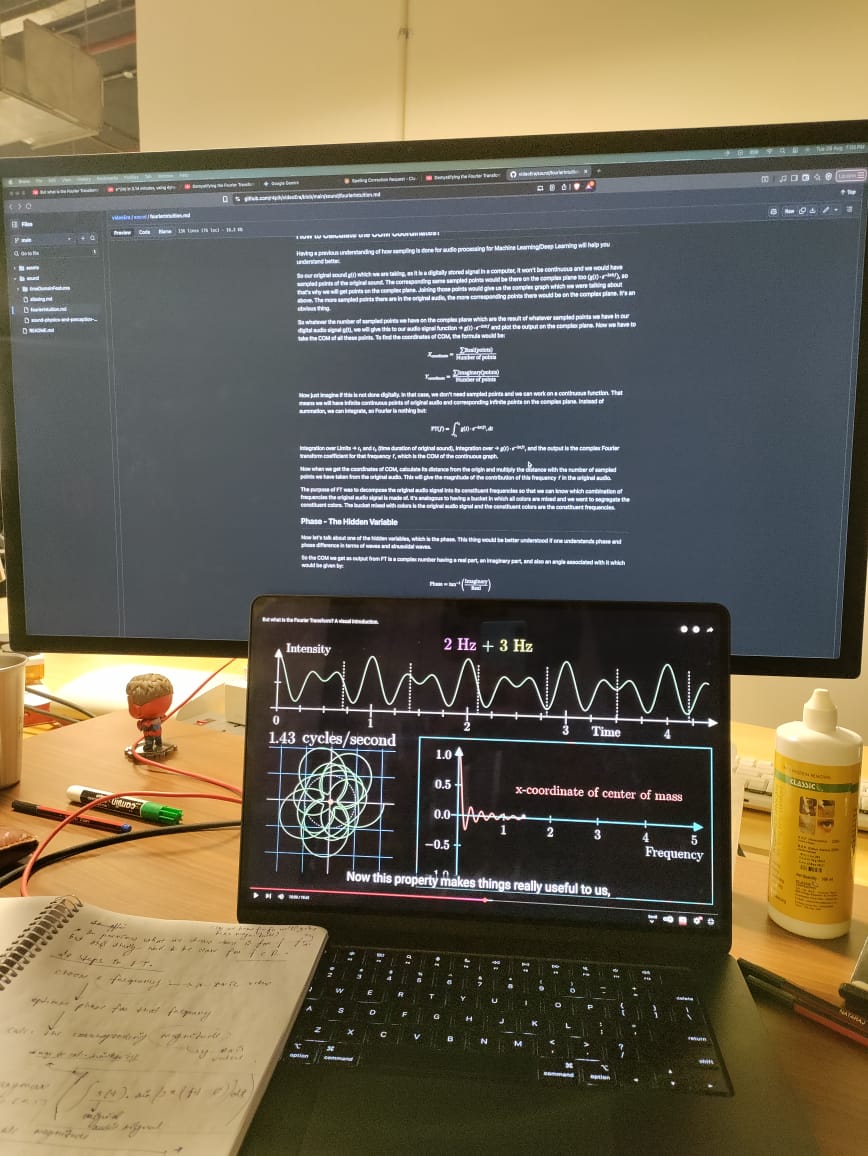
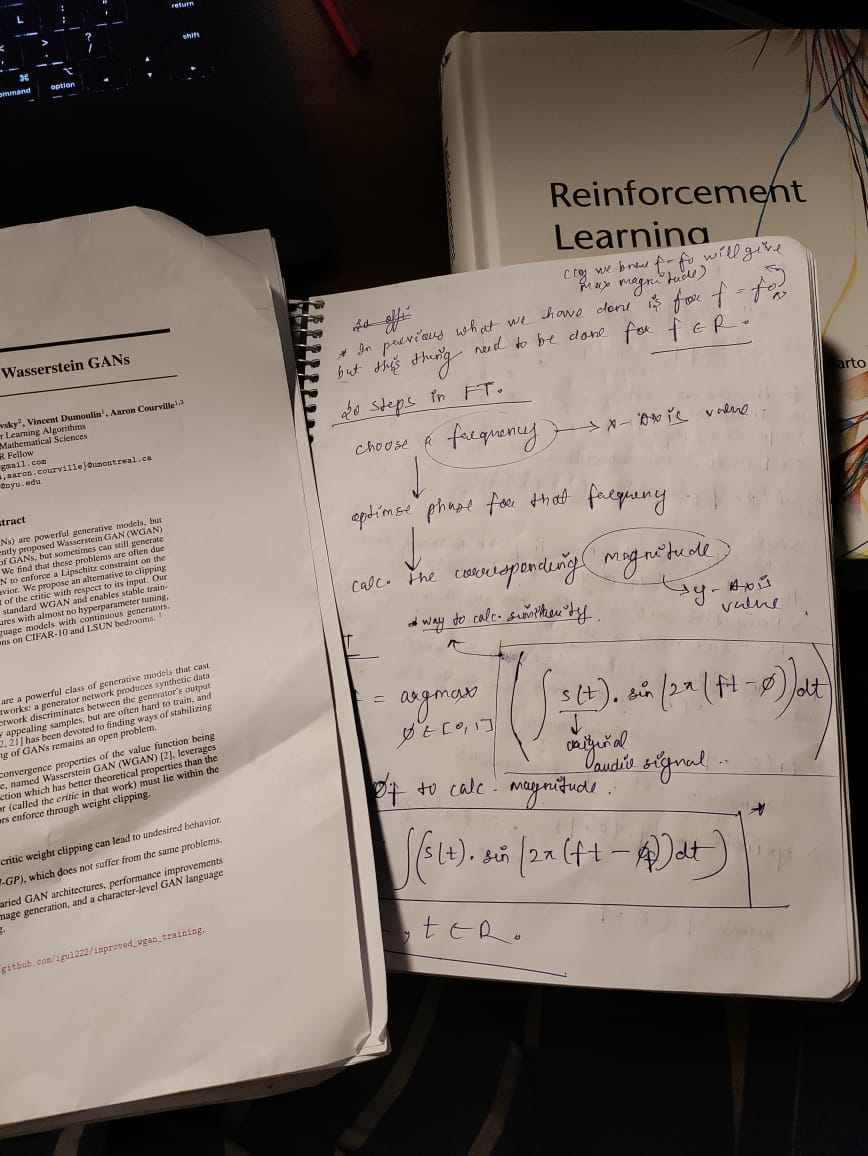
What I'm learning is in intersection of Maths, Physics and Deep Learning and it feels magic connecting all the dots just see out this crazy stuff. The sound and music fundamentals are crazy...
From sometime I've been reading about sound and it's foundation in machine learning and deep learning. How the feature extraction in time domain and frequency domain happens. I'm trying to make a organised repo where I'm writing some nicely written pieces, and taking detailed notes of my learning.
https://t.co/z9bsXiPZYu
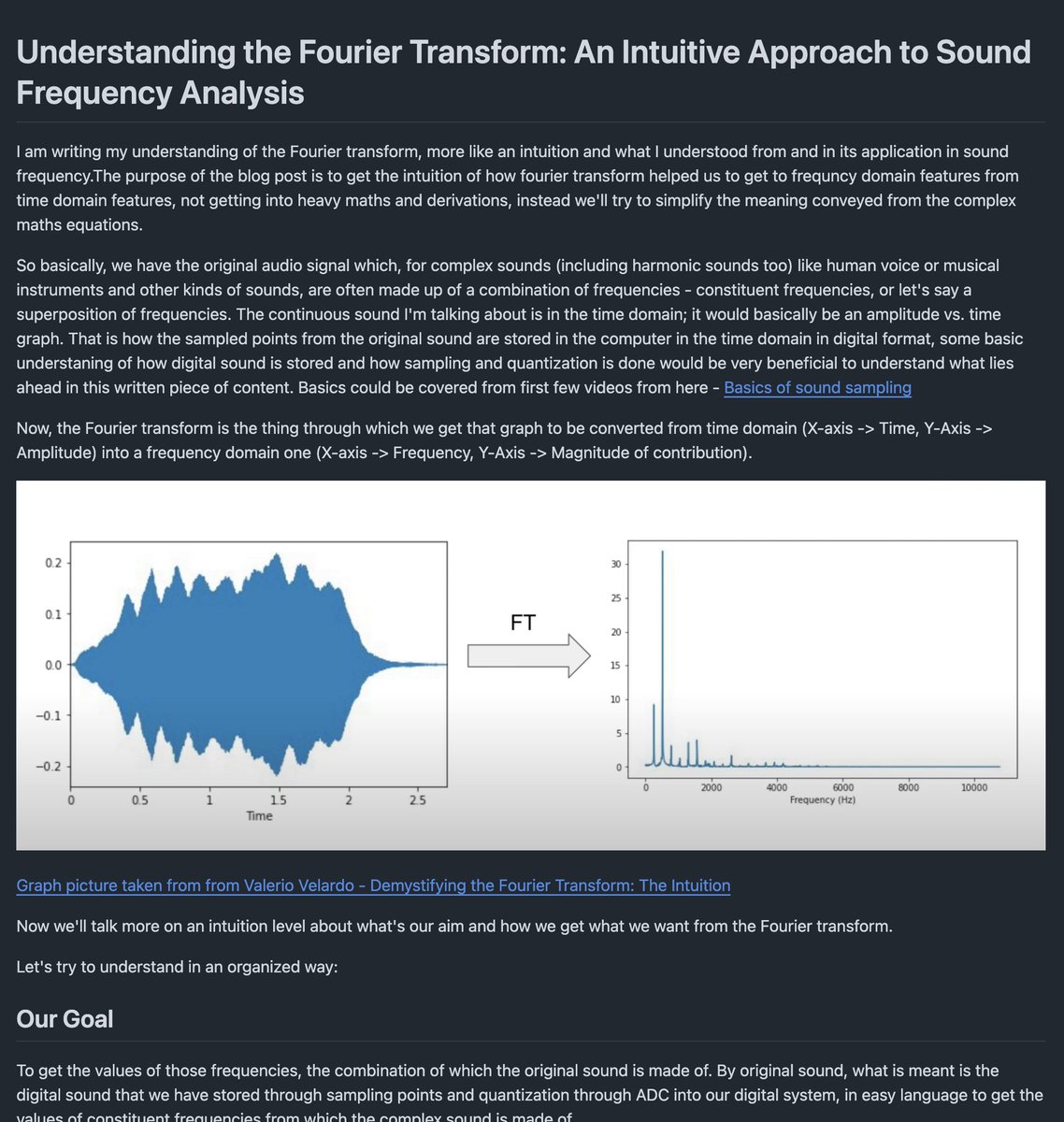
I've written : Understanding the Fourier Transform: An Intuitive Approach to Sound Frequency Analysis.
At first it was very difficult for me develop the intuition of the fourier transform, but repeatedly reading about it helped me filled the loopholes. This topic felt a bit abstract to me and difficult to get the feel of it, but now I feel I somewhat am able to connect the dots.
First of all I only wanted to understand the application of Fourier Transform in the sound domain, so rather than understanding the mathematical derivation it becomes important to get the intuition of stuff, and thats why I have written the whole intuition I got.
The resources I've been referring to understand this thing were and I'm highly thankful for channels of - Valerio Velardo - The Sound of AI and 3 Blue 1 Brown.
These guys have made very good content on this topic.
There are never more better visualisations available for these complex topics than 3 Blue 1 Brown, the 3Blue1Brown will give the full visual proof of whats happening.
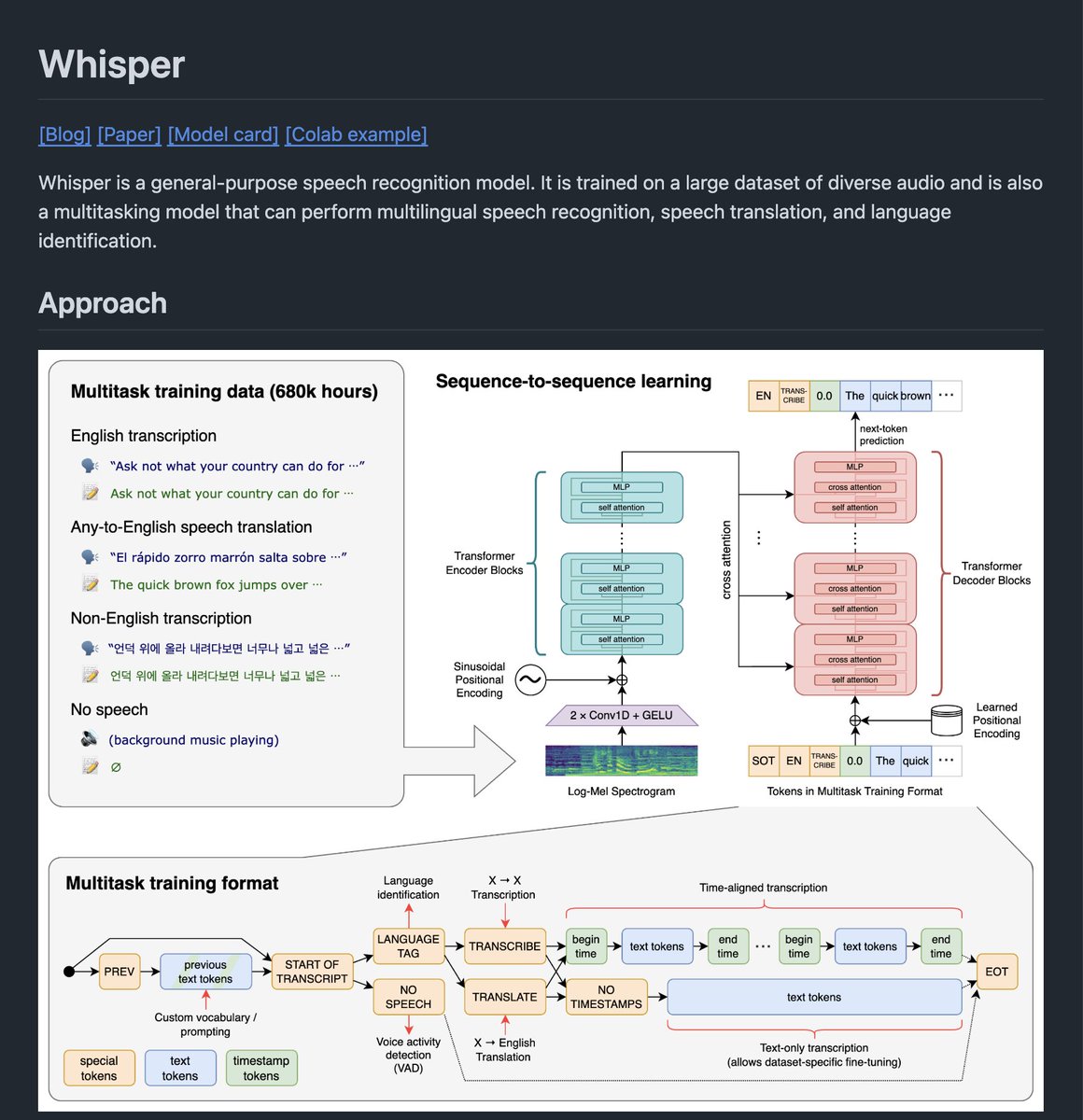
I'm trying to develop a learning repo where I am writing some stuff which feels important and also implementing the code related to things.
I’m a neuroscientist.
The healthiest brain isn’t the one with the most supplements.
It’s the one with the most high-quality inputs: light, movement, whole food, deep relationships, meaningful work.
The best prescriptions are often free.
Once you apply the principles of effective training to successfully upskill in one domain, you realize just how widely applicable those principles are. You can't unsee it. You get "Limitless"-pilled.
When you're in the right career field, you focus on outcomes, and the techniques to maximize outcomes are the ones that most uplift your soul. What makes you feel fulfilled is progress towards a goal, not the inherent pleasure of the task at hand.
Personally, the hardcore skills that changed my life were serious math/coding chops. Those skills pair really well with each other and pretty much anything else.
I don't claim those are the only hardcore skills, but I do claim they're at the top of the list for anyone who is at all quantitatively/technically inclined.
For those people, I think the perfect trifecta is combining math/coding chops with serious knowledge in some other domain. Bonus points if you're an interesting communicator.
The idea is:
domain knowledge --> identify a problem worth solving and understand what constitutes a solution
math/coding chops --> solve the problem
interesting communication --> make people aware of the solution
To be a real Human, one needs intelligence, courage, tenacity, curiosity, and a strong moral backbone. Remove any one of the five and you end up with the equivalent of a lemon.