SpaceXAI has become a major force for good in Memphis and surrounding communities.
• SpaceXAI’s expansion is projected to push local tax revenue above $100 million
• Employs almost 3,000 people locally in Memphis
• The Musk Foundation donated $350,000 to Boys & Girls Clubs of Greater Memphis
• Has paid tens of millions of dollars in property taxes to Memphis and Shelby County
• Spent $10 million in 2025 with Memphis restaurants and food vendors
• Starlink is also giving eligible Memphis-area residents half-price service.
• 80% of the construction workforce was hired from the Memphis community
• Hired thousands of subcontractors and works with local Memphis vendors/businesses
• Provides free meals around the clock for employees and contractors
• 25% of SpaceXAI property tax revenue is set aside for nearby communities
• Building an $80 million Colossus Water Recycling Plant. The plant is expected to treat around 13 million gallons of wastewater per day that will save about 4.745 billion gallons of potable water every year.
• Built electrical substations at no cost to MLGW
• Installed 240+ batteries for on-site energy storage and grid support
• Partnered with Memphis-Shelby County Schools on upgrades near its facilities
• MSCS accepted an in-kind Musk Foundation donation, previously reported around $6M, for school repairs and student support
• Removed major debris from local roads, including 300+ mattresses, 500 truck tires and 15,000+ lbs of waste
• SpaceXAI cleanup efforts have removed 100+ tons of garbage and debris
• Partnered with Mt. Vernon Baptist Church to support a new community center fundraiser
• SpaceXAI team members volunteered at Mid-South Food Bank and helped assemble 7,000 Christmas baskets
• Offers $25,000 signing bonuses for new hires relocating to Shelby County
• Offers $10,000 bonuses for workers moving to nearby Mississippi or Arkansas
SpaceXAI is not just building AI in Memphis.
It is investing in jobs, schools, infrastructure, cleanups, local businesses, families and the surrounding community.
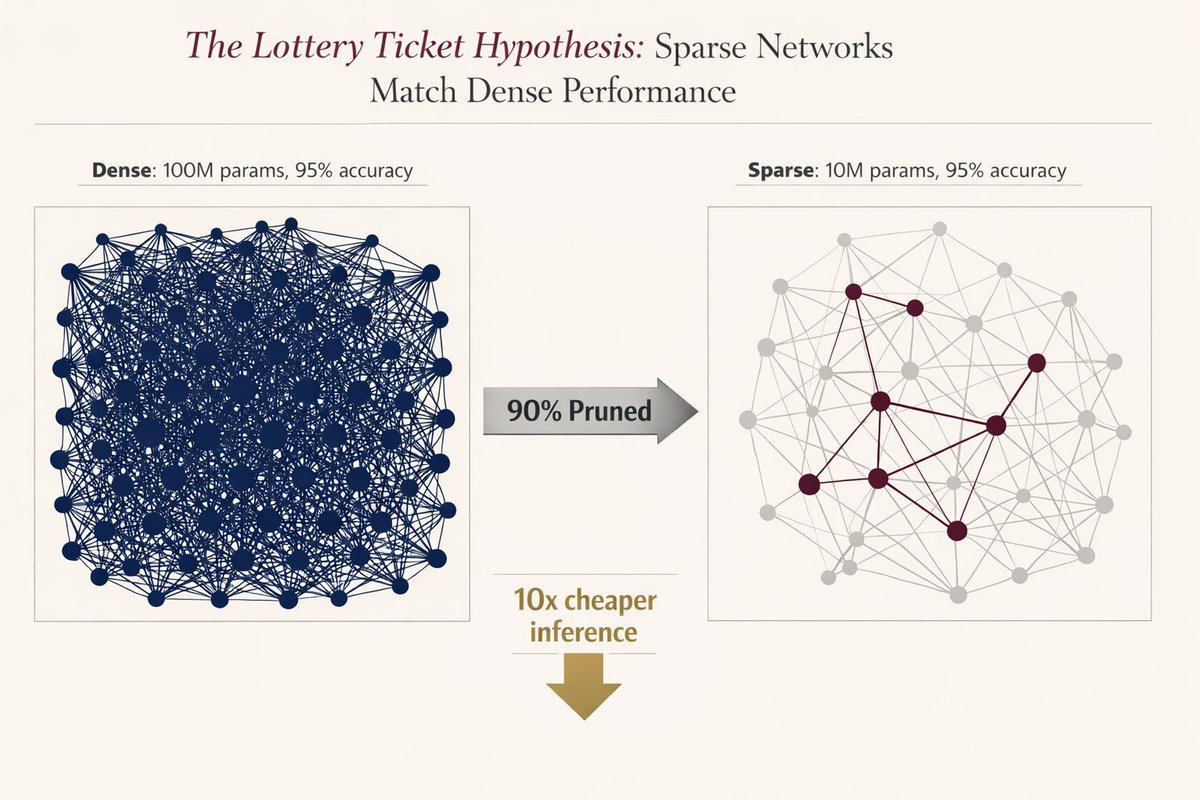
🚨 MIT proved you can delete 90% of a neural network without losing accuracy.
Researchers found that inside every massive model, there is a "winning ticket”, a tiny subnetwork that does all the heavy lifting.
They proved if you find it and reset it to its original state, it performs exactly like the giant version.
But there was a catch that killed adoption instantly..
you had to train the massive model first to find the ticket. nobody wanted to train twice just to deploy once. it was a cool academic flex, but useless for production.
The original 2018 paper was mind-blowing:
But today, after 8 years…
We finally have the silicon-level breakthrough we were waiting for: structured sparsity.
Modern GPUs (NVIDIA Ampere+) don’t just “simulate” pruning anymore.
They have native support for block sparsity (2:4 patterns) built directly into the hardware.
It’s not theoretical, it’s silicon-level acceleration.
The math is terrifyingly good: a 90% sparse network = 50% less memory bandwidth + 2× compute throughput. Real speed.. zero accuracy loss.
Three things just made this production-ready in 2026:
- pruning-aware training (you train sparse from day one)
- native support in pytorch 2.0 and the apple neural engine
- the realization that ai models are 90% redundant by design
Evolution over-parameterizes everything. We’re finally learning how to prune.
The era of bloated, inefficient models is officially over. The tooling finally caught up to the theory, and the winners are going to be the ones who stop paying for 90% of weights they don’t even need.
The future of AI is smaller, faster, and smarter.
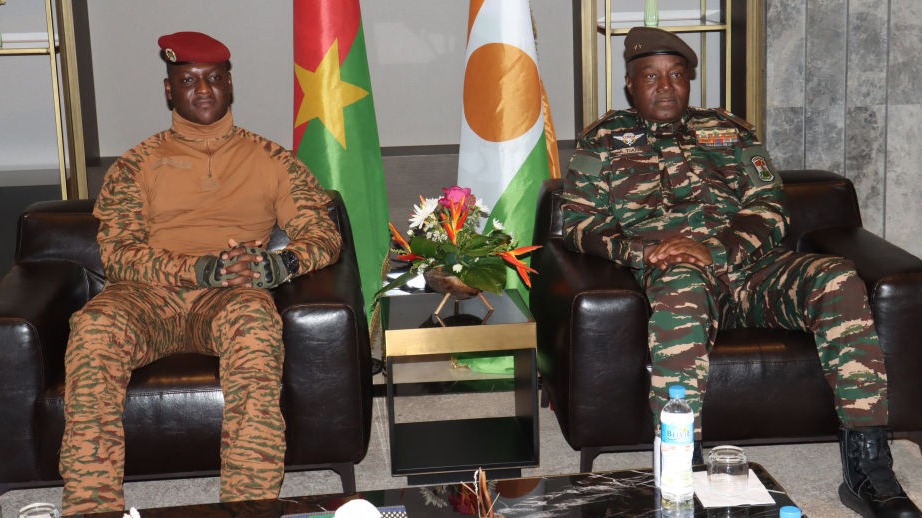
Alliance of Sahel States’ (AES) new Unified Force seeks to strengthen CT effortsAlliance of Sahel States’ (AES) new Unified Force seeks to strengthen CT effortsAlliance of Sahel States’ (AES) new Unified Force seeks to strengthen CT efforts.
Been avoiding posting pnl tweets but inspired by everyone's yearly pnl posts, goals and reviews I decided to post mine.
Approximately +7.4m on the year, which equates to roughly a 250% return on trading assets.
An insane year in terms of opportunity set. I benefited a lot this year from my multi strategy/market/timeframe approach. There was opportunity galore. I am very happy with the headline figure, but reality is that +1000% or even much higher was possible without a doubt.
My August drawdown that I tweeted about cost a lot in raw cost, but also in opportunity cost. Definitely a focus going forward to avoid this.
One goal I have been slowly working towards over the past few years has been to get comfortable holding more assets in my trading accounts, not leaning on keeping the account small as a crutch for poor risk management. Despite my large drawdown I was never at risk of blowing up this year, so really happy with my progression on this.
In terms of my actual trading a lot of skills that I built 2021-2024 really started to pay off and it kind of felt like I had a "base breakout". A lot of things felt like they came together nicely, coupled with the good market of course.
Going forward my focus will continue to be on big opportunities and how to maximize them. That said I also want to improve my consistency day-to-day/week-to-week. I would like to avoid the ugly equity curve I produced this year.
V2 "Cosmic" dataset will be used for Signals scores in rounds starting on or after Jan 1, 2025. Read more about this dataset on our forum: https://t.co/AhVDiycmmo
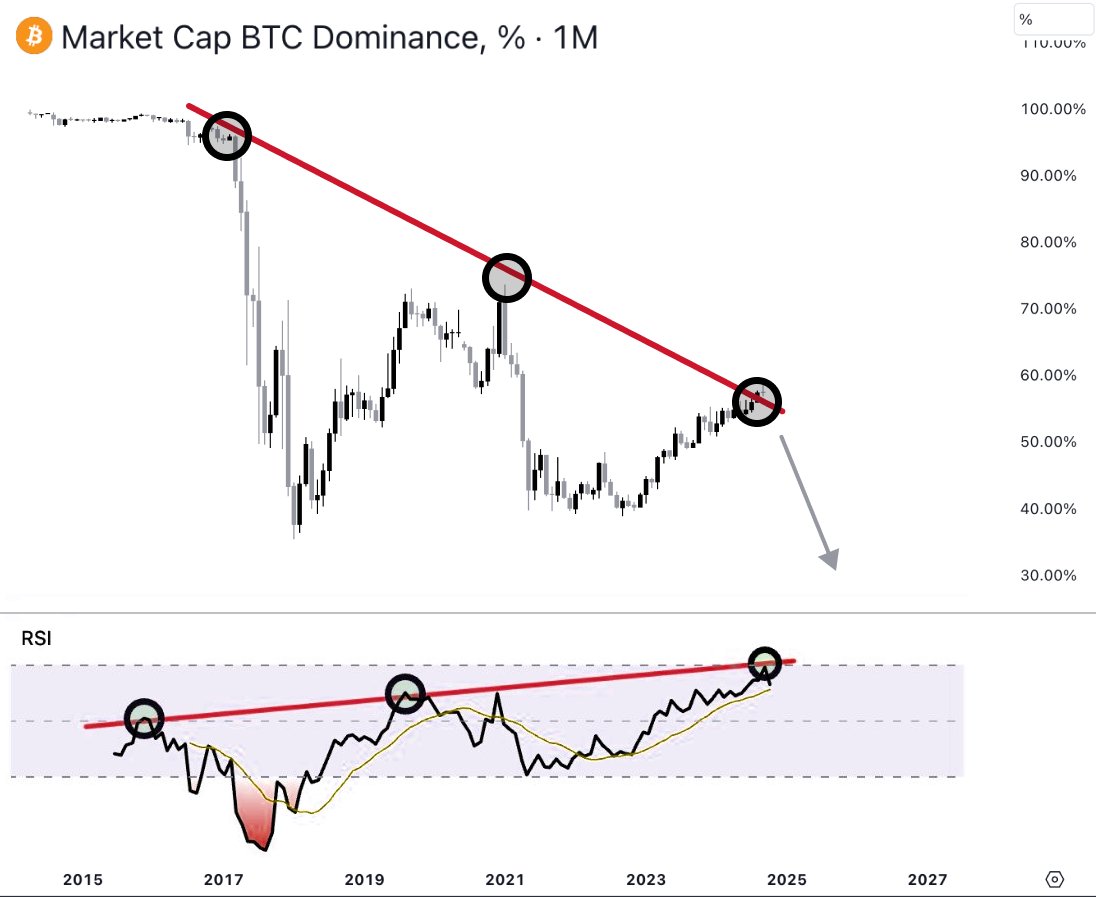
#crypto bull run cycle: BTC pump -> ETH + highcaps pump -> altszn
Altseason is just around the corner.
I’ve been through 2 altszns, turning <$1k into $5M+
50x–100x on ur entire portfolio is possible if you know how to play it right.
Here’s my playbook 🧵👇
I ACCIDENTALLY HACKED PUMPFUN
Pumpfun has infinite resources, analyzing memecoins 24/7
In 5 days, I connected the AI Bot to the Pumpfun API
And it bought $1 for 0.61 $SOL and hasn't sold yet (at 367x)
Here's how I did it without any skills 🧵👇
Amazing work by Numerai participant, jefferythewind.
"Following up on some exploratory work on simulating portfolios built from Numerai’s crypto meta model, I wanted to investigate a statistical risk factor model for the crypto market and apply the model to more realistic backtest of the TB100 portfolio."
Read more on our forum: https://t.co/O7MXnhf1DT
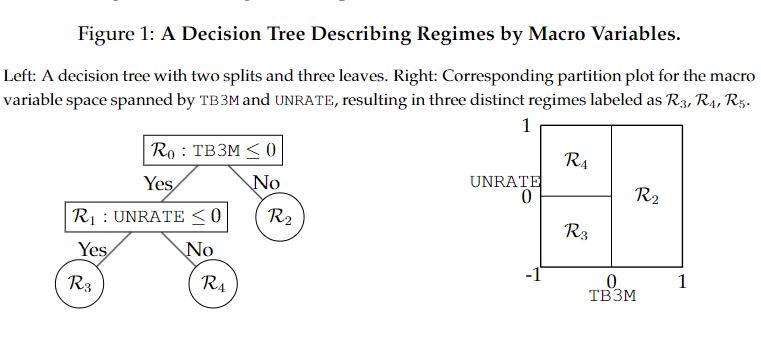
"A tree-based Bayesian regime-switching model... reveals strong evidence of regime changes in currency risk-return relationships determined by U.S. inflation and interest rates." https://t.co/R8XYpMjcQx
TWO VARIABLES TO GROWTH
1. How many hours you work
2. How effective those hours are
I’ve seen many put in the hours, but into work that was totally ineffective.
The work where you grow the most is often the emotionally difficult and draining deep work.
Part of what I emphasize with metalearning is that you need to put the time in to figure out where your time is most effectively spent.
Some periods it’ll be detailed trade writeups, other times backtesting, or developing edge. Other times working on sizing or risk management.
The people who go the furthest, like Lukas, excel so far bc they’re maxing out on both: they’re putting in an unmatched amount of effort in the right places due to planning / self-awareness.
Early in my career I grinded long hours and weekends. Especially as you get older and later in your career, you tend to grind less and it becomes even more important to make sure those hours are going into the right spots.
Even though I trade part-time at best, I’m still able to put up 8-figure years bc the hours I put in are incredibly focused and high ROI w systems / trading pods in place to support me.
A big shoutout to @HashKeyGroup for believing in our vision. 🙌
Dive into the future of #AI with us at @aon_aonet. 🌟
Here's to new ventures! 🪩
https://t.co/8HozjRDaPS