I’ve been building Nilearn to make neuroimaging + ML both approachable and powerful. Since my first GitHub drops, it’s evolved fast.
Here’s a quick tour of what it can do and what I built into it
https://t.co/zMPuvsuVGz
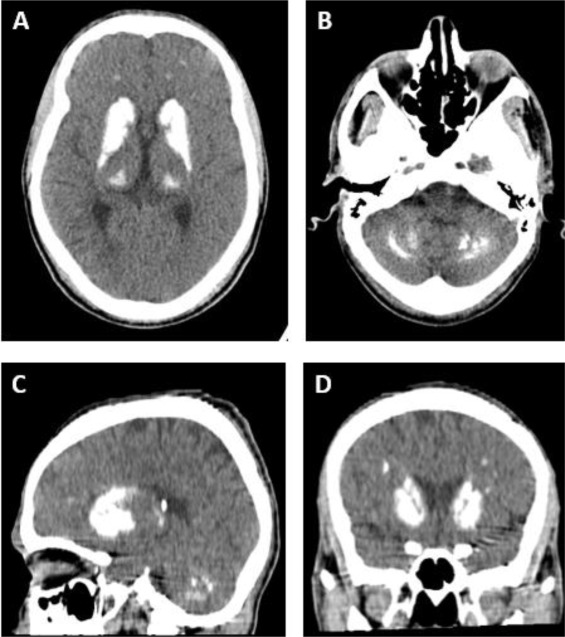
🤵♂️47-year-old man presents with generalized weakness and fatigue. No prior neurologic or psychiatric history. Currently receiving chemotherapy for hepatocellular carcinoma. Brain imaging was performed to exclude acute pathology.
🧠👀Any thoughts?
Curious how these connectomes change with age, disease, or behavior?
Once signals are extracted, you can feed them into ML models, statistical tests, or clustering. Let’s connect brain patterns to real outcomes
Pro tip: If you skip confound regression, the correlation matrix becomes overly dense — every region seems connected.
That’s why preprocessing matters.
Bonus: Nilearn lets you flexibly load confounds from fMRIPrep outputs using load confounds, following best practices.
Neuroimaging isn’t just pictures it’s data you can analyze.
With nilearn, you can extract meaningful time series from a brain parcellation and build functional connectivity maps in Python.
Step 1:
Load a predefined brain atlas and fMRI data.
A parcellation divides the brain into regions so you can summarize activity by region instead of raw voxels.
The neuroscientist Jaak Panksepp wrote that loving social bonds are a primal form of addiction, and the brain signals the lack of these bonds via the feeling of depression
when you're depressed, you're actually in withdrawal from love
Important paper, also for adults who “enjoy” stimulants. A new class of actual focus enhancing stimulants is emerging too— and they seem to enhance REM duration that night. Most are for narcolepsy and no, not Modafinil. 2026 is going to be a banner year for Rx stimulants.
After analyzing 500+ anxious clients, I found the cause behind most chronic anxiety loops.
It’s not trauma, stress, or overthinking.
It’s a SINGLE morning habit almost everyone does without realizing it... 🧵
(And, the psychological cost is staggering)
Being in nature reduces fatigue and boosts attention.
34 experiments: After walking, playing, and learning in parks, forests, or water, kids & teens show better focus and self-control.
Not all outdoor time is equal. Green and blue spaces are more refreshing than urban settings.