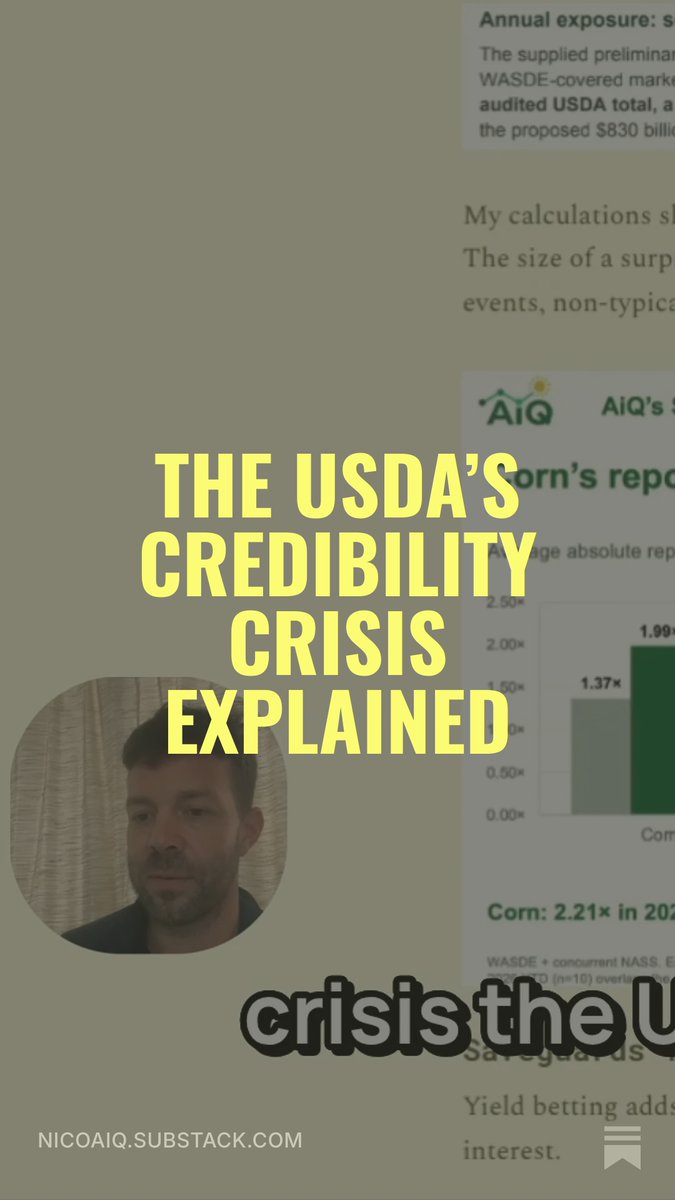
Please share these, taxpayers are owed answers to very straightforward questions that the public has no insight into by design.
The USDA has been making changes, and I have provided them data, feedback, and questions. They quietly made changes I suggested in the November WASDE, and seem to hope people will forget and move on.
Their discretionary decisions drive over $1 trillion (my estimate) in report exposure annually and is intentionally hidden from the public.
https://t.co/PuNbkE2CcG
If one knew there would be a significant adjustment to ending stocks, let's assume USDA leadership is extremely intelligent, then you would know where prices should go in the weeks ahead.
The signal gets much stronger with back-to-back adjustments.
Read the weekly note, I'll keep pulling on the threads until the truth unravels.
https://t.co/UaYu3HzGlr
"The committee can provide more transparency or keep deflecting in public. I’ll keep making it clear that there is no hiding once the common knowledge is out in the open.
The emperor doesn’t get his clothes back."
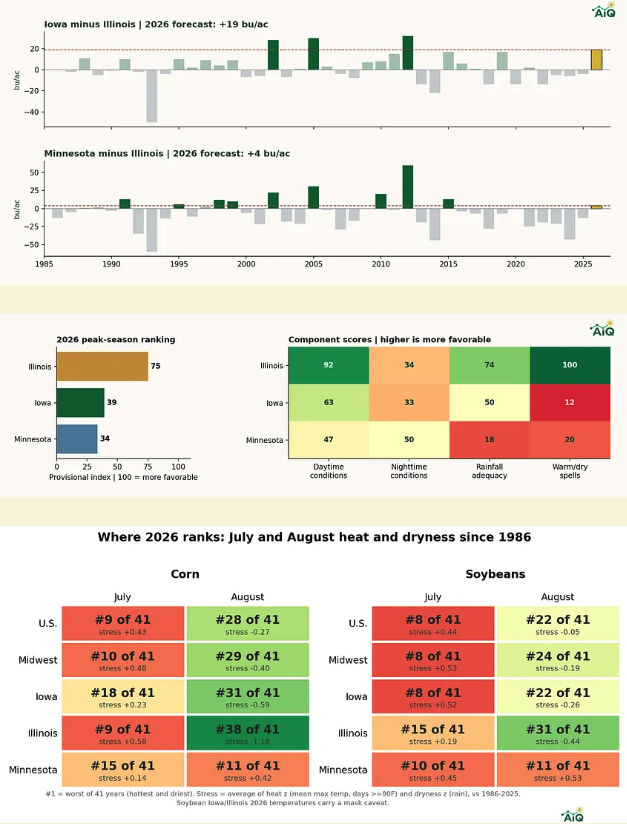
@farmdocDaily@usda_nass It appears increasingly likely that NASS' discretionary interpretations played a role in these yield swings, and explains the growing credibility crisis facing the agency.
Take a look at how the administration has impacted beef supply.
https://t.co/jmYvWXoyy7
@Grain_Cycles This is not a debate. no. NOOO
Entire sectors do not self-immolate w/out a catalyst, just like entire sectors don’t spontaneously rally in zero sum futures.
USDA’s leadership has been “a” or “the” critical catalyst, & I’m not done rolling out evidence.
Stay tuned✌🏻
@Grain_Cycles I am attributing a catalyst. There were others, and I specifically cited positioning.
It is the behavior of the usda officials and Secretary Rollins, along with the data that is evidence this was even more abnormal.
Please sir, the year is not 1996, bring me facts and data.
Ironically, one of the all-time boomerangs will be the attempts of the USDA to hide behind "new AI implementation" to suggest the private sector should just trust them, and the first point AI makes is that it's discretionary, so we obviously can't trust it. lmao
https://t.co/UaYu3HzGlr
Please share these, taxpayers are owed answers to very straightforward questions that the public has no insight into by design.
The USDA has been making changes, and I have provided them data, feedback, and questions. They quietly made changes I suggested in the November WASDE, and seem to hope people will forget and move on.
Their discretionary decisions drive over $1 trillion (my estimate) in report exposure annually and is intentionally hidden from the public.
https://t.co/PuNbkE2CcG
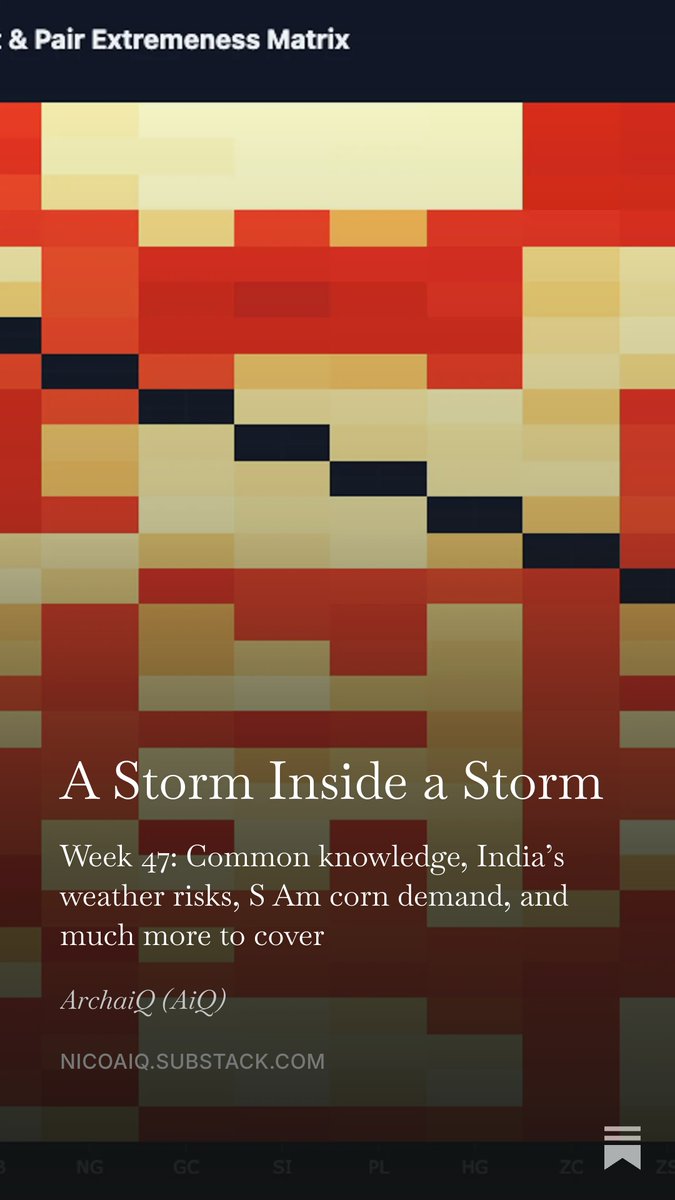
Overview of the week 47 topics:
-You’re welcome: Why I’m making the USDA’s secrecy a common knowledge problem.
-Commodities get dragged back into the storm.
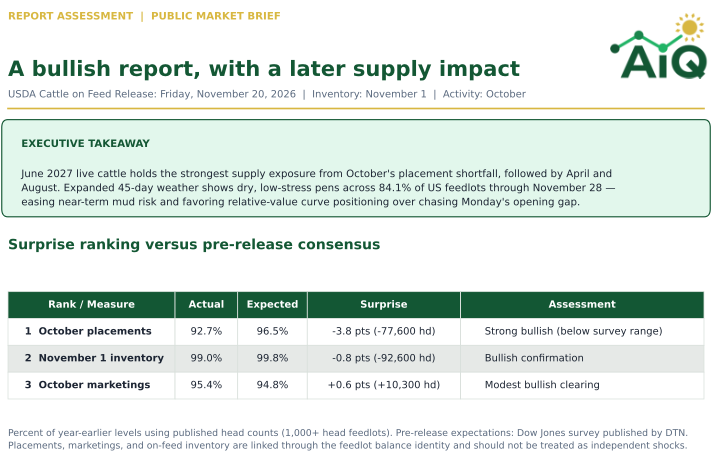
-Cattle on Feed: Are we back? Tell me we’re back!
What is it about cattle that attracts giant Ponzi schemes?
-Why India’s risks are severely underpriced in 2027.
-South American corn demand is soaring.
-Fast money pukes precious metals. Is it too much?
Another friendly report, and for the most part, cattle have been one of the few commodities to avoid getting to caught up in the commodity storm (next post).
We know they move markets. They know they move markets. They know that I know. They now know that all of you know.
Tomorrow's note will cover a bit more.
Objectively, one would be dumb or lying to argue they're not away of the influence the ASB can have on prices.
@BohlingMatt@BradyD78@ISU145 Watching both sides start to figure out these people aren’t on their sides, and they’re policies are placating to ensure nothing changes, is like watching a child’s eyes light up as it takes its first steps.
We know they move markets. They know they move markets. They know that I know. They now know that all of you know.
Tomorrow's note will cover a bit more.
Objectively, one would be dumb or lying to argue they're not away of the influence the ASB can have on prices.