Incoming data increasingly suggest that the energy price shock is feeding into broader inflation developments, Executive Board member @Isabel_Schnabel tells @Reuters. Given the size and persistence of the shock, looking through is no longer an option.
https://t.co/8Li4mA2AXy
@ollirehn "Do I need to remind us that the ECB’s two subsequent rate hikes of spring 2011 were reversed in November and December 2011?"
https://t.co/vDGhORMnwq
« Chinese imports to the euro zone are up by 27% in volume terms since the start of 2024, with prices down by 8%, Panetta said, adding that this was driving down the price of goods exposed to Chinese competition »
https://t.co/DlEgDjJY9t
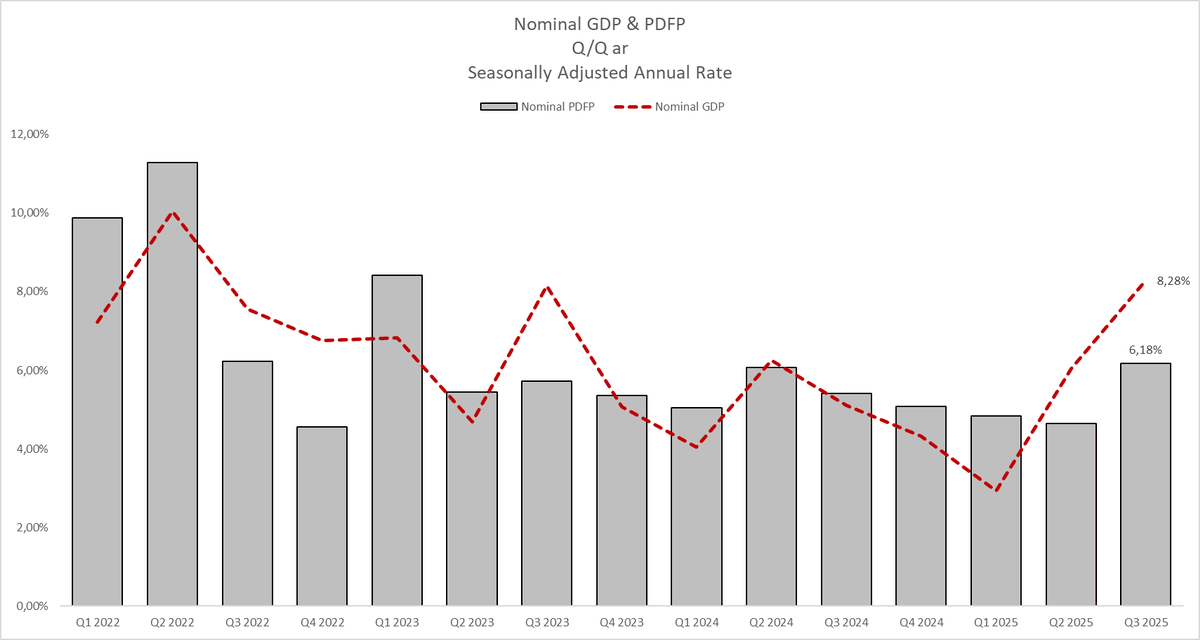
"The Federal Reserve has cut rates only a handful of times when nominal growth was greater than 8 per cent and most of those instances were in the 1970s." Richard Bernstein @RBAdvisors in the FT https://t.co/vzNnkKmGpY
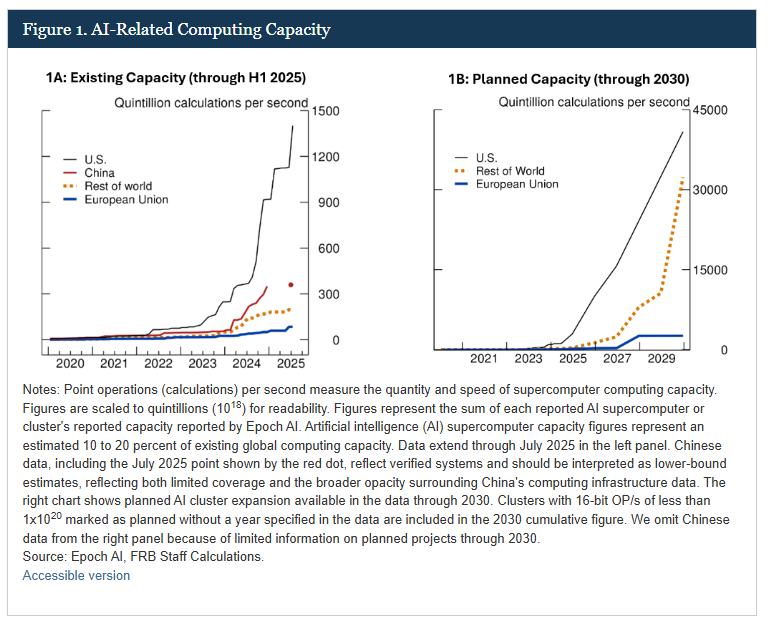
The Global Trade Effects of the AI Infrastructure Boom
"The U.S. leads globally in terms of the AI infrastructure build-out and planned investments, followed by China, with other economies, notably Europe, lagging"
https://t.co/kM772zxdaO
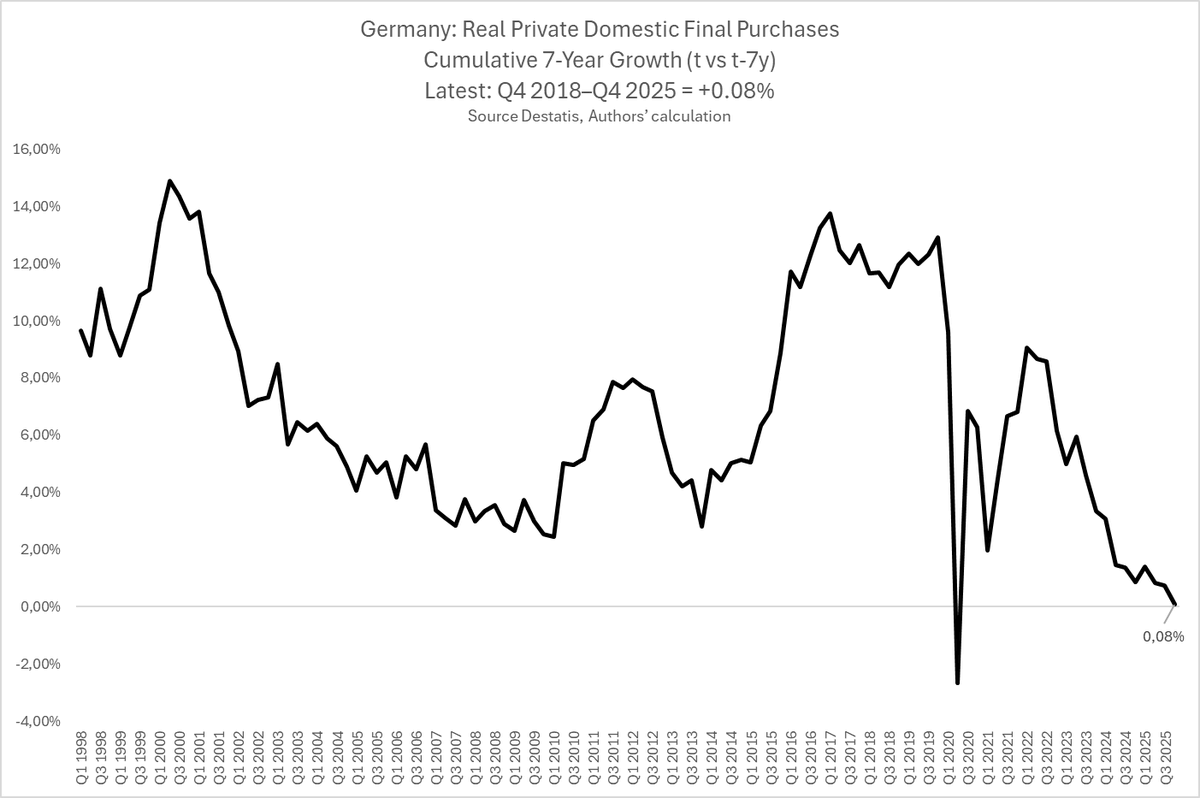
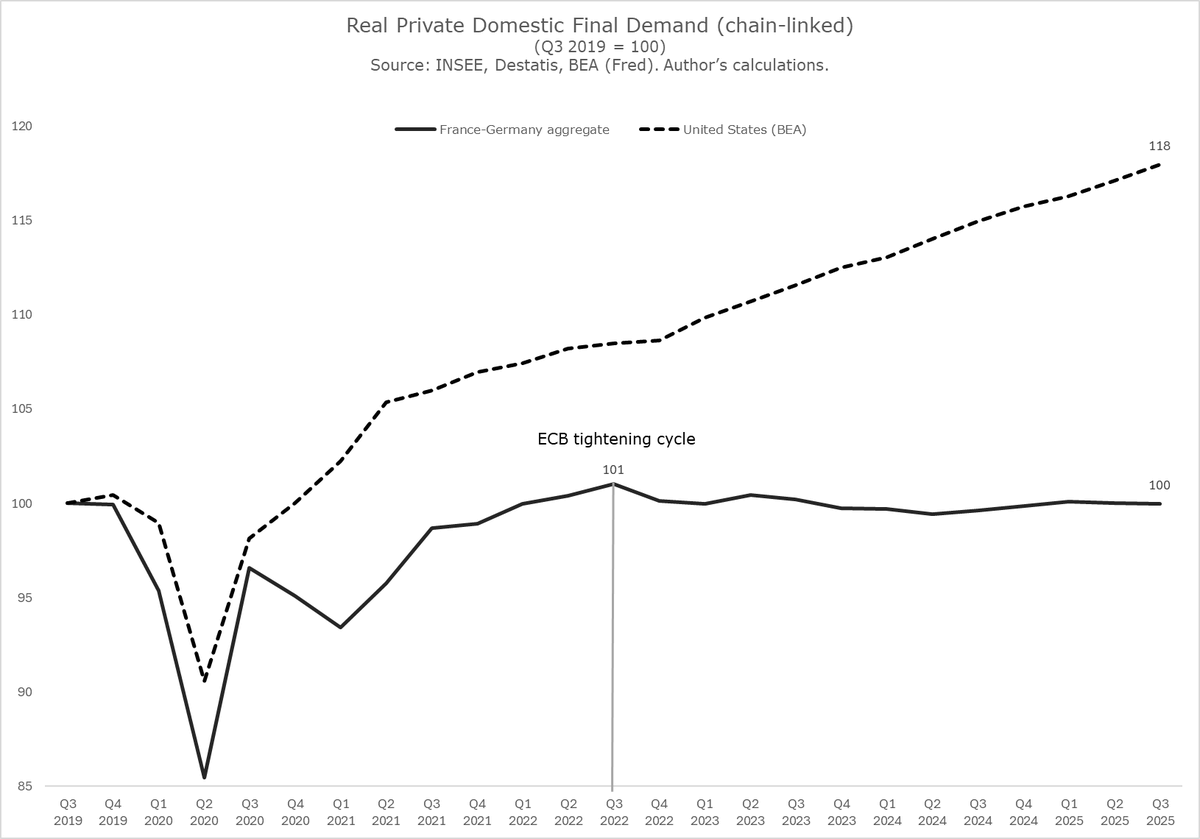
Weak private demand is the core problem—tied to weak productivity (Draghi). Strip out the noise (Ireland’s MNE distortions, NGEU one-offs) and focus on the core euro area (FR+DE): the ECB tightening cycle is hard to miss. Core private domestic demand is the adjustment margin.
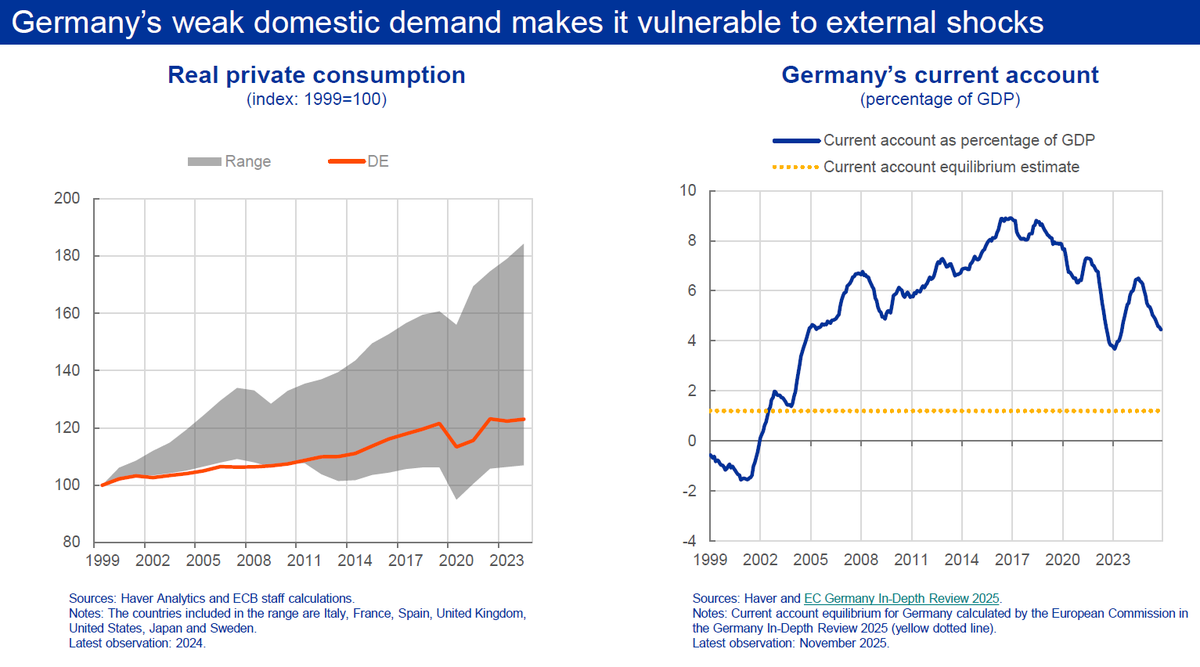
The key shortfall is a sustained weakness in domestic demand. Since 1999 real private consumption in Germany has grown by less than 1% per year. Domestic investment remained subdued as well. This is mirrored in the sharp rise in Germany’s current account surplus. 15/20
@fipaddict Si vous regardez les projections BDF, vous verrez que les anticipations du taux 10 ans reste ancrées au dessus de la croissance nominale sur tout l’horizon. Effet boule de neige constant.
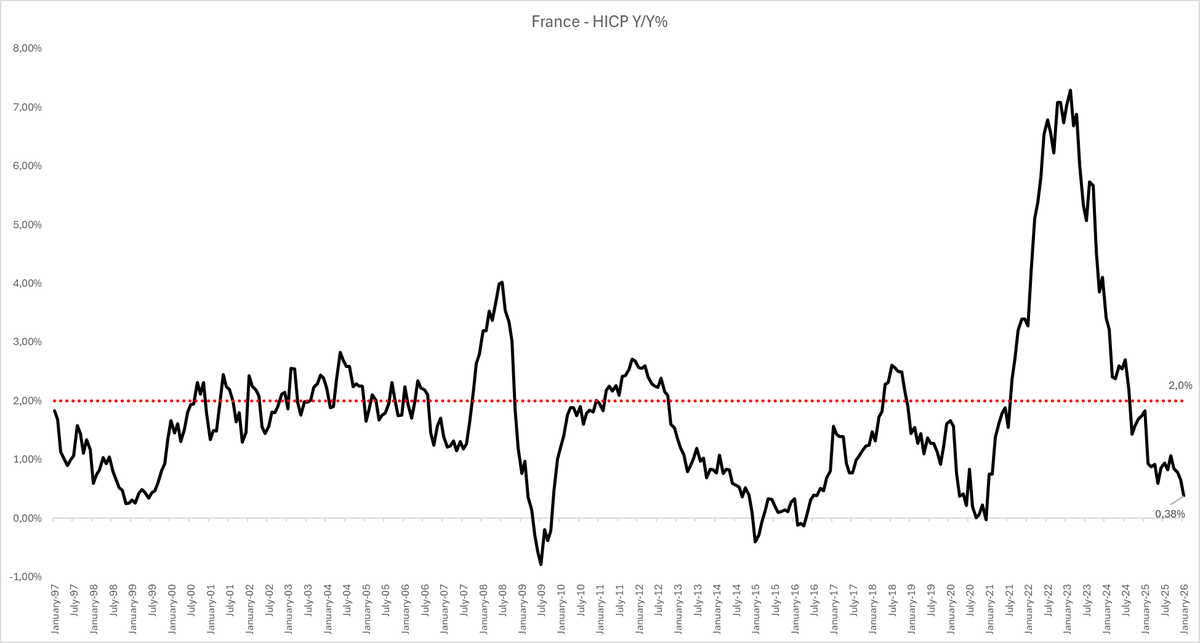
L'inflation en France continue de s'effondrer... divisée par 2 en 3 mois ! HICP est passé de +0,8% YoY en novembre à +0,4% YoY en janvier (1ère estimation)
The day wouldn't be complete without another profound & insightful Kevin Warsh commentary. All kidding aside, Warsh's life is going to be very complicated and not just because of Trump.👇👇👇
https://t.co/uURVdiKpcT
New episode! Scott Sumner on Monetary Policy Confusion in Our Current Policy Debates
Scott lays out for @DavidBeckworth why people have been reversing the cause and effect of the eurozone crisis.
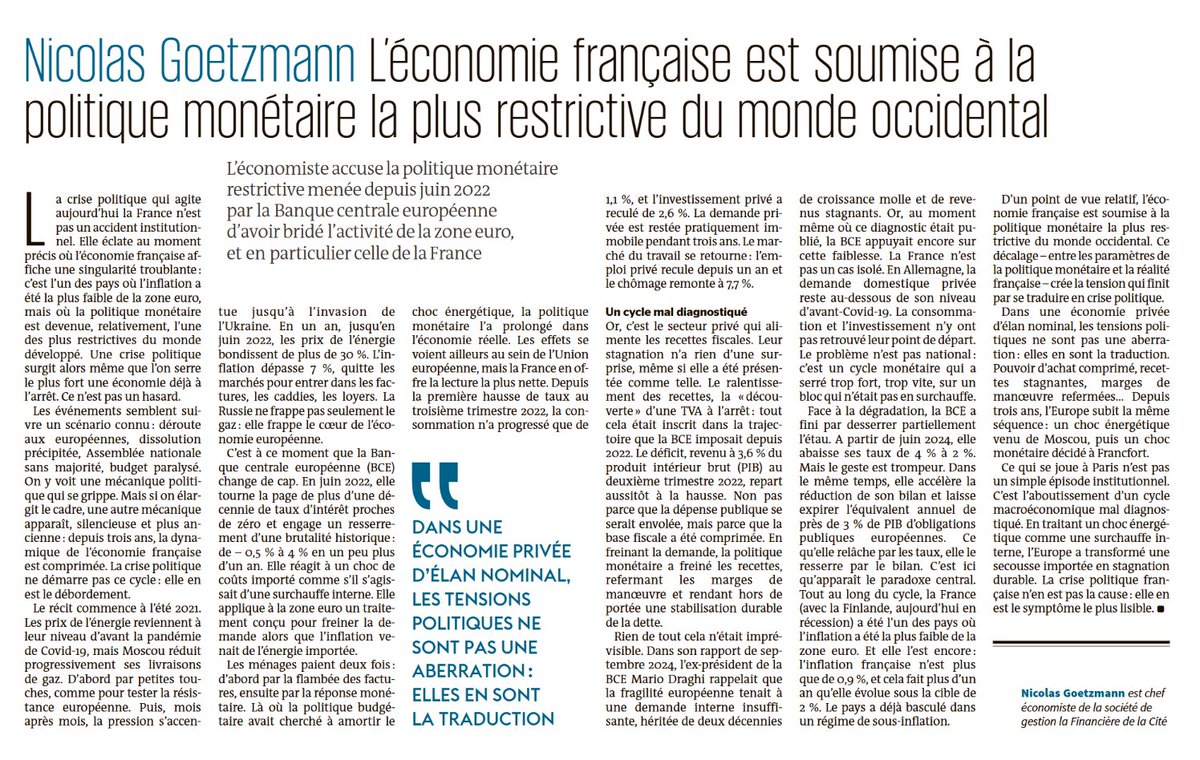
#Germany's attitude gives the impression that competition is no longer with #China, but within the eurozone itself: relative advantage is being built up vis-à-vis European partners, not vis-à-vis Beijing - @NicolasGoetzman op-ed @LesEchos
https://t.co/sBJExIO932