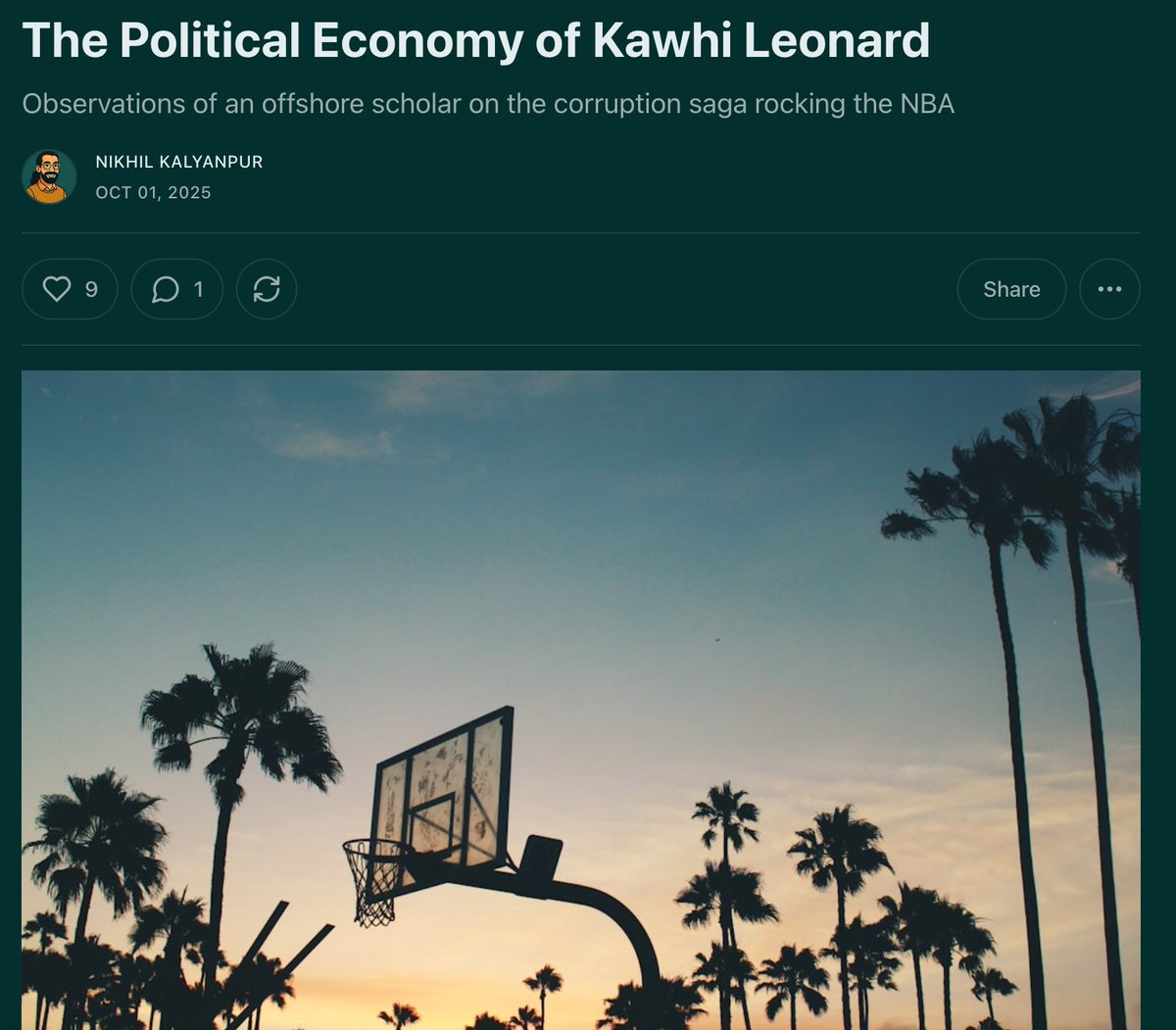
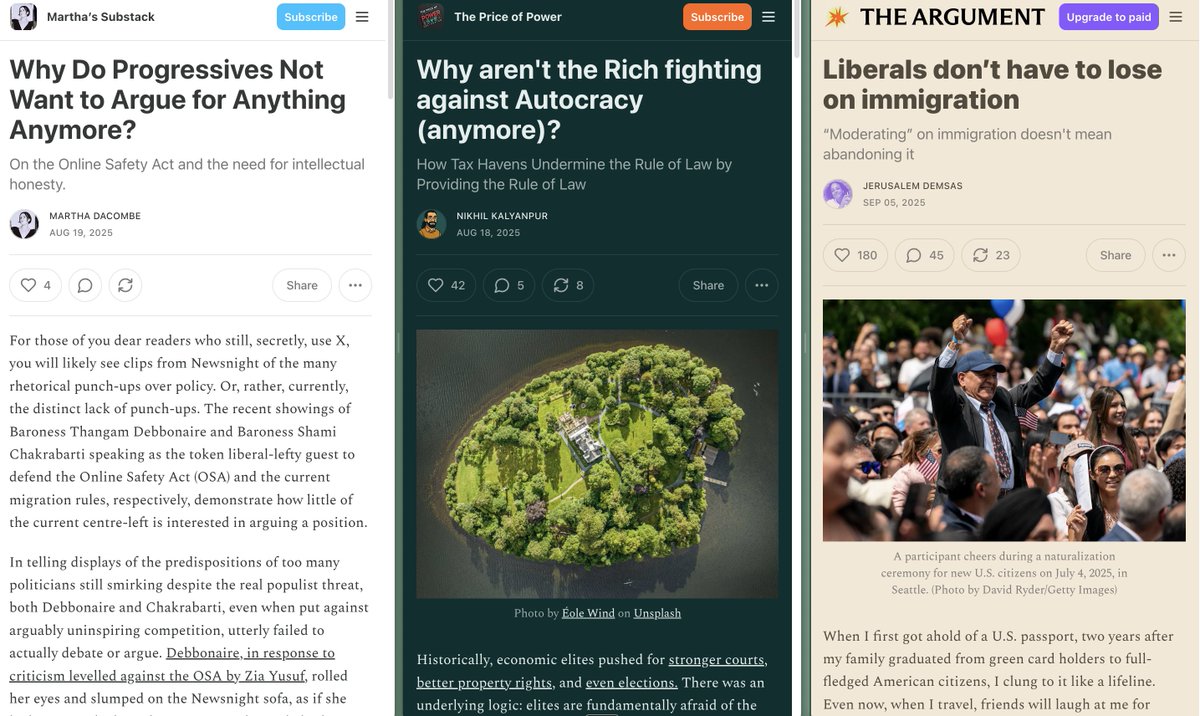
Two substacks that have become indispensable reading for me are @cornelban on Geoeconomics: https://t.co/AwAaJGTwiB
and @NikKalyanpur on https://t.co/L5Lw0UB8tb
Subscribe to both and cut through the BS
🚨
/15/ Europe in Palestine –– A Dispatch from the Gaza Flotilla
David Adler (@davidrkadler) reports from the Global Sumud Flotilla (@gbsumudflotilla) heading towards Gaza bearing humanitarian aid.
Just days after the flotilla's mother ship was attacked by a drone in Tunis harbour, the gang talks about why most European states have so committed themselves to participating in Israel's campaign of genocide and ethnic cleansing: is it the inability or unwillingness of an elite overcommitted to Atlanticism to formulate foreign policy without the United States? Or fear of US-Israeli coercion through the tech-security nexus? Is it the flailing political centre pandering to right populists at home? Or is there a simpler ideological explanation?
🔗
"the offshore world is not exotic. It’s boring and propped up by the most powerful economies on earth. Increasingly, they’re the ones acting like the “islands.”" "It’s become banal. And that’s what makes it so durable." ~ @NikKalyanpur https://t.co/bIOKnK7BUe
amid the ongoing cultural vibe shift, thinking a lot about how much 'postliberalism' is right philosophically vs pragmatically -- big risk of overcorrecting if it's the latter
to that end, three pieces I liked on the importance of argument itself:
Very sharp essay by @NikKalyanpur on how “…offshore finance allows elites to insulate themselves from the risks of weak governance without having to fix it themselves.” Link below.
Why are minerals so central to geopolitics? How green are electric cars? Why is anti-mining protest increasing? Can the inequalities of the global economy be transformed?
I tackle these topics in my book EXTRACTION: The Frontiers of Green Capitalism
👀 September 2025 @wwnorton
New working paper with @NikKalyanpur and @berliner_dan‼️
Activists use transparency ("leaks") to try to dismantle the opaque offshore world. Does this work?
We identify a new effect of offshore leaks: they encourage stronger private governance in the financial sector. 1/
Excited to be chairing this timely & important panel feat. @ProfKMcNamara, @aiaevans, @lizingleson, and @loyaladvisor. Please join us in person at LSE on 24 Oct, 18:30-20:00, for "The End of Free Markets? Economic Statecraft in the Age of Geopolitics."
https://t.co/M2vWc62Pdl
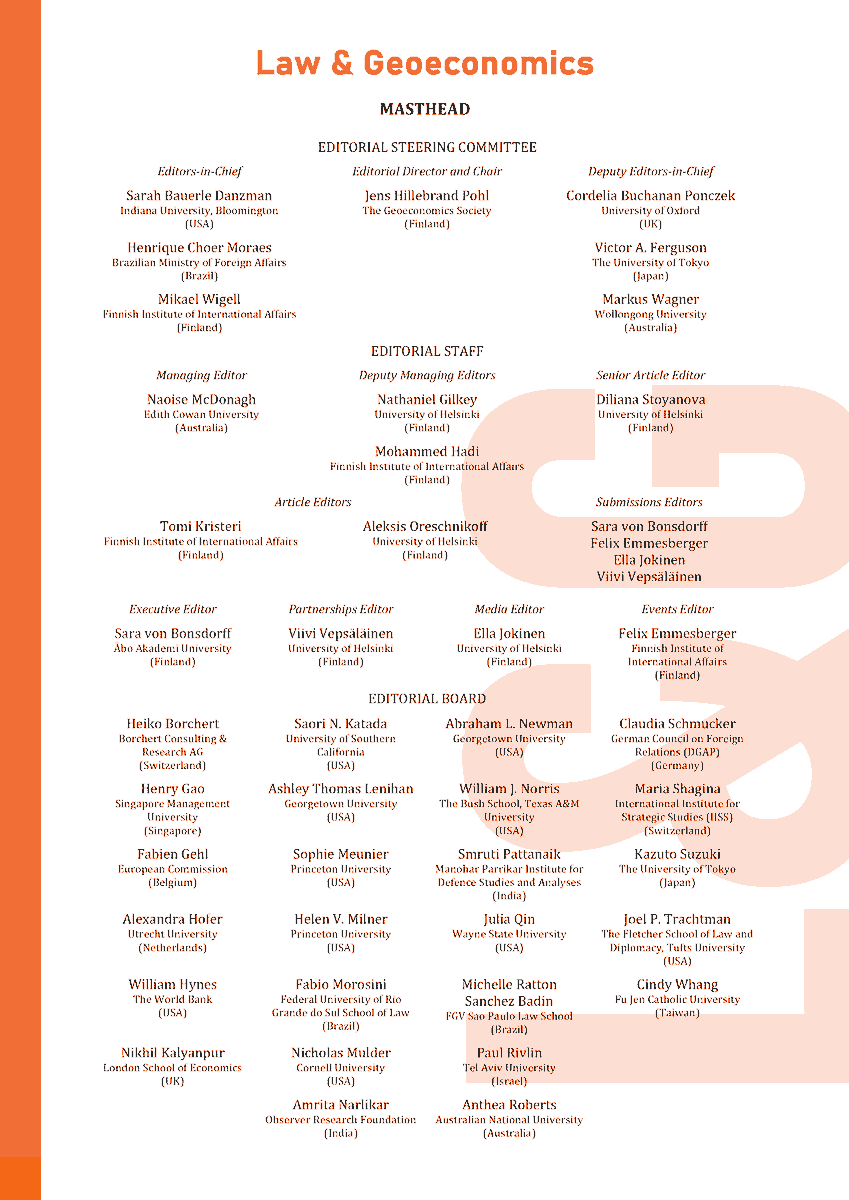
𝗜𝗻𝘁𝗿𝗼𝗱𝘂𝗰𝗶𝗻𝗴 𝘁𝗵𝗲 𝗠𝗮𝘀𝘁𝗵𝗲𝗮𝗱 𝗼𝗳 𝙇𝙖𝙬 & 𝙂𝙚𝙤𝙚𝙘𝙤𝙣𝙤𝙢𝙞𝙘𝙨, 𝗩𝗼𝗹𝘂𝗺𝗲 𝟭 || We are excited to introduce the editorial team of Law & Geoeconomics (L&G), a new double-blind peer-reviewed journal published by @degruyterbrill with its first issue to be released in 2025. #geoeconomics
OFFICIAL LAUNCH || The @geoec_society and the Helsinki Initiative on Law & Geoeconomics are pleased to announce the official launch of the new peer-reviewed journal 𝑳𝒂𝒘 & 𝑮𝒆𝒐𝒆𝒄𝒐𝒏𝒐𝒎𝒊𝒄𝒔 (L&G), published by @degruyter_brill. Join the Editorial Board at the official launch event in San Francisco on April 5th, 2024 online or in person (by invitation only).
#lawandgeoeconomics
In what ways are the networks that knit us together also powerful coercive tools, from fiber optic cables to the financial system?
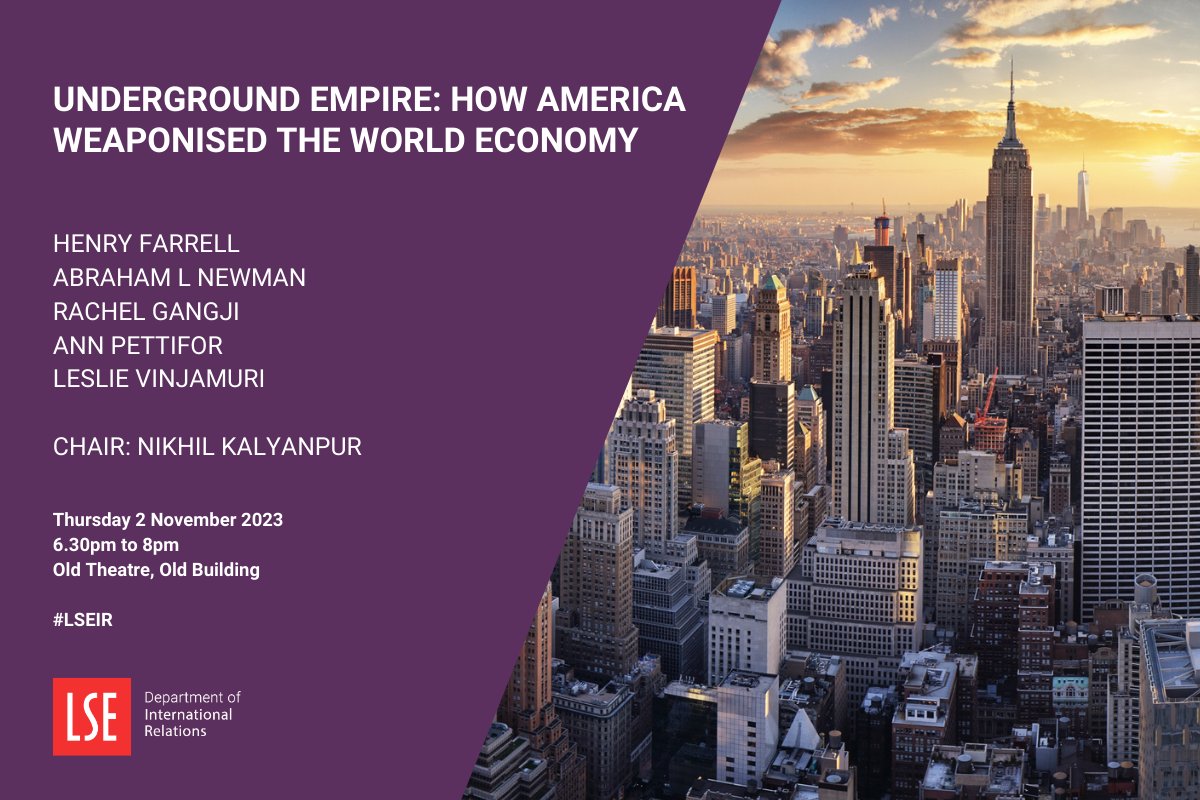
Join Leslie Vinjamuri @ChathamHouse, Rachel Gangji, @AnnPettifor, and @NikKalyanpur- and @henryfarrell & Abraham L. Newman for their book launch!
📢 Join us Thurs 2 Nov, for Abraham Newman and @henryfarrell's book launch, with @AnnPettifor, @londonvinjamuri, Rachel Gangji and @NikKalyanpur!
They'll discuss the weaponization of the global economy & the sustainability of these tactics.
ℹ️ https://t.co/xE3i2iNSFV
Authoritarians have learned how to take advantage of the institutions underpinning globalization for their own illiberal ends.
@LSEIRDept@NikKalyanpur argues in his new journal article.
Read here 🔽
https://t.co/pMQyAasPJ4