For large-scale institutions, such as central banks, security remains as critical as ever. In this context, we strongly believe that @axelar's pioneering technology provides the definitive answer to the security question through its permissionless, hub-and-spoke system.
Ripple is officially recommending the withdrawal of the XChainBridge amendment (XLS-38). With Axelar successfully handling the EVM Sidechain and a lack of broader developer demand, dropping XLS-38 will remove over 10,000 lines of inactive code. Read the full reasoning here 👇
The recent Cosmos EVM vulnerability does not affect Axelar. Axelar is built on the Cosmos SDK, but does not run the cosmos/evm module, share code with it, or embed an EVM execution environment. No action is required from Axelar users.
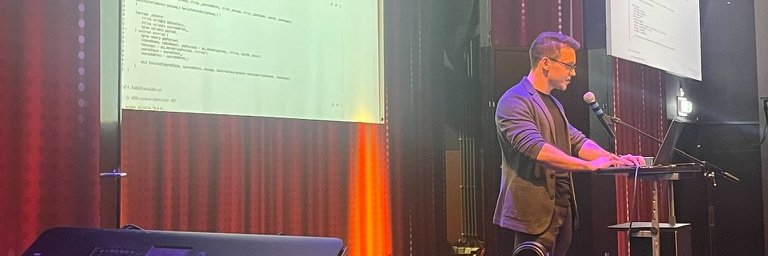
If you’re attending @CryptoCanal next week, catch Common Prefix’s Odysseas Sofikitis presenting “Zenith: Zano’s Path to Pure Proof of Stake.”
📅 September 4 · 13:50–14:10
📍 De Hallen Studio, Amsterdam
Event schedule: https://t.co/Cef4wsE8vl
Cosmos has faced many attacks in the past few months, not least because of AI-assisted attackers.
We encourage the Cosmos ecosystem zones to be extra diligent, apply security updates often, and follow best practices with respect to on-call and SLAs. These will be paramount as AI-assisted attackers expand.
One of our strategies for defense at Common Prefix has been to explore the use of provable security with formal verification. Using the cryptographic methodology, one can prove that no attack is possible, even attacks we have not yet imagined.
Of course, this requires a correct specification of model and assumptions. We hope this method will become more popular as AI agents help lift the burden of writing complex formally verified proofs.
$AXL is now live on Axelar App.
The native utility token that powers the Axelar network can now be bridged across 16 EVM chains, directly on https://t.co/BRxKMQNF4L.
Axelar v1.5.3 is now available.
The release brings CPU and memory improvements to full nodes and validators, allowing for roughly 4x faster catch-up.
It migrates the network to cosmos-sdk v0.53, that carries the latest security updates, alongside a number of our own, introduced in response to the rise in AI-driven attacks.
Also included in this version is the authz module, enabling scoped, revocable permissions such as delegating governance voting to a separate key.
Validators and node operators should upgrade soon to ensure continuity.
Interoperability is entering a different phase.
Connecting two chains was the first step.
The bigger challenge is building infrastructure that can connect entire financial ecosystems while meeting higher standards of security, robustness and reliability.
That is the direction @axelar is pushing in 2026:
from connected networks → to institutional-grade interoperability. 🌐
Not isolated systems.
Not another collection of bridges.
Infrastructure designed to let institutions, assets and applications operate across multiple networks without forcing everything onto one chain.
The multichain future needs more than connections.
It needs a backbone.
#Axelar #Interoperability #validator ethereum:0x467719ad09025fcc6cf6f8311755809d45a5e5f3
$SOL is now available on the XRP Ledger, issued by Axelar, expanding cross-chain liquidity between Solana and the XRP Ledger.
XRPL users can access SOL directly from their XRPL DEX platform of choice.
👥Concentration of @axelar User Activity in the Competitive DeFi Landscape
The Pareto chart shows that transaction activity among users of @axelar’s crosschain services is concentrated in the hands of a relatively small minority. Just 4.09% of users account for 50% of all transactions, while 32.26% of users generate 80% of total activity. Reaching 95% of activity, however, requires the participation of 80.35% of users, indicating a long tail of users with relatively low transaction activity.📊
The Lorenz curve confirms the same pattern from an inequality perspective: a Gini coefficient of 0.658 falls within the "high inequality" range, suggesting that a large share of users (roughly 60–70%) contributes only a small fraction of the total activity.📋
However, this level of concentration is not an anomaly; rather, it is a common pattern across the crypto and DeFi ecosystems.✅
Comparisons with similar metrics indicate that most DeFi protocols exhibit Gini coefficients between 0.85 and 0.95. MakerDAO (@SkyEcosystem) transactions, for example, have recorded a Gini coefficient of 0.921, while even developer participation in protocols such as @LidoFinance has shown a Gini coefficient of around 0.82.
Against this backdrop, @axelar's 0.658 actually represents a relatively more balanced distribution compared with the broader crypto industry.👌
🔎Based on the architectural structure and usage patterns of @axelar's competitors, it can be said that:
Chainlink CCIP, with its strong focus on institutional use cases, is likely to exhibit the highest level of concentration. LayerZero, with a significant share of its transaction activity flowing through a relatively small number of major applications such as Stargate, is likely to show a level of concentration comparable to or even higher than @axelar. Wormhole, with a combination of retail users and institutional flows, likely falls somewhere in the middle of this spectrum.
💡Ultimately, concentration of activity among a small group of users can be interpreted in two ways:
"It may be a sign of ecosystem health, reflecting strong loyalty among key users and high value activity, but it can also represent a structural risk, indicating dependence on a limited number of major participants."
Axelar Data: https://t.co/xPvYM7Y5pi
Xaman Swap opens the whole XRPL to you.
Any asset on the XRPL, tradable for any other: $RLUSD, $USDC, $XRP, $SOL (Axelar), and the entire long tail.
Our smart routing is built to find you a better outcome than the default paths.
Xaman Swap gets our users the best outcome.