A short little early-development gameplay trailer for my endless highway game Driving At Night. Everything you see is being generated procedurally based on the music in real time. Supports local files, Spotify, YouTube, or anything else that can play audio on a computer.
@Nition@pangram I wrote this article on June 28, 2019. It was published on a forum, but that forum is no longer active. Therefore, I am providing you with a link from web.archive.
https://t.co/dm9eCtS8oM
I'm offering a USD$500 reward to the first person who can present pre-2020 human-written text that the latest version of @pangram flags as AI.
The specific requirements to claim the reward are:
1. At least 750 consecutive words.
2. Pangram flags it as 75% or more AI generated.
3. You provide proof that the text was first written in 2019 or earlier and is unmodified.
4. The text was ostensibly human written. This requirement only exists to avoid trick answers like output from GPT-2, machine translation, markov chains, the same word 500 times etc.
Regarding requirement #3, unfortunately in 2026 there's no way to prove that new text wasn't AI generated, so what I need provided is proof that the text existed in 2019 or earlier, before AI writing got so good. For example, valid proof might be:
- A link to the text on a website that's been logged by the Internet Archive's Wayback Machine before 2020.
- A link to a paper published on a third party website with a pre-2020 publication date. Note: I will need to be able to access the paper through the same website that has its publication date. Otherwise someone could send a modern AI generated paper and simply link to the date and abstract of a paper with the same name but different content.
- A chapter from a book edition with a known pre-2020 publication date where I can access a pre-2020 copy for myself. Note: For the same reasons as above, simply sending a passage of text and a link to a book's name and publication date doesn't prove anything on its own. The ideal situation would either be that there's an eBook of it available somewhere with a known pre-2020 upload date, or it's a well-known enough book that the content simply couldn't be faked everywhere.
Q&A:
"Why are you offering this reward?"
Some people are blaming the detector because they don't want to admit to using AI for their writing. I don't like people lying for personal gain.
"Are you affiliated with Pangram in any way?"
No.
"How do I submit something to you?"
Just reply to this tweet with the necessary info and I'll have a look when I can.
"How can I trust you to judge fairly?"
I'll publicly reply with my verdict on submissions and the world can judge me. The world can also judge you - please only submit something if it really fits all the criteria. Especially since I'll need to review all submissions in my free time.
"But it's my private writing, can I send it to you privately?"
If it's always been private then how will you prove that it's pre-2020?
"I have the perfect example but I left the text with my girlfriend in Canada."
She can submit it and win $500.
"Won't this be trivially easy to claim? I heard even chapters of Don Quixote and Moby-Dick get fully flagged as AI!"
Tell me which chapter and win $500.
"Conversely, isn't 750 words at >=75% a high bar? If Pangram is so reliable, why not 1%?"
At very low word counts Pangram IS somewhat unreliable, and with a monetary incentive I can imagine someone scanning every book on Project Gutenberg just to find one paragraph that's falsely flagged as AI. At the same time, most claims that Pangram is flagging human writing as AI have it showing the entire text as AI. I recently saw someone on X say that they personally knew of "thousands" of examples of human text that was flagged like this (unfortunately they declined to mention any). So I've set the bar somewhere in the middle.
"But Pangram was trained on existing text; that's why it always flags OLD text as human but falsely flags NEW text."
As far as I'm aware this isn't really how Pangram works. But I'd love to be able to award this bounty for new human writing, it's just that there's no way to verify people's honesty online for the new stuff.
"How will you pay out if I win?"
However works. Probably an international bank transfer via @Wise .
"How can I help?"
When someone says they know of an old published paper or story that Pangram flags as AI, you could point them to this tweet. They can win $500.
"How long will your offer last if nobody wins?"
As long as this post is up. If you're reading this, it's still available.
@notgodcomplex96@EntropyChase@JaredWalczak If you're willing to share the name of any of those books and the edition, you can very likely claim the $500 bounty that I'm offering here: https://t.co/tmM7DcUmSL
I'm offering a USD$500 reward to the first person who can present pre-2020 human-written text that the latest version of @pangram flags as AI.
The specific requirements to claim the reward are:
1. At least 750 consecutive words.
2. Pangram flags it as 75% or more AI generated.
3. You provide proof that the text was first written in 2019 or earlier and is unmodified.
4. The text was ostensibly human written. This requirement only exists to avoid trick answers like output from GPT-2, machine translation, markov chains, the same word 500 times etc.
Regarding requirement #3, unfortunately in 2026 there's no way to prove that new text wasn't AI generated, so what I need provided is proof that the text existed in 2019 or earlier, before AI writing got so good. For example, valid proof might be:
- A link to the text on a website that's been logged by the Internet Archive's Wayback Machine before 2020.
- A link to a paper published on a third party website with a pre-2020 publication date. Note: I will need to be able to access the paper through the same website that has its publication date. Otherwise someone could send a modern AI generated paper and simply link to the date and abstract of a paper with the same name but different content.
- A chapter from a book edition with a known pre-2020 publication date where I can access a pre-2020 copy for myself. Note: For the same reasons as above, simply sending a passage of text and a link to a book's name and publication date doesn't prove anything on its own. The ideal situation would either be that there's an eBook of it available somewhere with a known pre-2020 upload date, or it's a well-known enough book that the content simply couldn't be faked everywhere.
Q&A:
"Why are you offering this reward?"
Some people are blaming the detector because they don't want to admit to using AI for their writing. I don't like people lying for personal gain.
"Are you affiliated with Pangram in any way?"
No.
"How do I submit something to you?"
Just reply to this tweet with the necessary info and I'll have a look when I can.
"How can I trust you to judge fairly?"
I'll publicly reply with my verdict on submissions and the world can judge me. The world can also judge you - please only submit something if it really fits all the criteria. Especially since I'll need to review all submissions in my free time.
"But it's my private writing, can I send it to you privately?"
If it's always been private then how will you prove that it's pre-2020?
"I have the perfect example but I left the text with my girlfriend in Canada."
She can submit it and win $500.
"Won't this be trivially easy to claim? I heard even chapters of Don Quixote and Moby-Dick get fully flagged as AI!"
Tell me which chapter and win $500.
"Conversely, isn't 750 words at >=75% a high bar? If Pangram is so reliable, why not 1%?"
At very low word counts Pangram IS somewhat unreliable, and with a monetary incentive I can imagine someone scanning every book on Project Gutenberg just to find one paragraph that's falsely flagged as AI. At the same time, most claims that Pangram is flagging human writing as AI have it showing the entire text as AI. I recently saw someone on X say that they personally knew of "thousands" of examples of human text that was flagged like this (unfortunately they declined to mention any). So I've set the bar somewhere in the middle.
"But Pangram was trained on existing text; that's why it always flags OLD text as human but falsely flags NEW text."
As far as I'm aware this isn't really how Pangram works. But I'd love to be able to award this bounty for new human writing, it's just that there's no way to verify people's honesty online for the new stuff.
"How will you pay out if I win?"
However works. Probably an international bank transfer via @Wise .
"How can I help?"
When someone says they know of an old published paper or story that Pangram flags as AI, you could point them to this tweet. They can win $500.
"How long will your offer last if nobody wins?"
As long as this post is up. If you're reading this, it's still available.
@ekonomi_org_tr@mhmmt_tpl Ah, yeah, @mhmmt_tpl you may be able claim my $500 bounty for this if want to share the name and edition of the book, and which pages. I suspect though that it probably wasn't with Pangram? Other detectors unfortunately tend to be much worse.
@JakeKeuhlen@politicalmath https://t.co/chWiuTLeUg might be good for your use case (I promise this isn't an ad!). It's basically pihole as a subscription service.
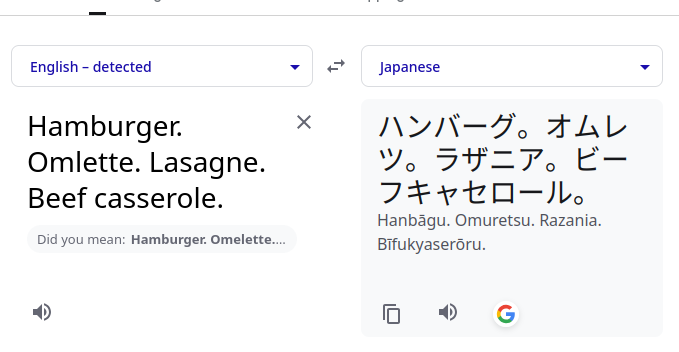
@kirishimasu It reads like a person with a very strong Dutch-like accent saying "Give me the gold! I have a pistol!" in English. It's just funny how it reads a lot like English with a strong accent. Same situation as this:
I'm offering a USD$500 reward to the first person who can present pre-2020 human-written text that the latest version of @pangram flags as AI.
The specific requirements to claim the reward are:
1. At least 750 consecutive words.
2. Pangram flags it as 75% or more AI generated.
3. You provide proof that the text was first written in 2019 or earlier and is unmodified.
4. The text was ostensibly human written. This requirement only exists to avoid trick answers like output from GPT-2, machine translation, markov chains, the same word 500 times etc.
Regarding requirement #3, unfortunately in 2026 there's no way to prove that new text wasn't AI generated, so what I need provided is proof that the text existed in 2019 or earlier, before AI writing got so good. For example, valid proof might be:
- A link to the text on a website that's been logged by the Internet Archive's Wayback Machine before 2020.
- A link to a paper published on a third party website with a pre-2020 publication date. Note: I will need to be able to access the paper through the same website that has its publication date. Otherwise someone could send a modern AI generated paper and simply link to the date and abstract of a paper with the same name but different content.
- A chapter from a book edition with a known pre-2020 publication date where I can access a pre-2020 copy for myself. Note: For the same reasons as above, simply sending a passage of text and a link to a book's name and publication date doesn't prove anything on its own. The ideal situation would either be that there's an eBook of it available somewhere with a known pre-2020 upload date, or it's a well-known enough book that the content simply couldn't be faked everywhere.
Q&A:
"Why are you offering this reward?"
Some people are blaming the detector because they don't want to admit to using AI for their writing. I don't like people lying for personal gain.
"Are you affiliated with Pangram in any way?"
No.
"How do I submit something to you?"
Just reply to this tweet with the necessary info and I'll have a look when I can.
"How can I trust you to judge fairly?"
I'll publicly reply with my verdict on submissions and the world can judge me. The world can also judge you - please only submit something if it really fits all the criteria. Especially since I'll need to review all submissions in my free time.
"But it's my private writing, can I send it to you privately?"
If it's always been private then how will you prove that it's pre-2020?
"I have the perfect example but I left the text with my girlfriend in Canada."
She can submit it and win $500.
"Won't this be trivially easy to claim? I heard even chapters of Don Quixote and Moby-Dick get fully flagged as AI!"
Tell me which chapter and win $500.
"Conversely, isn't 750 words at >=75% a high bar? If Pangram is so reliable, why not 1%?"
At very low word counts Pangram IS somewhat unreliable, and with a monetary incentive I can imagine someone scanning every book on Project Gutenberg just to find one paragraph that's falsely flagged as AI. At the same time, most claims that Pangram is flagging human writing as AI have it showing the entire text as AI. I recently saw someone on X say that they personally knew of "thousands" of examples of human text that was flagged like this (unfortunately they declined to mention any). So I've set the bar somewhere in the middle.
"But Pangram was trained on existing text; that's why it always flags OLD text as human but falsely flags NEW text."
As far as I'm aware this isn't really how Pangram works. But I'd love to be able to award this bounty for new human writing, it's just that there's no way to verify people's honesty online for the new stuff.
"How will you pay out if I win?"
However works. Probably an international bank transfer via @Wise .
"How can I help?"
When someone says they know of an old published paper or story that Pangram flags as AI, you could point them to this tweet. They can win $500.
"How long will your offer last if nobody wins?"
As long as this post is up. If you're reading this, it's still available.
@Vick314300@nyanotech@SamInloes@aidan_mclau@tszzl I think you're missing the point of the parent comment. An empty ship is more efficient in terms of resource use. It is less efficient economically.
@AndyMasley This is another Claude chart so please don't take it as accurate, but I was interested in how it might look if scaled by what the average American actually spends on each of those things. e.g. You might eat more fast food vs. drink beer, making your fast food footprint bigger.