Multiple accounts from the new 🇷🇺 troll target list #TangoDown and many more restricted about to join them! 😈
Learn about #NAFOworks and how you can help here:
#StandWithUkraine#NAFO
https://t.co/022f0nnAAj
More Sophistication, Less Slop: Russian and Chinese malign influence actors are working smarter in the age of AI
Two Six Technologies
https://t.co/rTRr3yvA5p
@twosixtech
Волонтер InformNapalm із Сакартвело Алекс Алексідзе продовжує наповнювати OSINT-базу даних Fire (https://t.co/LOgyyFapnM), яка допомагає відстежувати тенденції в полум'яних інцидентах, диверсіях та ударах по території тимчасово існуючої РФ.
Можливий недолік бази, що ми починали її вести з 2022 року не враховуючи тимчасово окуповані території, а виключно враховували територію РФ у міжнародно визнаних кордонах, тому удари по ТОТ в цій базі відсутні та не входять в загальну статистику.
Із цікавого: якщо відфільтрувати лише дронові удари по НПЗ за 2026 рік, то видно вже щонайменше 117 подій з досить показовою географією.
Для порівняння: за весь 2022 рік у базі зафіксовано 1 такий інцидент, за 2023 - 6, за 2024 - 70, за 2025 - 137.
Тобто з кожним роком видно прогресію вибивання російських НПЗ і навтобаз. В поточному році кількість ударів по НПЗ вже майже наздогнала показники за весь 2025 рік. Тобто в запасі ще 6 місяців щоб значно перевершити минулорічні активності.
A day with the Da Vinci Wolves' interceptor crews 👀
Watch the France 24 report featuring a crew using interceptor STING drones to effectively counter Shaheds: https://t.co/x0quXn5gyf
Are you ready to serve your country as a CIA Case Officer? In this challenging and rewarding role, you will gather human intelligence from assets around the world and work with foreign partners to conduct operations in order to safeguard our Nation. Learn more at https://t.co/ocBOBt8JaL.
Have you already seen these 3D-printed Vampire drone models? They're awesome!
Grab yours and support our Kupiansk Vampires campaign 👇
https://t.co/yz0Dsp4ya9
31,500+ invaders neutralized, logistics paralyzed, and record-breaking air defense results. May was a month of massive scaling for our e-Points system. We’re using real-time data to exhaust the enemy, protect our sky, and roboticize the front line. The mission continues.
On this day in 1944, the first Operation Jedburgh team parachuted into occupied France on the night before the Allied landings in Normandy.
Learn more:
https://t.co/r5tFuSvO5h
These LLMs are the best at resisting Russian propaganda
The government-sponsored Estonian Language Institute has released a new “Propaganda Resistance” benchmarkranking dozens of LLMs on their ability to avoid “tak[ing] positions on topics that the Russian Federation uses in its strategic narratives.”
Ars Technica
https://t.co/xXTnzjGJ8f
@arstechnica
Great conversations drive great outcomes. We’re enjoying the opportunity to connect with attendees, exchange ideas, and collaborate on the future of cybersecurity at the @NSAgov booth. Stop by and join the discussion. #TechNetCyber#CyberDefense
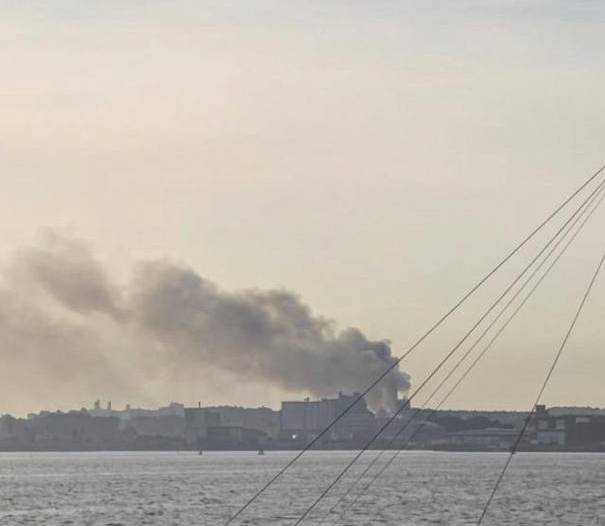
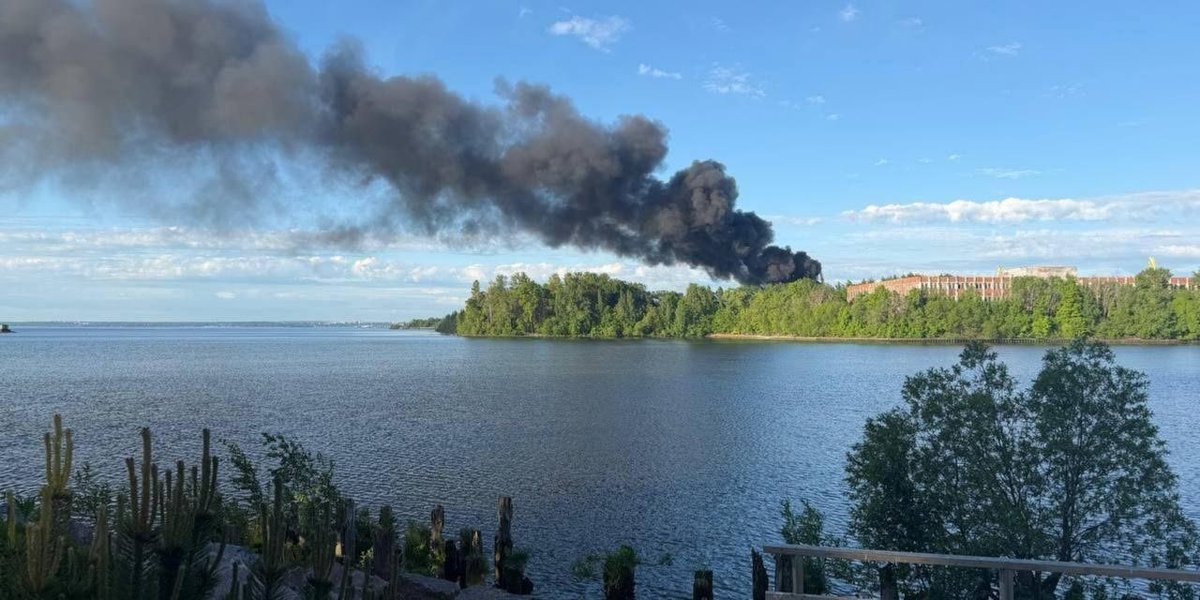
Drones of the Special Operations Forces Strike Russia’s Baltic Fleet Naval Base “Kronstadt”
During the night of June 6, Deep Strike units of Ukraine’s Special Operations Forces (SOF), in coordination with the Unmanned Systems Forces and the Security Service of Ukraine (SBU), struck the Russian Baltic Fleet’s naval base “Kronstadt” near St. Petersburg.
Several SOF drones successfully reached their designated targets. Fires were recorded on the base's territory following the strike.
“Kronstadt” is considered a symbol of Russia’s naval power and a strategic component of the enemy’s military machine. The base hosts warships, submarines, training facilities, repair docks, and shipbuilding infrastructure.
Following Ukraine’s destruction of a significant portion of Russia’s military capabilities in the Black Sea, the importance of Kronstadt in sustaining the enemy’s naval and military potential has increased substantially. Now, one of #Russia’s oldest naval bases has also come under fire.
The distance from #Ukraine’s border to the Kronstadt naval base is approximately 1,000 kilometers.
Ukraine’s Special Operations Forces continue to degrade the enemy’s capability to wage war against Ukraine.
Дорогі колеги, вітаємо з Днем журналіста України! 🇺🇦✍️
Міжнародна волонтерська спільнота InformNapalm щиро дякує кожному з вас за відданість професії, сміливість та силу духу.
Сьогодні, під час важкої війни проти російських загарбників, слово та об'єктивний факт стали справжньою зброєю. Ворог намагається затопити світ брехнею — але ви щодня утримуєте інформаційний фронт, фіксуєте історію та викриваєте воєнні злочини Кремля.
Хочемо окремо подякувати журналістам, які всі ці роки підтримували волонтерів нашої спільноти та допомагали поширювати правду — доносити до читачів докази з наших OSINT та CYBINT-розслідувань, відкривати світові очі на реальність російської агресії. Ваша праця руйнує ворожі міфи й наближає справедливість.
Разом ми робимо одну велику справу.
Бажаємо вам безпечної роботи, надійних джерел, сил та натхнення! Віримо, що зовсім скоро ви опублікуєте свій найголовніший матеріал — новину про нашу спільну Перемогу.
Дякуємо за вашу роботу! Слава Україні! 🇺🇦
FSB’s matryoshka #1/3 – Gamaredon’s gifts that keeps unpacking – GammaPhish and GammaWorm
https://t.co/VpB7IqSCGK
Gamaredon is a cyberespionage group specialized in long-term and persistent intrusion operations targeting Ukraine. Officially operated by Russia’s FSB.
https://t.co/FdmV4L2Rir
@sekoia_io
The founder of the international volunteer intelligence community InformNapalm, Roman Burko @newsburko , published the following post today on his Facebook page regarding Russian drone attacks, Russian drones entering the airspace of Romania, Poland, and the Baltic states, as well as the idea of introducing a clear formula of deterrence that the Kremlin would understand:
"Russia has spent years testing the limits of what is considered acceptable. It began with airspace violations, then came missiles and drones falling on the territory of neighboring states, followed by deliberate provocations and a demonstrative disregard for the borders of #NATO countries.
The problem is not only the incidents themselves. The problem is that the Kremlin sees no direct cost for such actions.
Obviously, Poland, #Romania, or other countries on NATO’s eastern flank are not going to respond to every Russian drone with strikes on Russian territory or by deploying troops. But between inaction and direct military retaliation lies a broad spectrum of possible responses.
One of them could be a simple and transparent deterrence formula: every Russian drone, missile, or other weapon system that violates the airspace of a NATO member state would automatically trigger additional funding for Ukraine’s long-range strike capabilities.
One drone entering NATO airspace would mean dozens or hundreds of additional attack drones for the Ukrainian Defense Forces.
One missile would result in a new funding package for #Ukraine’s deep-strike capabilities.
One large-scale provocation would lead to a new level of support for Ukraine’s defense-industrial base.
The essence of such a model is not escalation. On the contrary, it is about creating a clear and predictable cost for every violation committed by the Kremlin. If every provocation automatically increases Ukraine’s ability to strike the aggressor’s military and economic assets, sooner or later the very logic behind such provocations loses its value.
In practical terms, this would mean shifting deterrence from the realm of diplomatic statements into the realm of concrete arithmetic.
This approach could be applied not only to violations of NATO borders. In the future, Europe could also tie the scale of Russian attacks against Ukrainian cities to automatic increases in military assistance.
Launch one hundred Shahed drones against Ukraine — receive a multiplied increase in funding for Ukrainian strike-drone production.
Use ballistic missiles — face an even higher response coefficient.
Strike civilian infrastructure — finance new capabilities for destroying Russian military logistics.
Moscow constantly seeks to impose on the West a fear of escalation. But there is another model: not responding symmetrically, but making every subsequent Russian strike increasingly costly for Russia itself.
Europe already possesses the necessary financial resources. Ukraine already has the army, combat experience, and industrial capacity required to scale up drone production. What is missing is a political decision that would transform support for Ukraine from a reactive policy into a systematic deterrence mechanism.
Such a decision could be adopted collectively by NATO or individually by any country that has the political will to act.
Russia understands the language of costs and consequences. The only question is when Europe will begin speaking to the Kremlin in that language."
The NSA is expected to announce permanent leadership roles for the Cybersecurity Collaboration Center and the Cybersecurity Directorate, two of the spy agency's major cyber organizations https://t.co/NCPAtFMW5Y
"Дим над Кронштадтом сьогодні — для мене глибокий символ.
Назву #Кронштадт я добре запам’ятав ще з дитинства, коли жив на Донбасі й слухав розповіді свого діда про п’ятирічну строкову службу на радянському Північному флоті. У цих історіях час від часу звучала ця назва — Кронштадт, порт, до якого заходили військові кораблі різних флотів.
Мій дід був українцем. Він багато розповідав про свою службу, про людей і про тодішні порядки. Згадував, як росіяни називали українців “хохлами”, вкладаючи в це зневагу, але водночас добре знали: українці не люблять конфліктів без потреби, проте здатні дати жорстку відсіч, якщо їх принижувати або намагатися зламати. Сам дід був старшиною 2 статті та командував відділенням.
Ще в дитинстві я запам’ятав одну його просту думку: росіяни поважають силу, а слабкість сприймають як можливість домінувати. Для восьмирічного хлопця це стало одним із тих життєвих уроків, які відкладаються десь глибоко в пам’яті й повертаються через багато років.
На час його служби припала й Карибська криза. Він згадував, як під час відпустки отримав термінову телеграму, поспіхом повертався з центральної України до Кронштадта і буквально забігав по трапу на корабель. Щойно він опинився на борту — трап прибрали, а корабель вийшов у море в напрямку Куби.
Сьогодні Кронштадт — одна з головних баз Балтійського флоту Росії. І коли я побачив новини про дим над ним, то несподівано згадав діда.
Він усе життя пропрацював на шахтах Донбасу. Помер уже під російською окупацією. Через війну я не зміг приїхати й попрощатися з ним.
Але я добре пам’ятаю його розповіді. Не лише про флот. Про те, як Москва століттями використовувала Україну як ресурс. Про Голодомор. Про репресії. Про знищення української еліти, культури й пам’яті. Про імперію, яка звикла жити за рахунок інших народів і сприймати їх не як рівних, а як власність.
Я виріс на Донбасі, але завдяки таким розмовам з дитинства розумів просту річ: якщо показати Кремлю слабкість, він спробує тебе підкорити. Якщо поступатися без кінця — він вимагатиме ще більше.
Тому дим над Кронштадтом для мене — не просто новина про черговий удар.
Це нагадування про те, що імперія, яка століттями звикла приходити на чужу землю, нарешті отримує відповідь. Що українці не лише вистояли, а й навчилися завдавати ударів, які раз за разом роблять колоса слабшим.
І мені здається, що дідо, якби дожив до цього дня, лише мовчки посміхнувся б",
- написав сьогодні український військовий, друг "Рут", учасник міжнародної розвідувальної спільноти InformNapalm.
New episode of @ThePhoenixCast: "Tailored Intelligence From the Deep: Inside Qintel"
Keith Mularski (FBI's "Master Splyntr" inside DarkMarket) and Damon Mathews on cyber attribution and why code/data are the new arsenal of democracy.
Link: https://t.co/pcQ668DjIV
#PhoenixCast