@BorisJohnson Bitcoin is not a Ponzi scheme. A Ponzi requires a central operator promising returns and paying early investors with funds from later ones. Bitcoin has no issuer, no promoter, and no guaranteed return—just an open, decentralized monetary network driven by code and market demand.
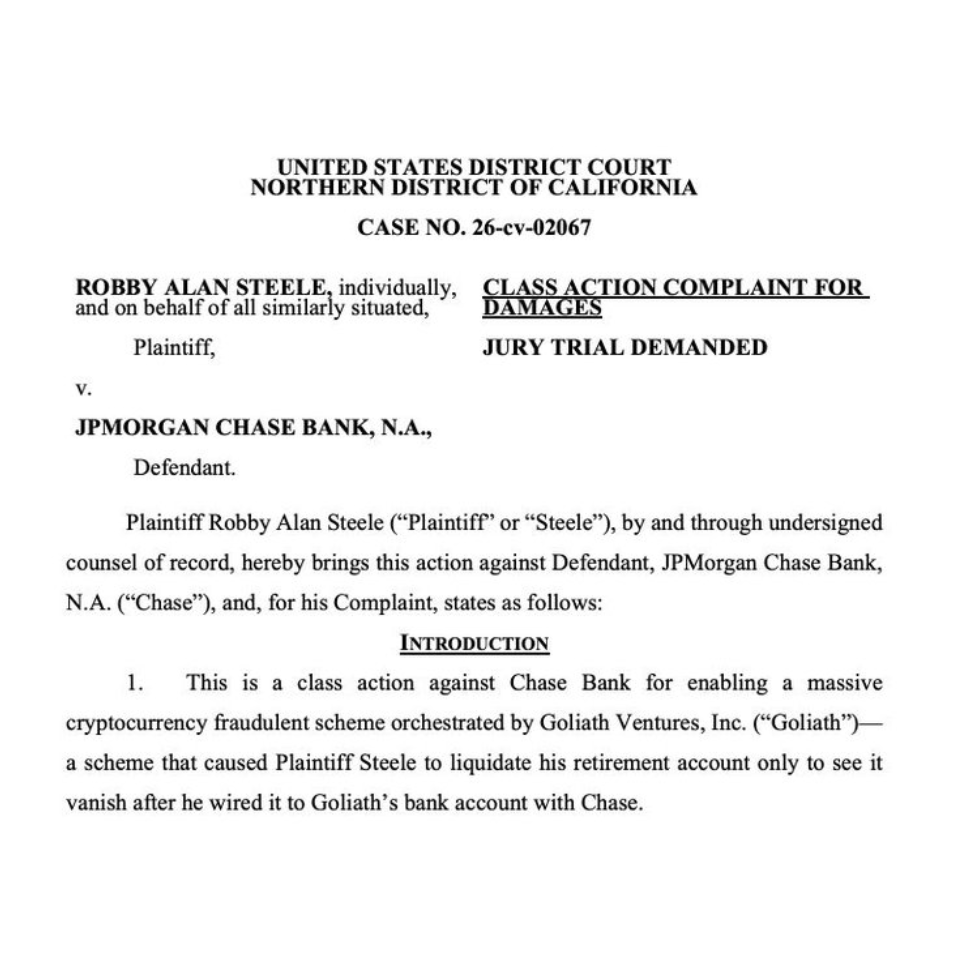
BREAKING: 🇺🇸 LARGEST U.S. BANK JP MORGAN IS GETTING SUED OVER A $328 MILLION A CRYPTO PONZI SCHEME.
A new class action lawsuit filed in a U.S. federal court claims JP Morgan Chase helped enable a massive crypto Ponzi scheme run by Goliath Ventures.
According to the complaint, the alleged scheme raised about $328 million from roughly 2,000 investors between 2023 and early 2026.
The company promised investors steady monthly returns from crypto trading strategies and liquidity pools.
But prosecutors say the business operated like a classic Ponzi structure, where new investor money was used to pay earlier investors while the rest of the funds were diverted elsewhere.
Investigators say over $250 million flowed through a JP Morgan business bank account controlled by the company.
From there, large amounts of money were transferred to Coinbase wallets and crypto platforms.
The lawsuit claims JP Morgan allowed the transactions to continue despite warning signs and unusual activity linked to the accounts.
Investors argue the bank should have flagged or stopped the transfers earlier. According to prosecutors, only a very small portion of the funds were actually used for crypto trading.
The rest was allegedly spent on luxury homes, travel, events, and payments used to keep the scheme running.
The alleged fraud began to collapse when investors started requesting withdrawals and payments slowed down.
Authorities later froze assets and placed the company into receivership while investigators traced where the money went.
The case is now expanding beyond the people who ran the scheme.
The lawsuit argues that traditional banking channels were a key part of how the money moved, because most investor deposits first passed through normal bank accounts before being sent to crypto exchanges.
And this raises a bigger question.
If over $250 million can move through accounts at the world’s largest bank during a Ponzi scheme, what exactly are the monitoring systems inside these banks designed to catch?
You want to know the secret?
The bottom NEVER feels like the bottom. It feels like the beginning of something worse.
March 2020: "Global pandemic, economy collapsing, BTC going to $1,000"
→ Bottom was $3,800. Top was $69,000 (18x)
November 2022: "FTX collapsed, crypto is fraud, BTC going to $8,000"
→ Bottom was $15,500. Top was $126,000 (8x)
February 2026: "Long bear market coming, BTC going to $40,000"
→ Bottom is... ?
Every single person who got rich bought when it felt EXACTLY like this.
When hope was gone.
When sentiment was dead.
When everyone said "it's different this time."
It's never different. The bottom always looks like the end.
I see many analyzing these price moves.
If it's not clear to you by now, let me make it so :
We cryptos are all fucking retarded and have absolutely zero understanding of how this market will behave.
Hold. Stop thinking. Sniff glue. That's it. Let crypto jesus take the wheel
THE REAL REASON BEHIND THE OCTOBER 10TH CRYPTO CRASH IS FINALLY OUT.
And it’s much bigger than what people thought.
For weeks, traders kept asking the same question:
"Why did the market collapse so violently on Oct 10 when there was no macro event, no ETF news, no exchange failure, nothing?"
Now we have the missing piece and it explains a lot.
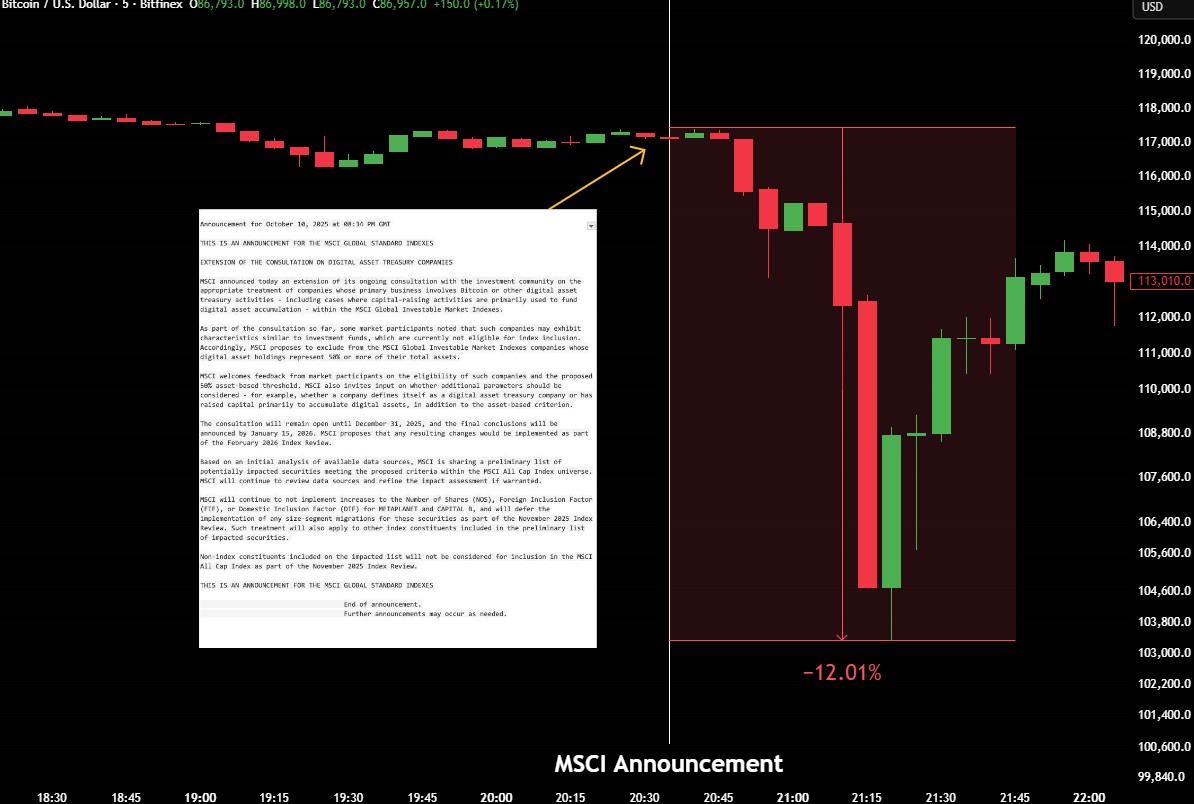
1) MSCI quietly dropped a major update on Oct 10
On the same evening the crash began, MSCI released a consultation note that almost nobody in crypto paid attention to.
MSCI said they are reviewing how to classify companies whose main business involves accumulating Bitcoin or digital assets.
Key proposal:
- If digital assets = 50% or more of a company’s total assets
- And the company’s operating activity resembles a digital asset treasury
→ That company can be excluded from MSCI global indexes.
This directly puts several Bitcoin-heavy companies at risk, especially MicroStrategy.
2) Why this matters
If MSCI excludes these companies:
• Index funds are forced to sell
Funds tracking MSCI indices must remove these stocks.
They do not get to choose. This is literal forced institutional selling.
• MicroStrategy becomes a primary target
If MSTR is labeled fund-like, MSCI indexed funds could be forced to reduce or exit positions.
• When MSTR dumps → BTC reacts immediately
Like it or not, $MSTR is treated as a leveraged Bitcoin proxy.
If the stock shows weakness: confidence drops → Bitcoin correlation increases → retail panic accelerates → liquidations start hitting → BTC falls harder.
3) How this connects to the Oct 10 crash ?
The market was already fragile:
- Trump new tariffs
- Weak Nasdaq
- High leverage in BTC markets
- Fear of 4-year cycle top
When MSCI’s note dropped, it added a new type of structural risk that traders did not expect.
The fear was simple:
"If MSTR or similar companies get removed from MSCI, large funds will be forced to sell, what happens to Bitcoin then?"
This fear hit right into an already stressed market.
The result: one of the biggest liquidation waves in crypto history.
4) But there’s another layer: JPMorgan’s timing
3 days ago, JPMorgan published a bearish report highlighting the same MSCI risks, right when:
- MSTR was weak
- BTC was weak
- Liquidity was thin
- Sentiment was fragile
This amplified panic, causing a 14% dump in a few days.
And if you know JPMorgan’s history, you know this pattern:
They speak bearish when prices are weak.
They accumulate assets when retail is scared.
They publish bullish notes near tops.
Their timing is never random.
This is not a secret. This is standard Wall Street behavior.
5) Is JP Morgan manipulating the market?
Not illegally. But strategically, yes.
This is how big institutions operate:
- Push fear when liquidity is low
- Trigger panic
- Let weak hands sell
- Accumulate at a discount
- Turn bullish later
They’ve done it with metals. They’ve done it with bonds. They are doing it with Bitcoin.
This is not a cartel. This is Wall Street strategy.
6) Now the plot twist: Michael Saylor responds publicly
Right when MSCI fears started dominating headlines, Saylor dropped a detailed clarification:
"MicroStrategy is not a fund, not a trust, not a holding company. It is a publicly traded operating company with a $500M software business and a Bitcoin based treasury strategy."
He also highlighted:
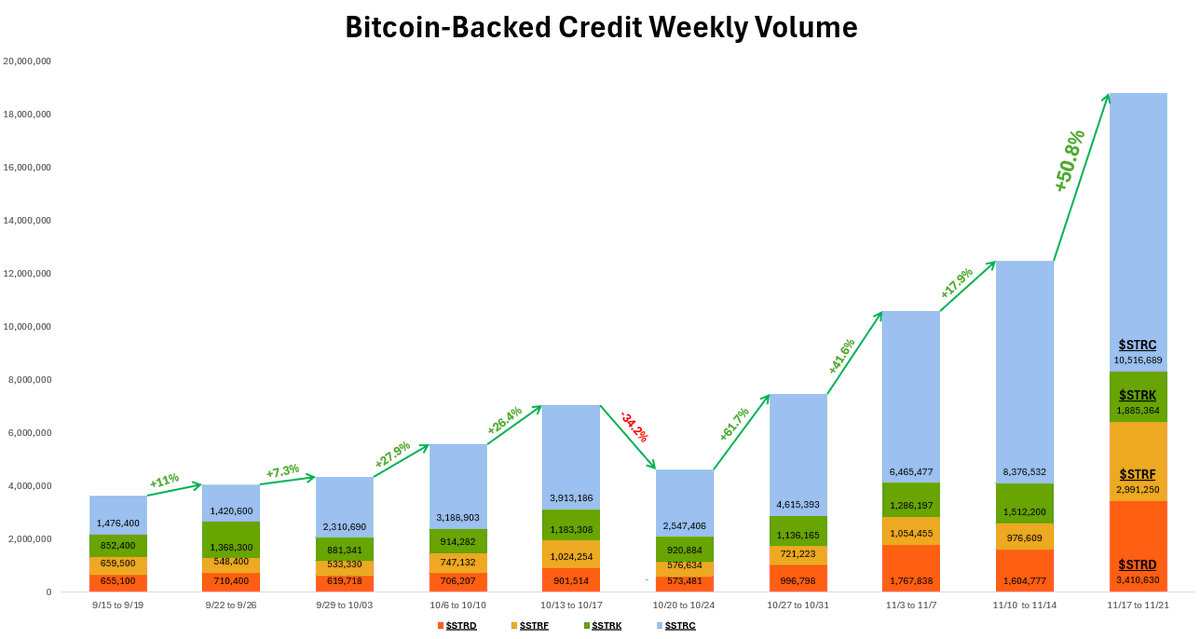
- 5 new digital credit instruments ($STRK, $STRF, $STRD, $STRC, $STRE)
- $7.7B notional value issued this year
- Stretch ($STRC), the first Bitcoin backed variable yield credit instrument
- Ongoing software operations and financial product innovation
His message was simple:
"We are not passive holders. We are builders. We are innovating. Index labels do not define us."
7) So what does all this mean for the market?
✔ Oct 10 crash was NOT random
It aligns exactly with MSCI’s consultation release.
✔ Forced-selling fear created liquidity stress
Traders panicked because they assumed index funds might eventually dump large positions.
✔ JPMorgan amplified the fear
Their bearish note came at the perfect moment to shake markets further.
✔ Saylor finally cleared the air
His statement explained why MicroStrategy is fundamentally different from what MSCI is describing.
✔ But uncertainty remains
Final MSCI decision comes on 15 January 2026.
Policy goes into effect February 2026.
Between now and then? The market may price in more volatility.
Final Take:
The market did not crash because of a single event.
It crashed because one unexpected structural risk hit an already fragile system.
And large institutions used that moment to shape sentiment.
But the long term picture is simple:
Bitcoin adoption unchanged.
Corporate interest unchanged.
Saylor remains on track.
Institutions still building.
ETF flows will stabilize.
Liquidity cycles will return.
MSCI classification will not stop Bitcoin.
Fear creates opportunity. Narratives create volatility. But fundamentals do not change.
This is why the Oct 10 crash was violent and why it will be remembered as a technical panic, not a fundamental breakdown.
BIG DAY FOR CRYPTO HOLDERS 🚨
🇺🇸 FED will cut rates today at 2 PM ET.
Rate cut odds are 99.9%, so the move itself is already priced in.
But a rate cut alone won’t decide the direction of the market, what matters is how the Fed frames the decision and what tone Powell takes after.
Here’s what to watch 👇
➠ The Fed Statement
This is where the market looks for guidance.
If the statement calls this a mid cycle adjustment, it means the Fed sees it as a one-time move, markets might stay flat or even pull back.
But if the language shifts toward growth risks increasing, it hints that more cuts are likely ahead.
If you’re watching yields, a dovish statement should push 2-year yields lower and weaken the dollar, both early signs of a liquidity rebound.
➠ Quantitative Tightening (QT)
Markets expect the Fed to officially announce the end of QT, meaning it stops reducing its balance sheet.
That’s a big deal. It signals the Fed is no longer draining liquidity from the system.
This would mark the first real structural shift toward expansion, something that historically fuels risk on behavior across tech, equities, and especially Bitcoin.
➠ Powell’s Press Conference (2:30 PM ET)
The tone will move markets instantly.
If Powell acknowledges slower growth or highlights confidence that inflation is under control, it tells traders the Fed is comfortable easing further.
That’s when you’ll see the chain reaction:
Bond yields drop as markets price deeper cuts.
The dollar weakens, signaling easier global liquidity.
Equities and crypto rally as capital rotates into risk assets.
If Powell stays cautious and avoids any commitment to future cuts, expect markets to consolidate, not fall, but pause until more clarity emerges.
In short:
The 25 bps cut is just the headline.
What truly matters is the statement language, QT decision, and Powell’s tone.
Why I am where I am today comes down to these ten steps:
Try.
Try again.
Try once more.
Try a little differently.
Try again tomorrow.
Try and ask for help.
Try to learn from those who’ve done it before.
Try to understand what isn’t working.
Try to see what is working.
And never stop trying.