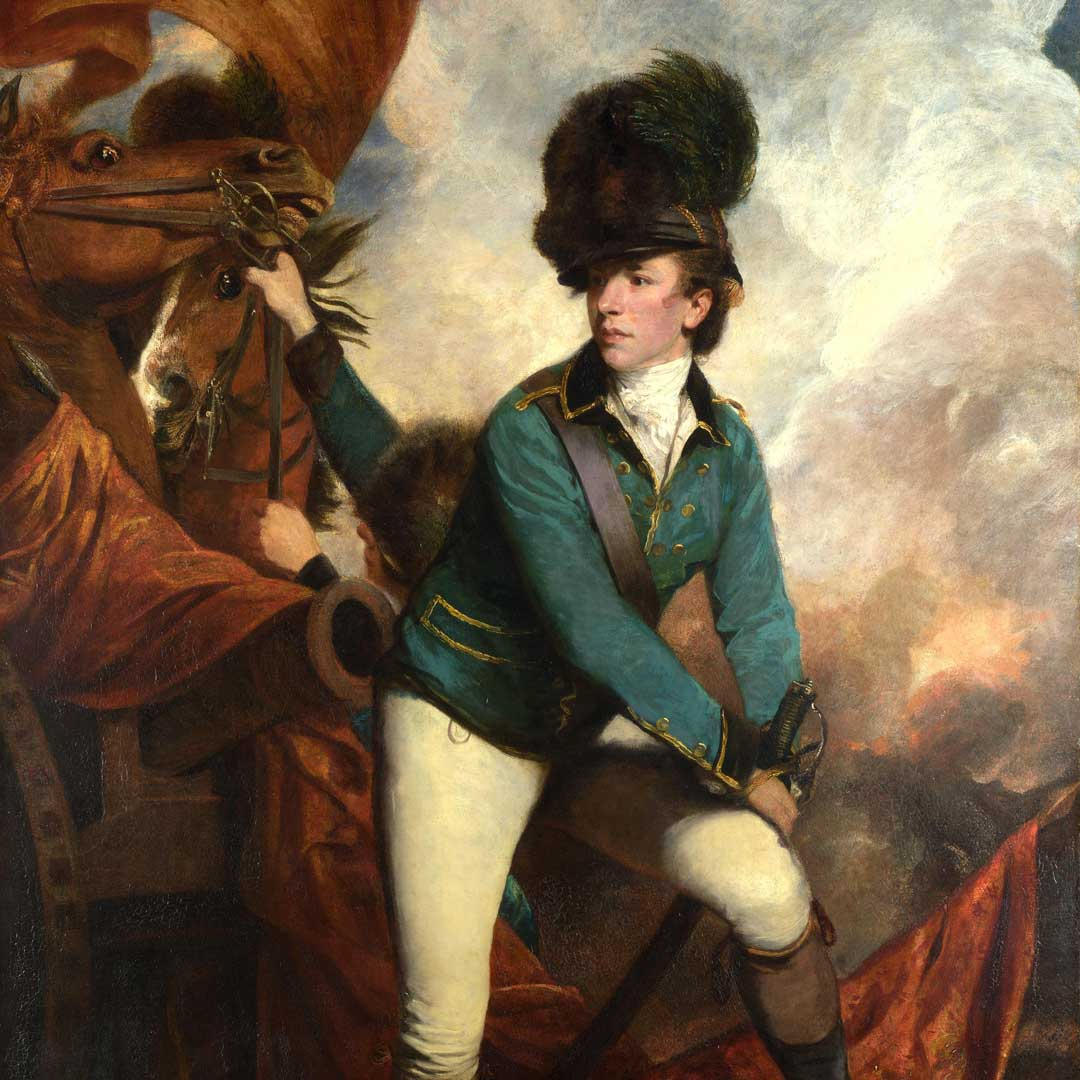
Feelings ran deep between Loyalists and Patriots in South Carolina’s backcountry, but it wasn't until Lt. Col. Banastre Tarleton and his #British Legion commenced a “no mercy” policy that things turned intensely bitter. https://t.co/1z9klyWohQ #history#americanhistory#ushistory
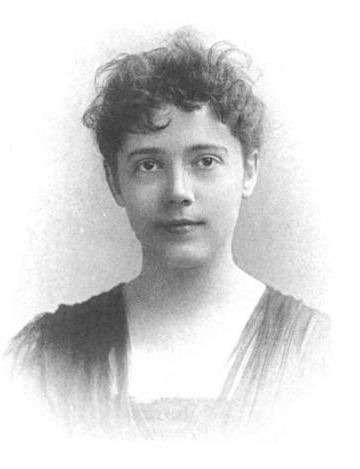
Elizabeth Bisland was a US journalist propelled into the limelight when she set out in 1889 — head-to-head with fellow journalist Nellie Bly — on a journey to beat Phileas Fogg’s fictitious 80-days around of the world: https://t.co/DCJmBX2Yxh
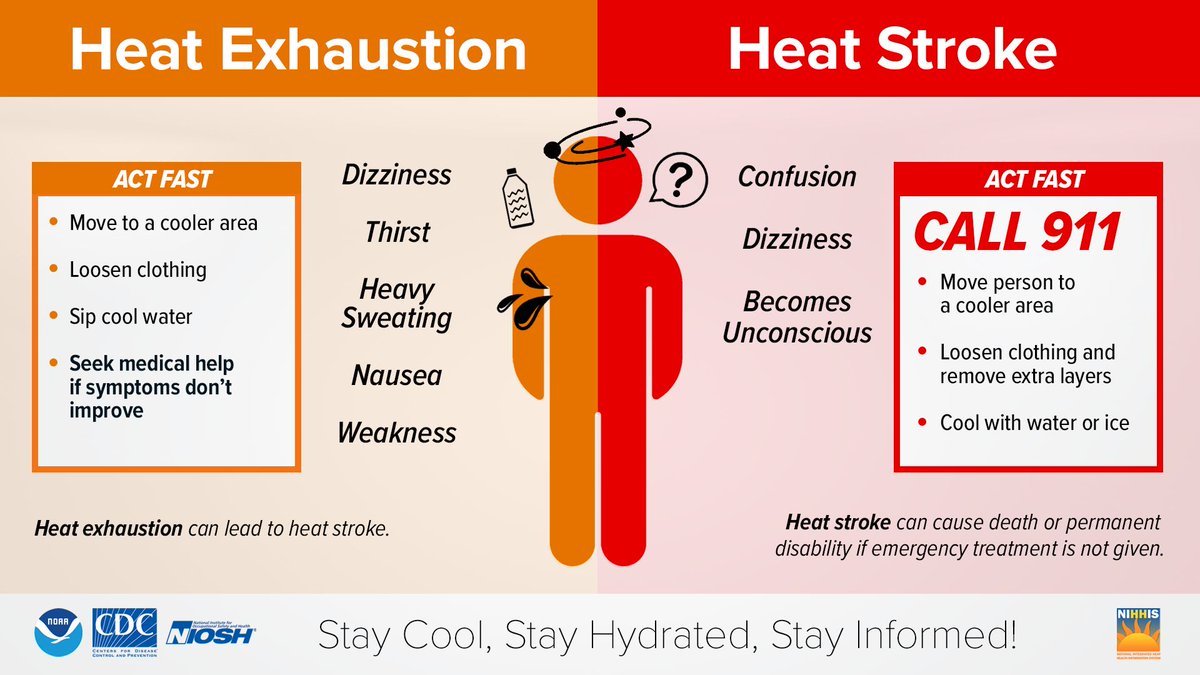
We are expecting hot, humid conditions with heat indices over 100°F for a large part of the area today. It will be highest in the southeast, where a Heat Advisory has been issued.
The traffic can be a pain, but the HRBT Expansion Project is about 50% completed! Check out the video in this article to see how far it's come.
https://t.co/spqu6tuadT
Colonial Iron Mine: During the American Revolutionary War, iron excavated from this SC mine was used to make swords, canons, and more: https://t.co/4nM5ns32GJ
What the hell is an ampersand and why does it look like that?!
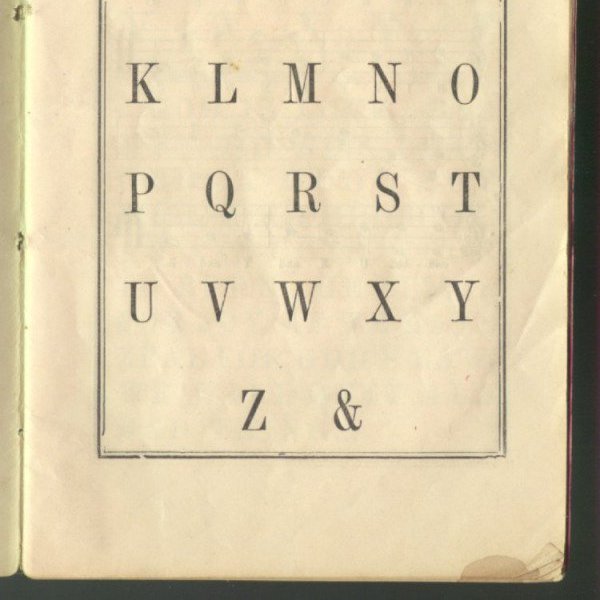
The first thing you need to know is that "&" used to be the 27th letter of the alphabet...
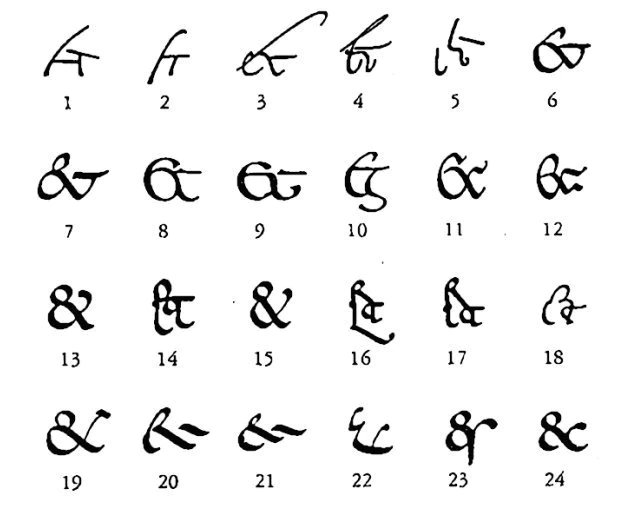
But there are three parts to this story. And the first begins over two thousand years ago in Ancient Rome with a single word: et. It's the Latin for "and". At some point Roman scribes started combining the two letters of et into a single symbol, which was the ancestor of our modern &.
The earliest example of the "et" symbol is actually from graffiti in Pompeii. In any case, it did not disappear with the fall of the Roman Empire.
Latin survived as the language of the Catholic Church and of scholarship in Medieval Europe. Scribes during the Dark Ages continued to use the & symbol. It evolved down the centuries, in places losing any semblance of the letters e and t whatsoever.
The second part of the story is that during the 18th and 19th centuries, as education and the teaching of literacy spread, & was added to the end of the alphabet as a sort of 27th letter.
On a related note, although "et cetera" is now usually just abbreviated as etc., for a long time it was instead abbreviated as "&c". The & was for et and the c for cetera.
The third and final part of the story is about how the alphabet was taught to children — and how it was read out loud.
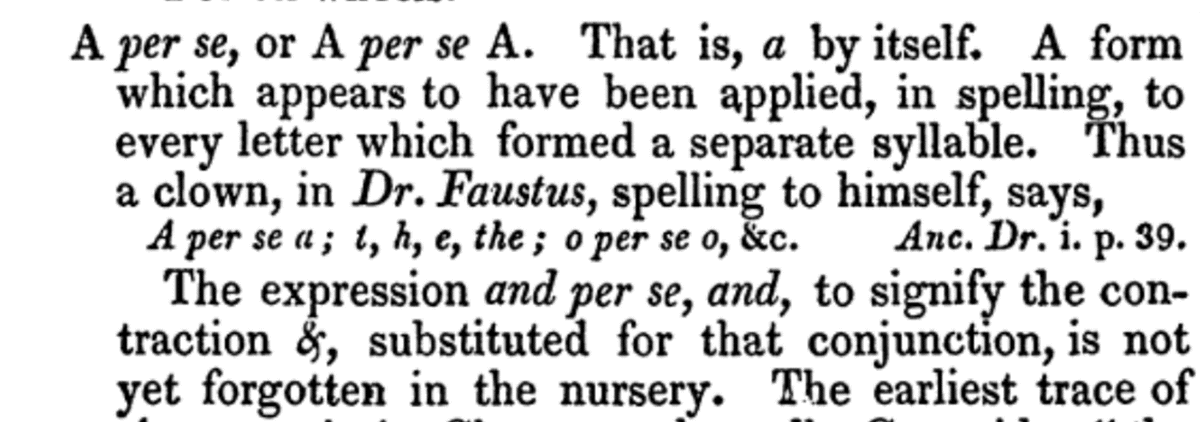
As this 1822 Glossary of Words and Phrases explains, it had been normal during the Renaissance, when speaking the alphabet, to add "per se" before any letter which could also be a word on its own — "per se" means "by itself" in Latin.
Take the letter A, which can also be a word of its own. When reading out the alphabet people would say "A, per se A, B, C, D, E, F, G, H, I, per se I..." and so on. O was also considered a word of its own.
Which means, when people got to the end of the alphabet, with & being the 27th letter, they would say: "S, T, U, V, W, X, Y, Z, and per se &."
When this old way of reading the alphabet was taught to children in the 18th century and they were reciting it aloud, they would garble "and per se " into what eventually became... ampersand.
A Dictionary of Slang and Colloquial English from 1905 relates some of the many other pronunciations school children apparently came up with:
"Ampersand. The sign &; ampersand. Variants: Ann Passy Ann; anpasty; andpassy; anparse; apersie; per-se; ampassy; am-passy-ana; ampene-and; ampus-and; ampsyand; ampazad; amsiam; ampus-end; apperse-and; empersiand; amperzed; and zumzy-zan."
Well, of all the many pronunciations that might have stuck, it was "ampersand" which came to be accepted and is now the official name for &... rather than zumzy-zan. So, from hurried Roman scribes to unruly school children, that's where "&" came from.
Explore Virginia's 41 state parks with a Nature Backpack! Each one includes free entry/parking into the parks, flora and fauna guides, a magnifying lens, a dip net, and a port-a-bug field observation container! View availability here: https://t.co/x5ZjyxJFpd ⛰️🔍🐛🌸
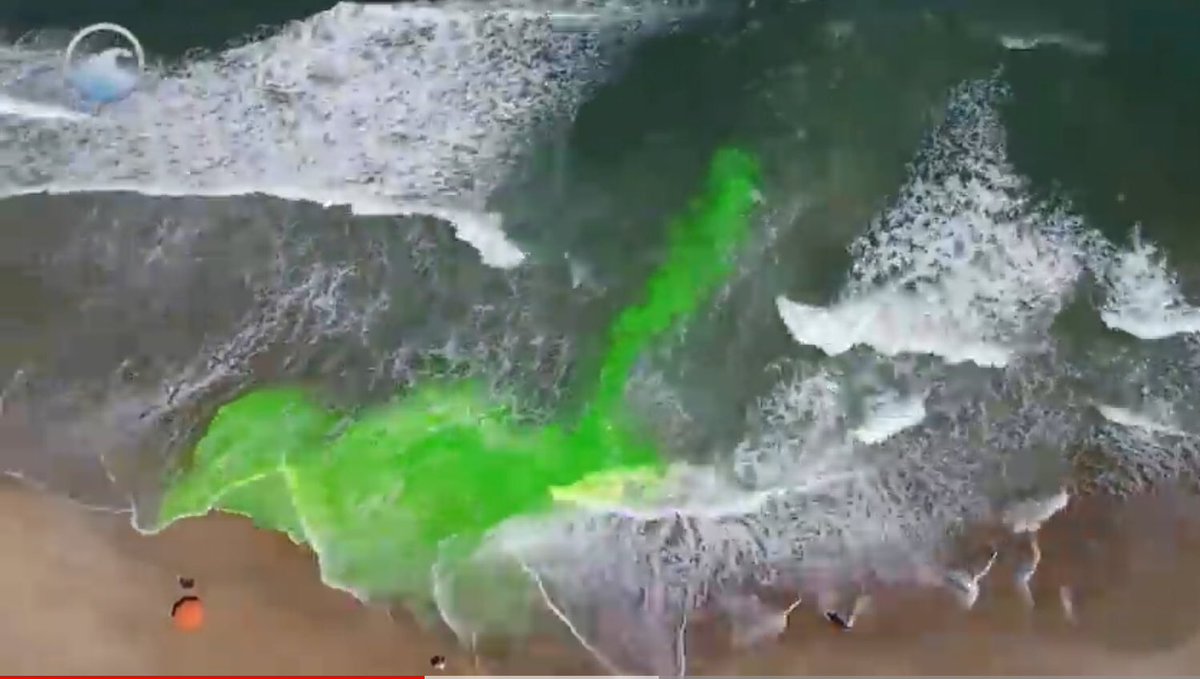
Rip currents are dangerous for swimmers but also ecologically important – here's how scientists are working to understand these 'rivers of the sea' https://t.co/g2AxZCjitV
WHO expert cancer group states that the sweetener aspartame is a possible carcinogen, but evidence is limited – 6 questions answered https://t.co/F6q2qGgtT2
#OTD
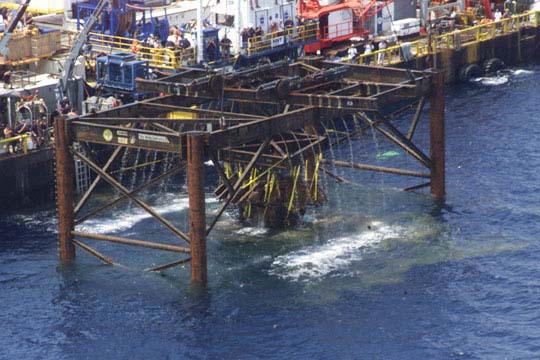
On July 16 𝟐𝟎𝟎𝟏, 𝘔𝘰𝘯𝘪𝘵𝘰𝘳’s 30-ton steam engine was recovered at around 11:56 am. Divers worked around the clock for 4 weeks to free the engine from cement-like encrustations.
The engine now rests in conservation with @MarinersMuseum
Visitors to Great Bridge Battlefield are often offered a realistic glimpse of the lives of 18th-century sailors, pirates and privateers, courtesy of the Brethren of the Coast, a living history organization based in Hampton Roads. Brethren of the Coast: https://t.co/uChc4RyznW
How did a federal courthouse in Norfolk end up with control of the famous wreck site in international waters about 400 miles south of Newfoundland, Canada?
It all started with another famous shipwreck.
https://t.co/XrLHFLzqkH