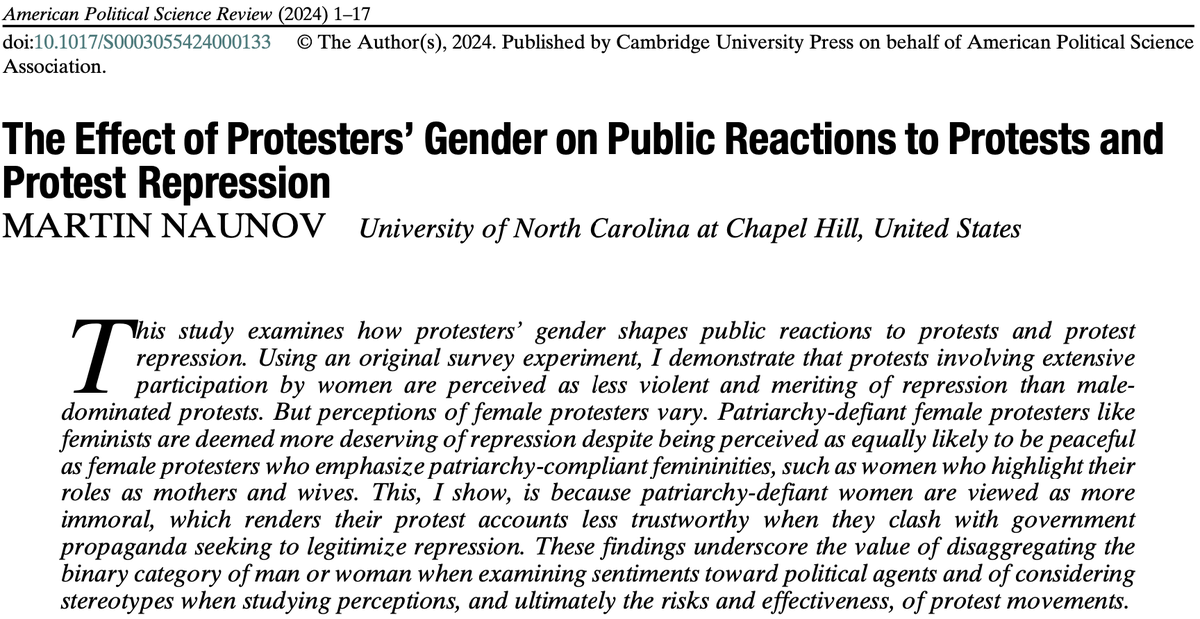
Just in time for #InternationalWomensDay tomorrow, my first paper is now out in the @apsrjournal ! In it, I delve into the nuanced effects of protester gender on public reactions to protests and repression https://t.co/BqbSloY7JG🧵
Excited to share that my paper on citizen-to-citizen persuasion, co-authored with Carlos Rueda-Cañòn and Tim Ryan, was just accepted at the Journal of Politics. Link: https://t.co/xYvzFjJ9DJ🧵
@RobbWiller Thanks for sharing this, Robb! Fascinating overlap with our findings! We actually considered a follow-up testing whether telling people about the usefulness of perspective-taking boosts persuasiveness, but shelved it--really cool to see you essentially did that and that it works!
Excited to share that my paper on citizen-to-citizen persuasion, co-authored with Carlos Rueda-Cañòn and Tim Ryan, was just accepted at the Journal of Politics. Link: https://t.co/xYvzFjJ9DJ🧵
We have a JOP article about how swifties ~randomly denied tickets to the eras tour due to website allocation errors changed their views on related policies
https://t.co/XyOo9bEQS5
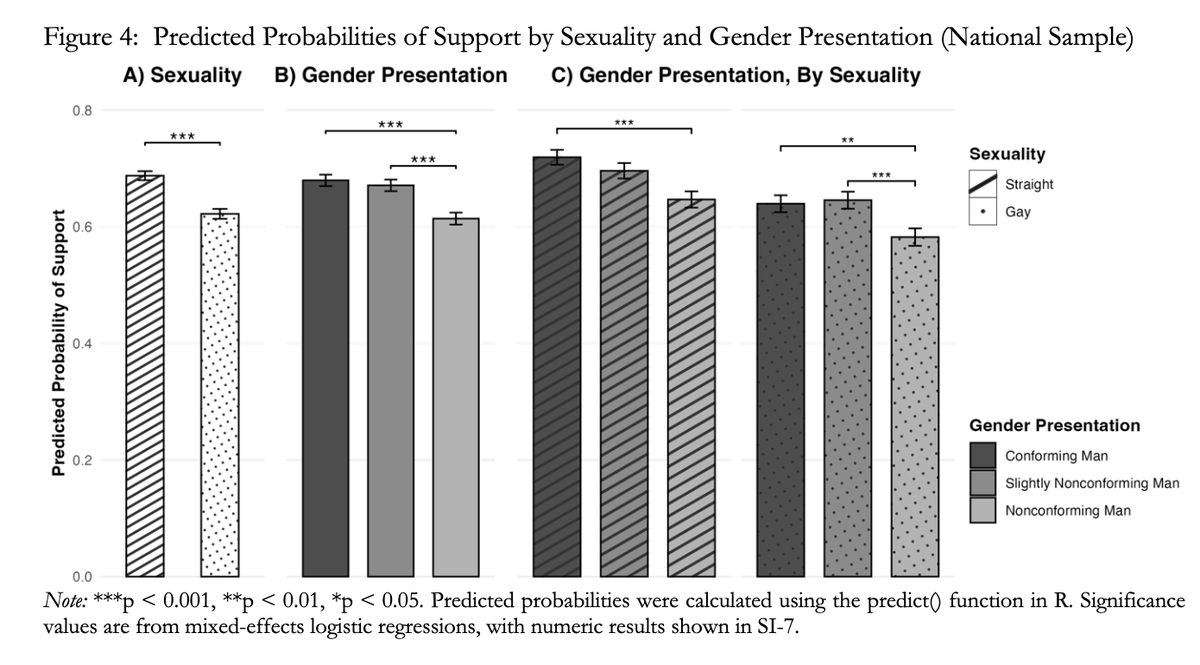
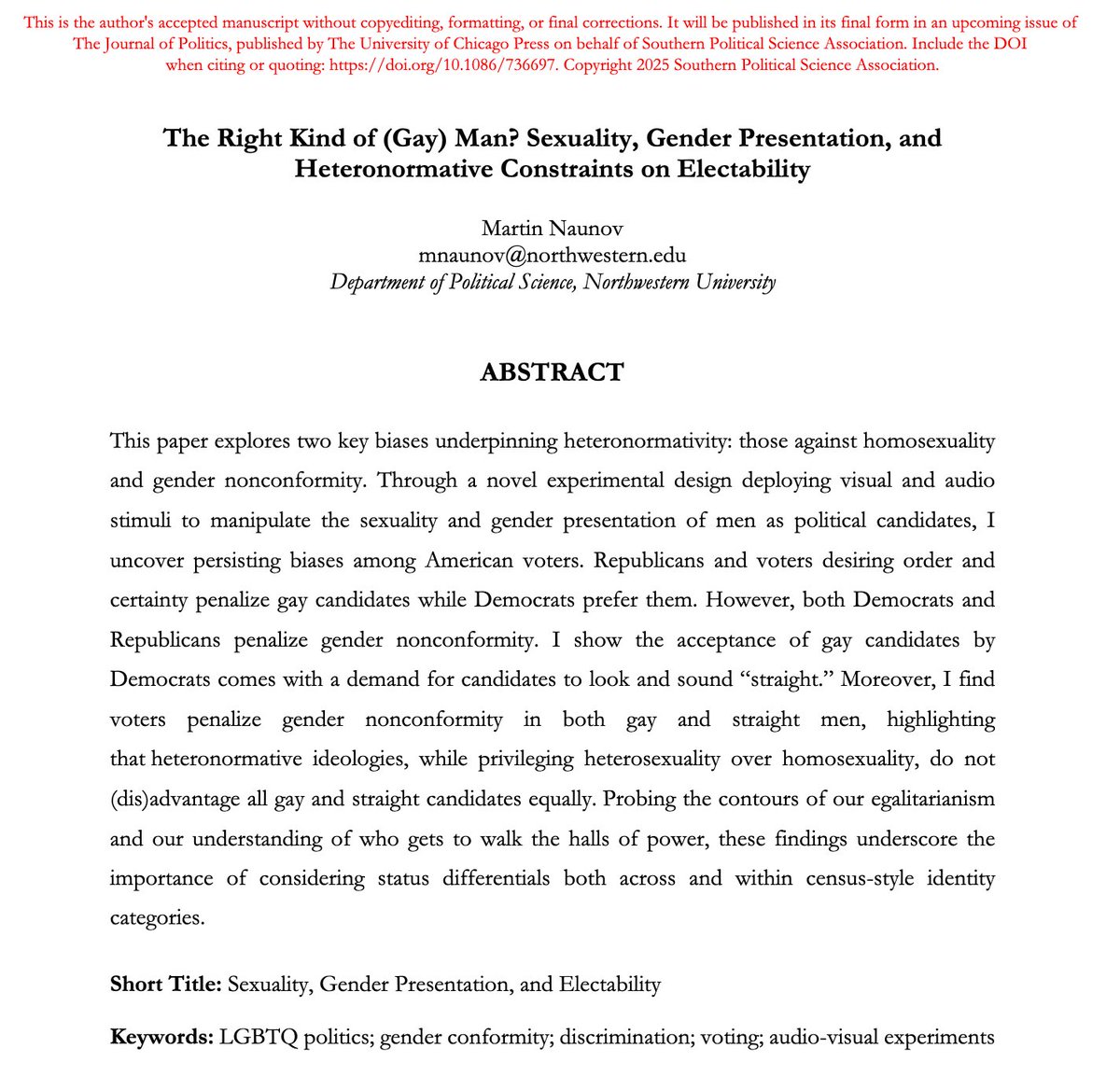
Republicans penalize gay candidates while Democrats prefer them as long as the candidate looks and sounds "straight," showing the differential political biases between homosexuality and gender nonconformity, finds @NotLipset in @The_JOP https://t.co/ATJRI7KfVb
Happy Pride! Let’s keep pushing for the kind of inclusion & egalitarianism that doesn’t demand we “cover” or tone down our (minoritized) identities & blend into the mainstream🌈
It’s the 1st day of Pride Month🌈 & I'm proud to share my new JOP article. Using a survey experiment, I show: Republicans still penalize gay candidates. Democrats do not—but they do penalize even subtle gender nonconformity, demanding that gay candidates look & sound “straight"
Trying to change the minds of people with different political views can be frustrating—but it’s not pointless.
A study by @NotLipset shows that by sharing personal stories and trying to understand other viewpoints, ordinary people can change opinions. https://t.co/ICHwUcwPor
@AlexanderSpangh@Ross_Dahlke@The_JOP But you’re absolutely right & we reflect on this in the discussion. Definitely more research is needed on how specific platform features—word limits, like visibility, content filtering—shape whether persuasion success or even attempt persuasion in the first place.
@AlexanderSpangh@Ross_Dahlke@The_JOP Algorithms may amplify this by making hostility more visible & rewarding. Public debates can also make ppl defensive—once someone takes a stance publicly, conceding gets harder. Plus even when attitudes shift, we may miss subtle changes.