Somebody picks it up.
If you leave something at the Vietnam Veterans Memorial in Washington, a National Park Service employee will come along and collect it. Not throw it away. Collect it.
It gets a number. It gets cataloged. It goes into a box in a storage facility that is not open to the public, on shelves that run up toward the ceiling.
They have been doing this since the wall was dedicated in November 1982.
More than four hundred thousand objects.
Combat boots. Dog tags. Medals. Photographs. Letters written to men who have been dead for fifty years, by people who still had something they needed to say to them.
Nobody planned for any of this. The memorial opened, and people started putting things down at the base of it, and somebody at the Park Service had to decide what the policy was going to be.
What they decided was that you do not throw away a letter written to the dead.
There are 58,307 names cut into that wall.
The people who leave these things are not asked to sign anything. Almost all of them are anonymous. They walk up, they set it down, they leave.
And a federal employee, whose job title has nothing to do with grief, walks the length of that wall, picks up a letter that was never addressed to her, and puts it somewhere it will be kept.
Curators have been opening those boxes and writing down what is inside for more than thirty years.
You are allowed to walk away from a grave.
The country decided it was not going to walk away from what you left there. 🇺🇸
On page twenty-six of “The Billionaire Tax” proposal in California, it explains how the state legislature can convert from a Billionaire Tax to an Everyone Tax without voter approval.
They can also adjust the tax to be a yearly tax, not just one time…again, without your approval.
Intelligence test for you: if this was meant to just target Billionaires, why did they write this in?
A new study finds California has the second worst roads in America, ahead of only Alaska. When you pay the highest gas taxes yet drive over the deepest potholes, your government is broken.
California Democrats new mileage tax scam
“When you add up the car tax, the gas tax, and this new mileage tax, for a family with 2 cars, a working family with 2 parents driving, they would have to pay $4,200 a year to the state of California just for the privilege of driving on crappy roads. $4,200, and that's after their income taxes. That doesn't include gas price, it doesn't include the car, the insurance. What are we thinking here?”
“I rise in opposition to AB 1421”
If the “NO” vote is visible through the envelope, that is likely an illegal violation of voter privacy. It could constitute state-level election law violations, federal voter intimidation, and constitutional civil rights infringements. It also provides a strong legal basis for seeking emergency injunctive relief to stop their use immediately.
1. Violation of Ballot Secrecy (State Law)
California’s Constitution and Election Code both guarantee that ballots must remain secret. This is a foundational protection.
California Constitution, Article II, Section 7:
“Voting shall be secret.”
California Elections Code §14291:
“No voter shall place a mark on the ballot that will make the ballot identifiable, and no person shall attempt to ascertain how a voter voted.”
If the design of the envelope automatically exposes a voter’s choice, for example, showing a “NO” vote through a hole, that is a direct violation of these provisions. Election officials could be held accountable for failing to safeguard ballot secrecy.
2. Voter Intimidation and Coercion (Federal Law)
If the envelope design allows others to identify and potentially retaliate against or pressure voters based on their vote, it can fall under federal voter intimidation statutes.
52 U.S.C. § 10307(b) (Voting Rights Act):
Prohibits any attempt to “intimidate, threaten, or coerce” a person for voting or attempting to vote.
18 U.S.C. § 594 (Federal Voter Intimidation Statute):
Makes it a federal crime to “intimidate, threaten, coerce, or attempt to intimidate, threaten, or coerce” anyone in connection with voting.
Even if no one has yet acted on this information, the design itself, if it enables targeting or intimidation, could be enough for legal action.
3. Civil Rights Violations (Constitutional and Federal Claims)
A pattern of exposing votes could support claims under the 14th Amendment (Equal Protection) and 42 U.S.C. § 1983, which allow individuals to sue state officials for violating constitutional rights.
Voters could argue that the state failed to protect their fundamental right to vote in secret, treating them differently from voters in jurisdictions where ballots remain private.
Courts have previously ruled that state action leading to vote exposure can “chill” participation, which itself is a violation of constitutional protections.
4. Grounds for Injunctive Relief or a Restraining Order
If the envelopes are still in use, a strong legal case could be made for an injunction or temporary restraining order (TRO) to stop their distribution. Courts grant such relief when:
There’s a likelihood of success on the merits (here, violation of ballot secrecy and voter intimidation statutes).
Voters will suffer irreparable harm (once a ballot’s contents are exposed, privacy cannot be restored).
The public interest strongly favors protecting the right to vote in secret.
A TRO could compel the county to immediately redesign or recall the envelopes and issue new ones that ensure secrecy.
5. Potential Liability for Election Officials
If officials knew or should have known the envelope design exposed votes and did nothing, they could face legal consequences, including:
Civil lawsuits by affected voters.
Investigations by the U.S. Department of Justice’s Civil Rights Division.
State enforcement by the California Attorney General or Secretary of State (ironically, the same office potentially liable here).
Maybe I should share this with a lawyer?
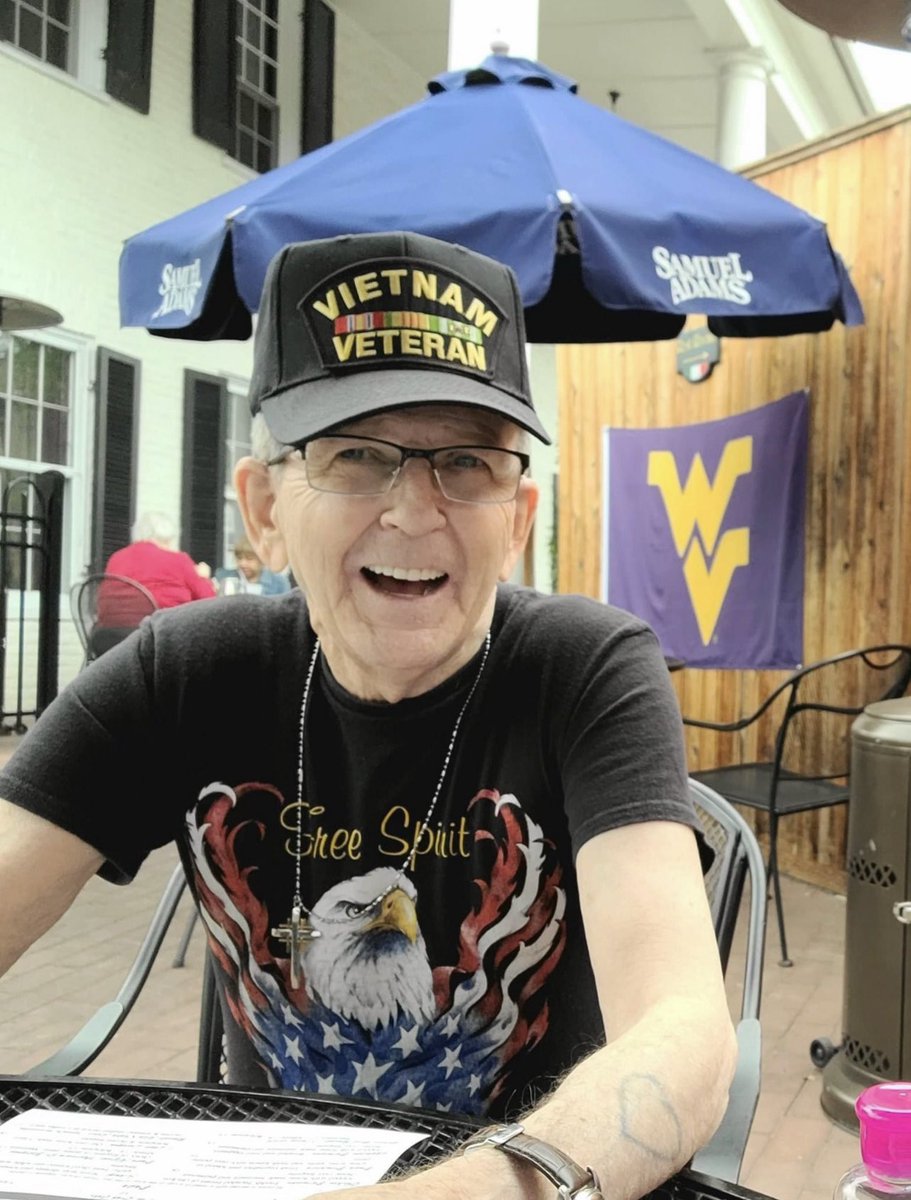
“I was in vietnam 1965-1966. We had grunts who followed Charlie into their tunnels called Tunnel Rats to give their location by radio to Hqs. These young men were brave Heroes who fought & died for their country.” - Albert Bruck 🇺🇸 Featured by https://t.co/L3uoXFDpnl 🇺🇸 #Saturday
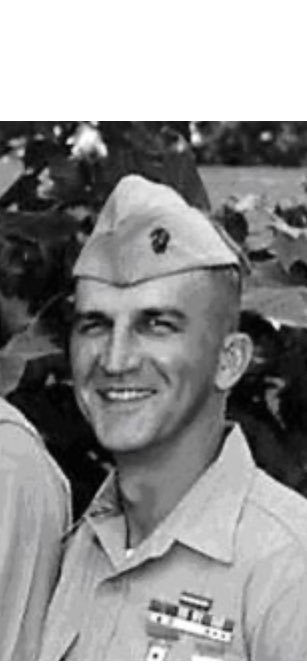
U.S. Marine Corps Second Lieutenant Andrew Marco Sherman was killed in action on August 8, 1966 in Quang Tri Province, South Vietnam. For his extraordinary heroism & bravery that day, Andrew was awarded the Navy Cross. He was 32 years old. Remember Andrew today. American Hero.🇺🇸
Today we recognize recipients of our nation’s oldest military honor, the Purple Heart.
These extraordinary service members are our nation’s heroes. I’m proud to stand and recognize their sacrifice and courage.
#PurpleHeartDay
@DeptofDefense
On #PurpleHeartDay, we recognize and pay tribute to our nation's military men and women whose sacrifices and wounds in defense of liberty merited the nation's oldest military award. To those living and deceased Purple Heart recipients, we are grateful for your service.
United States Marine Corps Lance Corporal Raul Fuentes Flores was killed in action on August 7, 1966 in Quang Nam Province, South Vietnam. Raul was 19 years old & from Corpus Christi, Texas. 3rd Battalion, 1st Marines, K Company. Remember Raul today. Semper Fi. American Hero.🇺🇸
U.S. Navy Lieutenant Charles Wigger Fryer was declared missing in action on August 7, 1966 after a combat mission over North Vietnam. Charles was a 26 year old pilot from Oklahoma City, Oklahoma. Fighter Squadron 152. Sadly, Charles’ remains were never recovered. American Hero.🇺🇸
United States Army First Lieutenant Loren Douglas Hagen was killed in action on August 7, 1971 in South Vietnam. For his extraordinary heroism & bravery that day, Loren was awarded the Medal of Honor. He was 25 years old. Remember Loren today. American Hero. De Oppresso Liber.🇺🇸
“I’m the proud mother of my only child, Sgt.Jonathan Peney who served as an Army Ranger Medic with 75th RANGER REGIMENT, 1/75, 2nd Platoon D Co, from 2005 to 2010. His 4th deployment was his last. Rest In Peace my son.” - Sue Peney 🇺🇸 #RIP#Sunday 🇺🇸 https://t.co/3yzoWb9Pb3…