This sounds nice, but it's a great way to undermine the welfare state.
The strongest welfare states in the world (the Nordics) tax everyone, including nurses. And they give everyone universal healthcare, childcare, pensions, education in return.
When the middle class has skin in the game, they defend the system. When welfare is 'just for the poor', it becomes a poor program: stigmatized, underfunded, easy to gut.
That's why billionaires keep pushing this idea. The real scandal isn't that this nurse pays $12k.
It's that Jeff Bezos pays $0.
Every time we've made it easier to write software, we've ended up writing exponentially more of it.
When high-level languages replaced assembly, programmers didn't write less code - they wrote orders of magnitude more, tackling problems that would have been economically impossible before. When frameworks abstracted away the plumbing, we didn't reduce our output - we built more ambitious applications. When cloud platforms eliminated infrastructure management, we didn't scale back - we spun up services for use cases that never would have justified a server room.
@levie recently articulated why this pattern is about to repeat itself at a scale we haven't seen before, using Jevons Paradox as the frame. The argument resonates because it's playing out in real-time in our developer tools. The initial question everyone asks is "will this replace developers?" but just watch what actually happens. Teams that adopt these tools don't always shrink their engineering headcount - they expand their product surface area. The three-person startup that could only maintain one product now maintains four. The enterprise team that could only experiment with two approaches now tries seven.
The constraint being removed isn't competence but it's the activation energy required to start something new. Think about that internal tool you've been putting off because "it would take someone two weeks and we can't spare anyone"? Now it takes three hours. That refactoring you've been deferring because the risk/reward math didn't work? The math just changed.
This matters because software engineers are uniquely positioned to understand what's coming. We've seen this movie before, just in smaller domains. Every abstraction layer - from assembly to C to Python to frameworks to low-code - followed the same pattern. Each one was supposed to mean we'd need fewer developers. Each one instead enabled us to build more software.
Here's the part that deserves more attention imo: the barrier being lowered isn't just about writing code faster. It's about the types of problems that become economically viable to solve with software. Think about all the internal tools that don't exist at your company. Not because no one thought of them, but because the ROI calculation never cleared the bar. The custom dashboard that would make one team 10% more efficient but would take a week to build. The data pipeline that would unlock insights but requires specialized knowledge. The integration that would smooth a workflow but touches three different systems.
These aren't failing the cost-benefit analysis because the benefit is low - they're failing because the cost is high. Lower that cost by "10x", and suddenly you have an explosion of viable projects. This is exactly what's happening with AI-assisted development, and it's going to be more dramatic than previous transitions because we're making previously "impossible" work possible.
The second-order effects get really interesting when you consider that every new tool creates demand for more tools. When we made it easier to build web applications, we didn't just get more web applications - we got an entire ecosystem of monitoring tools, deployment platforms, debugging tools, and testing frameworks. Each of these spawned their own ecosystems. The compounding effect is nonlinear.
Now apply this logic to every domain where we're lowering the barrier to entry. Every new capability unlocked creates demand for supporting capabilities. Every workflow that becomes tractable creates demand for adjacent workflows. The surface area of what's economically viable expands in all directions.
For engineers specifically, this changes the calculus of what we choose to work on. Right now, we're trained to be incredibly selective about what we build because our time is the scarce resource. But when the cost of building drops dramatically, the limiting factor becomes imagination, "taste" and judgment, not implementation capacity. The skill shifts from "what can I build given my constraints?" to "what should we build given that constraints have in some ways been evaporated?"
The meta-point here is that we keep making the same prediction error. Every time we make something more efficient, we predict it will mean less of that thing. But efficiency improvements don't reduce demand - they reveal latent demand that was previously uneconomic to address. Coal. Computing. Cloud infrastructure. And now, knowledge work.
The pattern is so consistent that the burden of proof should shift. Instead of asking "will AI agents reduce the need for human knowledge workers?" we should be asking "what orders of magnitude increase in knowledge work output are we about to see?"
For software engineers it's the same transition we've navigated successfully several times already. The developers who thrived weren't the ones who resisted higher-level abstractions; they were the ones who used those abstractions to build more ambitious systems. The same logic applies now, just at a larger scale.
The real question is whether we're prepared for a world where the bottleneck shifts from "can we build this?" to "should we build this?" That's a fundamentally different problem space, and it requires fundamentally different skills.
We're about to find out what happens when the cost of knowledge work drops by an order of magnitude. History suggests we (perhaps) won't do less work - we'll discover we've been massively under-investing in knowledge work because it was too expensive to do all the things that were actually worth doing.
The paradox isn't that efficiency creates abundance. The paradox is that we keep being surprised by it.
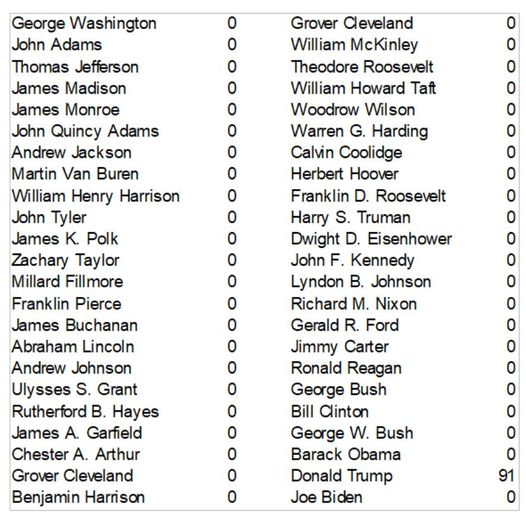
As a reminder,
The US has had 46 presidents. Among them, there have been 91 criminal felony charges indicted. Those charges are distributed among the presidents as in the following list:
1/2
Prop's to Twilio's CEO:
Amazon calling back staff to the office 5 days per week raises the question at every other tech company if they'll do it. Telling staff that nothing changes until the CEO remains in-place is bold: but also wonderful for retention + recruitment.
In 1922, a group of scientists went to the Toronto General Hospital where diabetic children were kept in wards, often 50 or more at a time. Most of them were comatose and dying from diabetic ketoacidosis.
These children were essentially in their death beds, awaiting what was at that time, certain death. The scientists moved swiftly and proceeded to inject the children with a new purified extract of insulin.
As they began to inject the last comatose child, the first one to be injected began to wake up. Then one by one, all the children awoke from their diabetic comas. A room that was full of death and gloom suddenly became a place of joy and hope.
In the early 1920s, Frederick Banting and Charles Best discovered insulin under John Macleod at the University of Toronto. With the help of James Collip, insulin was purified, making it available to successfully treat diabetes. Both Banting and Macleod earned Nobel Prizes for their work in 1923.
Banting was 32 when he received the Nobel Prize, and he chose to share half the prize money with Best, who was his assistant and just 24 years old at the time. Banting refused to put his name on the patent and instead sold it to the University of Toronto for $1. He thought it was unethical to profit from a discovery that would save millions of lives. "Insulin belongs to the world, not to me," he said.
Bun 1.0 is here and it’s shockingly compelling.
Bun is a lightning fast runtime, build tool, bundler, package manager, and testing tool, all rolled into one.
Bun replaces Node, npm, Yarn, pnpm, tsc, Jest, Vite, esbuild, Babel, webpack, and much more.
https://t.co/W3pMWHgZjg
The Computer Girls
The story of the 1967 Cosmopolitan article talking about a strange, new profession dominated by women: the programmer
[read more: https://t.co/BNUNoZI2tG]
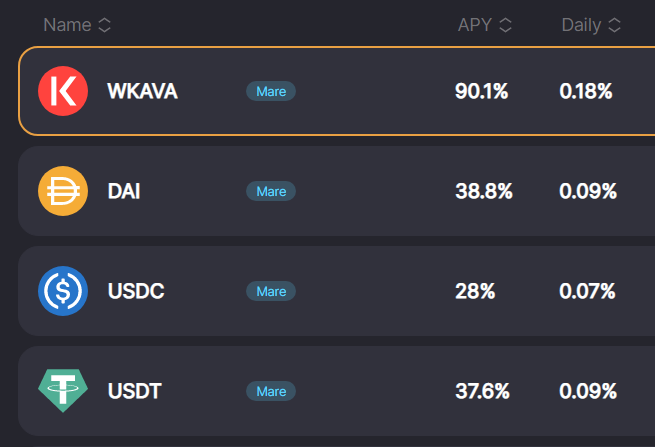
Consistently 25%+📈
That's our stablecoins APY with @SonneFinance!
$DAI $USDC $USDT
$wstETH $BTC $ETH
+ more
Our @optimismFND TVL is past $11M now🔥
---
How to:
1️⃣bridge tokens over to OP
https://t.co/mf9QfXbQKi
2️⃣Stake in our dapp
https://t.co/ccUCS6oFBI
That's it. Simple😉
I've seen a lot of people asking "why does everyone think Twitter is doomed?"
As an SRE and sysadmin with 10+ years of industry experience, I wanted to write up a few scenarios that are real threats to the integrity of the bird site over the coming weeks.




![Rainmaker1973's tweet photo. The Computer Girls
The story of the 1967 Cosmopolitan article talking about a strange, new profession dominated by women: the programmer
[read more: https://t.co/BNUNoZI2tG] https://t.co/SnqWyndztC](https://pbs.twimg.com/media/FtQeVwoXsAAHsGc.png)


