The era of unprovable AI writing just ended.
Starting August 2, every new Claude model weaves an invisible watermark into the words it generates. Copy it, paste it into an email, a blog post, a college essay, and the watermark travels with the text. Anthropic will publish the detection method so anyone can check, which means your professor, your boss, and the platform you post on can all run the same test you can.
Here's the part almost nobody knows. Google has been doing this to Gemini since 2024. Every Gemini answer you've read for two years carried a hidden signature, and Google barely mentioned it. Claude joining means the two most-used writing models on earth now sign their own work.
Think about what this ends. The entire appeal of AI writing was deniability. Your cover letter, your LinkedIn post, your term paper, your "personal" apology email. Nobody could ever prove a machine wrote it, and everyone quietly relied on that. The labs themselves just decided to hand out the proof.
The mechanism is the wild part. The model tilts its word choices according to a secret key, and across a few hundred words those tilts form a pattern a detector can confirm.
The writing carries its own confession in the sentence structure.
Paraphrase hard enough and it washes out. Short snippets slip through too. But the default just flipped. AI text used to be innocent until proven guilty.
Now it ships pre-confessed.
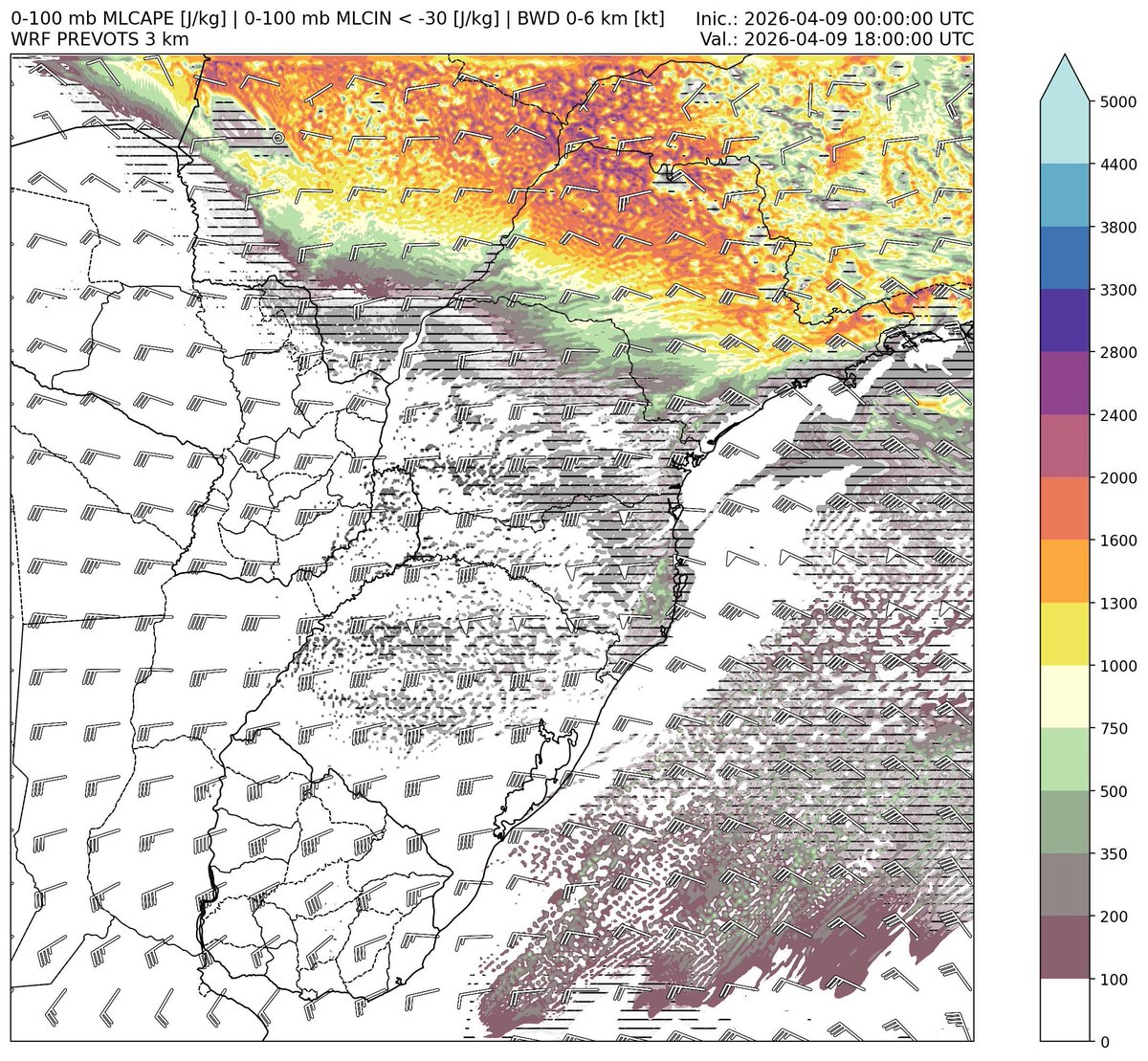
I'm collaborating with @lucaschaser to make a model visualization platform for South America, including my own operational WRF 3 km runs. You will have all the variables needed for convection forecasting, plus point soundings at a small cost here https://t.co/Y01pZFwbKy
Think Like an Entrepreneur to Succeed as a Researcher
Most people think academic success is about rigor and persistence. But it’s just as much about how you act under uncertainty. Here are 4 practical takeaways from our open-access Journal of Business Venturing Insights article:
1️⃣ Recognize and frame opportunities. Great researchers don’t just find questions—they position them to resonate with reviewers, editors, and funders. Success depends on how well you align your ideas with what the field values.
2️⃣Build adaptive trajectories. Careers are not linear—they evolve through feedback, constraints, and shifting priorities. The most effective researchers adjust direction continuously rather than following rigid plans.
3️⃣ Use constraints creatively. Limited resources are not a barrier—they’re the reality. Top researchers recombine what they have (data, collaborators, methods) to keep moving forward.
4️⃣ Iterate relentlessly. Rejection is not failure—it’s the process. Progress comes from cycles of submission, feedback, and revision that shape both your work and your identity as a scholar.
And remember: success is co-created.
Doctoral programs build foundational skills, institutions shape incentives, and funding bodies determine what gets supported. Your trajectory is entrepreneurial—but it is also embedded in these systems.
Final thought: Don’t just do research. Approach your career like an entrepreneur.
Get #opeanaccess article: Aguinis, H., Ding, Y., Uy, M., & Foo, M. D. 2026. Academic entrepreneuring: Bridging entrepreneurial action and academic careers. Journal of Business Venturing Insights, 25: e00609. https://t.co/T9D2cgfN78
Watch AI-generated video summary: https://t.co/OhOHN5uRWd
@AACSB@AIB_LAC@AIB_World@anzam_news@AOM_CTO@AOM_HCM@AOM_OB@AOM_ONE@AOM_SIM@AOM_STR@AOM_TIM@AOMDEI@bam_ac_uk@cms_aom@EasternAoM@EFMDNews@ENT_Div_AoM@EURAM_BXL@GWAlumni@GWAlumniChicago@GWAlumniWeekend@GWAlumniofSoCal@GWArgentina@GWBAA@GWEnergyAlumni@gwbusiness@GW_OVPR@GWSBalumni@GWtech@GWtweets@HR_Div_AoM@IberoAoM@ICSB@IIAS_IISA@MFCAinc@mh_aom@MOC_AOM@MOCDivision@presidentofGW@RMD_AOM@SIOPtweets@SouthernMgt@Strategic_Mgmt@SWAcademyOfMGMT@ThePhDProject
TREEPEDIA es una web del MIT Sensable City Lab que evalúa la cobertura arbórea a nivel de calle en 34 ciudades del mundo, por ahora, y les asigna un puntaje (s/mediana).
Los árboles ayudan a reducir la temperatura urbana y las inundaciones.
https://t.co/rKt9cg6ZXP
The only websites you need to actually understand Machine Learning (visually):
1. Ostralyan
https://t.co/ADZJGIrhC8
2. ML Visualizer
https://t.co/ZnDDq0T6ov
3. Interactive ML
https://t.co/2lQDrFz0mz
4. ML Visualiser
https://t.co/YZNV9i5fJA
5. TensorFlow Playground
https://t.co/jhDNAuCOyL
Skip boring theory.
See how ML works in real-time. 🚀
Follow @DivyanshT91162 for more...
GeoAI is transforming how we farm 🌾🛰️
Deep learning on ArcGIS Pro can detect diseased citrus trees, forecast crop yields, and map future planting zones: all on one platform by Esri.
Read more: https://t.co/romOXTYdXs
#Geoawesome#GeoAI#GIS#ArcGIS#Agriculture#MachineLearning
Money can grow on trees👀💰🌳
A new model is emerging — one that harnesses the power of AI to pinpoint exactly where trees are regrowing and directs finance to the restoration projects that will most likely deliver the most benefits.
Learn more here: https://t.co/wZpJn17Blv
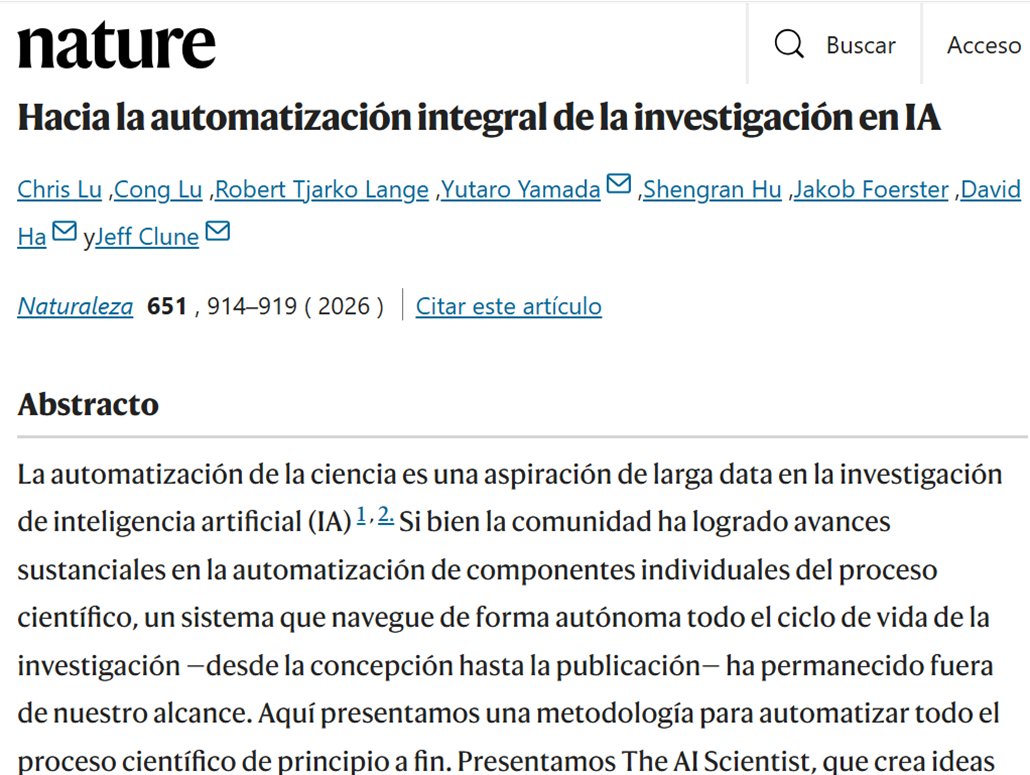
Nature de "The AI Scientist"
Un sistema de IA (Sakana AI, Oxford y UBC) que automatiza completamente el proceso de investigación científica, acelerando descubrimientos científico
Desde la generación de ideas, estadística, hasta la redacción del articulo
https://t.co/LjB9hyDegc
⛲Known as the "City of Springs," Jinan is living up to its name this autumn! Abundant rains have all 72 famous springs gushing in full force, making it the best time to witness their legendary scenery.
(Source: Xinhua)
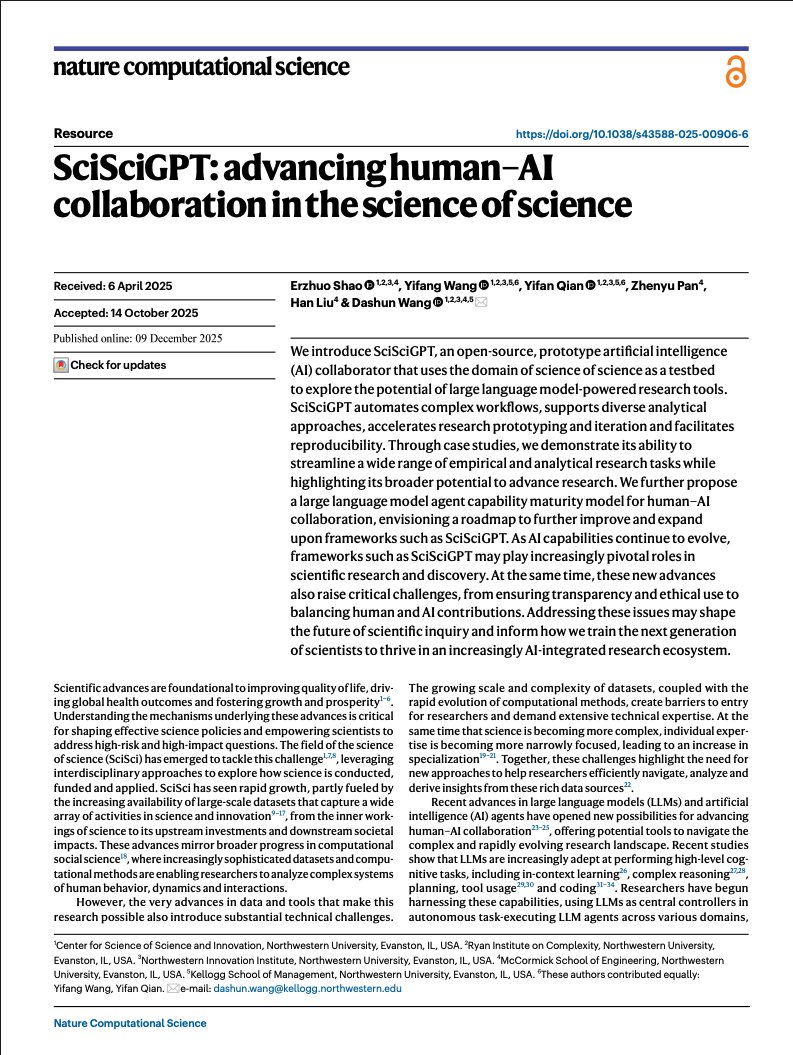
🚨New paper out in Nature Computational Science!
Introducing #SciSciGPT: an open-source, multi-agent, prototype AI collaborator designed to support research and discovery, using the science of science as a testbed.
Led by the amazing @ErzhuoShao
Demo + paper below!
1/n
🔬 🖥️ Applications are open for the CSHL course Quantitative Imaging: From Acquisition to Analysis (April 6–21, 2026)!
An intensive, hands-on course covering advanced fluorescence microscopy and quantitative image analysis using open-source tools.
🗓️ Apply online by Jan 30, 2026
https://t.co/SwYt1yGtHv
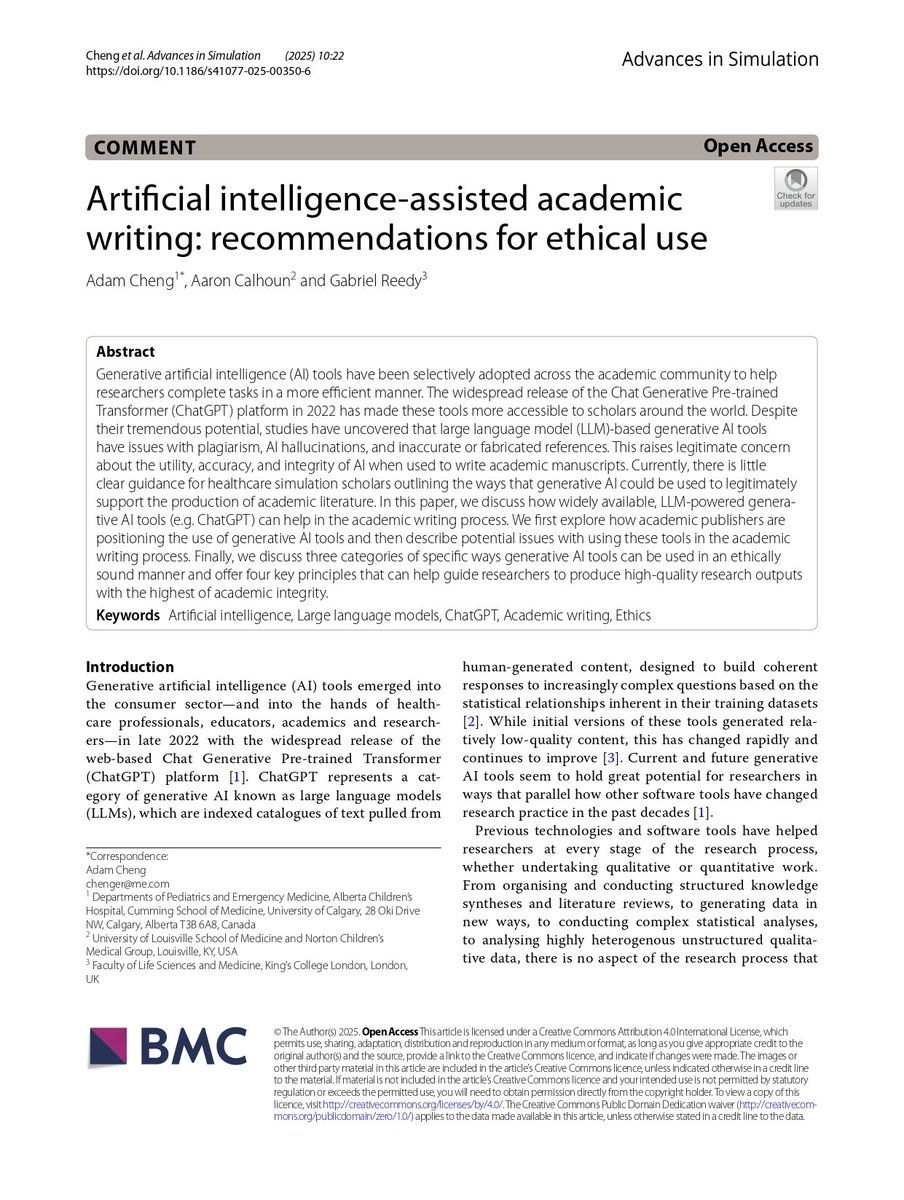
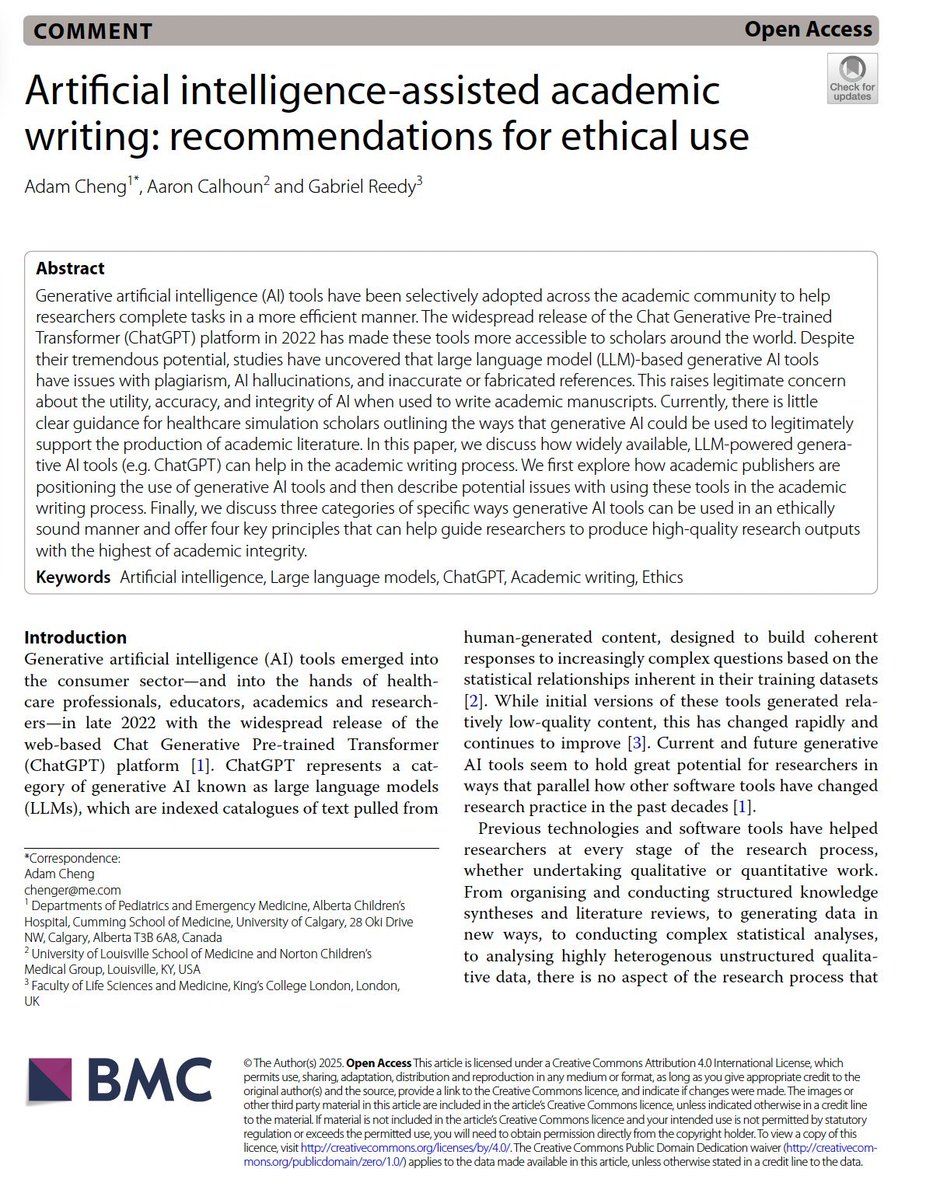
3-tier approach that help you maintain integrity when using AI for research ⤵️
(Retweet 𝘵𝘰 𝘱𝘳𝘰𝘮𝘰𝘵𝘦 𝘦𝘵𝘩𝘪𝘤𝘢𝘭 𝘈𝘐 𝘶𝘴𝘦)
— TIER 1 (Safe):
Grammar checks, readability improvements, language translation
— TIER 2 (Careful):
Outlining from YOUR content, summarizing YOUR ideas, improving clarity of YOUR drafts
— TIER 3 (Avoid):
Writing de novo text, generating references, data interpretation
Remember: AI should help polish YOUR ideas, not create them!
The biggest lesson? Ask yourself 4 questions before using AI in research:
— Are the primary ideas, insights and analysis still mine?
— Am I maintaining my core research skills?
— Have I verified all content is accurate and bias-free?
— Have I disclosed exactly how AI was used?
If you answer "no" to any of these, rethink your approach.
1/5