Introducing four of the speakers joining us at AgentCon Silicon Valley on May 4th. 🌉✨
Patrick Chanezon @NyahMacklinDev@pelikhan JD Armada
Microsoft, Neo4j, GitHub, and Elastic — all in one room, all in one day at the Computer History Museum, Mountain View. This is the kind of lineup you clear your calendar for.
Free to attend. Spots are limited.
Made possible by @pendoio@Microsoft@CircleCI@neo4j@descopeinc CODE Magazine @WeAreDevs
👉 Register now: https://t.co/gVRxqQytEl
#AgentCon #GlobalAICommunity #AIAgents #AgentConSiliconValley #AIWorldTour
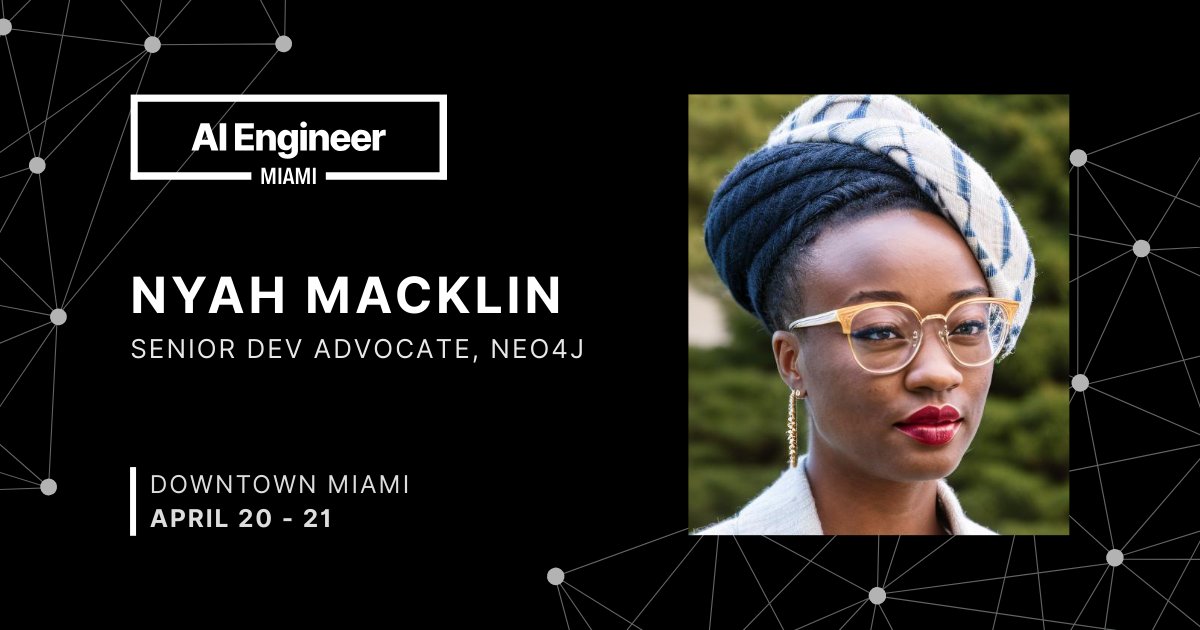
Welcome @NyahMacklinDev to the AIE Miami speaker lineup!
Nyah will explore context engineering and why AI systems need more than intelligence to reason reliably. From connected memory to graph-based knowledge representation, dive into how better context leads to better AI.
When AI agents have to execute complex, multi-hop reasoning across interconnected knowledge domains, traditional RAG systems fail.
@NyahMacklinDev will show us how to move beyond vector databases alone and into how engineers can ground agents and large language models (LLMs) to uncover connections in data that are often missed by conventional RAG techniques.
https://t.co/olWGsdRIG5
Traditional RAG can retrieve similar content. But can it uncover real connections across complex enterprise data?
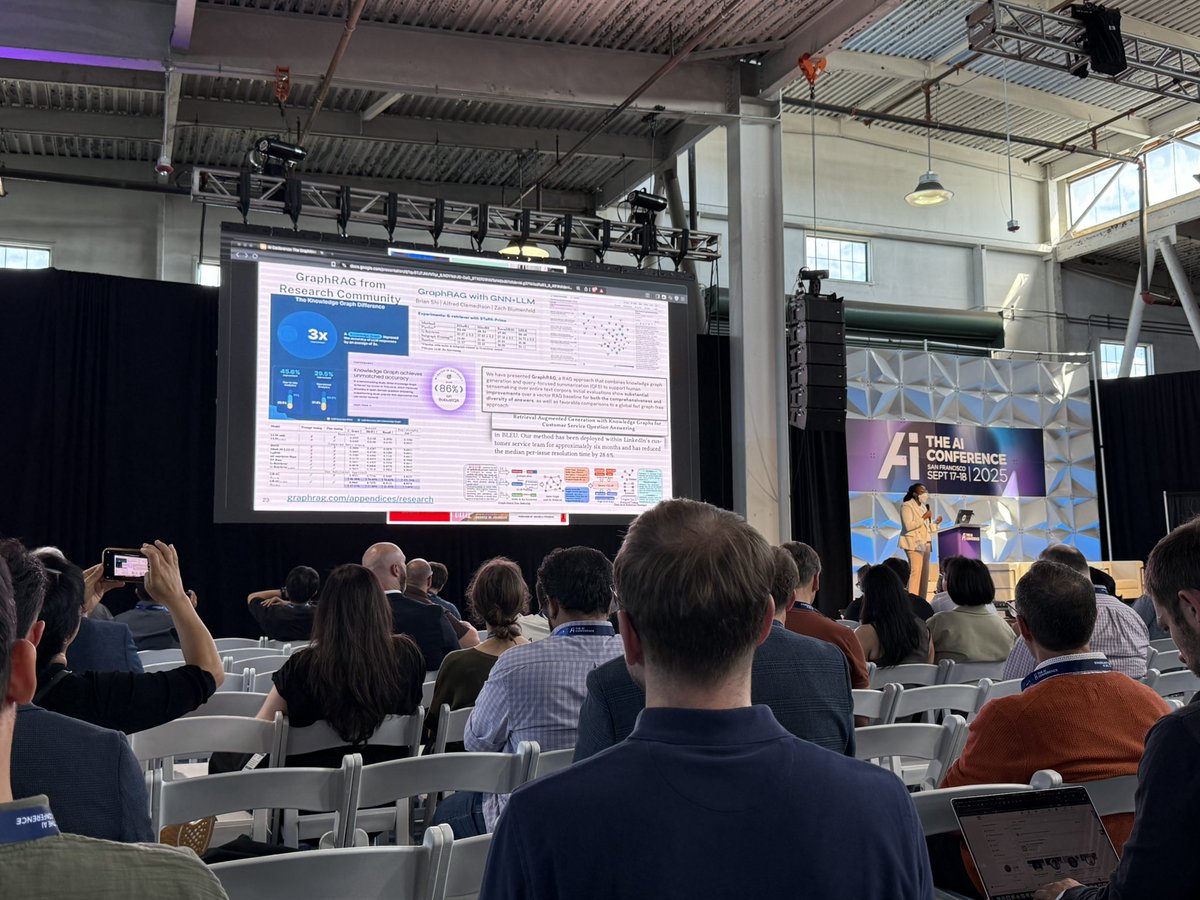
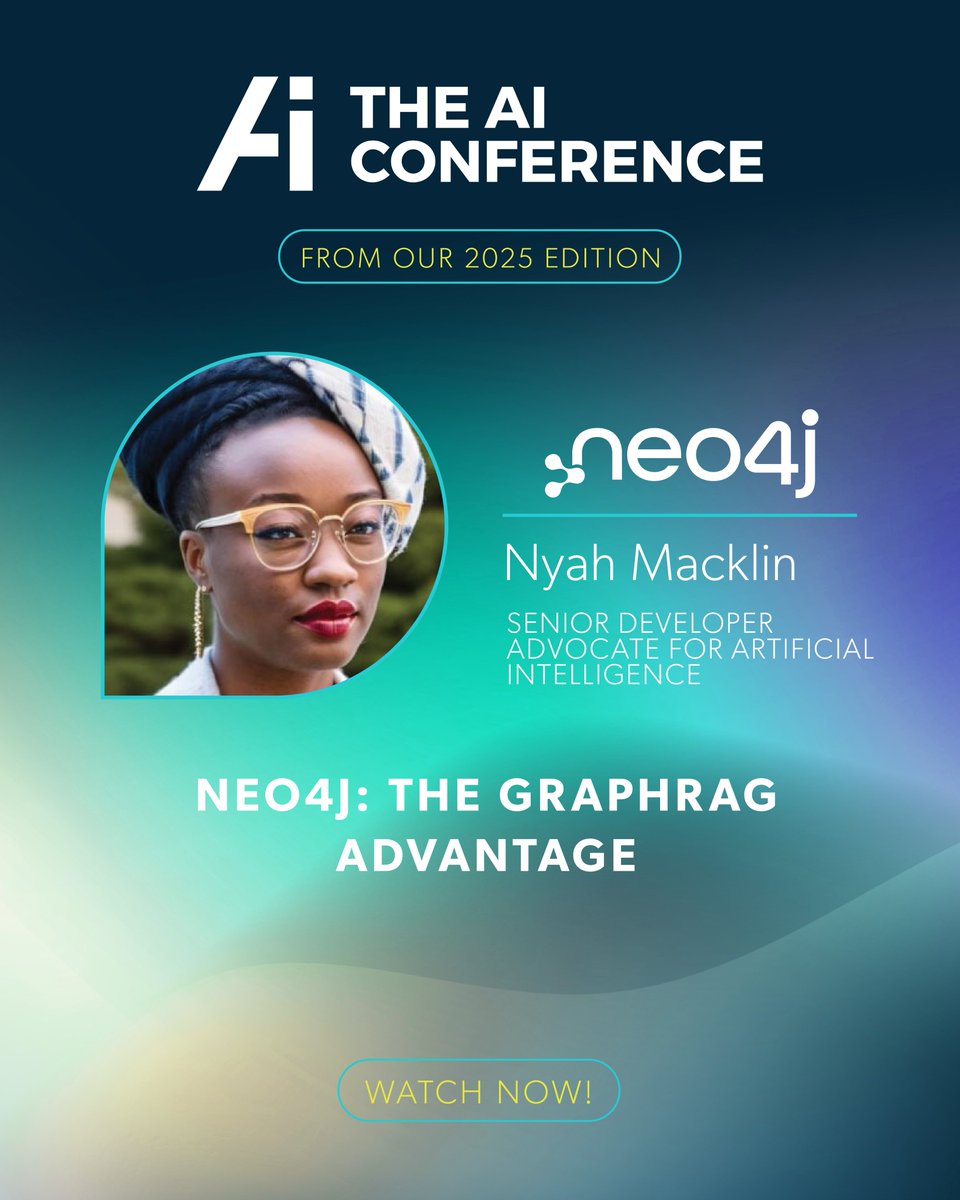
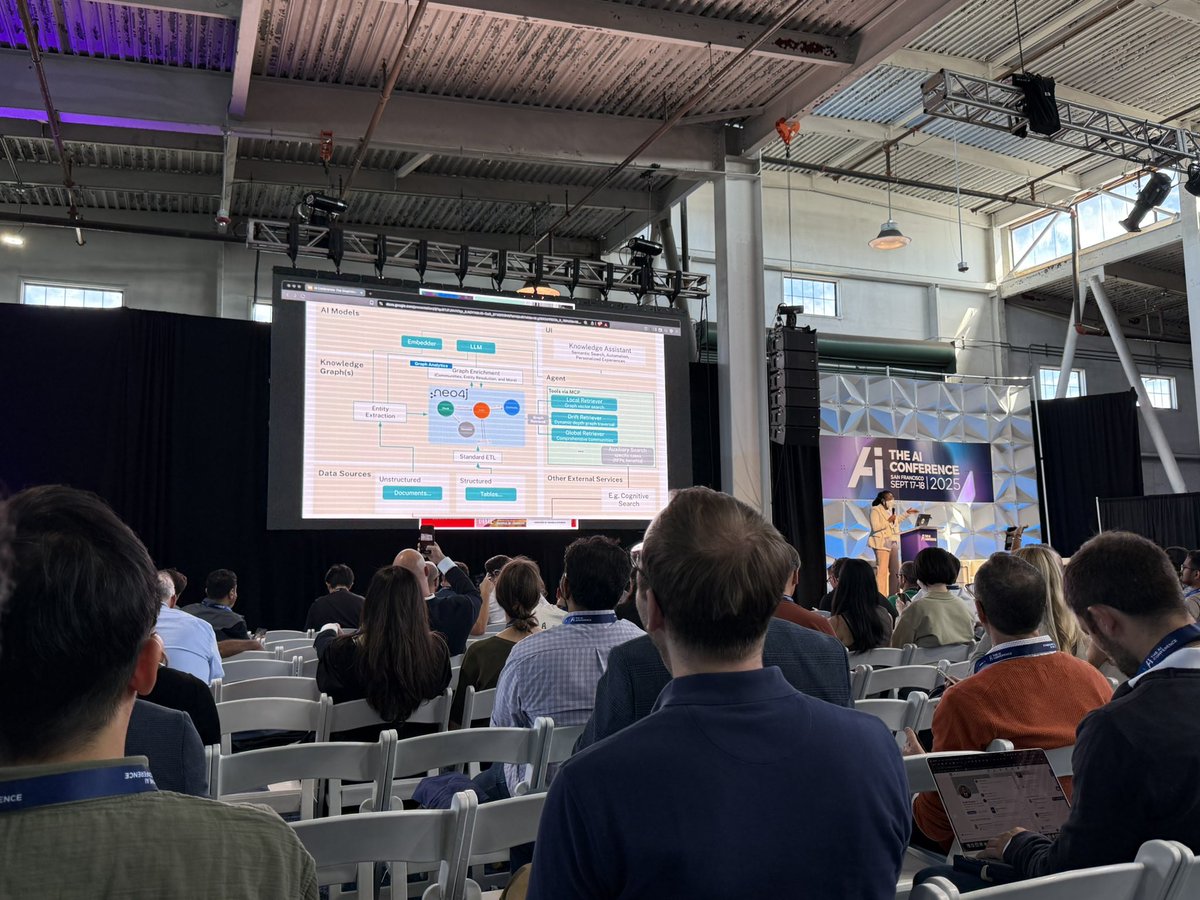
At The AI Conference 2025, Nyah Macklin, Senior Developer Advocate for AI at Neo4j, broke down how GraphRAG and knowledge graphs power more accurate, explainable, and reliable AI agents.
Watch the full talk on our YouTube channel. https://t.co/QYlyMH2gY3
@blackgirlbytes@neo4j@Ai4Conferences Aw thank you BOOOO!!! I just got back on Twitter, so I saw all these wonderful posts about my talks <3 Grateful for you queen!
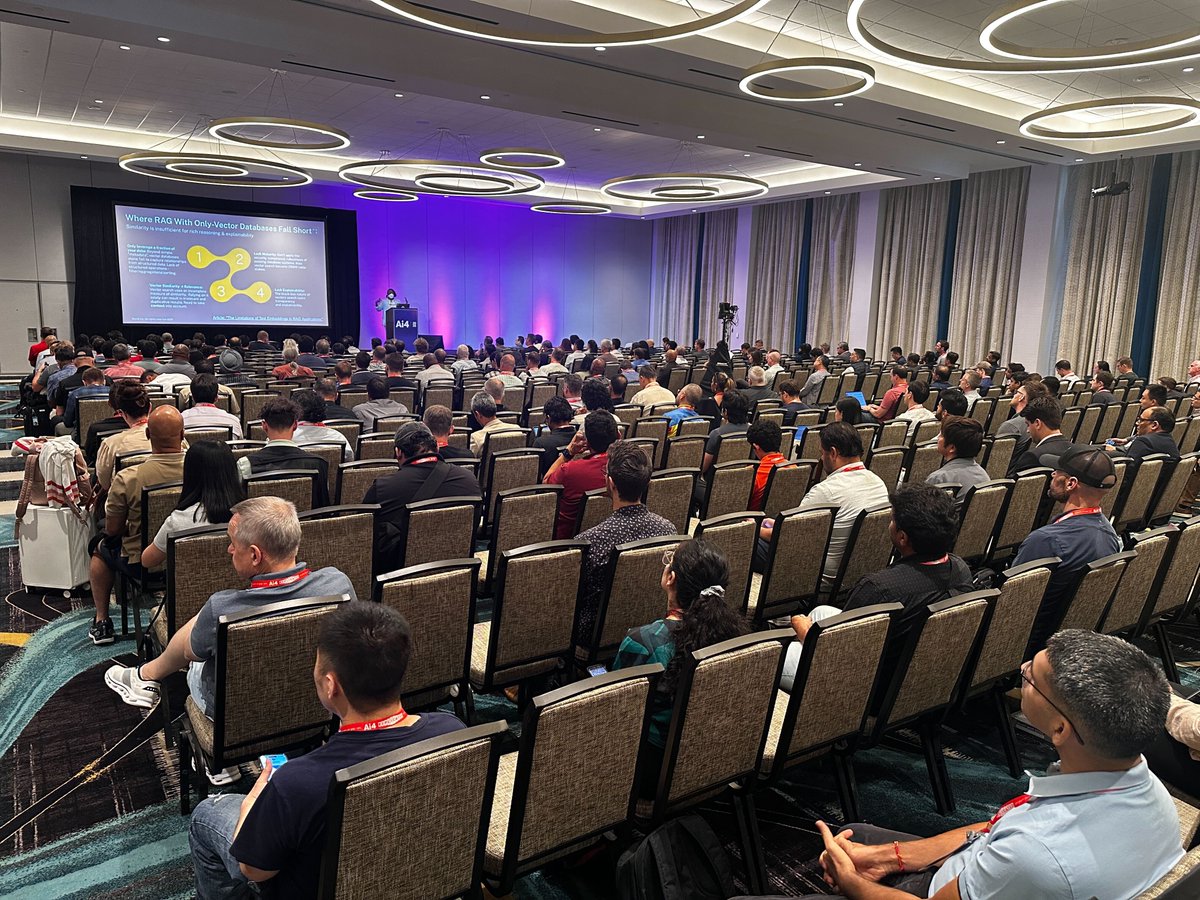
Nyah at @Ai4Conferences - talking about the #GraphRAG Advantage: Providing Enterprise-Grade Knowledge To AI Agents And LLMs.
Psst: you can download the presentation when the event ends here: https://t.co/s5QcgvfaRx
#Neo4j@NyahMacklinDev
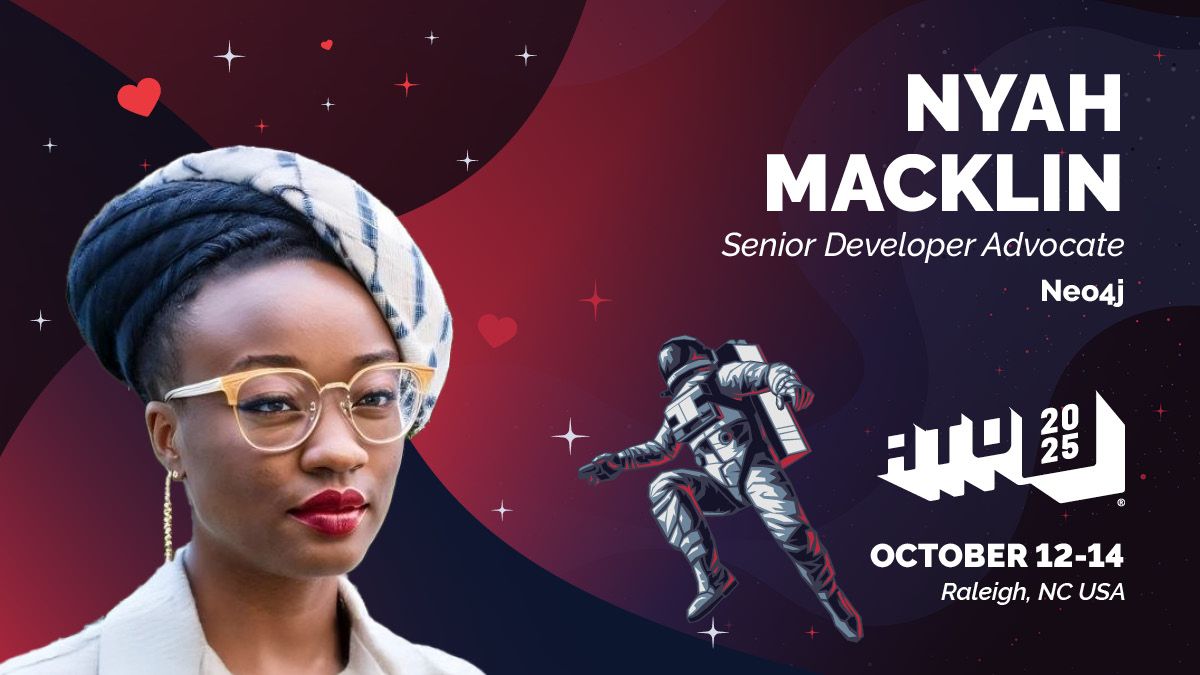
We're excited to have Nyah Macklin (@nyahmacklindev), Senior Developer Advocate for @neo4j, presenting "Is Your LLM Lying to You? Ensuring Factual Accuracy with GraphRAG and Knowledge Graphs" at #AllThingsOpen! https://t.co/KrVWtVrYcC
@shashiwhocodes Last year, I learned so much from Nyah Macklin’s @NyahMacklinDev powerful talk on tech ethics and data responsibility. She shared frameworks to bring ethical thinking into the development lifecycle—an essential topic for all engineers.
#CareerDevelopment#ethics
Every member of our free @resilientcoders engineering cohort must get a paid client. After 5 weeks of HTML, CSS, & JS they made $40,370!
Here are the contract amounts:
10000
6000
5000
2000
1500
1200 x 2
1000 x 3
900
850
800 x 2
700 x 2
670
600
500 x 3
400 x 3
350 x 5
Yes, we did shut down Salesforce a year ago, as we have many SaaS providers—an internal estimate is about 1,200 SaaS shut down.
No, I don't think it is the end of Salesforce; might be the opposite.
Here is what actually happened and how/why we originally intended to NOT share it publicly:
At Klarna, we decided early to explore the potential of AI and LLMs—mostly ChatGPT—while being open to testing all things that seemed to be trending.
We encouraged all employees to do so and allowed them to pursue ideas organically rather than following "management direction" on exactly what they should be building.
In the early days of ChatGPT, we heard a lot:
"this tool allows you to feed all your PDFs, all your data sources to a LLM!"
However, the old universal truth of data scientists still holds true, even in AI: "shit in, shit out."
Feeding an LLM the fractioned, fragmented, and dispersed world of corporate data will result in a very confused LLM.
We started instead exploring a few key concepts: What of our data was actually valuable? What data was duplicative, incorrect, or contradicting? Why was it like that?
While people nowadays can criticize things like Wikipedia, we also reflected on the fact that it is a remarkable achievement—having over 20,000 people collaborate on the largest graph of knowledge that is still fundamentally of high quality, accessibility, and accuracy. What could we learn from this?
A Swedish company, @neo4j, and @emileifrem introduced us to the beautiful world of graphs.
We further explored data modeling, ontology, and, of course, vectors, RAGs, and many things.
Key to our explorations became the conclusion that the utilization of SaaS to store all forms of knowledge of what Klarna is, why it exists (docs), what it tries to accomplish (slides, tickets, kanban boards), how it is doing (sheets, analytics), who is it dealing with (CRM, supplier management), who works here (ERP, HR) and what it has learnt was fragmented over these SaaS—most of them having their own ideas and concepts and creating an unnavigable web of knowledge that required a tremendous amount of Klarna specific expertise to operate and utilize.
We also recognized that enterprise software has a standard set of features that are vital for it to operate—features such as audit, versioning, access and edit management, and similar universal needs. We need them as well, but that fragmentation again adds friction, admin overhead, and more.
So, we decided to start consolidating; to put things together, connect our knowledge, and remove the silos. The side consequence of this was the liquidation of SaaS—not all of them, but a lot of them. And not for the license fees, even though those savings have been nice, but for the unification and standardisation of our knowledge and data.
So no, we did not replace SaaS with an LLM, and storing CRM data in an LLM would have its limitations. But we developed an internal tech stack, using Neo4j and other things, to start bringing data=knowledge together.
Ultimately, we found this very interesting, but more importantly starting seeing serious productivity gains. We allowed our internal AI to use this knowledge, and we realised with the help of @cursor_ai we could quickly deploy new interfaces and interactions with it.
So, I discussed with one of my board members: should we share this publicly?
We decided not to. We hold no grudge against SaaS (not true—I hate some of it, but won't tell you which one). But we are a payments company and a neo bank, there is limited value for us to share this externally.
However, Klarna, being a bank, holds quarterly calls with its investors, and in passing on of these calls, I mentioned that we had removed some SaaS software including Salesforce. It turns out that the recording was leaked to @SeekingAlpha, and they put out a news post about it. And from there, it went crazy.
Suddenly, @Benioff was asked on stage why Klarna was leaving Salesforce. I was tremendously embarrassed.
So, to summarise, what does this mean? Will all companies do what Klarna does? I doubt it. On the contrary, much more likely is that we will see fewer SaaS consolidate the market, and they will do what we do and offer it to others. Those are likely to be your next SaaS.
And it is very likely that Salesforce will be one of those companies. As highlighted many times, they do so much more than CRM today and hence have the opportunity to become that hub of knowledge that modern companies will seek.
But there are also risks for them and others; a lot of our large enterprise SaaS providers suffers from a fallacy. They started as companies with a clear opinion of how to do things, but over time, as they try to satisfy every whim of any random person working at any large enterprise, they become somewhat of a glorified database and lose their opinion. Opinionated software is worth something, as opinions represent an experience of what works, what produces results. And this is the ultimate value.
So I hope with sharing this we can clarify a lot of speculation and misunderstandings and in the end same thing as is always true, just like when mobile came along, we talked about mobile first, now you need to be AI first. Of course all SaaS companies will need to learn adopt and evolve. But if they do there is tremendous opportunity ahead.
Build a knowledge graph agent from scratch 🔥
I'm super excited about this blog post by Tomaz Bratanic from @neo4j - this is probably the most thorough treatment I've seen for building a text-to-cypher powered knowledge graph agent that actually works well.
Tomaz walks through an entire list of potential strategies and evaluates them according to a standardized benchmark:
1. Naive text-to-cypher
2. Text-to-cypher with retry and evaluation
3. Iterative planning system by generating a plan of sub-queries before creating the final query.
All of these can be stitched together as an event-driven system with @llama_index workflows.
Check out the post! https://t.co/n86ikA0Uti
If you want to get your hands dirty on workflows check out our guide here: https://t.co/tNolgSm48v
As a reminder. All tickets to @RenderATL also includes access to the A.I. Summit hosted by @AtlantaTechWeek!
Hear from the latest developments, workshops and product demos centered around A.I.
Just one of the ways we’re stuffing more value into your tickets for #RenderATL2025