We're at the cover of Cell Stem Cell.
We're at the cover of Cell Stem Cell.
We're a-
(I can barely believe it. 🤯)
We found out why some people are born without the main interhemispheric bridge. 🧠
👏 to @PhDexheimer for this beautiful illustration of the corpus callosum.
📢 Paper alert! Here's our latest @CellStemCell story, led by @catarinacsmc.
The corpus callosum safeguards interhemispheric communication in the human brain.
𝘈𝘙𝘐𝘋1𝘉 mutations cause agenesis/absence of the CC.
But by which mechanisms? ⤵
https://t.co/fmZbFCbLjo
🧵1/10
🎙️✨ Sharing a glimpse of my research, in an interview to the Impact Award 2023.
I am so honoured to have received this distinction for my PhD work exploring the secrets of the human brain!
Thank you @univienna 🫶
Watch here ⤵
https://t.co/DtbD69dFKD
Subtitles in 🇵🇹🇬🇧🇩🇪
📢 We’re live at the @embojournal!
🌐 https://t.co/P5Jy0WiLJn
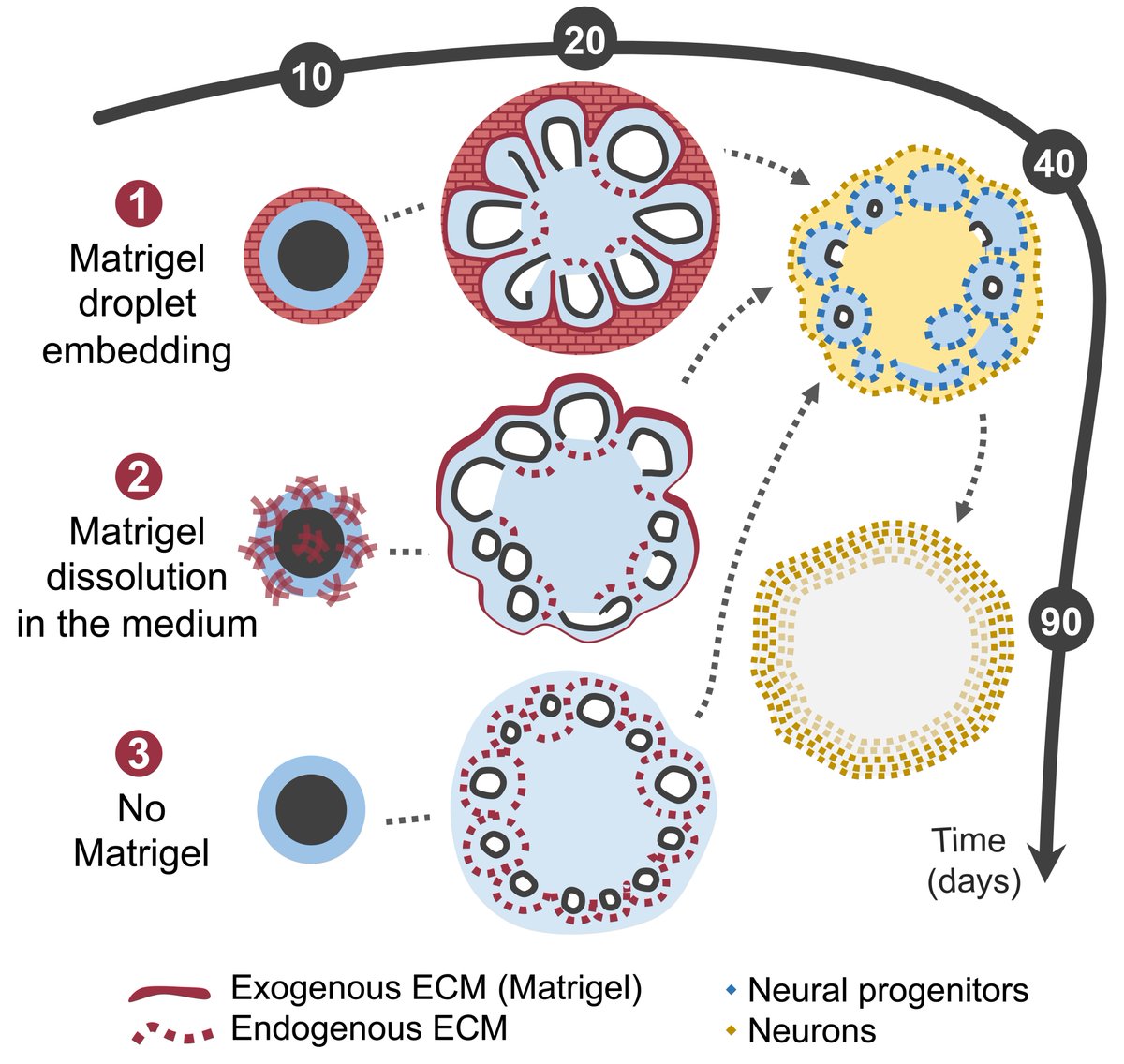
Human telencephalic organoids cultured in the absence of Matrigel endogenously produce and self-organize the extracellular matrix, without affecting programs of neuronal differentiation.
Led by @catarinacsmc 👩🔬
🧵 1/5
We are thrilled to share our latest work, a collaborative effort with @TreutleinLab, in Nature (https://t.co/pChgPCFEOM). We introduce CHOOSE, a powerful screening system within cerebral organoids, through which we identified developmental defects associated with autism.
🧵1/7
📣 Preprint alert!
Check out our latest story, led by @catarinacsmc.
The corpus callosum safeguards interhemispheric communication in the human brain.
𝘈𝘙𝘐𝘋1𝘉 mutations cause agenesis/absence of the CC.
We wanted to know why. 🤓
🧵1/9
https://t.co/RwkEOBpf31
Thrilled to share this project with the world!
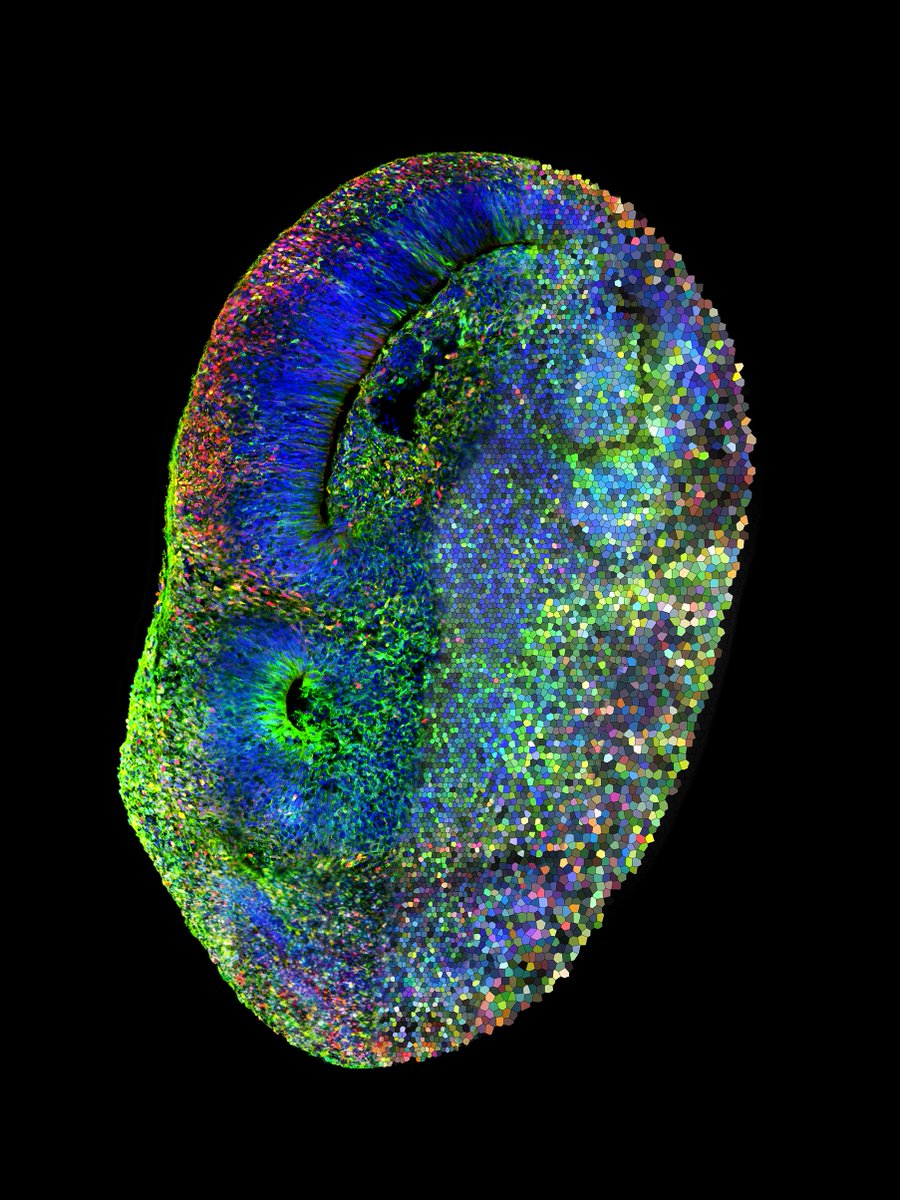
We looked into early morphogenesis of #brain#organoids and characterized the remarkable self-organizing capabilities of the neuroepithelium 🧠
Thanks to everyone in the @Knoblich_lab and beyond who supported me 💜
Go read it! 🤓😋
📢Preprint alert! Here's our latest story, led by @catarinacsmc
Brain organoid morphogenesis can be driven by exogenous ECM (Matrigel), or self-sustained by endogenous ECM production. Late development is mostly independent of the initial ECM source
https://t.co/ps0u4MrJCt
🧵1/7
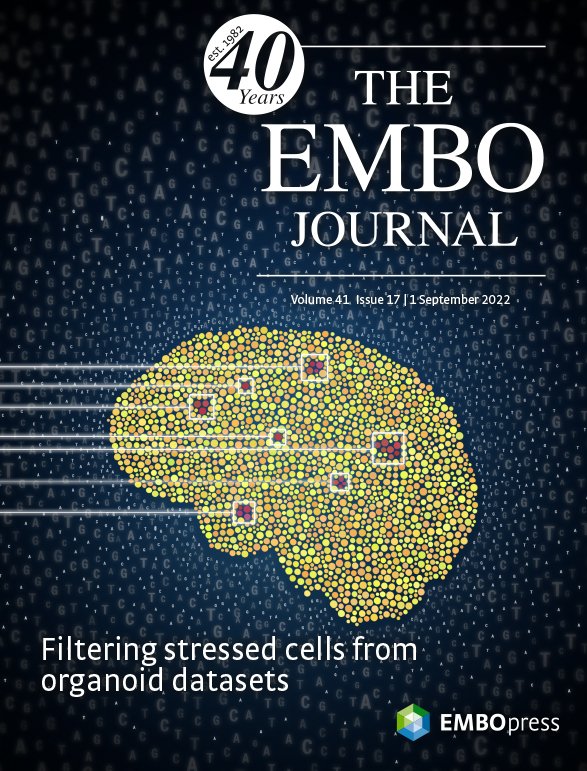
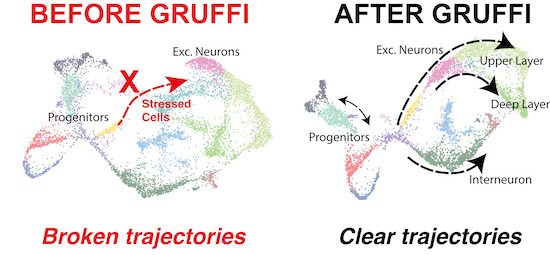
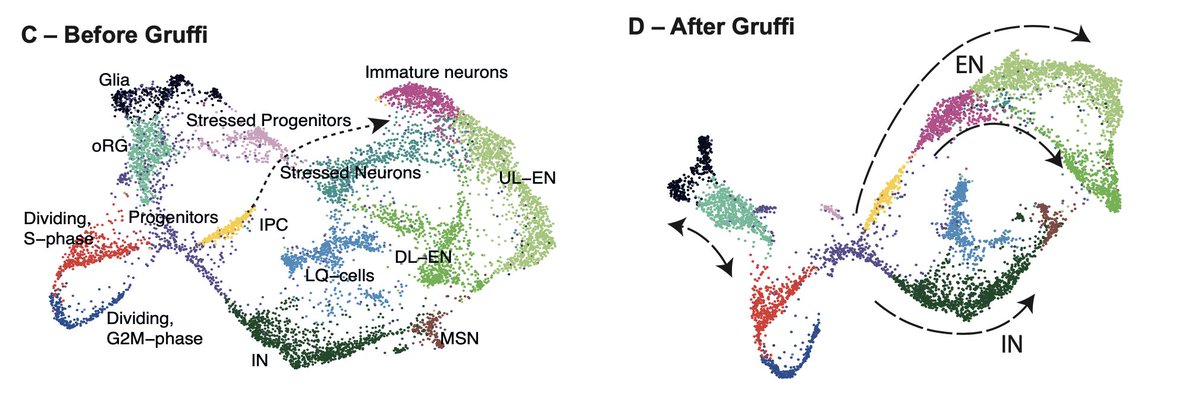
A unique stress signature found in in brain #organoid samples but not in fetal samples can be quantified and removed from #scRNAseq datasets using a new algorithm, Gruffi
New resource by the @Knoblich_lab@IMBA_Vienna
https://t.co/coCUXuO2Ia
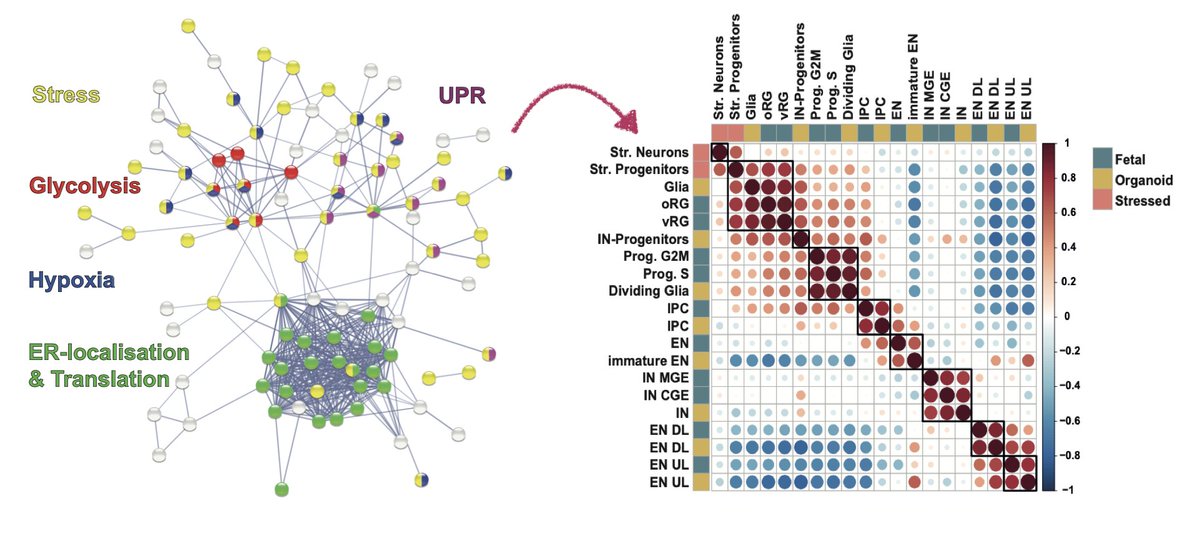
4/6 Stressed cells are limited to a defined group, that we call stress-identity. It is a cellular state characterized by widespread metabolic changes beyond the activation of stress pathways, which is not found in vivo, therefore need to be removed from #scRNA data.
3/6 We combined transcriptome-wide and gene-set based approaches in Granular Functional Filtering (Gruffi) and found that all analyzed brain organoids contain some stressed cells, but
their presence does not affect cell-type specification or neural maturation.
2/6 Not all cells are created equal – In 3D tissue models, such as brain organoids oxygen & nutritient supply is limited in deep tissue. This leads to cell-stress, but it's extent and consequences are unclear.
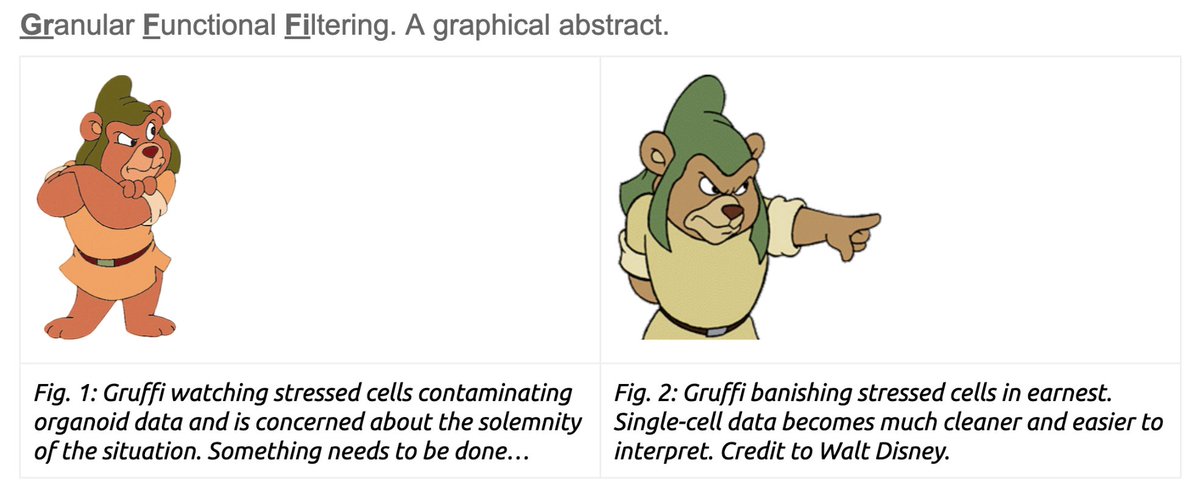
1/6 Stress in #brain#organoids is widely debated: Are all organoids & all cells affected? Does it exist in vivo? Does it impair cell differentiation? Gruffi, our new algorithm identifies and removes stressed cells from #scRNAseq#singlecell datasets. https://t.co/ewLtAZVsT4