In 1935 Italian engineer Sergio Stefanutti put a plane in the air that looked like it was flying backwards.
The Stefanutti SS.2 was a single-seat canard powered glider built at the experimental center in Guidonia, with the main wing at the rear, the elevator up front, and a tiny two-cylinder engine of about 16 horsepower mounted as a pusher. Test pilot Umberto Nannini first flew it that year and found it stable, easy to control, and quick to climb on almost no power. A steerable nose wheel linked to the rudders let it taxi around the field like a car, and the layout gave the pilot an uninterrupted view while making nose-overs nearly impossible. Italian newsreels the following April treated the whole thing as a novelty in heavier-than-air flight, and the little demonstrator led straight into later canard designs that included a 1939 fighter prototype.👀
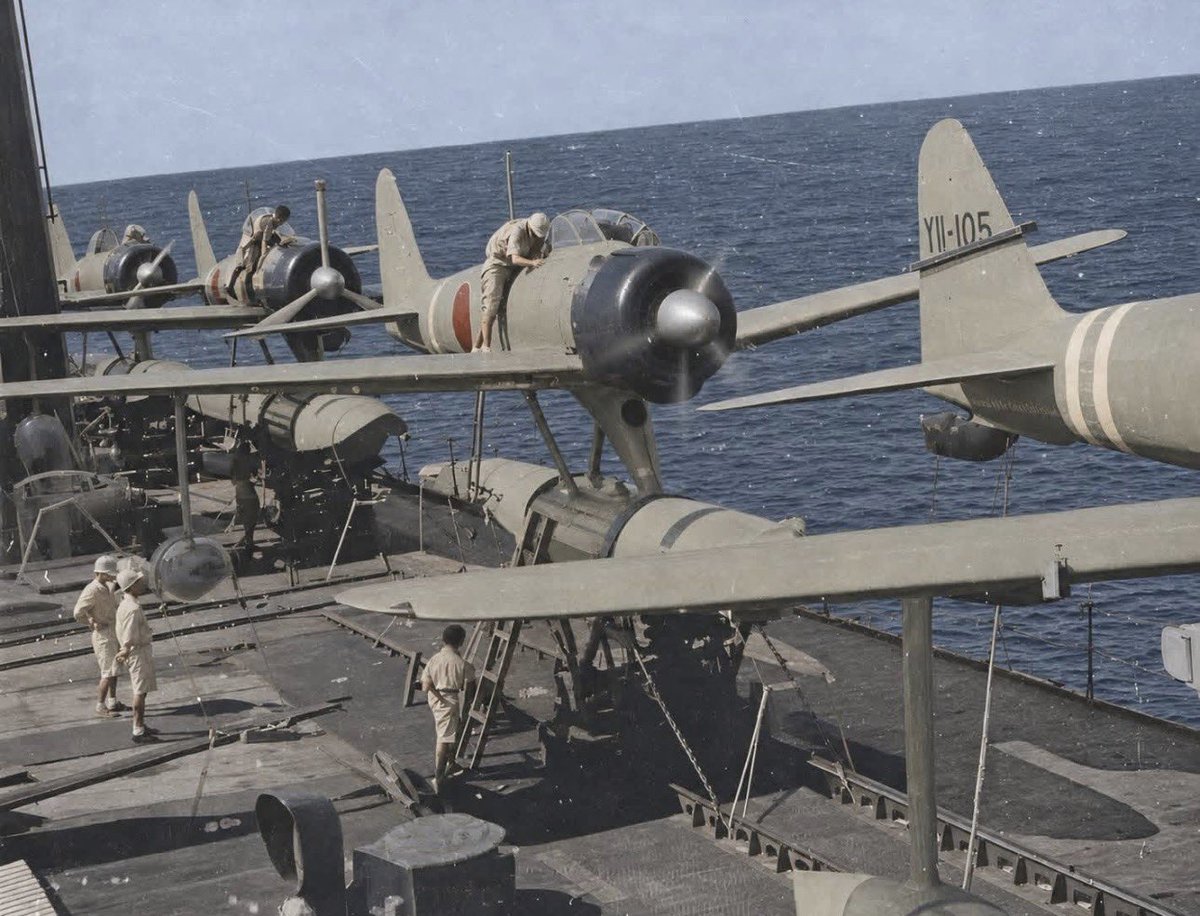
A Nikko A6M2-N “Rufe” 🇯🇵 heading to the Solomon Islands (Aug ‘42) the crew adjusting the position of the aircraft by pushing it into the shallow water.
Photo information: Jeff Groves "Nakajima A6M2-N Rufe Part II"
#二式水上戦闘機#零戦#水上機#太平洋戦争
In 1922, Alfred De Pischoff, a pioneer of French aviation, built a very small aircraft powered by a 10 bhp engine, with the aim of making aviation accessible to everyone.
The aircraft was named "Avionnette".
A custom automatic riveting machine invented by Edward J. Hill made the Navy’s ZMC-2 possible. The roughly 100-pound device rode circular tracks in the hangar and worked like a sewing machine, feeding three continuous aluminum wires to punch and set staggered rivets that formed a quarter-inch-wide airtight seam.
It averaged about 10 feet of seam per hour and installed the roughly 3.5 million tiny rivets that held the Tin Blimp’s thin Alclad skin together. The 149-foot airship, the only successful metal-clad one ever built, then carried about 200,000 cubic feet of helium on 752 flights totaling 2,265 hours from 1929 until it was scrapped in 1941. 👀
Oh, did I mention it was colored by https://t.co/YaIPcuTukj where boring ol' black & white go to, well, go to die. 😀