#OtD 23 Aug 1851 a violent riot broke out in Sydney, Australia, when police arrested a sailor wearing women's clothing. Hundreds attacked police officers and police stations, freeing all prisoners along the way. We've produced this poster in celebration: https://t.co/Uwu0bzEIbu
if (God forbid) there is another 2003 event, it will 100% be caused by data centers all simultaneously failing to ride through some minor grid disturbance
@agelston last week ~3000-4000MW of diesel fired for ten minutes (look at domzone load or PJM ACE) and there were photos of the clouds of black rising over the nova sky
"Data Center Alley" a section of Virginia with the densest concentration of data centers in the country, caused the power to flicker across the East Coast.
On Wednesday, July 22nd the electricity flickered on and off for about 10 minutes throughout the Eastern U.S., from Chicago to Boston to Miami.
The cause appears to be a concentration of data centers straining the grid.
Video from: @NBCWashington
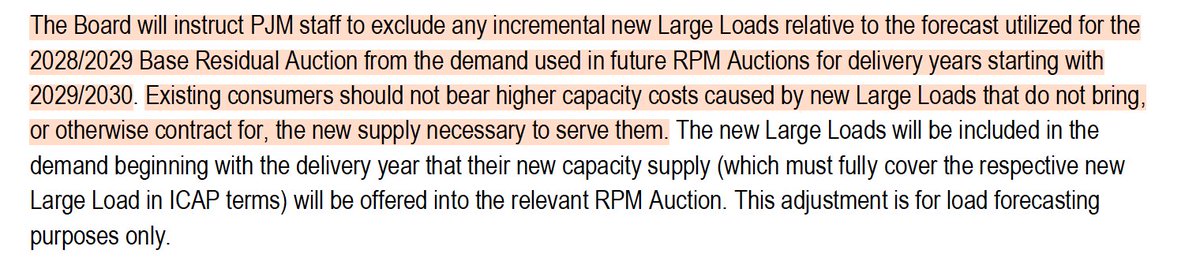
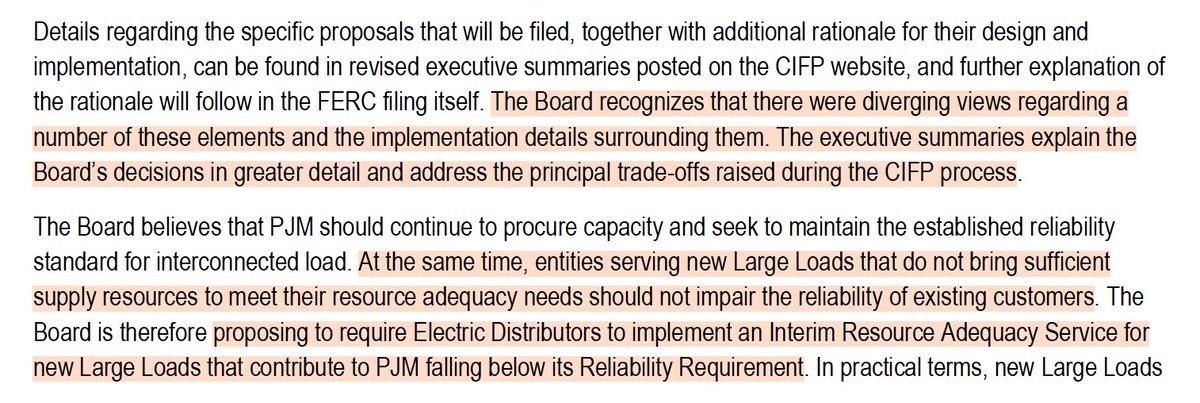
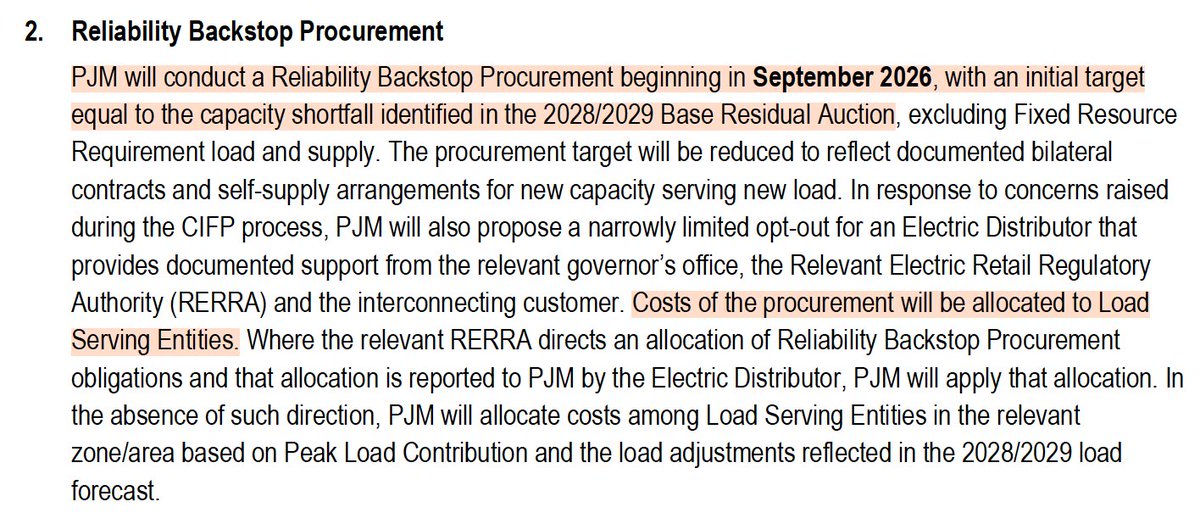
NEW: PJM Board releases FINAL decisions on large load curtailment, backstop procurement
- ALL new large loads from June '27 must BYOG OR face curtailment in tight conditions (new Interim RA Service, (previously called Connect & Manage)
- Curtailment would happen BEFORE capacity demand response resources called upon
- Reserve backstop in Sept '26 net of bilaterals, $$ for backstop procurement allocated to load serving entities >> ratepayers potentially on the hook, all eyes on States
- New large loads to be EXCLUDED from capacity auction from 29/30 onwards, ratepayers will not be paying capacity costs for those
@xiaowang1984 also pushing equipment to its limit for long periods will inevitably lead to more forced outages. ratings are a calculated limit based on the idea that everything is in working order, but real life’s different.
@deadbeatregular@paulsl_3 they can also use compressed air to depress the water below the turbines and operate as a synchronous condenser for voltage control or to increase reactive reserves on the system. also its about an 80 percent factor from MWh you pump to MWh you can generate
I’m currently on a project that is one phase of a multiphase infrastructure project to send buried static lines out to queens and nassau. Stupid political rhetoric aside, does this soft-handed know-nothing think an electrical grid is upgraded in a day? Or that it’s a mayor’s prerogative to do so?
The kind of habitat only enjoyed by people who have decided they have gotten all there is to get out of interaction with strangers. Animosity like this comes from feeling a little ashamed about it
@as_a_worker@nicholasjsoto is it just a trend with operations anywhere that it will breed right-wing cranks? man was not meant to be in one windowless room for twelve hours
They think the conductors make too much and the engineers make too much and the sanitation workers make too much and the teachers make too much but YOU - who sits on a laptop making Line Go Up - are totally safe. They'll never come after you. Promise
Most people still talk about AI data centers as a demand story.
I keep ending up at grid stability.
NERC just issued its highest level alert, saying big computational loads can swing power use in seconds and leave operators little room to respond. The server rack is now acting like a grid event.
Source: Business Insider
The Riga control room in this photo was built in 1985 to manage the USSR's North-Western power grid. Every light on the wall is a live substation.
That wall is a mosaic mimic board. The entire grid topology of northwestern USSR rendered as a real-time analog dashboard, before consumer GUIs existed. Macintosh had launched the year before. Windows 1.0 wouldn't ship for months. This room was already running real-time visualization for an entire regional grid.
The pipe organ ceiling fixtures are acoustic baffles. The curved consoles are ergonomic. The operators sitting there controlled electricity for Estonia, Latvia, Lithuania, Belarus, and northwestern Russia. About 25 million people. Frequency stabilization, load balancing, fault response, dispatched live from this room.
The Soviet Union built rooms like this throughout the 70s and 80s. By 1985 the design language was mature. Tarkovsky's Stalker came out in 1979. Blade Runner in 1982. WarGames in 1983. The cinematic future those movies imagined was already running, in actual rooms, dispatching actual electricity.
The grid this room controlled ran until February 8, 2025.
Estonia, Latvia, and Lithuania finally desynchronized from the Russian power system 14 months ago. The Baltic transmission operators isolated their networks, ran in island mode for 24 hours, and synchronized with Continental Europe at 14:05 on February 9. €1.6 billion to switch over. EU paid 75%.
The Soviet Union dissolved in 1991. The grid this room managed stayed on the wire for another 34 years.
Every sci-fi control room you've seen on screen was imitating rooms like this one. The room kept doing its job through all of them.