@HorizonEU funded project combining optoacoustic imaging and multi-omics to improve diabetes healthcare. Content reflects only the views of the project owner.
📊 In #OPTOMICS, better images mean better data.
Our new publication presents a novel technique (eMIP) that improves 3D visualization in #OptA scans, boosting feature clarity for large-scale phenotyping, including for #diabetes.
Read here: https://t.co/2gZdxN9CZZ
#RSOM#biomed
#HelmholtzDiabetes2025
🚀 Welcome to the 12th Helmholtz Diabetes Conference at Helmholtz Munich!
At this conference, experts in the fields of #diabetes and #obesity from all over the world gather to share their latest findings. As part of its tradition, the conference also highlights an additional focus topic: This year, leading experts in metabolic liver disease will contribute their expertise.
Why is research on liver health important for #DiabetesResearch?
👉 Check out the #video with Prof. Stephan Herzig!
👨🔬 Prof. Stephan Herzig, host of the Helmholtz Diabetes Conference, is Research Director at #HelmholtzMunich, Director and Department Head of the Helmholtz Diabetes Center, and Director of the Institute for Diabetes and Cancer.
👩🔬 Co-host is Prof. Anja Zeigerer, Helmholtz Munich, and Professor at the Medical Faculty of Heidelberg University.
@helmholtz_diabc@ZeigererLab
#LiverHealth #LiverDisease #MetabolicResearch
🚨New paper: https://t.co/Ahm8EwigJa
We show that correcting for genomic inflation in large GWAS studies might be throwing away important results - up to 40% of T2D loci!
#OPTOMICS is finding smarter ways to keep good data and still avoid bias. Better science, better health.🧬
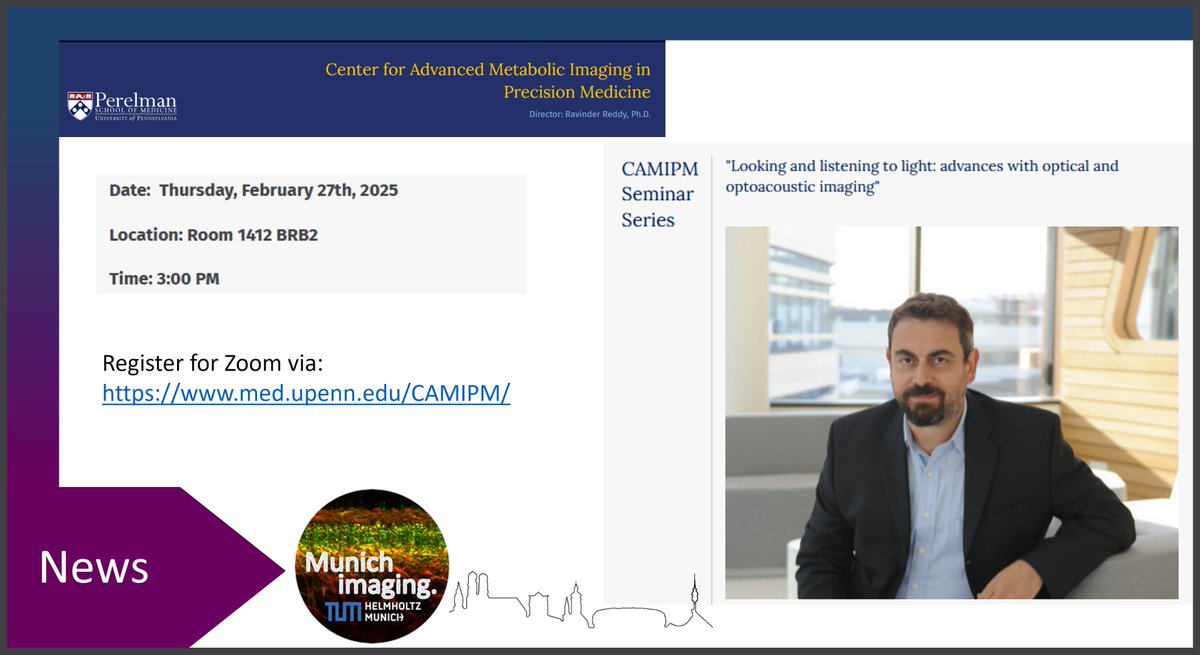
At the meeting of the Int. Soc. on Oxygen Transport to Tissue (@isott2025) in Thessaloniki/ Gr, hear the plenary by @munichimaging director Vasilis @ntziachristos on “#Optoacoustic imaging of #oxygen transport in tissues.”
25 Aug 2025, 8:30-9:30 am (Greek)
https://t.co/h0sb4XvPWH
Many thanks to our PhD researchers for presenting #optoacoustic technologies and for promoting the ongoing #OPTOMICS clinical study at the @TU_Muenchen! Looking forward to continued interactions with the public to improve #diabetes#healthcare! 🤝
@MunichImaging PhD students Mario and Erik showcased our research on #optoacoustic#imaging and #sensing at the @TU_Muenchen Universitätsklinikum open day! Itwas a great pleasure to interact with the visitors!
https://t.co/Ka9tli2uDS
Looking back at the World of Photonics and #ECBO2025 in Munich: our team from @MunichImaging presented on #optoacoustics and #fluorescence#imaging and had a great time networking with fellow experts from around the globe.
https://t.co/pfufOn06VV
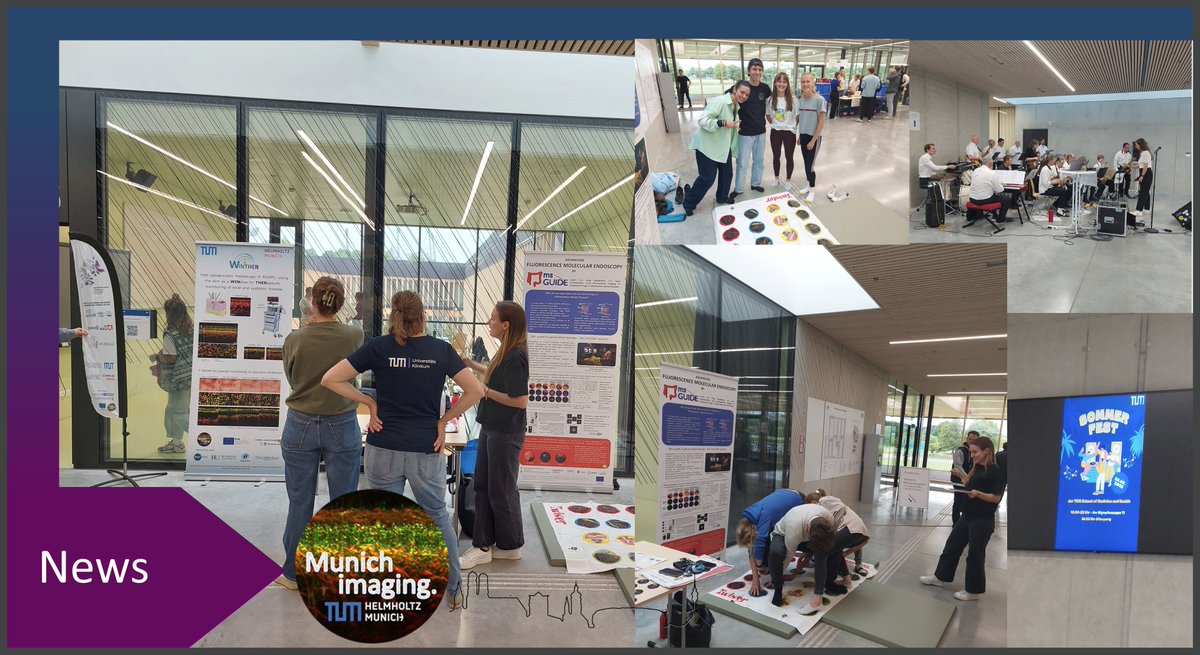
Play and learn! @Munichimaging took part in the Summerfest of theTUM School of Medicine and Health. Students could learn about #optoacoustic#imaging and #fluorescence molecular endoscopy – either in discussions or by playing imaging twister! We had great fun. See you next year!
Copenhagen Declaration: A Strategy for Diabetes Prevention
👉Read more: https://t.co/7G8pUhhzuL
The Copenhagen Declaration, developed by the Global Diabetes Forum, presents a coordinated international strategy to address the global challenge of #type2diabetes.
The declaration emphasizes the importance of early detection, individualized prevention, and remission approaches – particularly in relation to #prediabetes.
More than 50 experts from across the globe contributed to the initiative, including researchers from the Institute for Diabetes Research and Metabolic Diseases (IDM) at #HelmholtzMunich and the German Center for Diabetes Research (DZD).
It outlines seven key action areas, including:
• Early detection and remission strategies
• Precision medicine and AI-supported diagnostics
• Expanded access to care in low-resource settings
• Integration of digital health tools and real-time data
🎯The declaration aims to support more targeted, sustainable, and globally accessible approaches to diabetes prevention and care.
@DiabResearch@Dr_Birkenfeld
#CopenhagenDeclaration #DiabetesPrevention
The #optoacoustic Twister game is always a great gateway to connect with the public and discuss the details of our research and aim of our projects!
Looking forward to the next opportunity to communicate our research! 🧬🔦🙌🫂
Play and learn! @Munichimaging took part in the Summerfest of theTUM School of Medicine and Health. Students could learn about #optoacoustic#imaging and #fluorescence molecular endoscopy – either in discussions or by playing imaging twister! We had great fun. See you next year!
As much as we love a #peerreviewed publication, #openscience 🔓is highly important to #OPTOMICS and we release #preprints quite often through @medrxivpreprint.
Check out the newest ones 🧬:
- https://t.co/jHjvPyjWgu
- https://t.co/tBXKa66svl
- https://t.co/HXsnkAqcFC.
🧬New publication out in #npjMetabHealth!
The work shows that dietary restrictions improve metabolic health, lower mortality risk, and reduce #T2D risk. And potential drug targets were identified!💊
Read here: https://t.co/c4NzOIu8lC
@HorizonEU@HelmholtzMunich@Nature_NPJ
🌟 What makes the Bioengineering Center unique?
The Bioengineering Center at #HelmholtzMunich leads the way in non-invasive sensing and imaging technologies. It also creates next-generation protein, cell, and mini-organ tools to drive progress in prevention, early disease detection, and treatment.
• Pioneering novel observation tools for early disease detection
• Biomolecular engineering for improving biological observation and treatment
• Strong partnerships driving the translation into real-world applications
• High spin-off rate delivering healthcare solutions
🌟 Want to learn more? Visit our website!
👉 https://t.co/jp8kKGXnc0
@ntziachristos@erturklab@MunichImaging
#Bioengineering #BioTech #PrecisionMedicine
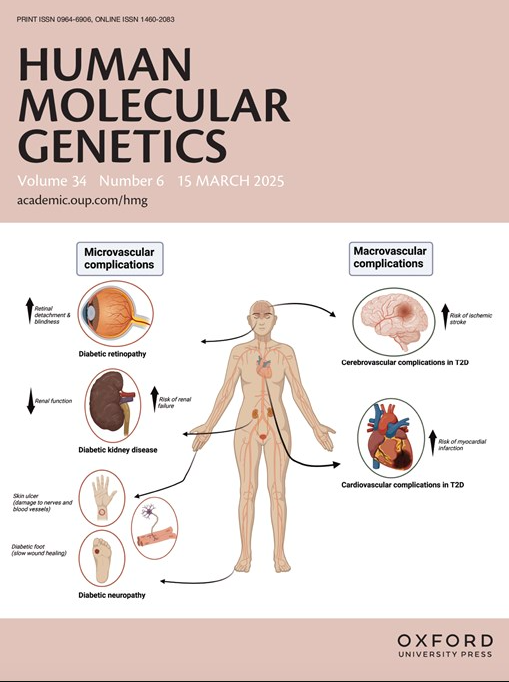
How exciting the recent paper from @HelmholtzMunich has been featured on the cover of @hmg_journal!🥳
The authors review the importance of #multiomics for understanding the molecular basis of #t2d vascular complications, a critical piece of the #OPTOMICS Digital Twin puzzle.🧩
15 March 2025 Issue: https://t.co/f9Jy0VLwSd
Cover: Type 2 diabetes complications impact various organs throughout the body. As shown in the figure, these complications are broadly classified into two major categories: microvascular and macrovascular. https://t.co/Q8IRbyZ5UH
🚨New publication in an @IntDiabetesFed journal! 🥳
In it, the potential of #RSOM as a non-invasive imaging method for detecting early #diabetes onset and assessing disease severity and #vascular complications is reviewed from a #clinical perspective.
➡️https://t.co/teUnop5ujv