A new treatment reactivates the brains natural cleaning system and clears 42 percent of toxic Alzheimers plaque while restoring memory.
In Alzheimers disease toxic amyloid-beta proteins accumulate into sticky plaques that impair brain function. New research indicates that this buildup stems not only from excess production but also from a breakdown in the brains waste removal system.
Under normal conditions specialized transport pumps known as P-glycoprotein or P-gp at the blood-brain barrier actively remove these toxins from the brain. In Alzheimers patients these pumps lose effectiveness and allow waste to build up.
A recent study in ACS Chemical Neuroscience found that a copper-based compound called Cu(ATSM) increased the activity of these clearance pumps by 24.1 percent in animal models. This enhancement enabled the brain to remove trapped toxins and reduced amyloid-beta plaques by 42 percent.
The improved waste disposal also produced a 44 percent gain in spatial learning and memory over 56 days. Although the results come from laboratory and animal research and have not yet been tested in humans with Alzheimers, Cu(ATSM) is already under evaluation for other neurological conditions such as Parkinsons and ALS. This existing research may help accelerate future clinical trials.
By repairing the brains own waste-disposal system instead of only targeting plaques this approach represents a promising new direction in dementia treatment.
[Pyun J et al. Cu(ATSM) Restores Blood–Brain Barrier Abundance of P-Glycoprotein and Improves Cognitive Function in the APP/PS1 Mouse Model of Alzheimer’s Disease. ACS Chemical Neuroscience. 2026. DOI: 10.1021/acschemneuro.6c00252]
NEW STUDY finds certain fatty acids selectively kill senescent "zombie" cells. The molecules exploit a fundamental biophysical weakness in senescent cells, a totally new approach. Could we simply consume these moleculs to treat aging? ...🧵
Most breakthroughs like age reversal don’t happen in isolation. They happen when the right people, technology & mission align.
That’s why I’m building Lifespan
Follow the science. Join the community. Shape the future
A major new paper reframes aging as a systems failure of epigenetic information. Not wear and tear but a software problem. This is what the Information Theory of Aging predicts and, if correct, means aging is reversible.
Let's dive in... 🧵
Scientists just made 50-year-old skin cells behave like they’re 20 again.
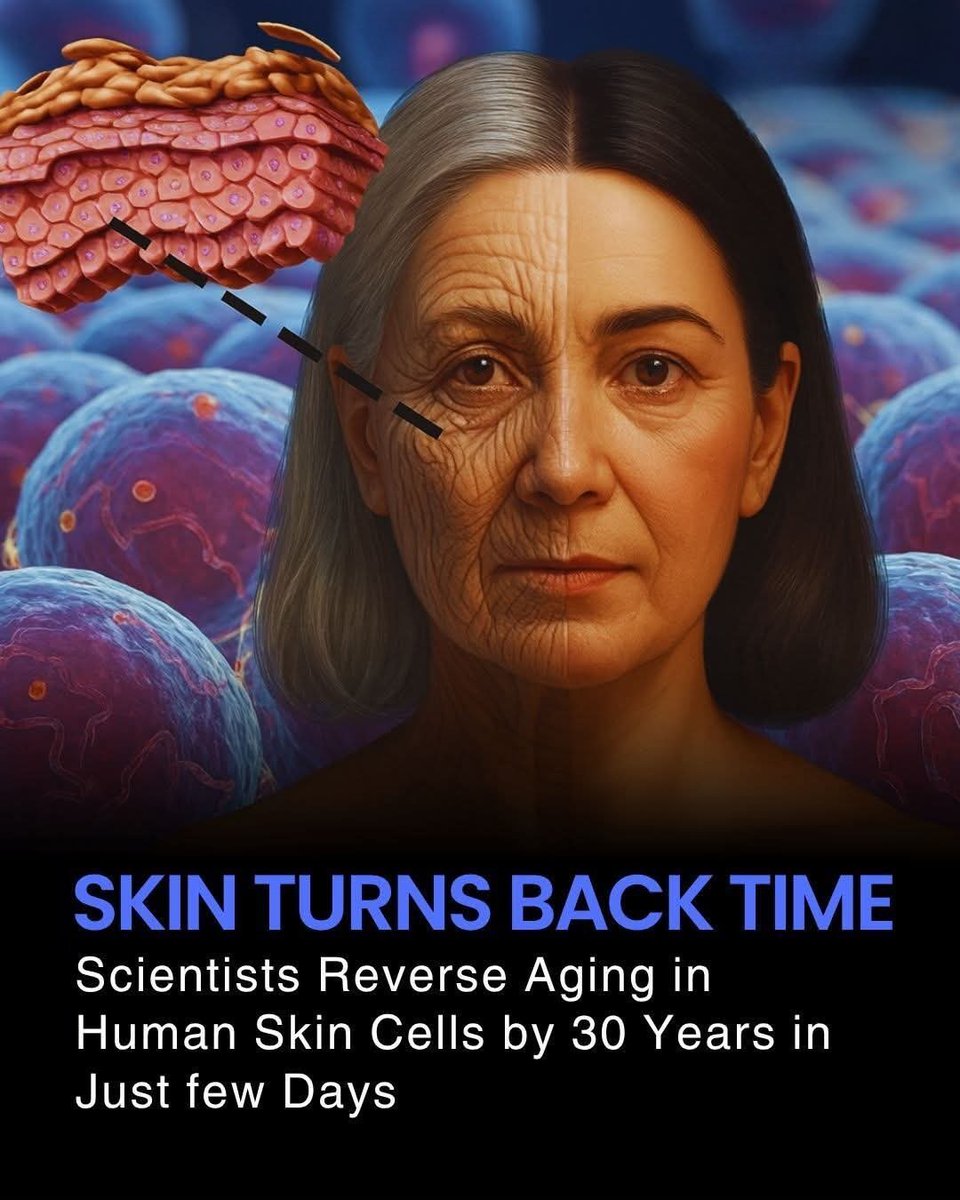
Researchers at the Babraham Institute in Cambridge have developed a groundbreaking method to reverse the biological aging of human skin cells by approximately 30 years, all while keeping them as fully functional adult skin cells.
The team used a carefully controlled, short-term version of the Nobel Prize-winning Yamanaka reprogramming technique. By exposing adult skin fibroblasts to a specific set of reprogramming factors (the Yamanaka factors) for just 13 days—and then stopping the process early—they successfully “reset” many molecular markers of aging without pushing the cells all the way back to a stem cell state.
After this brief treatment, the rejuvenated cells displayed a dramatically younger profile: their epigenetic clock (a measure of chemical tags on DNA that tracks biological age) and their gene expression patterns (the transcriptome) closely resembled those of cells from much younger individuals.
Even more impressively, the cells behaved younger too. The treated fibroblasts produced significantly higher levels of collagen—the protein essential for skin firmness, elasticity, and wound healing—and they migrated faster to close an artificial “wound” in laboratory dishes compared to untreated older cells.
The researchers also observed reversal of age-related changes in genes associated with diseases such as Alzheimer’s and cataracts, suggesting the technique could have broader therapeutic implications.
While this work is still in its early stages and the precise mechanisms remain under investigation, the findings open exciting possibilities: one day, scientists may be able to selectively rejuvenate aging cells in the body to enhance tissue repair, improve healing, and potentially slow or mitigate some effects of age-related diseases—without the risks associated with fully reprogramming cells into stem cells.
[Gill, D., Parry, A., Santos, F., Okkenhaug, H., Seale, M., Dobbs, L. J., Reik, W., & Ocampo, A. (2022). Multi-omic rejuvenation of human cells by maturation phase transient reprogramming. eLife, 11, e71624. DOI: 10.7554/eLife.71624]
🚨 In a stunning breakthrough, scientists have discovered a method to reverse aging in human skin cells by up to 30 years in just few days. This revolutionary technique could transform the fields of anti-aging, skincare, and regenerative medicine.
The researchers used advanced cellular reprogramming methods to rejuvenate skin cells, effectively restoring them to a much younger state. The process repairs DNA damage, enhances cellular function, and resets the skin’s biological clock, making cells behave like they did decades earlier.
This discovery holds enormous potential for developing future therapies that combat the visible signs of aging, improve skin health, and even reduce age-related cellular decline. By targeting the root causes of cellular aging rather than just the symptoms, scientists are opening a new era in longevity research.
Experts say that while this research is still in its early stages, it demonstrates that age reversal at the cellular level is possible and could eventually lead to breakthrough treatments for humans, not just in skincare but potentially for broader regenerative medicine applications.
In case you missed it
Dr. David Sinclair, whose lab reversed biological age in animals by 50 to 75% in six weeks, says that 2026 will be the year when age reversal in humans is either confirmed or disproven.
FDA has cleared the first human trial for next month.
Good technique is a must for effective and safe workouts. Done right, these 7 exercises will give you results that you can see and feel. https://t.co/4xmKnNTCDh
Although there's no cure for type 2 diabetes, studies show it's possible for some people to reverse it. Learn what that means and how you might do it. https://t.co/2toAl5oCPh
Scientists Unveil Breakthrough That Recharges Aging Human Cells Like Batteries 👀
Scientists boosted young stem cells with special “nanoflowers,” triggering a surge of fresh mitochondria, then those cells donated the extra power to old, tired cells.
The result?
Cells that were basically fading suddenly started acting younger, stronger, and more energetic.
This feels like a big progress in cellular rejuvenation.
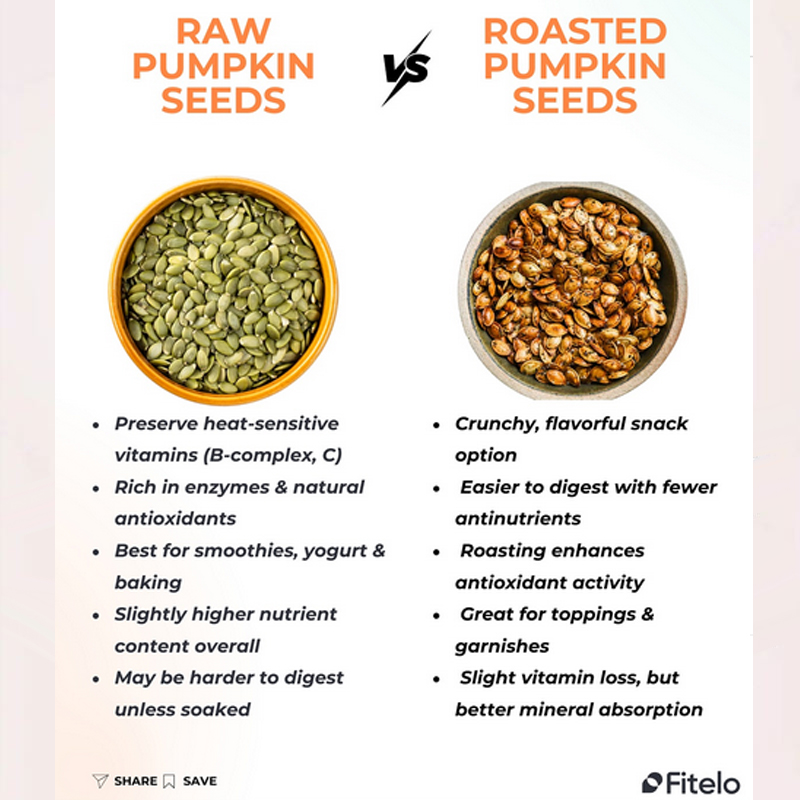
Pumpkin seeds are nutrient-dense with benefits including immune support from zinc, improved digestion from fiber, and enriched with iron, magnesium, plant-based omega-3s, and protein.
They also contain tryptophan and magnesium which can aid sleep and boost bone health.
Wow
Another amazing anti aging discovery
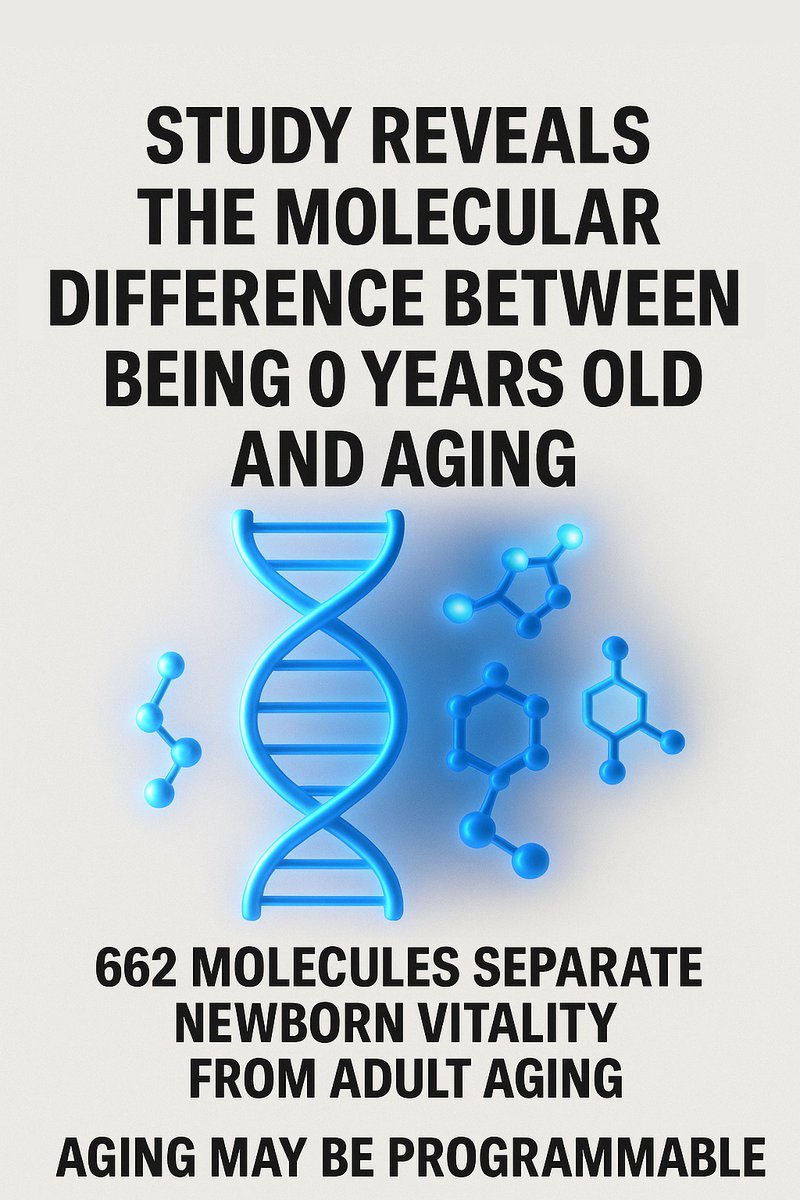
Study reveals the molecular difference between being 0 years old and aging. 662 molecules separate newborn vitality from adult aging.
Aging may be programmable.
A recent study published in Aging Cell compared the metabolomic profile of human umbilical cord plasma (newborn blood) with that of adult plasma and found a dramatically different "metabolic landscape."
Of 1,092 compounds detected, 662 showed significant differences between cord plasma and adult plasma, more than 60%.
211 metabolites abundant in cord plasma decline with age. These metabolites are involved in biological pathways related to aging: inflammation, oxidative stress, energy and nutrient metabolism, protein homeostasis, and DNA damage response.
The researchers then created a "cord plasma derived formula" using five of these metabolites: carnosine, taurocholic acid, inosine, L-histidine, and N-acetylneuraminic acid.
Administering this mix to the roundworm C. elegans significantly extended both lifespan and healthspan.
The work suggests that some of the youth associated molecules in newborn human blood might hold therapeutic potential against aging, and that cord blood metabolomics could point toward new anti aging interventions.
NEW STUDY: The amino acid L-theanine, first isolated from green tea in the 1940s, is used to improve mood and sleep 🍵 Study in mice finds L-theanine suppresses metastasis of prostate cancer, the second most common cause of death in men worldwide... 🧵


![Rainmaker1973's tweet photo. A new treatment reactivates the brains natural cleaning system and clears 42 percent of toxic Alzheimers plaque while restoring memory.
In Alzheimers disease toxic amyloid-beta proteins accumulate into sticky plaques that impair brain function. New research indicates that this buildup stems not only from excess production but also from a breakdown in the brains waste removal system.
Under normal conditions specialized transport pumps known as P-glycoprotein or P-gp at the blood-brain barrier actively remove these toxins from the brain. In Alzheimers patients these pumps lose effectiveness and allow waste to build up.
A recent study in ACS Chemical Neuroscience found that a copper-based compound called Cu(ATSM) increased the activity of these clearance pumps by 24.1 percent in animal models. This enhancement enabled the brain to remove trapped toxins and reduced amyloid-beta plaques by 42 percent.
The improved waste disposal also produced a 44 percent gain in spatial learning and memory over 56 days. Although the results come from laboratory and animal research and have not yet been tested in humans with Alzheimers, Cu(ATSM) is already under evaluation for other neurological conditions such as Parkinsons and ALS. This existing research may help accelerate future clinical trials.
By repairing the brains own waste-disposal system instead of only targeting plaques this approach represents a promising new direction in dementia treatment.
[Pyun J et al. Cu(ATSM) Restores Blood–Brain Barrier Abundance of P-Glycoprotein and Improves Cognitive Function in the APP/PS1 Mouse Model of Alzheimer’s Disease. ACS Chemical Neuroscience. 2026. DOI: 10.1021/acschemneuro.6c00252]](https://pbs.twimg.com/media/HL_cQY_WEAAnAYN.jpg)


![Rainmaker1973's tweet photo. Scientists just made 50-year-old skin cells behave like they’re 20 again.
Researchers at the Babraham Institute in Cambridge have developed a groundbreaking method to reverse the biological aging of human skin cells by approximately 30 years, all while keeping them as fully functional adult skin cells.
The team used a carefully controlled, short-term version of the Nobel Prize-winning Yamanaka reprogramming technique. By exposing adult skin fibroblasts to a specific set of reprogramming factors (the Yamanaka factors) for just 13 days—and then stopping the process early—they successfully “reset” many molecular markers of aging without pushing the cells all the way back to a stem cell state.
After this brief treatment, the rejuvenated cells displayed a dramatically younger profile: their epigenetic clock (a measure of chemical tags on DNA that tracks biological age) and their gene expression patterns (the transcriptome) closely resembled those of cells from much younger individuals.
Even more impressively, the cells behaved younger too. The treated fibroblasts produced significantly higher levels of collagen—the protein essential for skin firmness, elasticity, and wound healing—and they migrated faster to close an artificial “wound” in laboratory dishes compared to untreated older cells.
The researchers also observed reversal of age-related changes in genes associated with diseases such as Alzheimer’s and cataracts, suggesting the technique could have broader therapeutic implications.
While this work is still in its early stages and the precise mechanisms remain under investigation, the findings open exciting possibilities: one day, scientists may be able to selectively rejuvenate aging cells in the body to enhance tissue repair, improve healing, and potentially slow or mitigate some effects of age-related diseases—without the risks associated with fully reprogramming cells into stem cells.
[Gill, D., Parry, A., Santos, F., Okkenhaug, H., Seale, M., Dobbs, L. J., Reik, W., & Ocampo, A. (2022). Multi-omic rejuvenation of human cells by maturation phase transient reprogramming. eLife, 11, e71624. DOI: 10.7554/eLife.71624]](https://pbs.twimg.com/media/HD2zVhjXMAI_y6k.jpg)