Government should encourage more production and supply by lowering the cost of doing business. Our global carbon footprint is less than 0.01%. So, our high-end Climate Change Mitigation Strategy [Green Policy] contributes close to nothing globally.
An old friend was telling me the other day that around 20% of the cost of production for her business goes on green policy compliance. This doesn’t make economic sense for a struggling economy.
#Focus ✌🏽
This is exactly the problem. Rwanda imports far more goods than it exports. In Q1 2026, imports reached $1.33bn, against only $561m in exports and re-exports.
So when the franc weakens, fuel, medicines, fertiliser, machinery and other essential inputs become more expensive. Eventually, ordinary households pay the price.
The regional comparison is also telling. Since 2016, the dollar has become roughly 87% more expensive in Rwanda, compared with 28% in Kenya, 21% in Tanzania and 10% in Uganda.
At some point, we have to stop hiding behind headline GDP growth. If that growth cannot build export capacity, preserve the currency or protect people’s purchasing power, then something is fundamentally wrong with the economic model.
We implemented something this year at @modernliving256 called the "bottleneck meeting".
Every week on Saturday we meet to focus on Bottlenecks.
No operations
No client orders
No Admin issues
We only talk about initiatives to help us move faster and better.
- We keep having power outages on site --> OK let's buy a generator next week
- The factory layout is inefficient -'> OK let's redesign it so we reduce unnecessary steps.
- Procurement takes time --> Let's create a schedule and centralize purchases.
We have a running list. Each item has someone responsible with a deadline. Things that drag are addressed on the spot...
We move!
If you get busy, it's easy to forget about those "company building" elements...
You end up driving fast with a flat tire...
By creating a rhythm around solving bottlenecks with pure accountability and company wide visibility, we solved that...
The chairs are unrelated to this post but I love how they came out
During that 2017 Monaco golden era, teams went there to get players, Liverpool picked Fabinho, PSG picked Mbappe, man city picked Bernardo Silva, guess who Chelsea picked 😭 😭
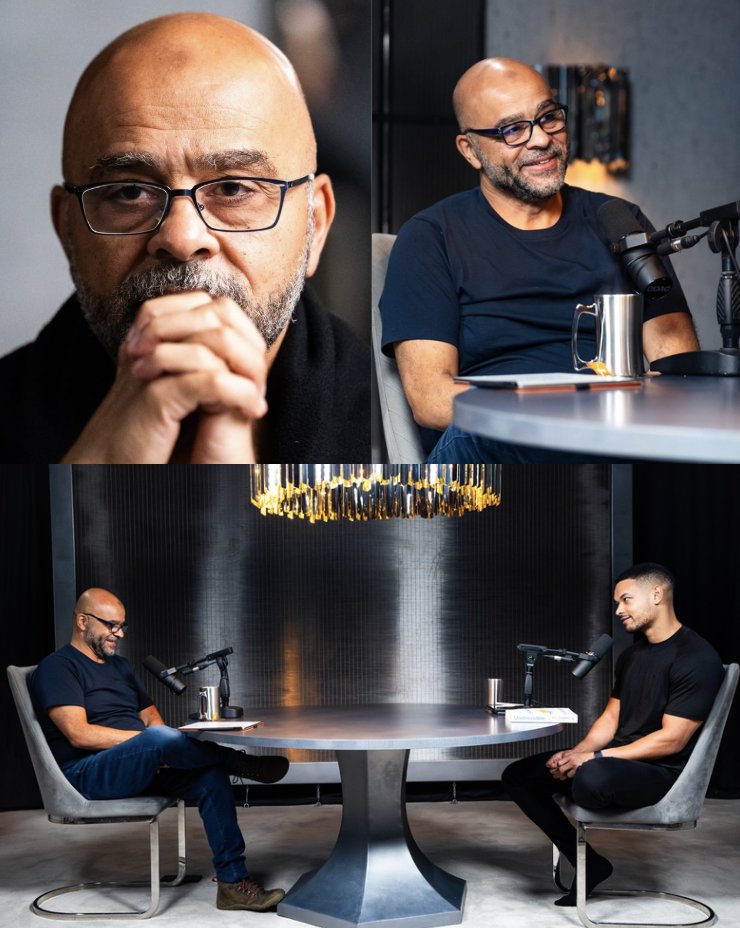
I get asked this question a lot: what's your favourite episode of The Diary Of A CEO ever?
The answer is fairly easy.. episode 101 with @MGawdat. It was our most shared episode ever, not because of fame or celebrity, but because what he said was so profound it changed the way I think about life..
Mo was the Chief Business Officer at Google X, the "moonshot factory" behind self-driving cars and some of the most futuristic technology on the planet. He co-founded over 20 businesses. By any external measure, he had achieved everything. But he was desperately unhappy..
So he did what any engineer would do - he tried to solve the problem. He spent years researching, collecting data, and eventually he discovered what he calls the happiness equation.
It's deceptively simple...
"You're happy in your life when your expectations of how life is supposed to be going are met. And you're unhappy when those expectations go unmet."
Therefore... so much of our happiness is about the gap between what happens and what you expected to happen."
I use this as a framework now to think about why I'm unhappy at certain moments in my life.
And it's always.. without any exception.. because I had an expectation of how something was going to happen and it's currently falling below that expectation.
This also explains why gratitude has always been seen as one of the great answers to happiness.
Because gratitude is the realisation that your expectations are being met in various areas of your life right now.
If you think about everything that's made you unhappy in the last week, I guarantee it's all about an expectation you had about something.
Someone cuts you off in traffic? You expected them not to. Your partner didn't do what you asked? You expected them to. Your dog pooped in the house? You expected it wouldn't.
So can we manage our expectations? of ourselves, of others, of our partners, of life itself?
Mo's son Ali died suddenly during a routine operation. It was the ultimate test of his equation. And somehow, through the worst thing a parent could ever endure, his framework helped him survive.
Have you listened to this one yet? ❤️
It’s strange how casually we have allowed AI & tech companies to know almost everything about us.
They know our business plans, our secrets, our diets, our health issues, our schedules, even our families.
You may say “I have nothing to hide”, but you know it doesn’t feel right.
26 LESSONS I'm taking into 2026 👇🏾
lesson 1: the person you marry is the most important career decision you’ll ever make.
lesson 2: failure isn’t the opposite of success - it’s the tuition fee.
lesson 3: the first thought you have is often the truest. Trust it more.
lesson 4: regret is always louder than rejection.
lesson 5: do not let the internet tell you how hard you should or shouldn't work.
lesson 6: everything is figure-out-able if you’re willing to look stupid.
lesson 7: anger is often just fear in disguise.
lesson 8: your health is the foundation under every ambition. Without it, nothing stands.
lesson 9: if you can’t explain it simply, you don’t understand it deeply.
lesson 10: your childhood is an explanation, not a justification.
lesson 11: you become unstoppable the day embarrassment stops being a price you fear.
lesson 12: if it costs your peace, it’s too expensive.
lesson 13: the people you love will always be your best investment.
lesson 14: growth feels a lot like loss at first.
lesson 15: if you can’t change it, change how you see it.
lesson 16: most timeframes and delays people give you are fake - it's just "how it's always been done". Your job is to push on them to see if they're made of concrete or paper.
lesson 17: your energy introduces you before your words do. Get right with yourself.
lesson 18: your biggest opportunities will show up dressed as problems
lesson 19: the people who win are the ones who can suffer boredom.
lesson 20: success is rarely about doing more - it’s about deleting what doesn’t matter.
lesson 21: great work is just good work repeated. Be consistent, not perfect.
lesson 22: protecting your time is the highest form of self-care and self-respect.
lesson 23: fear shrinks when you move
toward it.
lesson 24: discipline is easier than regret
lesson 25: don’t just chase goals. Chase environments that make those goals inevitable.
lesson 26: mind your own business.
I’m curious, which of these lessons did you have to learn the hard way? Drop the number in the comments. Or, if you have a Lesson 27 that I missed, leave it below. I’ll be reading through ❤️
The Richest Man in Babylon was one of the books that thought me so much. It prevented me from repeating common financial errors most people make. You may also learn from it or a version of it.
Here are some the financial lessons (laws) from the book:
1. Pay Yourself First : Save at least 10% of everything you earn before you spend on anything else. This builds the habit of wealth automatically. What you don’t see, you don’t miss.
2. Control Thy Expenditures
Live below your means, no matter how much you earn: The book teaches the difference between necessary expenses and desires and warns that expenses will always rise to meet income if you let them.
3. Make Thy Gold Multiply: Money should work for you, not sleep in your pocket.
Invest wisely so your savings create more income.
4. Guard Thy Treasure from Loss: Avoid schemes that promise quick profits. Only invest where your principal is safe, and seek advice from people who have proven success.
5. Make of Thy Dwelling a Profitable Investment: Own your home if possible, it stabilizes your future and reduces long-term financial stress.
6. Ensure a Future Income: Prepare for old age and emergencies. Wealth is not just about getting rich, but about not becoming poor again.
7. Increase Thy Ability to Earn:
Your greatest asset is your skill and knowledge. Constantly improve yourself, because higher earning power accelerates everything else.
8. Seek Wise Counsel: Learn from those who know more than you. Bad advice is expensive; good advice multiplies value.
9. Take Responsibility for Your Finances: No one will rescue you. The book repeatedly reminds us that discipline beats luck every time.
10. Start Now (Time Is the Greatest Asset): Even small amounts grow big when given time. Delay is the enemy of wealth.
Working at a company where half the people are based in Germany 🇩🇪 and the other half are based in the US 🇺🇸 really gives you a perspective on how both of these people think and work.
Germans are super high maintenance to work with, every new idea needs to come w a set of predefined rules and structure before action is taken meanwhile with Americans you give them some crumbs and as long as the idea feels and seems good they will jump into it and solve problems as they go.
Germans think the “American way” is inefficient or careless but the reality is that life is rarely predictable and often rewards action and speed over cautiousness or fear of failure.
I think Americans are right about this, risk is something to be managed in motion. Action creates information. Yes, the cost might be rework and sometimes chaos but the upside is momentum and learning.
Starting with a niche to later own the category...
When we started Modern Living, our idea was to only do "home accessories". In other words, no beds, dinning sets but rather that one accent chair or that very creative shelf.
By building a name in this field, customers started asking us for CORE furniture pieces (beds, sofa sets, dinning sets, etc.).
By building a name in this field, customers started asking us for interior design services, decor accessories, beddings, curtains, etc.
If we had started 8 years ago doing Sofas and selling decor accessories, we would probably not have a business. By taking this practical and modular approach, we are still around and growing 8 years later...
From the niche to the category...
A kid wished for a PS5 all year and ended up opening just a controller. He stayed grateful and humble anyway — and that’s when they surprised him with an actual PS5 🎁🎉
There is no university in the world where graduates have job skills. Universities are not job training centers.
Universities teach students to think in order to have mental agility and adaptability to think around a plethora of challenges.
These are, therefore, trainable people - hence “on the job training” which is ideally continuous throughout their career as they move up the ladder of (corporate or public) responsibility.
APR sports club should begin a gradual process to become a professional sports business independent of serving army officers. RDF officers serve all Rwandans- get the hell out of this!
as we head into the 2026 general election, opposition candidates need to wake up to one thing:
less than 15% of the real riggin' happens at the pollin' station
yes, "mukume akalulu" is important and necessary, but it's only one piece of a much bigger machine
the usual tricks still exist: ballot stuffin', pre-ticked ballots, ghost voters, conveniently missin' names from the register
that theatre has been there for decades
but if you study the last two election cycles properly, you realise somethin' else:
the decisive manipulation happens later, quietly, electronically, during transmission and aggregation of results; from district tally centres to the national tally database
2016: Besigye stormed a house in Naguru over vote riggin'
local and international media reported it as a suspected results-manipulation hub
he was arrested on the spot; which is exactly what you do when someone gets too close to the real pipeline
2021: same script, different cast.. the internet shutdown crippled transparency
one TV station was ordered to stop announcin' field-verified results because the numbers they were reportin' weren't matchin' the numbers being cooked upstream
also, remember that we had folks deletin' tweeted DR forms later
if you watch the current regulatory mood, you can tell where things are headin'
UCC has already warned media houses about runnin' independent tally centres ahead of 2026
that's not accidental, it's strategic
if you control the flow of information, you control the story and the results
across Africa and Latin America, election-forensics experts rank results transmission systems as the number one vulnerability
if the pipeline isn't end-to-end encrypted, independently audited, and transparently logged, anyone with access can alter aggregated numbers without touchin' a single ballot box
so here's the uncomfortable truth:
the opposition does not need more megaphones; it needs technical muscle
if you are serious, invest in:
- parallel vote tabulation (pvt): a statistically sound quick-count method used worldwide. it's the most efficient way to catch national-level manipulation
- full-scale collection of scanned DR forms: photos, PDFs, timestamps, all uploaded to a public, tamper-proof repository
when official totals don't match the scans, that's evidence courts and observers can't easily dismiss
- digital forensic capability: tools like wireshark, zeek, suricata; secure loggin' using ELK or splunk; proper chain-of-custody; timestamped metadata
- observer tech: ODK, activityinfo, secure reportin' channels, and trained volunteers who know what they're collectin' and why
everythin' else is just vibes
riggin' in Uganda is no longer just a village affair of pre-ticked ballots and dark-room swappin'
it's software, networks, data flow, and transmission paths
if the opposition wants to compete with the NRA establishment that has mastered digital advantage, then it must build a digital defence
2026 will not be won at the pollin' station alone. it will be won or lost in the pipes where the numbers travel
Greetings @RSSB_Rwanda,
Hear me out:
You’ve worked for 10 years, consistently contributing to RSSB. Then you get 3 options:
✅ Use part of your pension savings to buy an apartment in an RSSB-built estate,
or
✅ Keep it growing for your retirement.
or
✅ Or hybrid: continue saving while allocating a portion toward a long-term housing loan (RSSB becomes both insurer and developer)
That single policy shift could redefine housing in Rwanda.
If RSSB invested in affordable estates not just Vision City-level, but for everyday contributors, it could solve three major issues at once:
1.Affordable housing: Give middle-income earners a dignified path to ownership.
2.Urban planning: Move citizens from amanegeka to safe, planned communities.
https://t.co/PsDyQEgGxl protection: Turn long-term saving into a visible, life-changing benefit.
After 5 years of consistent contributions, workers could qualify to buy or co-finance a home, part of their pension goes to housing, the rest continues to grow.
This is how we can bridge the gap between today’s hustle and tomorrow’s security.
Housing shouldn’t just be a dream, it should be part of your social protection.
After all, shelter is a basic need.
From a concerned citizen!
Cc: @LouiseKanyonga