Now that everyone is writing LLM programs, the idea of doing approximate bayesian inference by sampling along linguistic pipelines (rather than k-best, etc.) is more relevant again
https://t.co/KONTPlixCH
What is going on with MLOps today?
Over the last few weeks I've talked to 20+ ML practitioners to understand how they see MLOps and where we're going. Here are a few trends for the future to expect in the coming years:
Feature Propagation is a simple and surprisingly efficient solution for learning on graphs with missing node features by @mmbronstein and @emaros96 https://t.co/ilGmZRwL9N
#entropy_coding with #asymmetric_numeral_systems
"This paper is meant as an educational resource to make #ANS more approachable by presenting it from a new perspective of latent variable models and the so-called bits-back trick."
Understanding Entropy Coding With Asymmetric Numeral Systems (ANS): a Statistician's Perspective. (arXiv:2201.01741v1 [https://t.co/zjV5HgYw5a]) https://t.co/a8JbdTdqFg
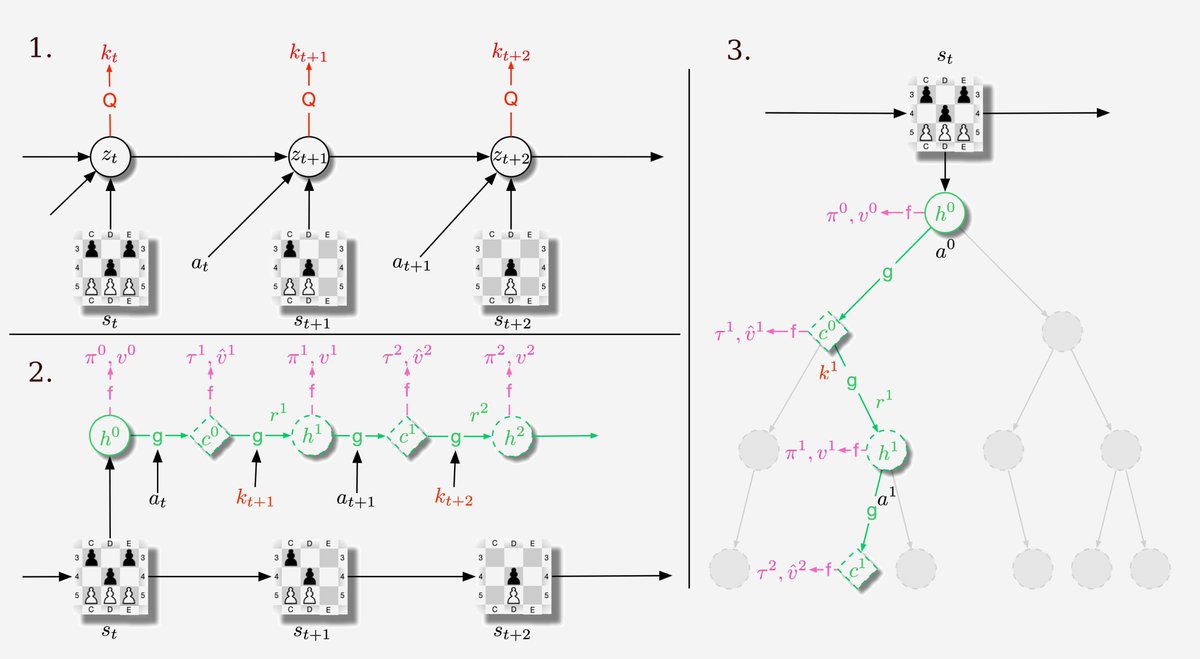
Vector Quantized Models for Planning
"… discrete autoencoders to capture the multiple possible effects of an action in a stochastic environment.
… stochastic #MCTS to plan over both the agent's actions and the discrete latent variables representing the environment's response
RL & language intersection. We proposed what I consider a more general & powerful version of AlphaGo and MuZero, using VQVAEs for planning via MCTS. I'm excited to see where these models and ideas take us in even more complex environments.
Paper: https://t.co/thvB6Ke1EA
https://t.co/qvnHOItZPB
This paper (by @FelixHill84 et al) is really an "It's all coming together" moment for @DeepMind I feel.
Let me try to describe my takeaways from my first readthrough.
1/14
#GPT3 from @OpenAI showed an emergent ability in large neural language models for rapidly acquiring and using new words.
We develop an agent that does this in a simulated 3D environment.
https://t.co/VnaDJTJEhM
1/N
Semantics: How are we leveraging domain-specific ontologies?
@INRAE_Intl and @ontotext explain how we deal with multidimensional data representation ranging from viticulture to winemaking for advancing viticultural research and producing top quality wines
https://t.co/UHOXMqPNKe
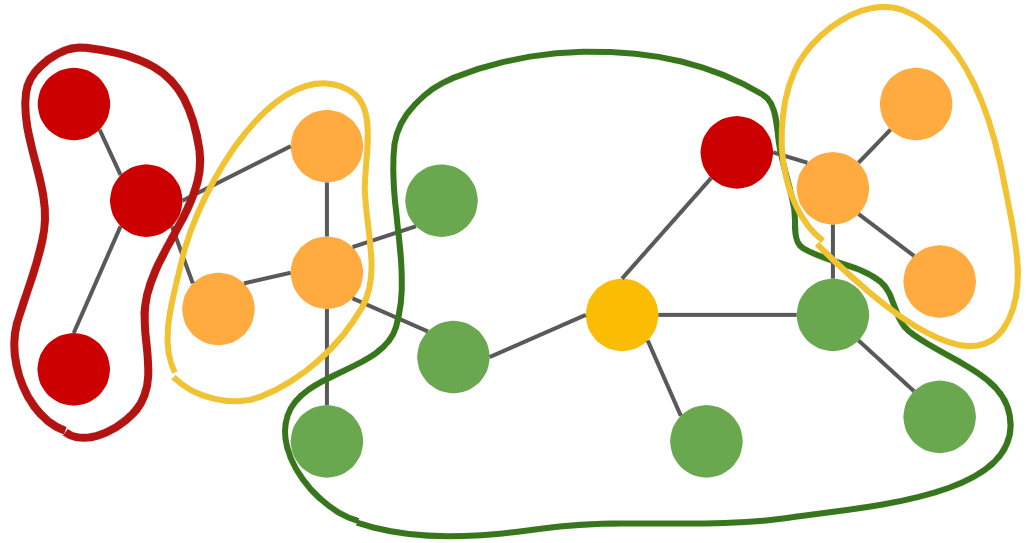
As promised, a thread on our new paper with @johnpalowitch and @phanein called “Graph Clustering with Graph Neural Networks”. We, uh, show how to cluster graphs with GNNs, and how to do it well with DmON.
Paper: https://t.co/nOuHSY9sBW
Code will be available soon™
(1/n)
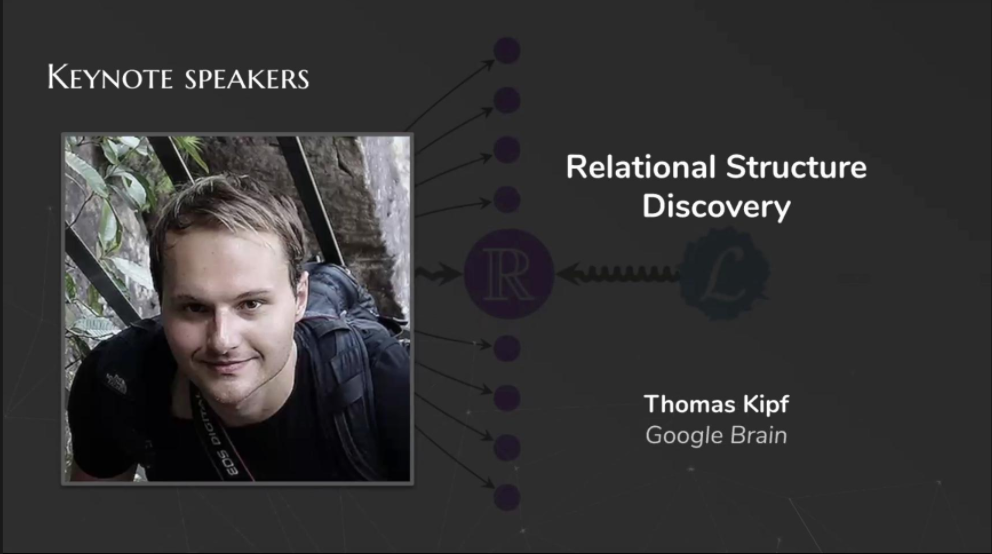
I will be talking about Relational Structure Discovery today at the Graph Representation Learning (and Beyond) workshop at ICML. The talk will be live-streamed at 9:30 CEST. Join us (w/ @xbresson) for live Q&A after the talk! Slide credit: @PetarV_93
It’s July 1, officially #CogSci2020 month! Our 42nd Annual Meeting centers upon the theme of “development.” #development what? Stay tuned to our Twitter this month to learn more about the theme, #programming, and to get #logistical information for a #CogSci2020 gone #Virtual
#AllenNLP 1.0 is just out, and it's the cumulation of months of work and over 500 commits. For an overview of what's new check out https://t.co/zDB05pEjcs use it now at https://t.co/YcYpXTSHx1.
Just out in PNAS: A paper examining the emergent linguistic structure learned by artificial neural networks, such as BERT, trained by cloze task (word-in-context prediction) self-supervision. By @chrmanning, @clark_kev, @johnhewtt, @ukhndlwl, @omerlevy_. https://t.co/OMkueUNPWy
Introducing the Super Duper NLP Repo. 😎
A database of over 100 Colab notebooks for the NLP developer to experiment with.
Happy Hunting.
#NLProc#AI#ArtificialIntelligence#MachineLearning
https://t.co/lF6FkYyKXj