The effect of current anti-amyloid drugs vs Alzheimer's disease is "trivial" for cognitive function or dementia severity, not clinically meaningful, from a systematic @cochranecollab review of 17 trials, >20,000 patients
https://t.co/9A6PeZOyAt
Fine-tuning massive LLMs used to be painfully slow, but not anymore!
4 open source libraries that accelerate fine-tuning of Large Language Models
1. Unsloth AI
• Fine-tune models like Qwen3, Llama 4, and Gemma 3 up to 2× faster with 70% less VRAM
• Uses optimized Triton kernels and manual backprop for exact accuracy
• Supports low-resource setups and runs on consumer GPUs or even Colab/Kaggle with ~3 GB VRAM
GitHub repo → https://t.co/n2aa7vWE1v
2. LLaMA Factory
• Fine-tune over 100 models (LLaMA, Mistral, Gemma, etc.) using a simple CLI or WebUI
• Supports LoRA, QLoRA, full or frozen fine-tuning across 2–8‑bit precision
• Includes built-in dataset templates, training monitors, and model export options
GitHub repo → https://t.co/Zrbg95fXpy
3. DeepSpeed
• Built for large-scale distributed fine-tuning with ZeRO and FSDP
• Optimized for multi-GPU and multi-node training with advanced memory management
• Trusted in production environments for scalable LLM training
GitHub repo → https://t.co/OekS5EZU2Z
4. Axolotl
• Yaml-based setup for fine-tuning, LoRA/QLoRA, DPO, GRPO, and multimodal workflows
• Includes kernel optimizations for memory-efficient training
• Actively maintained with support for Hugging Face, model export, and inference
GitHub repo → https://t.co/tUQ2W1Kpcl
This is Algebrica. A mathematical knowledge base I’ve been building for 2.5 years.
215+ entries, carefully written and structured.
400k+ views over this time. Not much in absolute terms, but meaningful to me.
No ads.
No courses to sell.
No gamification.
No distractions.
Just essential pages, aiming to explain mathematics as clearly as possible, for a university-level audience.
Built simply for the pleasure of sharing knowledge.
Content licensed under Creative Commons (BY-NC).
Best experienced on desktop.
If it helps even a few people understand something better, it’s worth it.
Genome analysis with AI is cool i guess - but a simple CLI wasn't enough for me.
Introducing HGI (Human Genome Interface):
HGI connects agents to highly optimized bioinformatics tools, performing a full genome analysis in ~1 minute (!) on a MacBook Pro. It identifies both known and novel high-risk variants, all analyzed by LLMs.
Compressing the pipeline from the original >60 minutes down to this timeframe was an exciting computer science and bioinformatics challenge. Thrilled with the results, as the current framework enables a genuine "talk to your genome" experience.
HGI significantly boosts AI capabilities, as LLMs typically struggle with standard genetics and bioinformatics tools and tasks.
Currently for research purposes only, but open for inquiries.
This one's for me!!
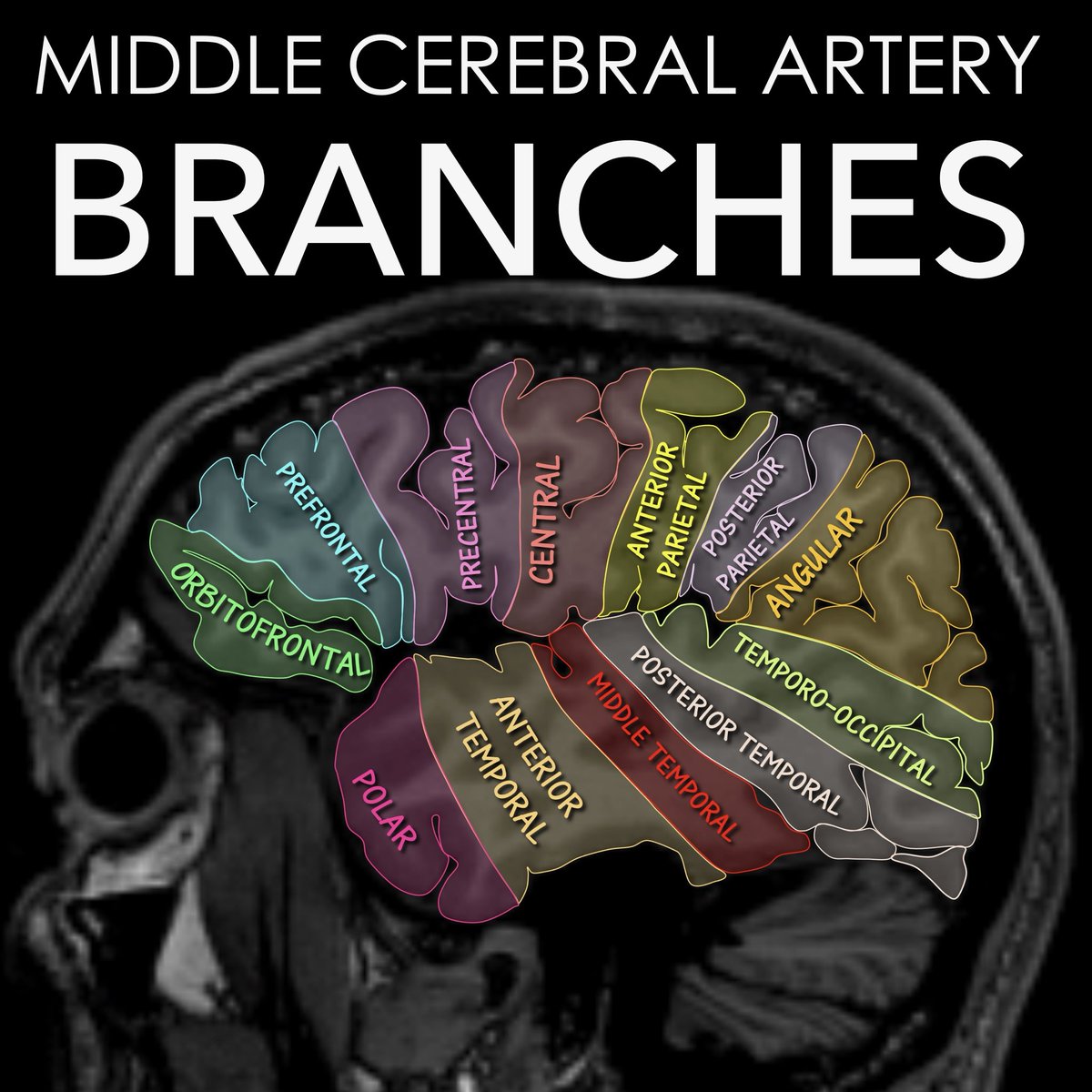
I was tired of seeing small MCA infarcts that were clearly from a branch occlusion& not knowing the name of the branch that was occluded!
I decided I would find a way to remember these territories myself-and then share it w/ you!!
Here's how you can remember the different territories
Start w/4 cardinal territories
-These are the skeleton from which you can remember the rest
Orbitofrontal: Easy, it overlies orbit in the frontal region, like its name
Central: East, it's the territory surrounding central sulcus
Angular: Easy, it literally looks like an angle between parietal & temporal region
Polar: Easy, it's the temporal pole!
Bc it's the MCA, there is an M or two humps between each of these cardinal branch territories & their names reflect the anatomy
Finally, the temporal territories look like fingers on a hand:
Polar is the thumb of the hand: remember polar sounds pollex which means thumb
Middle temporal is literally the middle finger!!
Now you know the middle cerebral branch territories— so your reports will never be middling!
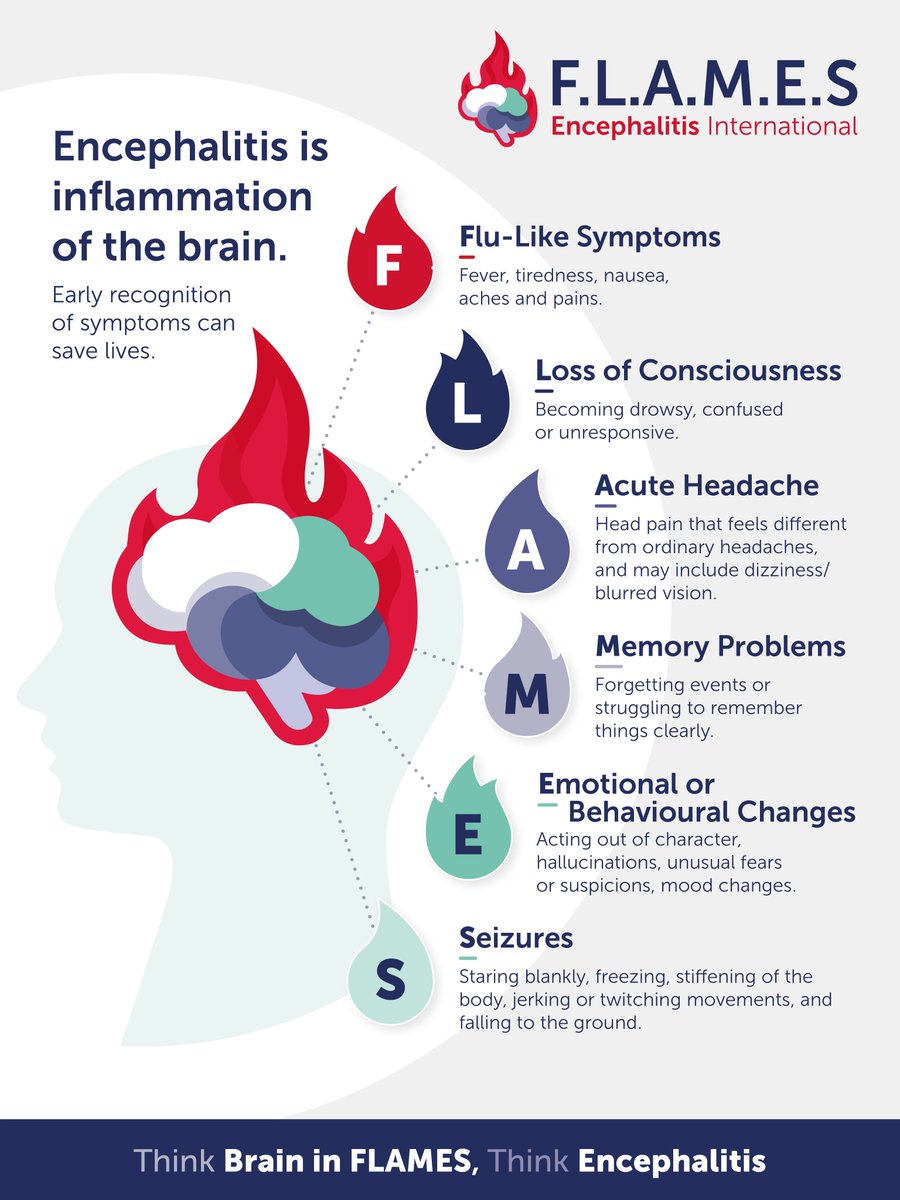
Proud to support F.L.A.M.E.S. from @encephalitis
Early recognition of Flu-like symptoms, Loss of consciousness, Acute headache, Memory issues, Emotional changes & Seizures can save lives.
Spread awareness & support: https://t.co/mSuMxnIYaJ
Deep Learning with PyTorch step by step
Total 3 volumes:
- Vol.1 (Fundamentals)
- Vol.2 (Computer Vision)
- Vol.3 (Sequences and NLP)
Official Repo: https://t.co/AdxIJjJc4t
OK, so the $ bio ai assistants are:
Ascent Bio - https://t.co/r9XxxvizqF
Bio Protocol BIOS - https://t.co/ZlU7ueQgzT
Edison Scientific - https://t.co/qioORKVhhG
K-Dense - https://t.co/06tuwxhbsA
Potato - https://t.co/I4mcR5vhPL
SciSpace - https://t.co/4jD6wq5ufn
Did I miss any?
EEG requires many neurons aligned so that their electric fields can positively sum to spread up to the scalp. I made a browser-based simulator for my EEG class to visualize how "open fields" contribute to EEG recordings.
https://t.co/AIVPTI7A9p
Github: https://t.co/zoFjD4joIq
Module for Graph Theory in Machine Learning is live!
this includes fundamentals to -
> computational graph (how pytorch works)
> Graph representation
> GNNs
> Message Passing in GNNs
> Spectral graph theory
> random walks & markov chains