This total solar eclipse appeared not only poetically beautiful but scientifically interesting. Usually the solar corona appears white, and to some observers the corona of last week's total solar eclipse did appear this pearly color. But this time, totality observers in Spain saw a corona that appeared unusually golden. For one reason, from Spain, the totality occurred when the setting Sun was near the horizon. That low, sunlight travels through a large amount of air which scatters out blue light. An unusual amount of smoke in the air from nearby forest fires acted as a second filter, further scattering the remaining blue tones and deepening the already gold-dominated light. The HDR-processed, multiple-exposure featured image was captured from Benavente, Spain last week. One thing that did not appear golden was a hydrogen-glowing prominence that hovered over the Sun's left edge -- its original bright pink color survived.
Image Credit & Copyright: Rui Santos (Living Impressions)
As the largest kidney transplant center in the Northeast, we honored more than 70 patients who received kidney transplants at CBMC over 25-years ago and as a result have been able to live healthy and fulfilling lives.
https://t.co/83rqzAHxyP
As we continue to celebrate #DonateLifeMonth, Dr. Matthew Hanlon shares the importance of becoming an organ donor. Organ donation doesn't just save lives, it restores them. To learn more about becoming an organ donor visit, https://t.co/PDTafFl99B
Doesn't look like much--just a dot. This is a discovery image of the 1st Kuiper Belt Object, spotted OTD/1992! It changed the known geography of our solar system, revealed that dwarf planets like Pluto are common & opened the way for New Horizons. Not bad for a little moving dot
Just checked my calendar and nope—still no new Orville...yet! Somewhere out there, a Moclan is screaming into a pillow and Bortus is singing in the shower... but not for us. 😭💫
#TheOrville#EgotasticFunTime#SciFiTV#RenewTheOrville
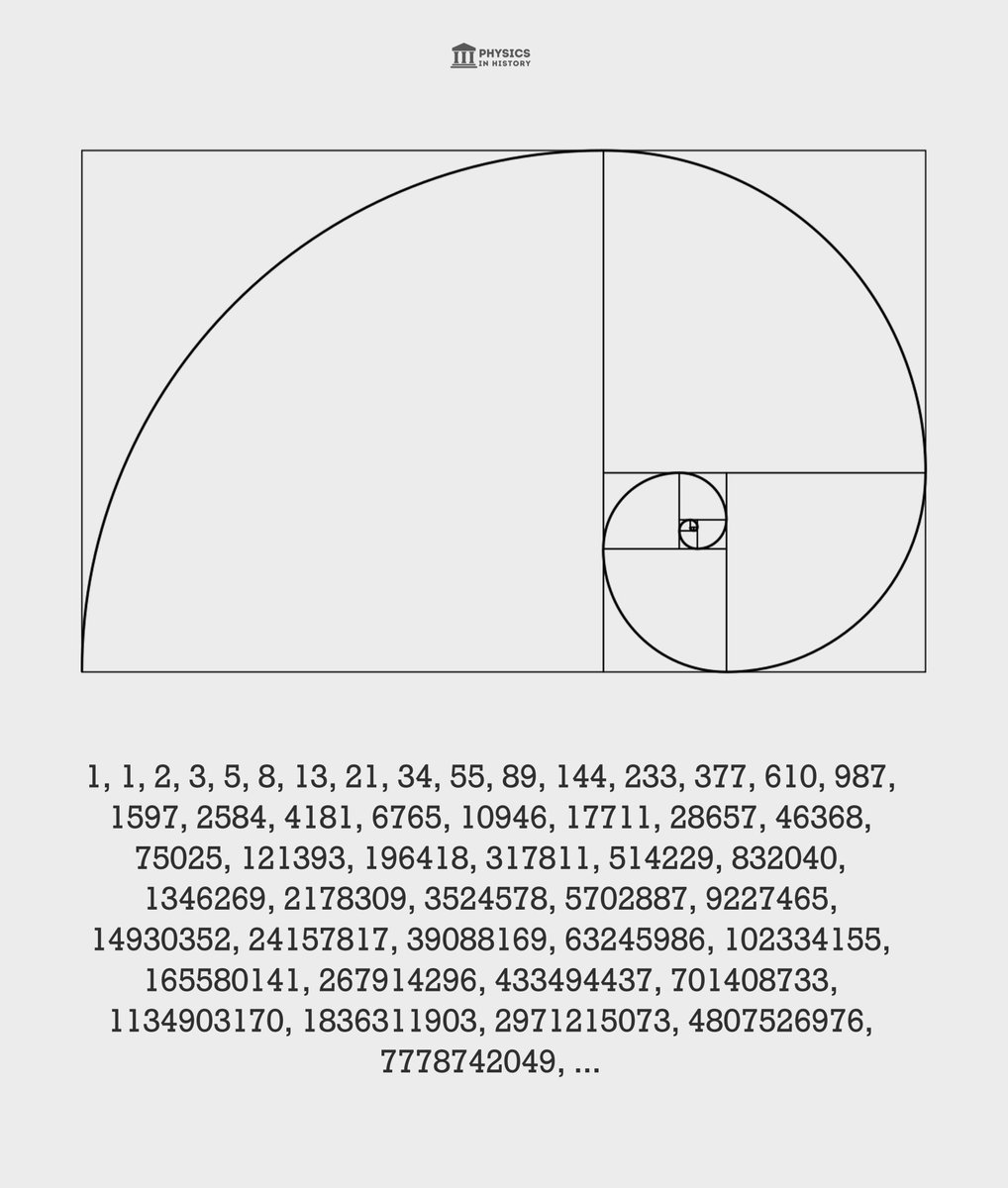
The Fibonacci sequence is a famous sequence of numbers that starts with 1 and 1, and each subsequent term is the sum of the previous two terms. For example, the first ten terms of the Fibonacci sequence are: 1, 1, 2, 3, 5, 8, 13, 21, 34, and 55. The sequence has many interesting properties and applications in mathematics, nature, art, and music. For example, the ratio of consecutive terms of the Fibonacci sequence converges to the golden ratio, which is approximately equal to 1.618. The golden ratio is considered to be aesthetically pleasing and can be found in many natural phenomena and artistic works. ✍️