🚨Our paper "Which night lights data should we use in economics, and where?" is out in the Journal of Development Economics (with John Gibson, Geua Boe-Gibson and Chao Li @waikato. We are grateful to the editor @afosterri & referees for their suggestions https://t.co/kLXhwWNcUK
Hi #EconTwitter!
Interested in #microeconometrics & causal inference?
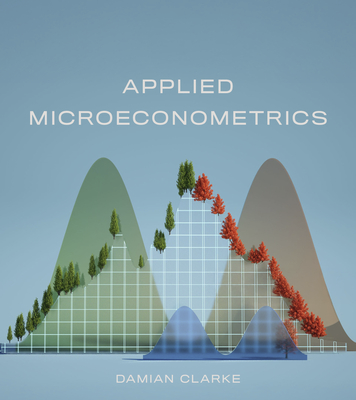
Damian Clarke's (@UniofExeter) 𝐀𝐩𝐩𝐥𝐢𝐞𝐝 𝐌𝐢𝐜𝐫𝐨𝐞𝐜𝐨𝐧𝐨𝐦𝐞𝐭𝐫𝐢𝐜𝐬 is out! The website is free, open and very cool, with lots of code/data in #R, #Python & #Stata.
Useful for grad students!
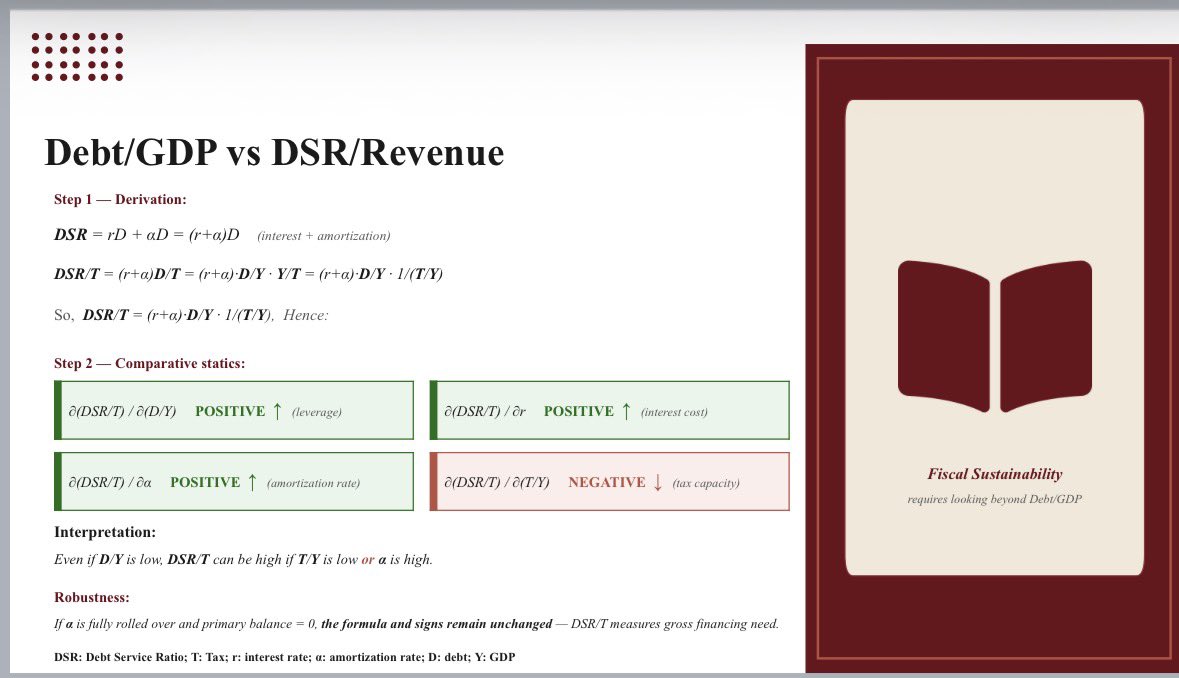
Untuk mahasiawa ekonomi. Ada banyak pertanyaan ke saya tentang ratio Debt/GDP vs Debt Service Ratio (DSR)/ Revenue
Mengapa indkator DSR/Revenue lebih relevan dibanding Debt/GDP.
Dalam bahan kuliah ini saya tunjukkan walau Debt/GDP sama, tapi jika DSR/Revenue lebih tinggi maka ruang fiskal atau fiscal space yg tersedia bisa lebih rendah.
Maaf ini memang bahan kuliah jadi sangat teknis. Buat non ekonom, intinya: walau dg rasio utang/PDB yang sama, kalau DSR/Revenue tinggi krn bunga dan cicilan utang yg tinggi atau Tax/PDB yg rendah, maka fiscal space akan lebih kecil. Itu sebabnya DSR/Revenue lebih penting dari Rasio utang/PDB karena pertanyaan paling pentinh adalah berapa besar ruang fiscal kita
An Econ PhD student at the 20th ranked program who is working on stuff they are passionate about will have a better job market than one at MIT who's been doing nothing but phd-app-maxxing since undergrad.
People get confused by this because they don't observe *how* successful people came about their insane knowledge bases. It wasn't by relentlessly grinding away at stuff because they had to.
They look at Scott Kominers and say "if i grind and learn as much math as he did, i will be successful." You can't! *You* can't learn as much math as Kominers because he gets energized by configuration results for type ii lattices. You will burn out if you try to do it this way.
You cannot, through grind alone, learn more about the economics of cities than Glaeser, or about how to maximize a value function than Acemoglu.
Research careers are long. Most people give up and stop working on research (graph is share of elite PhD graduates with at least one publication in year X after graduation).
If you're starting a PhD, you're presumably doing it to have a successful 40-year research career. The number one factor in whether that happens is not which program you get into, it's whether you find a research angle that energizes you enough to push through the endless barriers an academic career throws in your path.
This is why a lot of the received wisdom around PhD applications is wrong. If you're 100% consumed by the predoc rat race already, it's going to be a long, hard road ahead.
Obv you still have to do admissions, you should study a lot for the GRE, sigh it seems like taking real analysis is probably worth it.
But spending time on the things that energize you about economics is a no-brainer, whether it's policy, or blogging, or whatever, you gotta do the things that light your fire and make you want to be on this road.
Large Datasets: Claude Code for Economists with Paul Goldsmith-Pinkham |... https://t.co/RbWS60LE23 via @YouTube
More on https://t.co/AE52s9awei
Happy Easter!
Explore how Indonesia’s nationalist economic agenda continues to shape growth, reform and institutional change. In the chapter “Nationalist Political Economy in Indonesia” (Oxford University Press), @acopatunru argues that despite liberalisation efforts Indonesia still wrestles with deep institutional and cultural barriers to developing a full-fledged liberal market economy. This is a perfect read for anyone working on Southeast Asia, political economy, institutional reform, development policy or Indonesia-Australia links. https://t.co/a8tTfHec44
AI leaders should spend more energy reckoning with this fact.
A generation of kids is losing their best opportunity to learn how to read, write, and think, and they will pay the price for their whole lives.
It’s not every student. Some students are becoming more empowered and knowledgeable then ever. But there is a big big big chunk of kids who are GPTing through everything and will learn far less in high school and college, and our entire society will suffer that lost human capital.
Industrial policy is often discussed through high-level narratives and flagship initiatives, yet its implementation—particularly at the subnational level—remains opaque.
Read this week's article on industrial policy in China to learn more: https://t.co/bTG6jqdS8l
Forthcoming in the AER: "Micro vs Macro Labor Supply Elasticities: The Role of Dynamic Returns to Effort" by Henrik Kleven, Claus Kreiner, Kristian Larsen, and Jakob Søgaard. https://t.co/6y5qjQfwgi
Bagi yang tertarik wawancara saya dengan Gita Wirjawan @GWirjawan dalam End Game
Kelas Menengah Digempur Ketidakpastian - Chatib Basri | Endgame #216 (L... https://t.co/h6ues3Cjpy via @YouTube
@etjernst@Macquarie_Uni So happy for you. Congratulations, Emilia 🥳 If you're making your way to New Zealand, do let me know! We can have a small UC Davis reunion here :-)
🚨 AMA Alert! 🚨
Curious about how we can make science, leadership, and education more inclusive for women? Join Prof. @danilaserra_eco (Texas A&M) for an exclusive ASK ME ANYTHING (AMA) session on Feb 11, celebrating International Day of Women and Girls in Science! 🤩
Ask about her groundbreaking research on diversifying male- and white-dominated fields of study, and boosting women's aspirations and leadership.
Full details👇 https://t.co/vjWAeX9VdN
Don’t miss out! 🗓️ #WomenInScience #AMA #GirlsInSTEM
Rethinking evidence and refocusing on growth in development economics
Yesterday on VoxDevTalks, Lant Pritchett (@LSEnews@LSEPublicPolicy) discussed the overreliance on rigorous evidence, and need to focus on economic growth, in development economics: https://t.co/MHJNjj8dyx
For those who want to jump to the frontier in select areas of economics, the AEA has posted the webcasts of this year’s continuing lectures. Thanks much to @lkatz42 for his leadership and vision in assembling these lectures. https://t.co/waqw7yeQrk
Don't miss out on this guide on how to run surveys: on creating your own identifying variation: more than 80 pages and an Appendix with examples including social desirability, vignettes, information treatments and more.
Karena banyak pertanyaan mengenai bagaimana meningkatkan penerimaan pajak tanpa menaikkan tarif pajak, saya kirim ulang paper saya bersama Mayara Felix, Rema Hanna dan Benjamin Olken di American Economic Review, Dec 2021.
Paper bisa di akses di link ini https://t.co/4stG1LhOfg
Versi yang non teknis bisa di baca disini
https://t.co/sq7zbAqewn
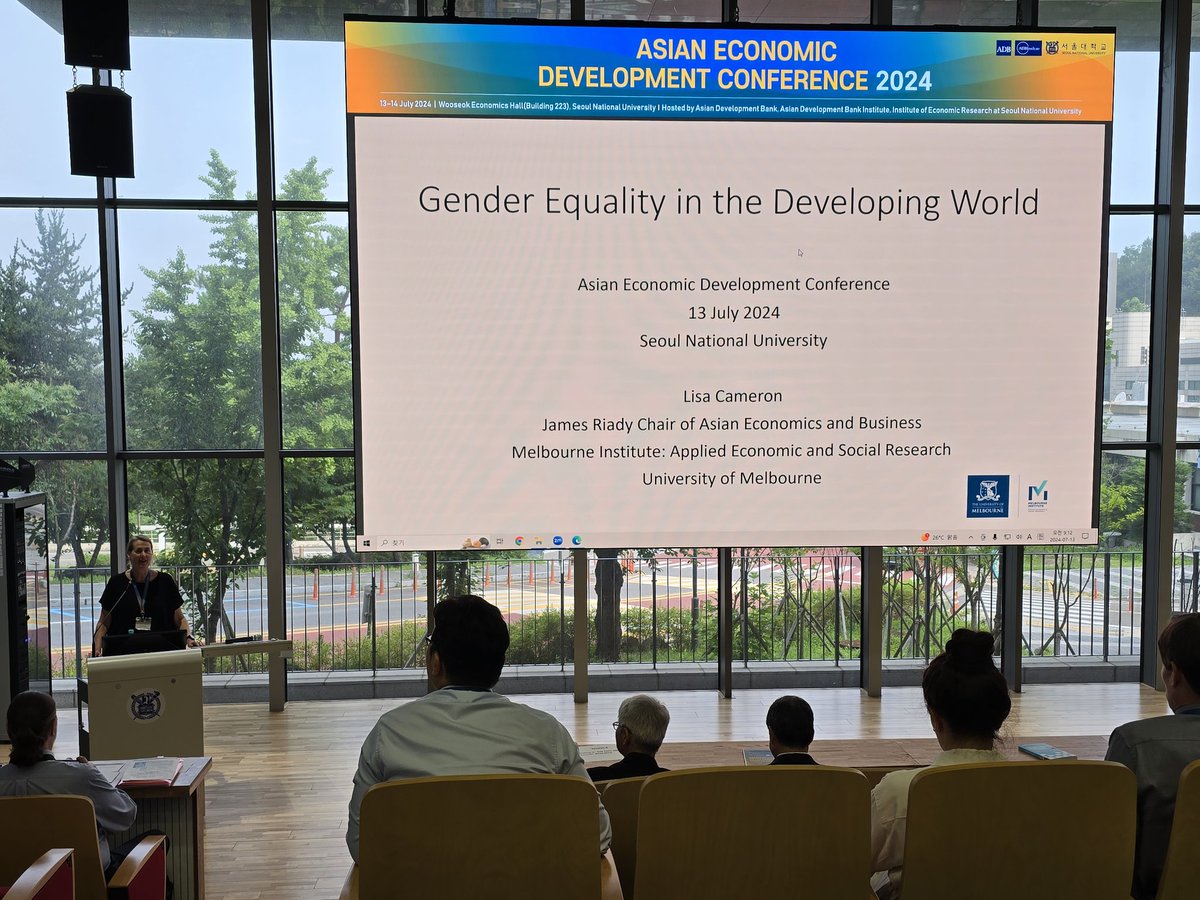
Weekend doesn't stop us from conferencing. @CameronLisaA from @MelbInstUOM kicks off the Asian Economic Development Conference with her keynote lecture on gender equality in the developing world #aedc2024