@dac_chain (DAC) centers its post-quantum security pitch on Proof of Quantum Work (PoQW) and Quantum Entropy, with its white paper pointing to protected transaction broadcast flows and ongoing hardening of validator communication and entropy distribution.
News on Clarke, the last testnet before mainnet.
We're live tomorrow at 16.00 UTC with GenLayer Chief Ecosystem Officer @raskovsky and @AnaRegen to share what's next for validators and where Pre-Mainnet Staking comes in.
Set a reminder 👇
https://t.co/OfbgIpMLJr
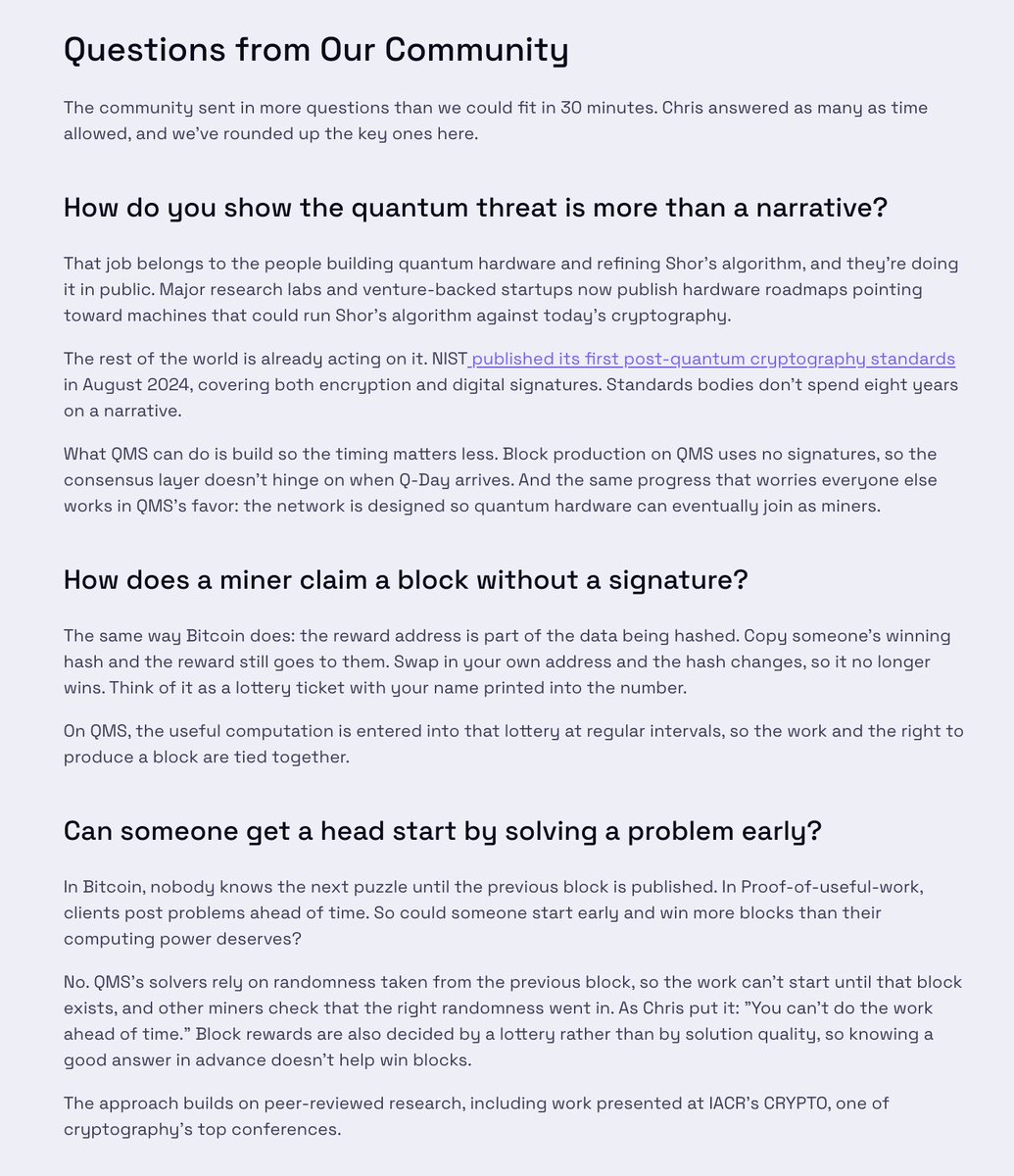
Most EVM chains produce blocks using stake. QMS uses Proof-of-Useful-Work: miners win blocks by solving QUBO optimization problems. Execution remains standard Ethereum, so Solidity contracts deploy with zero code changes.
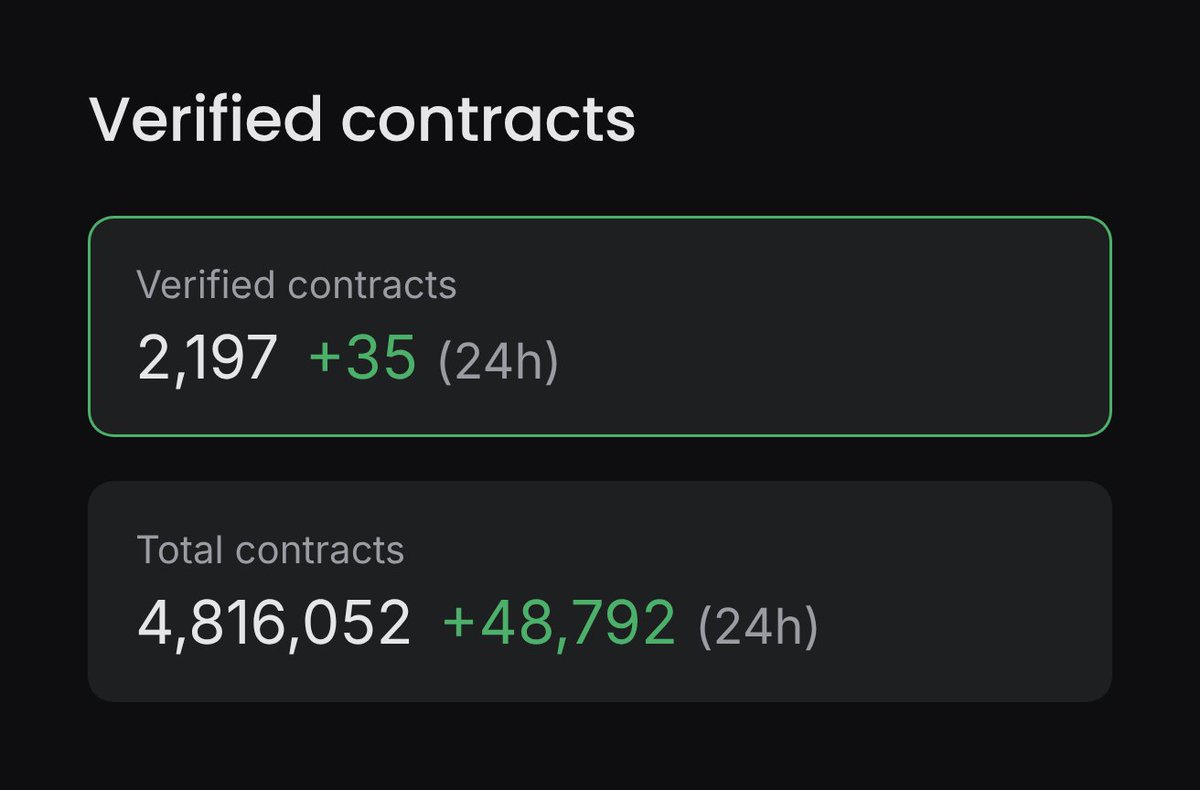
2,100+ verified contracts are already live on testnet.
UPGRADE. CLAIM. REPEAT. 🔁
Here’s one full cycle inside Chip Entropico:
1. Spend QE to upgrade your chip
2. Watch your power rate climb
3. Drain your Chip Cache
Simple loop. Compounding gains.
Start your run → https://t.co/Ty7A8Ri7aa
@dac_chain
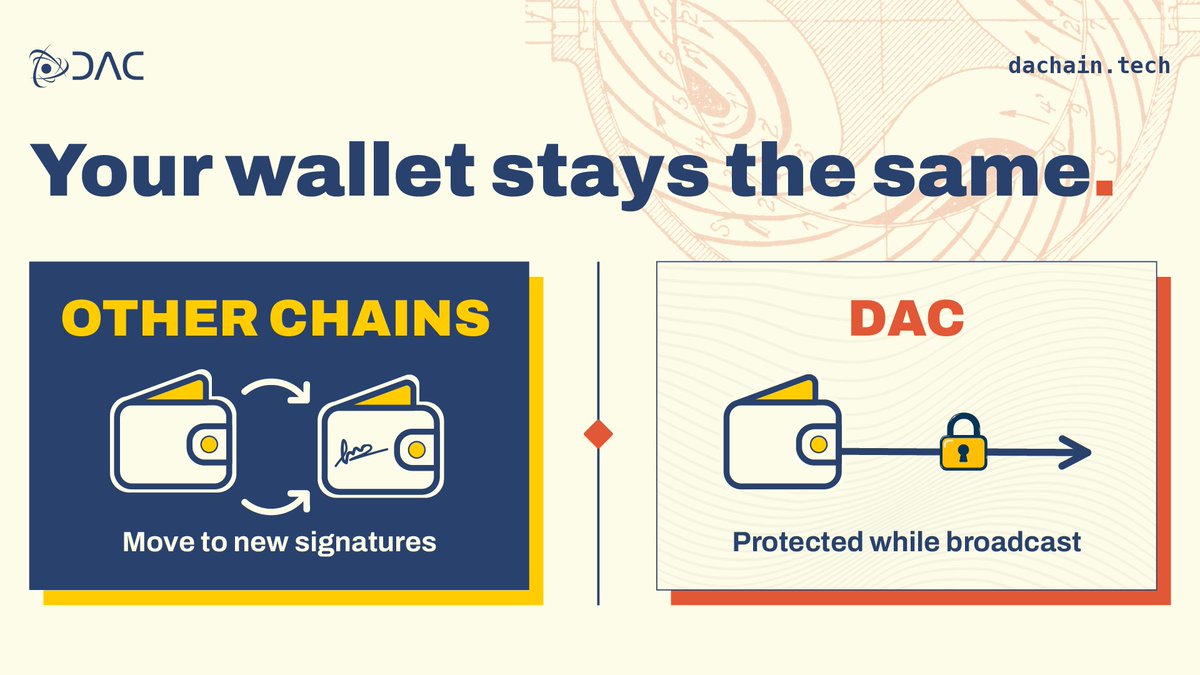
Plenty of chains plan to handle quantum risk later by moving users to new signatures.
On DAC you keep signing the way you already do, and transactions are protected while they're broadcast.
UPGRADE. CLAIM. REPEAT.
One full loop inside Chip Entropico, recorded in-game.
Spend Quantum Energy on your chip, watch its power climb, then claim what fills your Chip Cache.
Run your own loop → https://t.co/jMHQhh8Gxu
Will quantum computers eventually replace our laptops? Can they crack every password? Can they solve problems that would take today's supercomputers millions of years?
Quantum computing is often described in ways that make it sound almost magical. The actual science is arguably more interesting.
Let's look at five common misconceptions and what we know so far.
Root certificate authorities and core key-signing infrastructure—because without trusted identity and signing roots, everything built on top (wallets, exchanges, TLS, settlement layers) loses verifiable authenticity at once. @dac_chain
Two claimed proofs of a 167-year-old mathematical mystery emerged on the same day last week. Could either have implications for cryptography?
That's one of three developments worth following:
• Riemann Hypothesis: Two claimed proofs made headlines, one AI-assisted and another entirely human, with the latter addressing a generalized version of the hypothesis. Even if confirmed, the results wouldn't directly break today's encryption or blockchain signatures. The quantum threat comes from Shor's algorithm running on sufficiently powerful quantum computers.
• IOSCO: The global securities watchdog warned that quantum computers capable of breaking today's financial cryptography could emerge within five years, while upgrading existing systems could take longer.
• IBM, NVIDIA & Fermilab: Announced plans to bring quantum processors and classical supercomputing closer together, with a focus on error correction and building more reliable quantum systems.