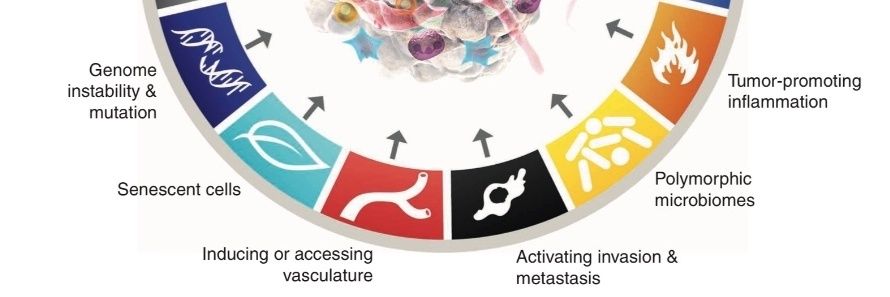
As we age, especially after 60 years, there is a marked accumulation of mutations in our mitochondrial DNA. These are undetected (cryptic) until they expand into clones and, while associated with clonal hematopoiesis (CHIP), they may independently have an impact on health outcomes @Nature
https://t.co/fO9xmSIbDc
🗣️ THE 5 BIGGEST HEAD & NECK CANCER TRIALS OF #ASCO26
1️⃣ AREST (6000)
Post-op RT vs observation in early-stage OSCC
⭐ Who truly needs adjuvant RT?
2️⃣ MACE POSTOP (6002)
Metronomic adjuvant chemo in LA oral cavity SCC
⭐ Can low-dose maintenance reduce relapse?
3️⃣ Induction De-escalation in NPC (6003)
2 vs 3 cycles induction chemo before CRT
⭐ Less toxicity. Same outcomes?
4️⃣ Carboplatin vs Cisplatin in NPC (6004)
Non-inferiority frontline CRT strategy
⭐ A gentler platinum backbone?
5️⃣ NIVOPOSTOP (6001)
Impact of neck dissection extent with post-op nivolumab + CRT
⭐ How does surgery interact with IO?
#HeadAndNeckCancer #HNOnc #OncTwitter #ASCO26 #HNSCC #MedTwitter @ASCO@myesmo@esmo_open@OncoAlert
New in @JThoracOncol:
📌 Compound (PACC/PACC AND PACC/classical) mutations both show enhanced sensitivity to 2nd-gen TKIs (afatinib) over osimertinib in 1L
📌 PACC pts on 1L osimertinib trended toward shorter ToT vs classical (19.5 vs 28.5 mo)
🧬 Bottom line: When you see a compound mutation with a PACC component (G719X, S768I, E709X) — even if paired with L858R or Ex19del — treat it as PACC. Consider 2nd-gen TKIs over osimertinib.
⭐️Still an area of unmet need! Novel agents like firmonertinib, silevertinib enozertinib are being studied.
Great effort by @LeXiuning and team!
https://t.co/u6tMuVNXrP
Nearly 30 thoracic oncology abstracts from Japan will be presented at #ASCO26 – including ours! 🇯🇵🫁
China’s momentum is truly impressive 🇨🇳🔥
This makes me even more motivated to contribute to:
🎤 Japan-led studies selected for oral presentation
🌏 Multinational research led from Japan
🚀 A stronger global impact in lung cancer research
#LCSM @ASCO
Radiation Recall Phenomenon (RRP) is one of the most fascinating and clinically important delayed toxicities in oncology.
A systemic drug can “reactivate” inflammation precisely within a prior radiation field — weeks, months, or even years later.
🔬 Classic clues:
✅ Rash sharply conforming to RT portal
✅ Pneumonitis limited to irradiated lung
✅ New chemo/immunotherapy started recently
⚠️ Common culprits:
• Taxanes
• Gemcitabine
• Doxorubicin
• Checkpoint inhibitors
💡 Always ask:
“Did this patient receive prior radiotherapy?”
Because recognizing Radiation Recall early can prevent severe toxicity and save lives.
#RadiationRecall #MedicalOncology #RadiationOncology #Oncology #CancerEducation #Immunotherapy #Chemotherapy #Pneumonitis #Dermatitis #Gemcitabine #Taxanes #OncoTwitter #MedTwitter #DrRupamManna
🧵 CROWN 7-Year Update: Lorlatinib in 1L ALK+ NSCLC: the longest PFS ever reported in advanced NSCLC keeps getting longer!!! #ASCO26 🫁 Abstracts! Presenter: @TonyMok9
Key takeaways: 👇 @ALKPositiveinc
1) 1/ 📈 Median PFS STILL not reached at 7 years.
• 7-yr PFS rate: 55% (lorlatinib) vs 3% (crizotinib), HR 0.19
• 44% of pts STILL on lorlatinib vs just 3% on crizotinib
When Kaplan–Meier Curves Fool You 📉
A flat survival tail can look exciting…
but sometimes it reflects very few patients remaining under follow-up.
The curve alone is never enough.
Always check: • Number at risk
• Censoring patterns
• Follow-up maturity
• Late-tail denominator
A “long-term survivor plateau” is meaningful only when enough patients are still being observed.
One of the most important lessons in interpreting immunotherapy trials.
#Oncology #MedEd #Biostatistics #Immunotherapy #ClinicalTrials #KaplanMeier #MVOnco
ALK+ NSCLC: high PD-L1 expression is associated with shorter PFS on first-line ALK TKIs.
In 130 patients, ORR was similar (~82%) regardless of PD-L1.
However PFS was significantly shorter with PD-L1 ≥50% (11 vs 21 mo, HR 2.29).
Preclinical data show no effect on TKI sensitivity, supporting a microenvironment-driven mechanism.
https://t.co/nUhZGFi993
La supervivencia al cáncer ya supera el 70% en EE.UU.
Era 63% en los 90.
Esa diferencia = 4,8 millones de personas vivas hoy.
Mieloma: 32% → 62%
Melanoma (metastásico): 16% → 35%
Pulmón (metastásico): 2% → 10%
No es un progreso abstracto.
Son cumpleaños, nietos,
y años de recuerdos.
Claro, aún nos queda camino por recorrer.
Pero esto es lo que hace el apoyo a la ciencia.
Adiós a @EvidenceOpen en Europa. Era una de las pocas IAs pensadas para médicos, anclada en literatura revisada por pares. En la UE solo quedan LLMs generalistas (ChatGPT, Claude, Gemini), sin filtrado clínico. Sin sustituto europeo equivalente. Perdemos una herramienta útil.
🚀 Metastatic lung cancer oral session at #ASCO26
A visual overview of the key metastatic NSCLC abstracts, including targeted therapy, immunotherapy, combination approaches, and CNS management 🫁💊
#LCSM@OncoAlert@EGFRResisters@Larvol
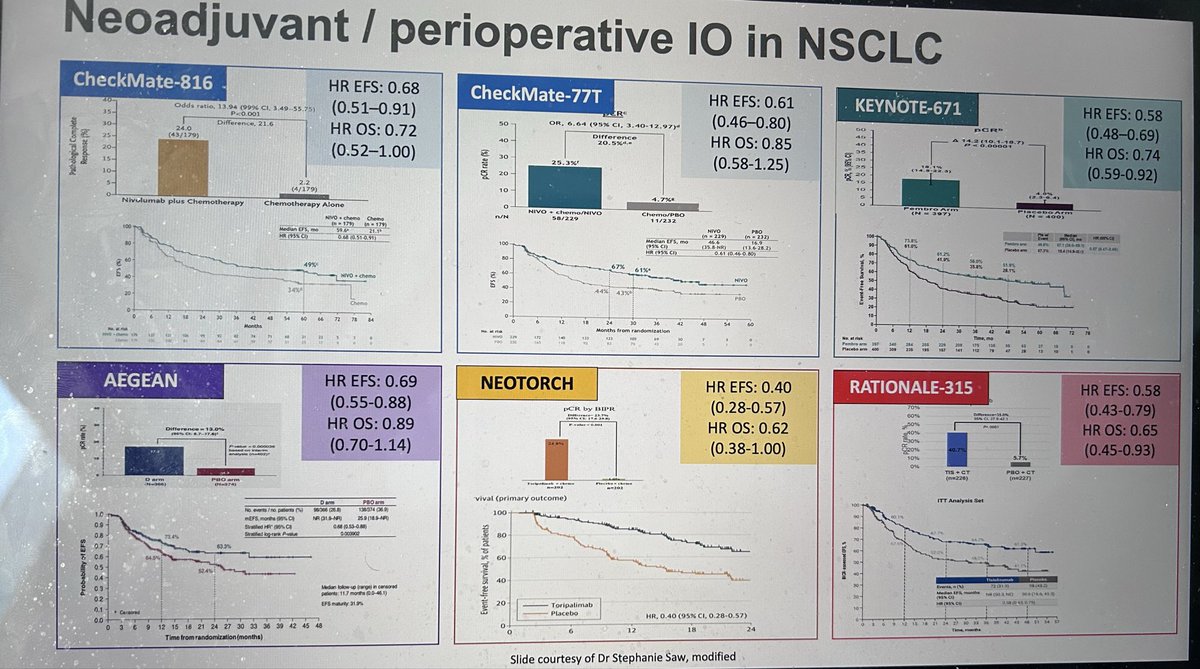
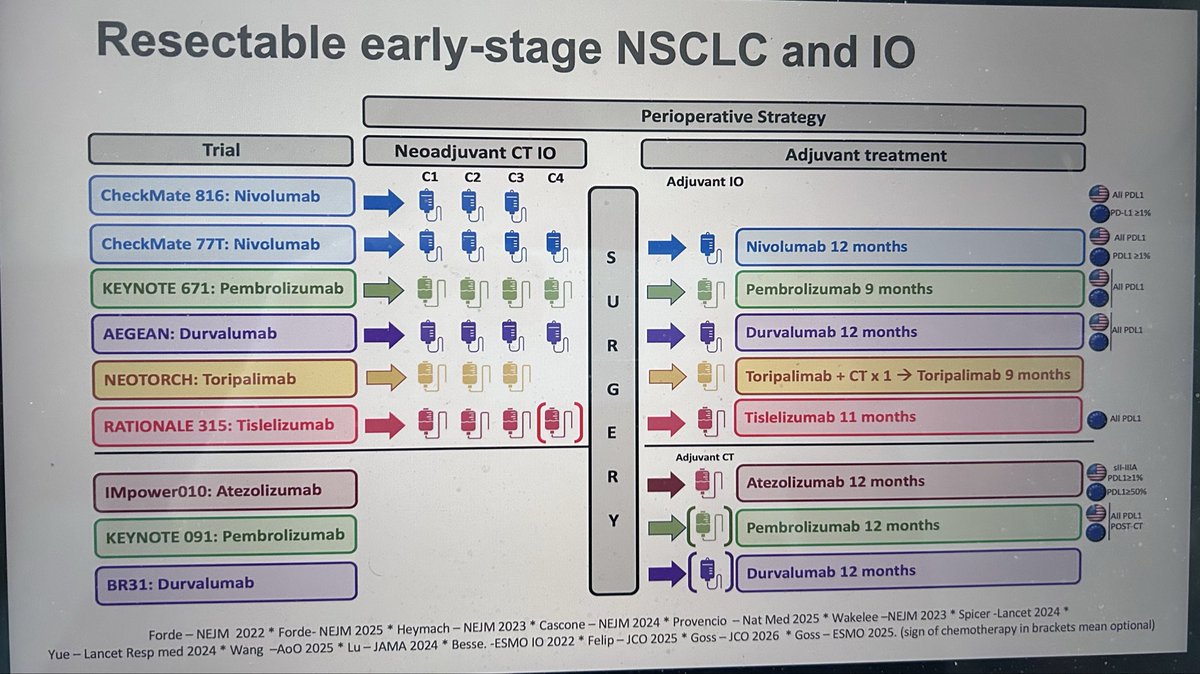
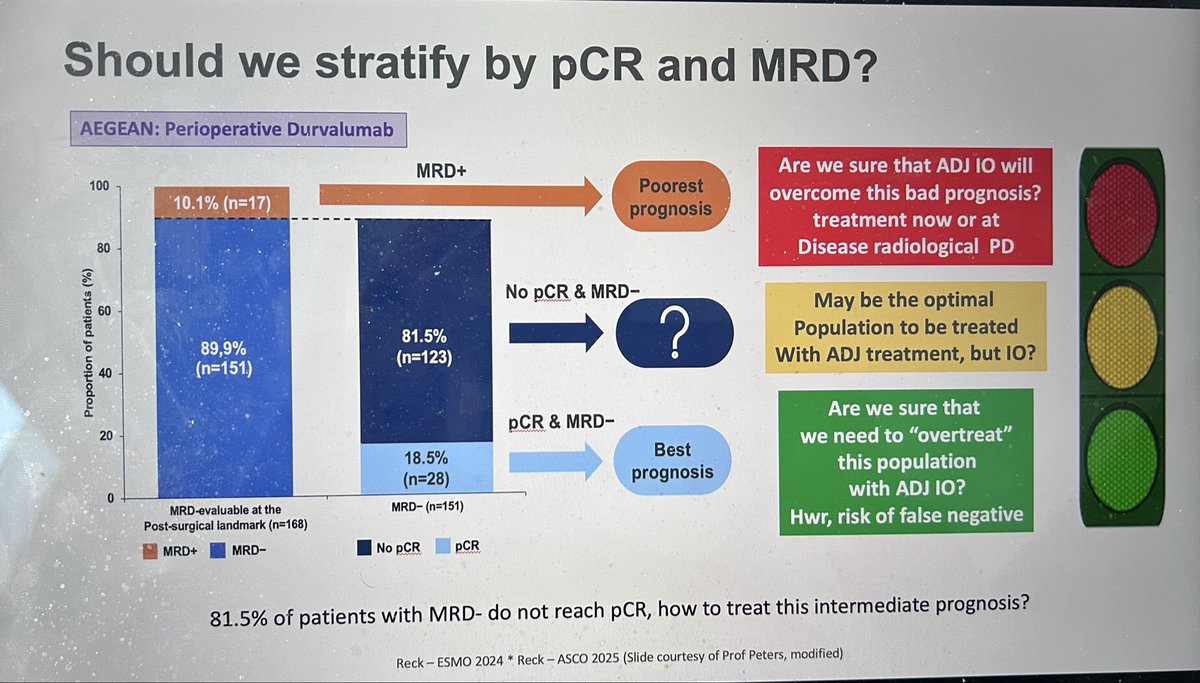
Are we ready for deintensification adjuvant IO in early-stage 🫁? In the future molecular and pathological parameters will guide our decisions? For pCR after induction CTIO we can discuss surveillance and in no-pCR probably continuing the same IO not the besst approach #ELCC26
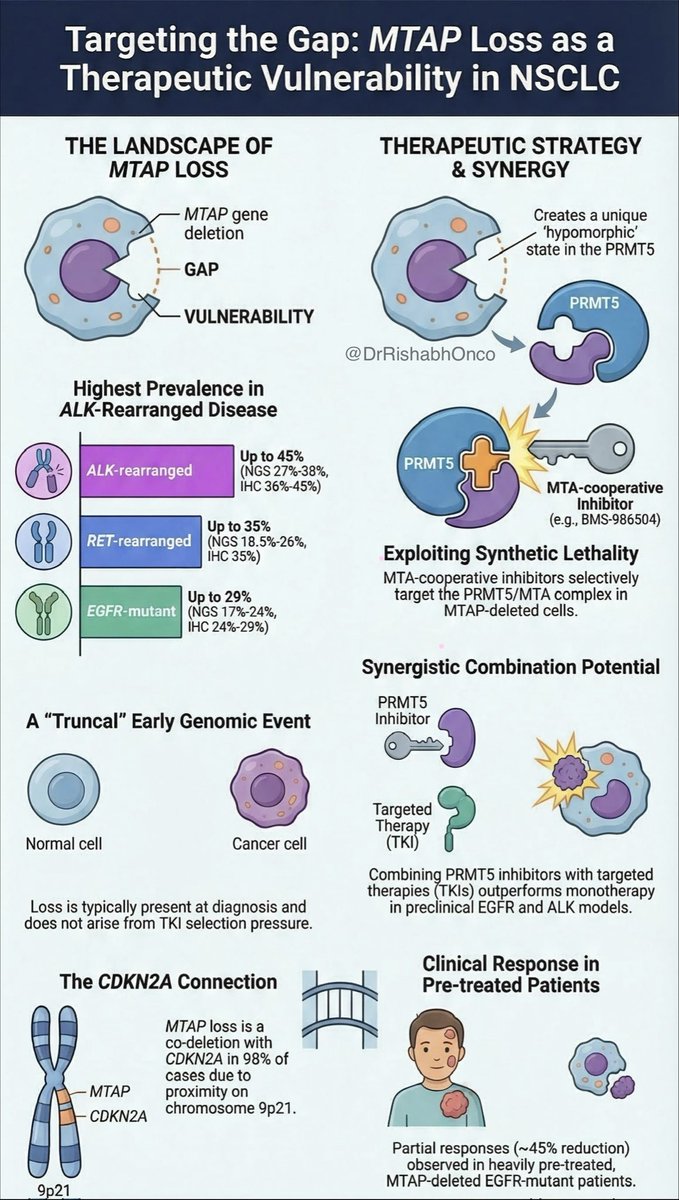
🫁 A potential new vulnerability in oncogene-driven NSCLC.
MTAP loss - a metabolic alteration present in ~10-15% of cancers - appears particularly frequent in EGFR, ALK and RET driven lung cancers.
A new Annals of Oncology study explores its biological and therapeutic implications.
🧪 Key findings
🔬 MTAP loss prevalence
• EGFR-mutant NSCLC
• ALK-rearranged NSCLC
• RET-rearranged NSCLC
⚠️ Clinical impact
MTAP loss did NOT worsen outcomes with frontline TKIs like osimertinib or alectinib.
💊 Therapeutic opportunity
MTAP-deleted tumors showed strong sensitivity to PRMT5 inhibition.
The MTA-cooperative PRMT5 inhibitor BMS-986504 demonstrated:
✅ Antitumor activity in MTAP-deleted models
✅ Activity across EGFR and ALK driven tumors
✅ Additive / synergistic effects when combined with targeted therapy
🎯 Why this matters
MTAP deletion may define a new combinatorial strategy in oncogene-driven lung cancer:
TKI + PRMT5 inhibition
A potential next wave of precision thoracic oncology.
🔖 Worth watching as PRMT5 inhibitor trials mature.
📖 Full paper in comment ⬇️
#OncoTwitter #LungCancer #NSCLC #PrecisionOncology
@OncoAlert@ASCO@myESMO
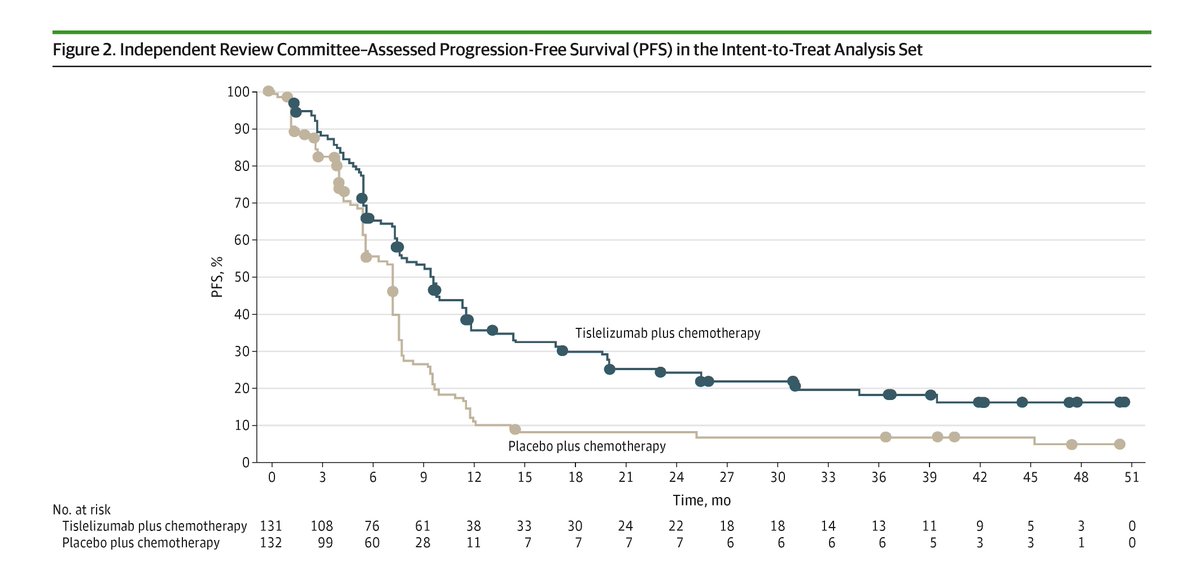
In recurrent or metastatic #NasopharyngealCancer, tislelizumab plus chemotherapy led to longer overall survival and durable progression-free survival compared with placebo plus chemotherapy.
https://t.co/55gPVe6qYT