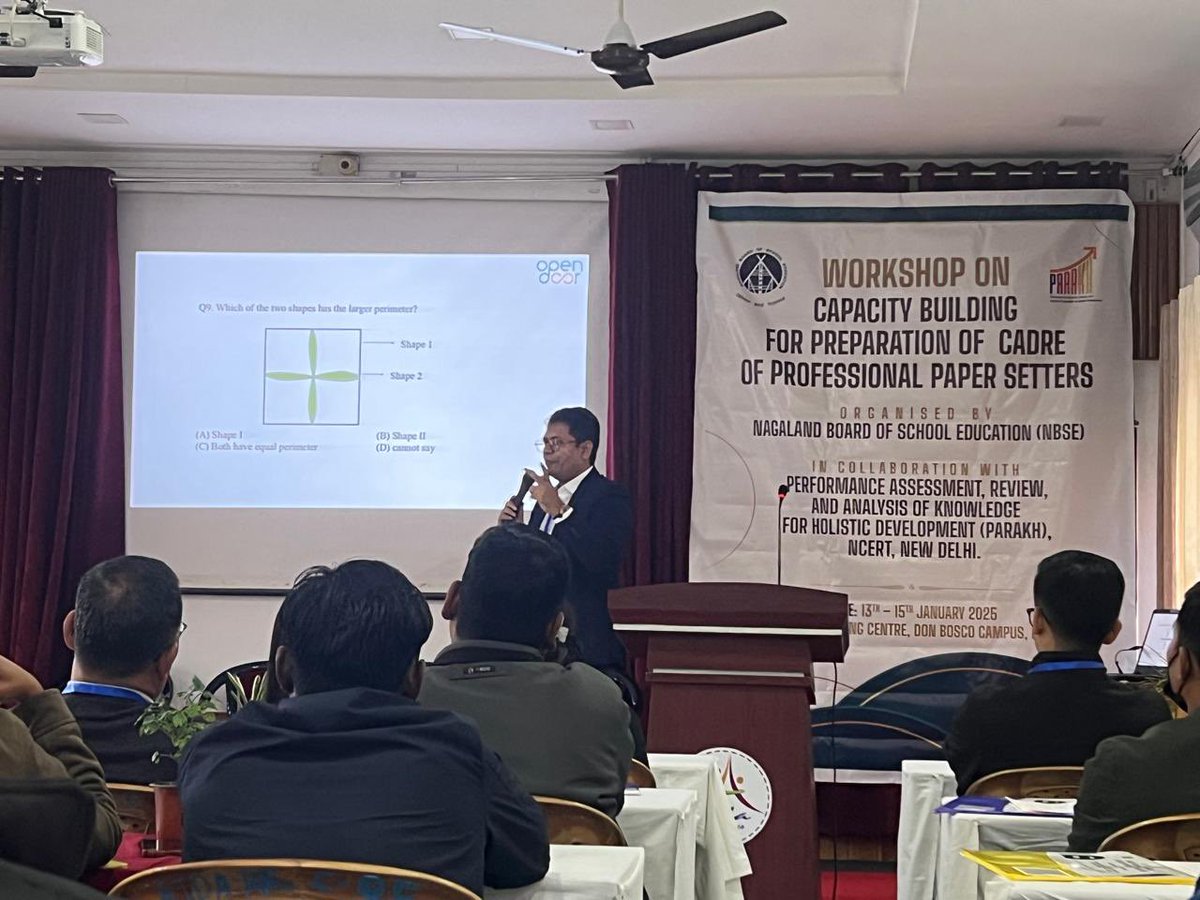
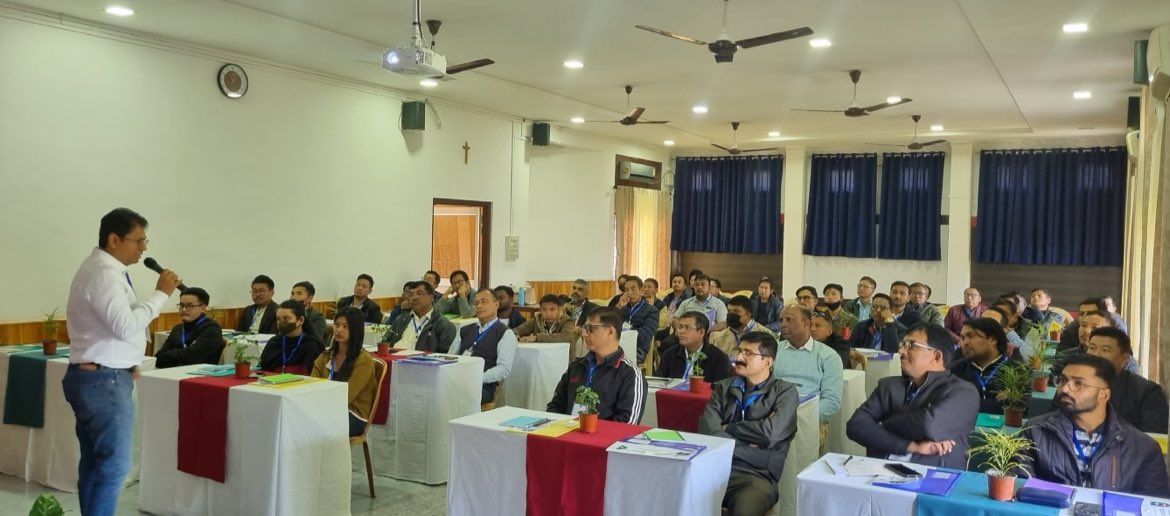
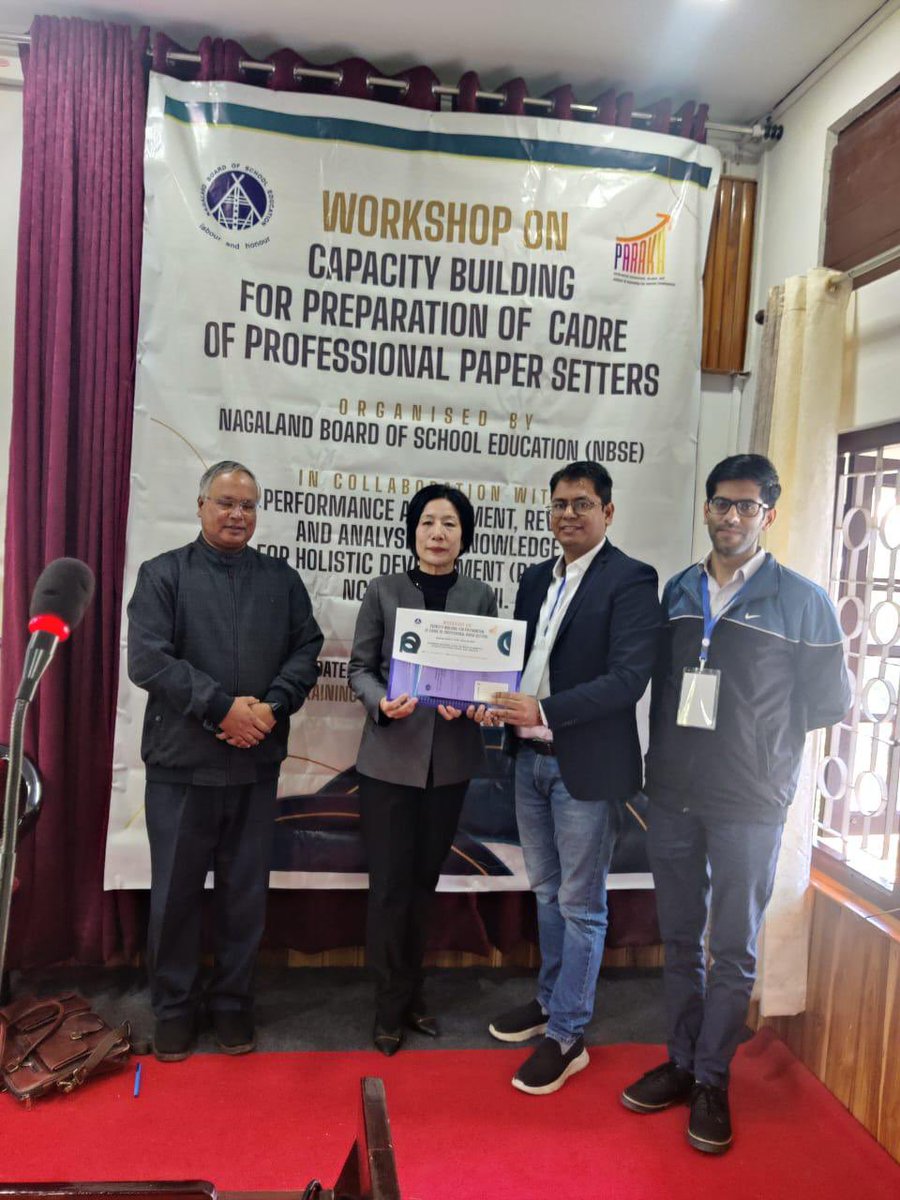
We are happy to share that Open Door has signed an MoU with the Nagaland Board Of School Education (NBSE) to develop a cadre of paper setters on Competency-Based Questions in a year-long contract.
@nbsenagaland has taken a big step towards concept-based learning!
Workshop on Capacity building of Cadre of Professional Paper Setters on Competency based questions for Science & Mathematics, organised by NBSE & PARAKH, NCERT commenced today at Dimapur with resource persons from @OpenDoor_Edu. @SamagraNagaland@MyGovNagaland
Summary:
1. Students follow a pattern all day
2. Teachers should ask good questions while teaching and in tests. Questions that BREAK THE PATTERN!
3. The world needs thinkers. People who can think deeply, challenge assumptions
4. Teachers have the power to create thinkers
(6/6)
Dear teachers, want to make children think? Then BREAK THE PATTERN!
Children follow a pattern from morning to night. Get ready for school, sit in the bus, attend classes, take an exam, come back home.. la la la
In this routine, can teachers BREAK THE PATTERN? Read on: (1/6)
Question that fits a pattern:
Q. What % of air is made up of Oxygen?
Question that BREAKS THE PATTERN:
Q. You are standing next to a fan. Which is the gas that is hitting in the largest quantiity?
(5/6)
Results:
- 1000+ teachers with improved subject knowledge
- Teachers design better questions
- Teachers more confident about their subject
All this IMPROVEMENT with little TRAINING (5/n)
Over the last 8 years, Open Door has employed a unique method. We have changed the formative assessments in schools. Replaced familiar questions with questions unfamiliar to teachers.
When this happens through the year, it forces teachers to think. And IMPROVE. (4/n)
Did you that Open Door is solving this problem? Helping teachers ask questions while teaching. Gets children's attention + makes them think hard.
150000+ kids thinking hard across India, UAE..
I’ve been thinking hard about how we get students to think hard in lessons. 🤔
Thinking hard is important if students are to understand and remember what we want them to learn.
But students can only think about what they *pay attention* to.
A 🧵about attention.
3) Too interesting. Some of these videos have a great graphic, background score, voiceover, editing.
The more interesting a video, the more likely are we to assume that we are learning.
Less likely are we to apply our mind, which is necessary for learning. (4/n)