Happy New Year from all of us at OfH!
What's on deck for 2026:
-Redesigned website w/ research summaries
-Results from the IGNITE study(https://t.co/0oiE3HwgLK)
-Results from the first-of-it-kind Stuckness in America survey
Excited to engage and collaborate with you all!
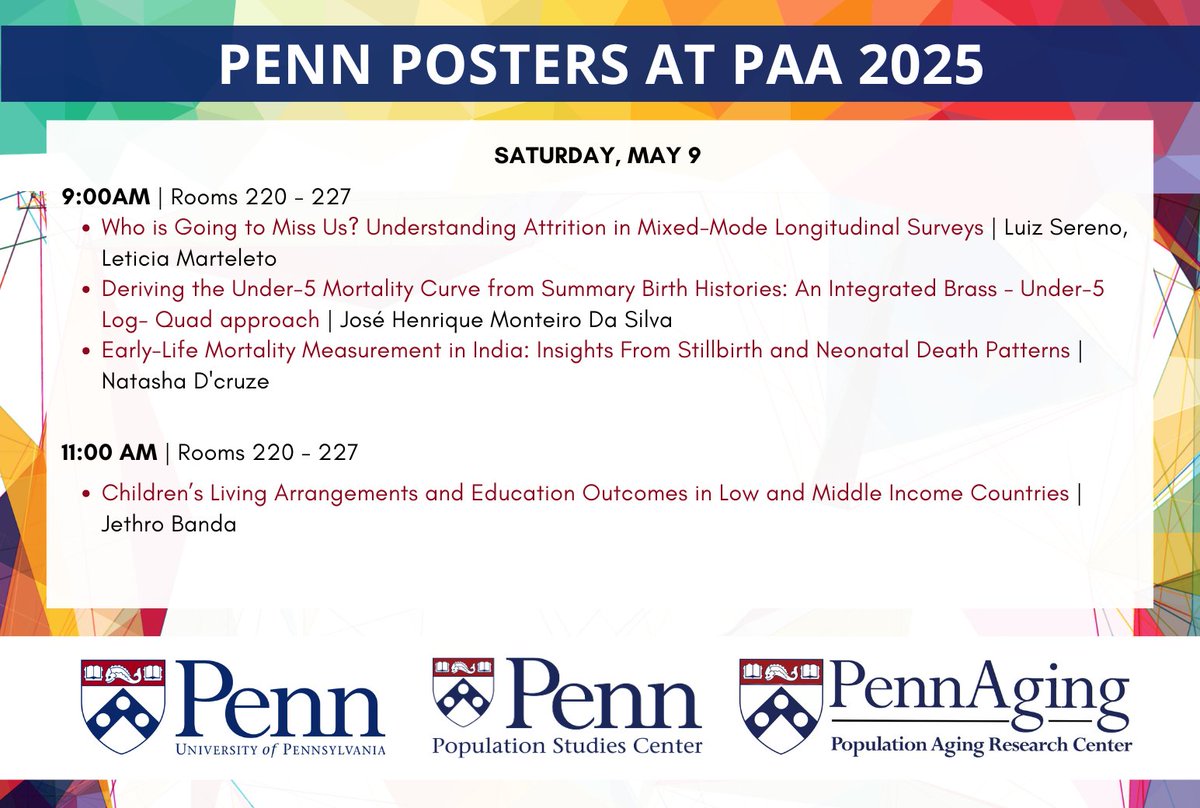
Penn Researchers are presenting research papers & posters @PopAssocAmerica#PAA2026
See the list of posters being presented below this THURS, FRI & SAT!
Also see the full list of Penn events at PAA 2026: https://t.co/S3rHTr6iC2
@PennLDI@PennMEHP@PennCHIBE@OppforHealthLab
I’m really excited about this paper! Some of my work has pointed out problems in empirical work, but this one is all about new 🔧s.
If you (or your referees) want to know about the mechanisms by which a treatment affects an outcome, you may be interested. A 🧵.
Our work on automotive plant closures and drug overdose deaths supports this story of how fading #opportunity has worsened our #health:
https://t.co/BxNKgUO26u
Let’s see, many of those towns has a single factory that had been there for decades that pumped money into the local workforce. Those towns were often an hour away from other employment centers. Many factories had 2-3 generations of families working in the factory and living together in the local community. Local businesses had steady income servicing those workers.
When the factory closed, everything changed.
1) The source of income for thousands of people disappeared at once. Often pensions were drastically reduced.
2) Local businesses closed their doors. Services disappeared.
3) Tax revenues collapsed.
4) The young who could got out. Families were scattered to the wind.
5) Crime and drug use increased.
6) Housing demand collapsed and housing stock began to decay.
7) Sometimes, as the factories closed, decades of toxins and contamination were left to rot in abandoned factories.
Those left in the towns they grew up in and raised families in were literally left behind with a greatly diminished quality of life.
These towns are scattered through the rust belt. It’s not a pretty sight. Lots of those towns went from idyllic to run-down in a few short years.
It shouldn’t be a surprise that life spans dropped.
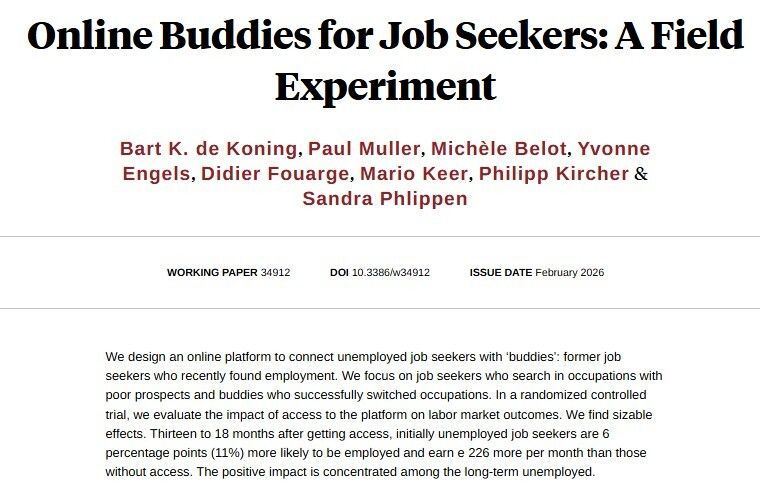
Connecting job seekers online with “buddies” who already managed to find a new job significantly increases their employment probability and their earnings, from Bart K. de Koning, @mul_paul, @BelotMichele, Yvonne Engels, Didier Fouarge, Mario Keer, Philipp Kircher, and Sandra Phlippen https://t.co/emOinESgOR
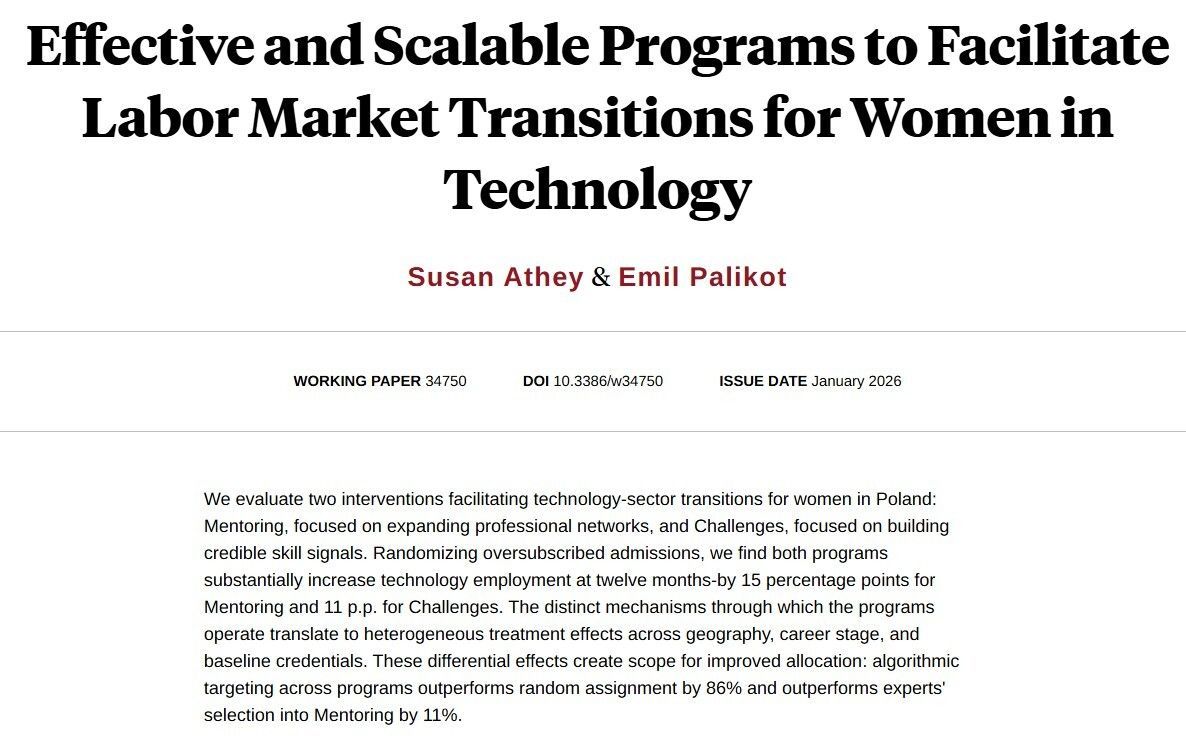
Studying what facilitates career transitions across sectors through a field experiment analyzing two programs. Tech jobs increase by 15 percentage points with mentoring and by 11 percentage points when workers create portfolios, from @Susan_Athey and Emil Palikot https://t.co/gBgrsMi37k
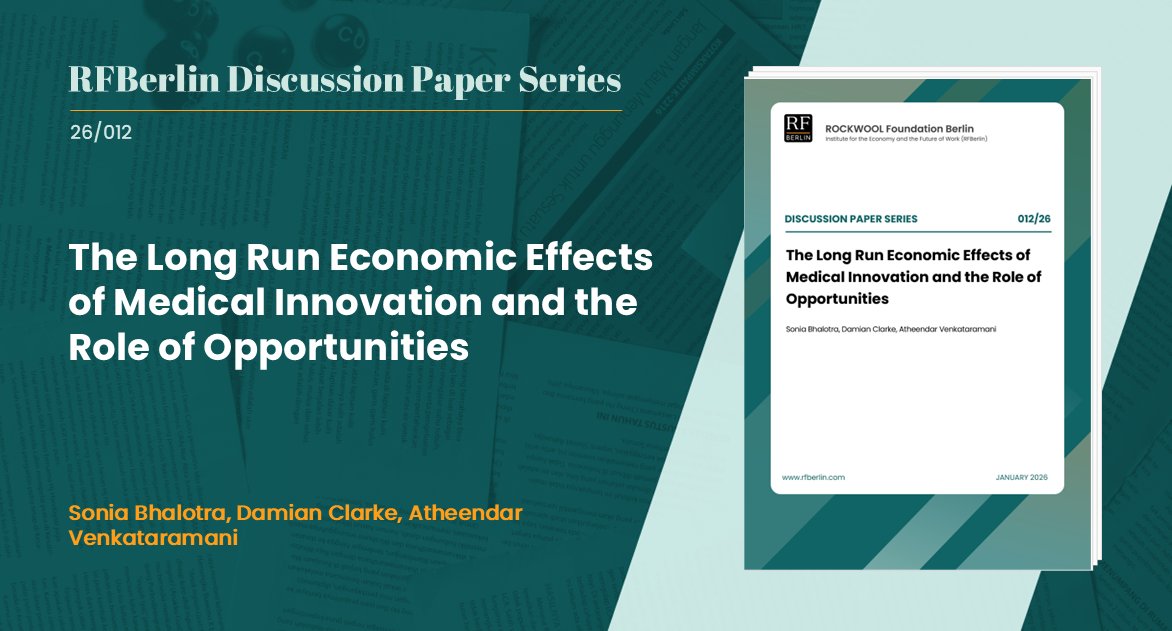
🆕 RFBerlin Discussion Paper! @SoniaBhalotra, Damian Clarke & Atheendar Venkataramani document large long-run economic gains from medical innovation and show that opportunities shape these effects over time.
🔗 https://t.co/VgDYn3cFXD
The first antibiotics reduced childhood pneumonia, boosting adult human capital and income. However, discriminatory institutions curtailed long-run gains from a healthy start, from @SoniaBhalotra , Damian Clarke, and Atheendar Venkataramani https://t.co/SlB1bubpJY
More on dementia & finances: similar to credit outcomes, we see declines on asset side start about 6 years before dementia onset, patterns are consistent with mistakes driving declines, not healthcare spending or spenddown
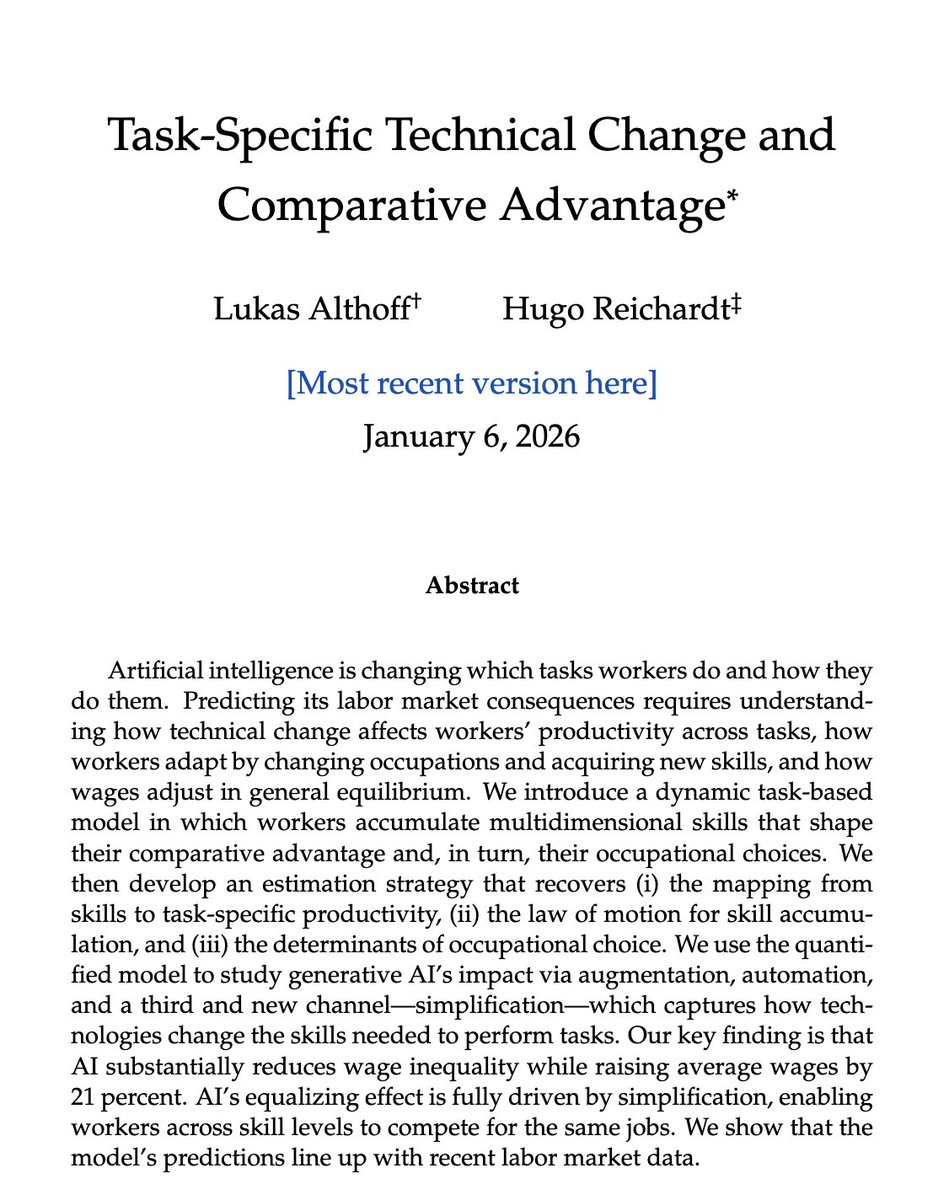
🚨 New working paper with @AlthoffLukas!
How will Artificial Intelligence affect the labor market?
We predict that AI will substantially decrease wage inequality ⬇️ while raising wages on average by 21% ⬆️.
These predictions are based on a general equilibrium task-based labor market model that we build, estimate, and apply to the case of AI.
"Simplification" (tasks getting easier) is the key mechanism behind AI's equalizing effect.
https://t.co/q9Zp1r27YR
The first antibiotics reduced childhood pneumonia, boosting adult human capital and income. However, discriminatory institutions curtailed long-run gains from a healthy start, from @SoniaBhalotra , Damian Clarke, and Atheendar Venkataramani https://t.co/SlB1bubpJY
🚨New NBER working paper out!🚨
“Unwilling to Reskill? Experimental Evidence from Real-World Jobseekers” (with A. Delfino, A. Garnero, S. Inferrera and M. Leonardi).
We study why take-up of “good” reskilling opportunities is so low—even when jobs are in demand.
The first antibiotics reduced childhood pneumonia, boosting adult human capital and income. However, discriminatory institutions curtailed long-run gains from a healthy start, from @SoniaBhalotra , Damian Clarke, and Atheendar Venkataramani https://t.co/SlB1bubpJY
🚨New updated version (1.0.2) of -lpdid- STATA command now available🚨 - created by Daniele Girardi and and @_AlexanderBusch
Update the command by typing "ssc install lpdid, replace" directly in STATA. Then look at the updated help file.
Key new features of LPDID:
* New [oneoff] suboption to deal with 'shock' treatments lasting 1 period by construction (eg, hurricanes)
* Reweighted estimator w/ covariates (or additional FEs) now *much* faster
* Reweighted estimator w/ covariates now compatible with wild bootstrap standard errors
Perspective by Atheendar S. Venkataramani, MD, PhD, Pritpal S. Tamber, MB, ChB, and Anthony Iton, MD, MPH, JD: Public Policies, Social Narratives, and Population Health https://t.co/zG3RV7aYyR
#HealthPolicy#PublicHealth
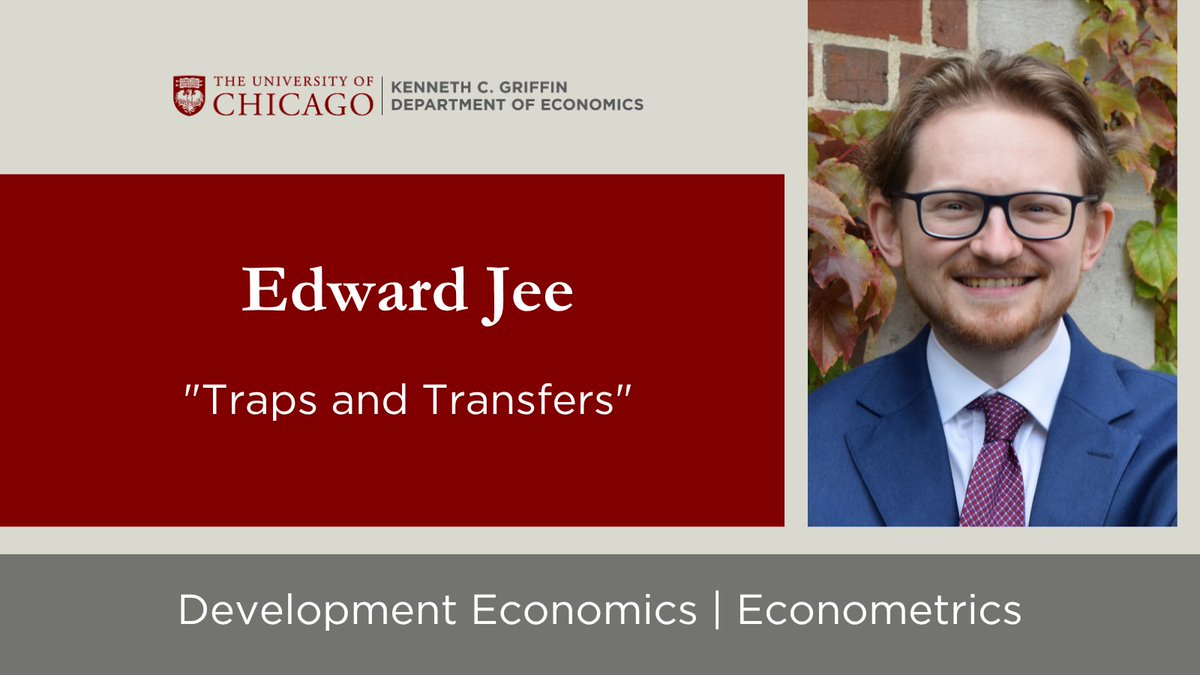
Do poverty traps exist? @ed_jee's study of 27 RCTs finds they're real but rare. Though fixed costs make traps common, forward-looking behavior & productivity differences mean they only affect 25% of households.
Read more: https://t.co/dIx7XdnJoO
#UChicago#EconJobMarket