OPTIKKA is a creative orchestration layer that empowers brands to be the conductor of agents, across all tooling for content creation and publishing, at scale
One of the more interesting conversations happening in enterprise creative right now has nothing to do with AI. It's about files.
For the last twenty years, we've built creative operations around the assumption that every new campaign, athlete, sponsor, language, platform, or destination requires another file. As organizations scale, those files compound into massive DAMs, complex folder structures, endless versioning, and workflows built around managing assets instead of activating them.
We're seeing this firsthand in collegiate athletics. Schools already have the data needed to create personalized content for every athlete, every milestone, every recruiting campaign, and every sponsor activation. What's holding them back isn't creativity. It's the operational burden of maintaining thousands of individual files. As design becomes code, that equation changes. Instead of managing thousands of assets, organizations can manage a design system connected to data. The design remains intact, while the content flexes dynamically. That's a fundamentally different model for creative production, and one we believe will define the next generation of enterprise design infrastructure.
This is our CEO, @danielpevans, talking about that shift.
The teams moving fastest today aren’t producing better work because they’re working harder.
They’re treating creative production like infrastructure.
One design framework.
Thousands of outputs.
Every format.
Every destination.
Creative direction stays human.
Production scales.
This is a great use case for AI in creative. Artists are able to explore more territory, iterate faster and bring their vision to life. Hopefully we'll see more new and original stories.
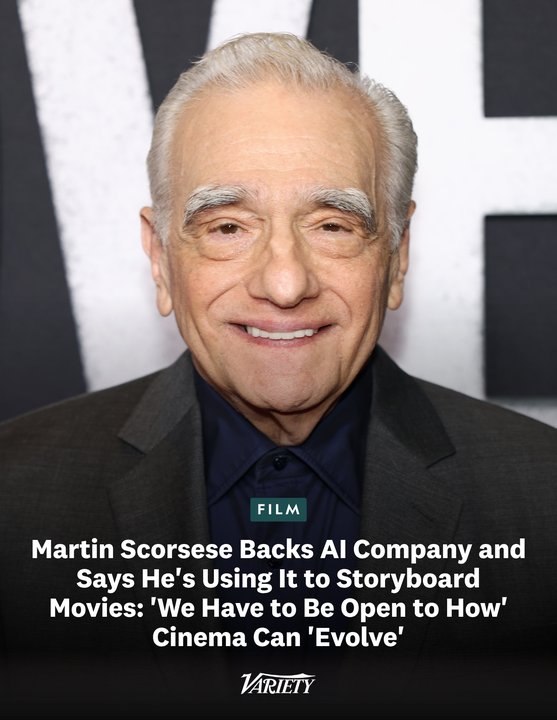
Martin Scorsese is backing an AI company to “push the bounds of creativity to create deeper and richer experiences for audiences.” He is using the technology for storyboarding purposes.
"I’m interested in the intersection of technology and storytelling, and seeing how that can push the bounds of creativity to create deeper and richer experiences for audiences. Cinema is a young medium, only around 125 years old, so we have to be open to how it can evolve. I utilized 3D with ‘Hugo’ and de-aging technology for ‘The Irishman.’ Now, with this tool, I can share what I’m visualizing more clearly and efficiently to my creative team — the production designer, art designer, and cinematographer — for them to build on to enrich cinematic intelligence."
https://t.co/53G0q5wFur
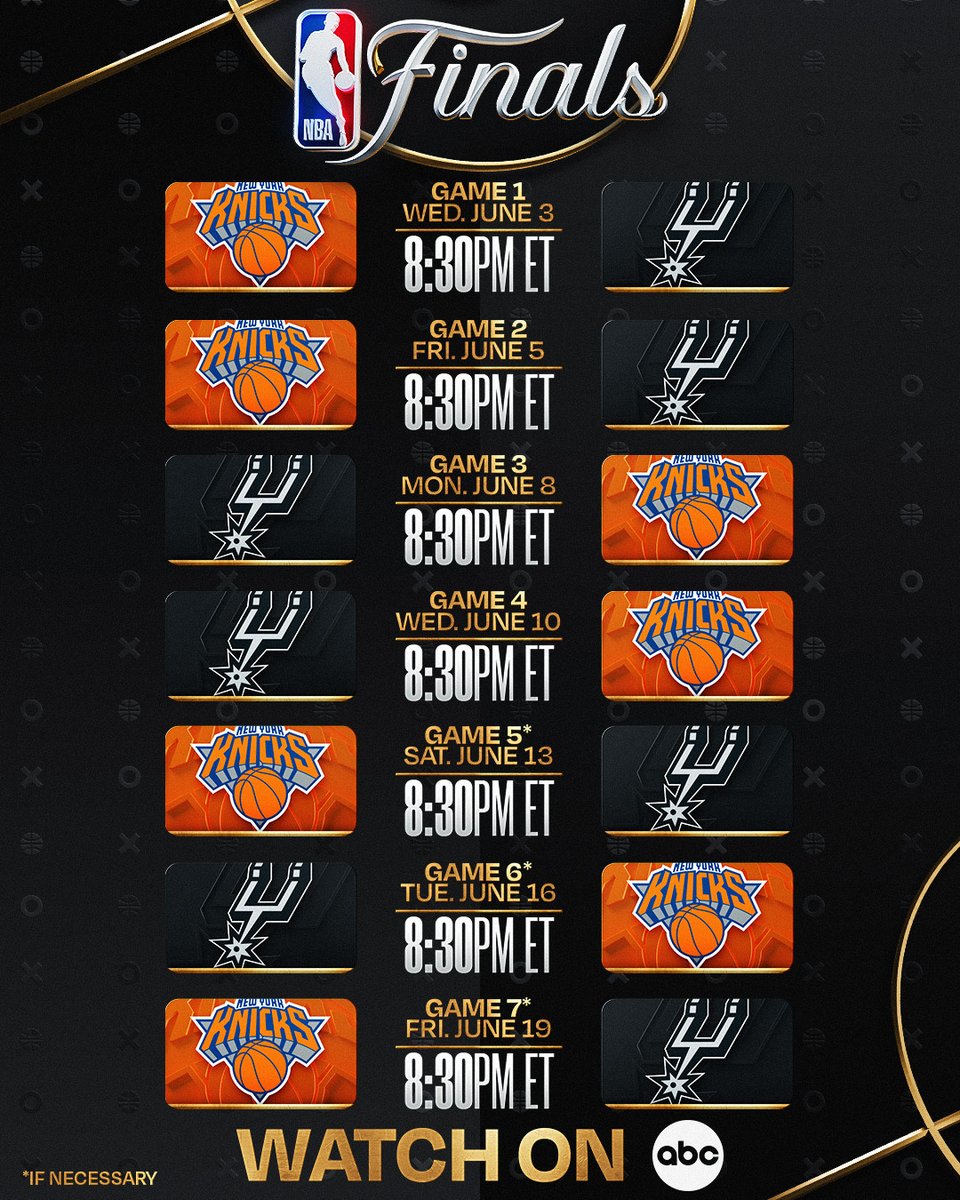
24 HOURS AWAY FROM GAME 1 🏆
Two storied franchises, out to write new chapters in their history. Check out the full official schedule of the NBA Finals before the action gets underway tomorrow!
Knicks/Spurs Game 1: Wednesday at 8:30pm/et on ABC
One of the things we were talking about internally recently was how absurd modern creative workflows have become once you actually break them down operationally.
A team creates one campaign graphic. Then that single PSD suddenly turns into dozens of versions across platforms, aspect ratios, sponsors, languages, teams, regions, and live updates. Then someone has to manually QA all of it, organize all of it, export all of it, and make sure nothing breaks in the process.
That is the part of the industry we think people are underestimating right now.
The conversation around AI keeps focusing on image generation and prompts, but most enterprise creative teams are not sitting around asking for more ideas. They are trying to figure out how to operationalize creative production without completely overwhelming designers and operators.
We talked through a broadcast example where one template needed to exist across multiple destinations with multiple variations before localization was even introduced. Once additional languages entered the workflow, the number of managed files multiplied almost immediately.
At a certain scale, the operational side of creative starts becoming just as important as the creative itself.
The expectation for content has changed faster than the infrastructure supporting it. Every organization now wants real-time content, personalized content, localized content, sponsor-specific content, platform-specific content, and they want it immediately.
Most workflows still rely on manually rebuilding files to make that happen.
That gap is becoming impossible to ignore.
A lot of AI creative workflows look impressive until real scale shows up.
That’s when the cracks start appearing. One update turns into hundreds of manual changes. Teams are still duplicating files, rebuilding layouts, checking outputs, fixing versions, and trying to keep brand consistency intact across every destination.
Optikka was built differently.
Design and data are separated so the system can scale without rebuilding the creative every time something changes. The structure holds. The rules stay intact. The outputs adapt without breaking the original intent.
This is not about replacing creative teams. It is about giving them infrastructure that can actually support the volume modern organizations demand.
Creative direction stays human and production scales.
Headed to New York City for @SBJ Tech Week next week!
@danielpevans and Mike Kelley will be talking with teams across sports, media, and broadcast about real-time creative workflows, deterministic systems, and what scalable production infrastructure actually looks like.
If you’re there, let’s connect!
Most teams don’t have a creative problem.
They have a production architecture problem.
As campaigns scale across platforms, formats, languages, regions, sponsors, and live moments, complexity compounds fast.
The issue isn’t volume.
It’s that design and data are still tightly coupled inside manual workflows.
A single update triggers duplicate files, rebuilds, resizing, QA, and re-exporting across every destination.
That model doesn’t scale.
Optikka separates design from data, turning campaigns into structured systems that generate variation without rebuilding creative every time.
AI made it easier to create…but it didn’t fix production.
Most tools still see:
logo = image
stat = text
background = layer
No meaning. No relationships.
So scale breaks.
If you're heading out to #NAB2026 in Las Vegas, Daniel & Mike will be showing how Optikka's creative intelligence platform helps broadcasters, teams, and leagues scale operations without disrupting current process. West Hall Room 237. Link in comments to book a meeting time.
Super smart take @levie. We're seeing this movement day in and day out! If you're in creative or marketing and getting up to speed, we're here to help!
Jevons paradox is happening in real time. Companies, especially outside of tech, are realizing that they can now afford to take on software projects that they wouldn’t have been able to tackle before because now AI lets them do so.
We’re going to start to use software for all new things in the economy because it’s incrementally cheaper to produce. Marketing teams at big companies will have engineers helping to automate workflows. Engineers in life sciences and healthcare will automate research. Small businesses will hire engineers for the first to build better digital experiences.
And as long as AI agents still require a human who understands what to prompt, how to review when an agent goes off the rails, how it guide back, how to maintain the system that was built, how to fix the ongoing bugs, and more, we will still have humans managing these agents.
This is why all the advice you get of not going into engineering is wrong. The world is going to increasingly be made up of software, and the people that understand it best will be in a strong economic position. This will happen in other roles as well where output goes up and demand increases.
Introducing @QuiverAI, a new AI lab and product company focused on frontier vector design.
We’ve raised an $8.3M seed round led by @a16z, with support from amazing angels and investors.
Our first model, Arrow-1.0, generates SVGs from images and text. It’s available now in public beta at https://t.co/zjAnKlI8pp
Say goodbye to post. Say hello to real-time production.
At #NABShow, we teamed up with @EluvioInc to prove it’s possible:
No exports
No file copies
Just-in-time graphics + highlights
Right inside the content fabric.
#MPTS2025#BroadcastTech#AITools