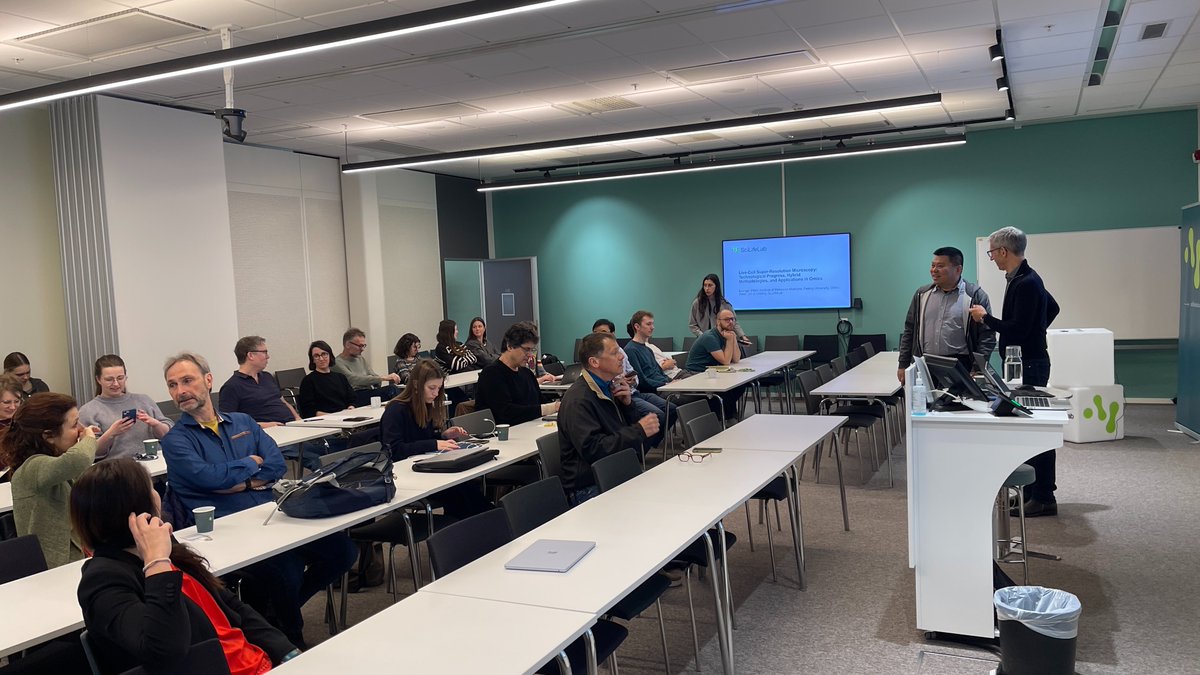
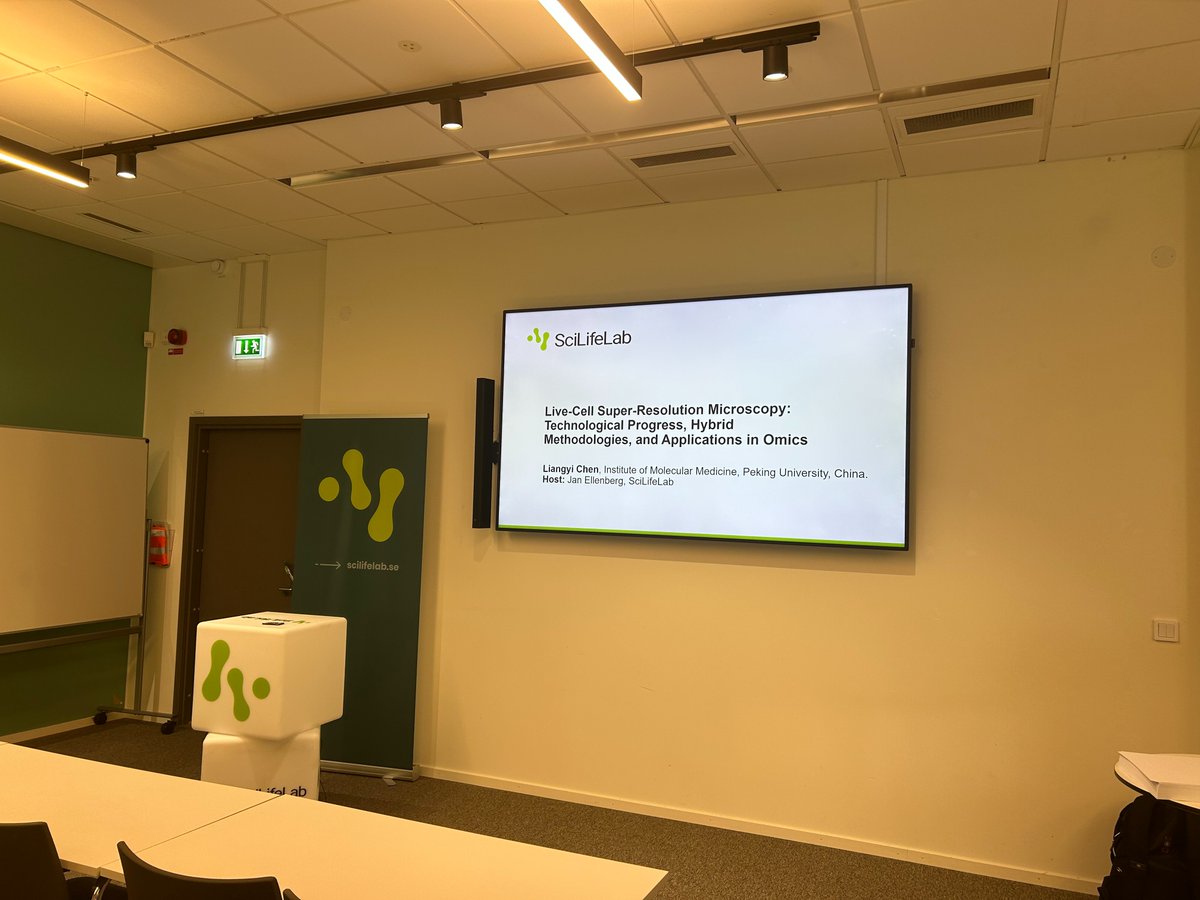
Great to see such an engaging seminar at SciLifeLab on live-cell super-resolution microscopy, delivered by our academic founder @Orangeroad2017 and hosted by Jan Ellenberg.
Looking forward to more collaborations and exchanges with leading institutes like @SciLifeLab_DC.
#MISIM
This 2-hour Stanford lecture breaks down how models like ChatGPT and Claude are actually built, clearer than what many people in top AI roles ever get exposed to.
Save this and set aside two hours today. It might end up being the most valuable thing you learn all week.
How does blood flow relate to brain activity? We discovered that it reflects two neural populations affected oppositely by arousal. Together, they explain neurovascular coupling in all brain regions and brain states!
Out in Nature: https://t.co/wtjzmbIjmz
@UCLBrainScience
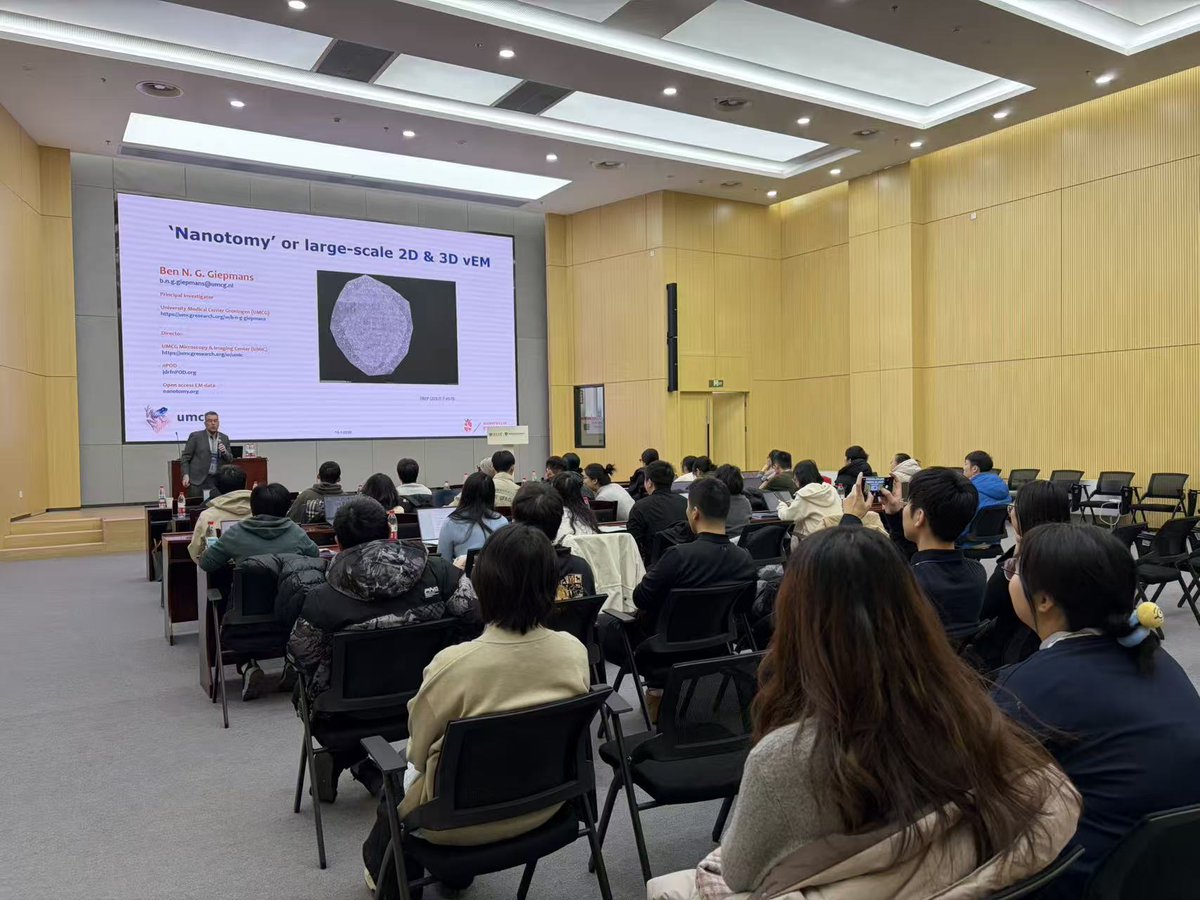
Great science at the CSCB-APOCB-IFCB Meeting (https://t.co/aBvwUcITW2) in Hefei! I was honored to present some of our recent work on the cellular response of cells to starvation and lysosomal membrane damage conducted by Yanwei and Michael.
🧵 Unlocking the true potential of AI and bioinformatics hinges on one missing link: real-time biological data.
I saw that Prof. Nikolai Slavov posted this, and that reminds me of how complicated a single cell is.
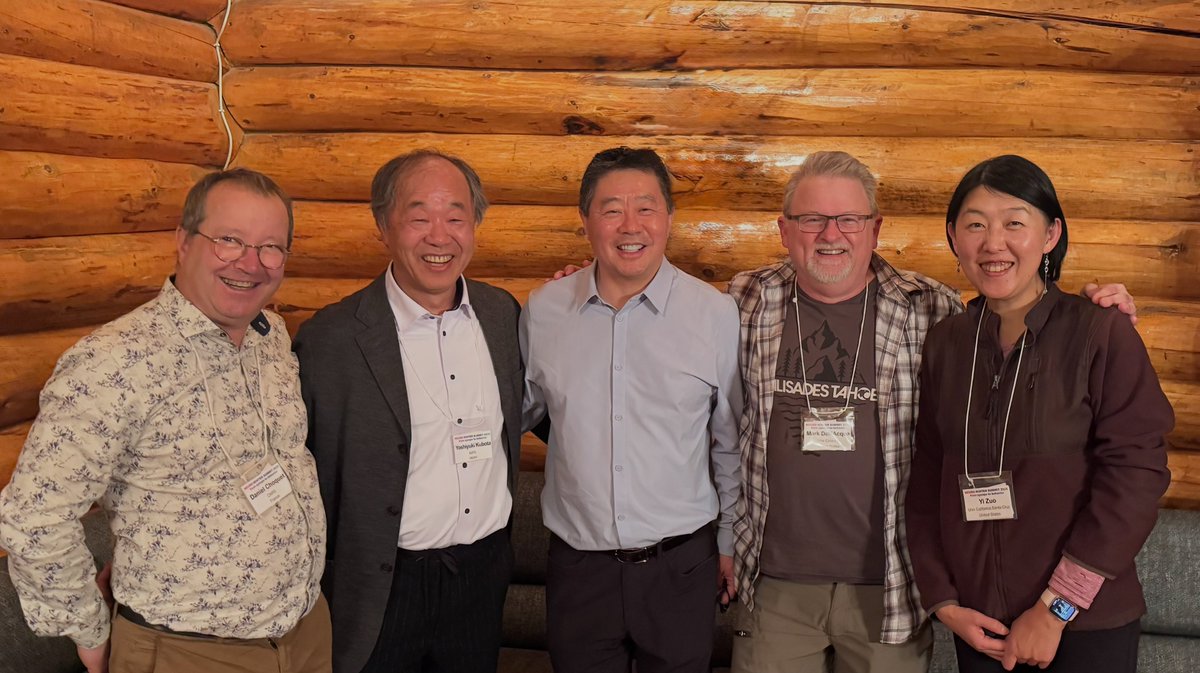
A wonderful wrap-up to the 1st NeuroWinterSummit in Hokkaido, Japan! Exciting science, great discussion/social and fun ski. Look forward to seeing everyone next year! #NeuroWinterSummit#Zuolab
[EVENT] Registrations are now open for the SFBS-2026
Join us in Bordeaux (Oct 14–21, 2026) for an advanced workshop and an international symposium
📆Workshop application deadline: May, 1
📆Symposium early bird registration deadline: June, 15
More info👉 https://t.co/4yQVWGiaab
Are connectome-based network mapping methods and the >200 papers that have used it invalid?
New paper out in @NatureNeuro says YES. https://t.co/U0OLZUSJWl
I have concerns about this new paper's methods and conclusions, but am biased. What do others think?
As a long-time devotee of both astronomy and microscopy, this is one of my favorite public lectures -- their histories have always been entwined. It really is astounding how human creativity and curiosity has taken us so far in so short a period of time.
2017 Alumni Seminar Day Keynote: All Things Great and Small - E. Betzig ... https://t.co/dBEeMgifuD via @YouTube
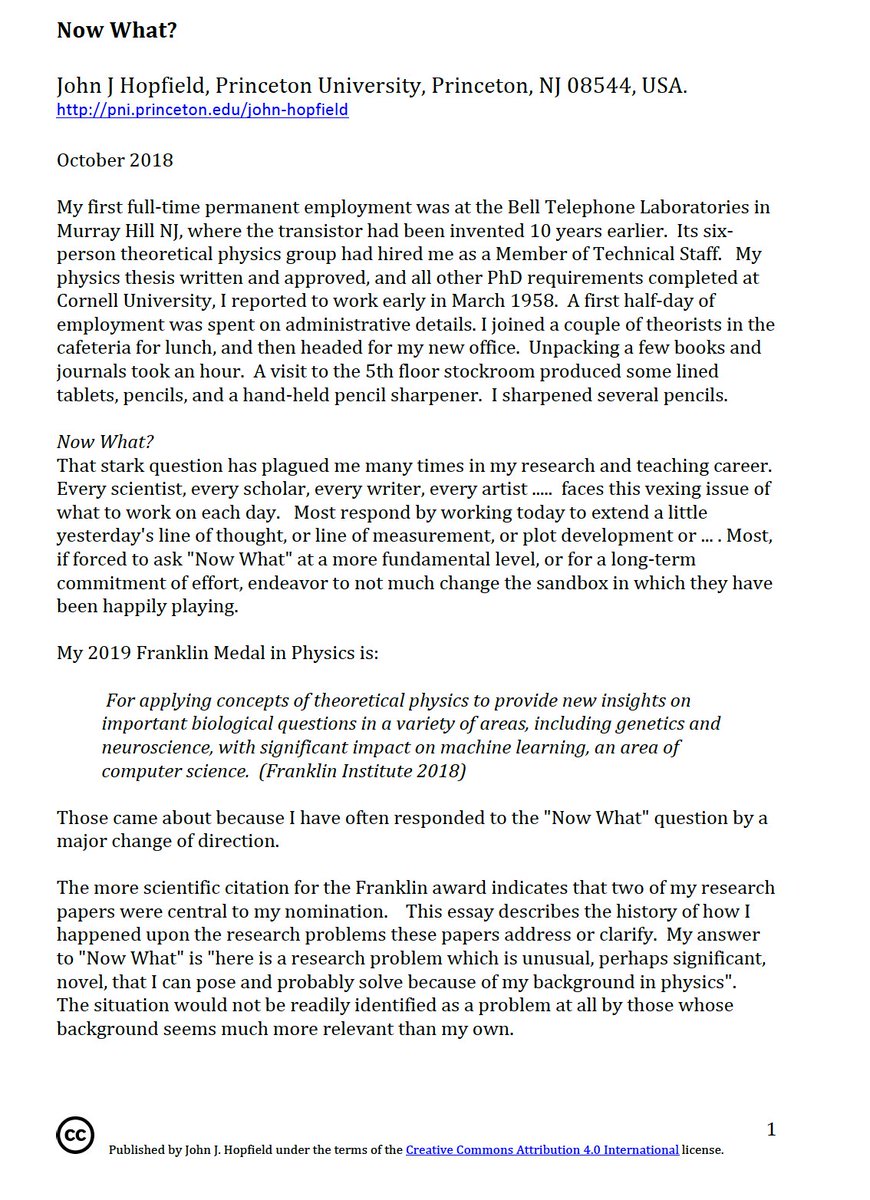
"Choosing problems is the primary determinant of what one accomplishes in science."
'Now What?' by Nobel Laureate John Hopfield should be required reading for aspiring scientists.
https://t.co/4xec0rB6cK
[STD] Sino-French BioImaging Symposium 2026
Organized between France & China (IRN BioImage), this event is dedicated to imaging for life sciences, with:
🔹An advanced thematic school
🔹A 3-day international symposium
📅When? 14-21, October, 2026
🔗Info: https://t.co/bVS4SPuwcn
It is superb to see our collabration review with Yang Zhang on AI and SR Imaging is out at Nature Methods on the last day of 2025! A good sign to look into the coming 2026!
https://t.co/Yp3JU7nibO
Just wrapped up an intensive visit to Peking University, focused on the National Biomedical Imaging Center (NBIC) and the broader 🇨🇳 Chinese life science ecosystem.
I was hosted by NBIC Deputy Director Prof. @Orangeroad2017 Chen Liangyi, co-host Prof. @ZhixingChen2, and NBIC Director Prof. Peace Chen. I also met with many PIs across NBIC, CLS, and the McGovern communities, with over 19 one-to-one discussions in total.
The meetings were focused and substantive. We discussed super-resolution microscopy, cryoEM, cryoET, probe and dye synthesis, and AI-solutions. These were technical conversations, probing assumptions, limits, and where integration across methods is actually needed.
What left a strong impression is how deliberately imaging, chemistry, computation, and biology are brought together. The structure here enables fast iteration and real cross-disciplinary depth, rather than parallel efforts.
Tomorrow, I head to Westlake University in Hangzhou to continue these discussions.
The pace, level of execution, and clarity of long-term thinking in imaging and quantitative life sciences here are hard to ignore.
Thank you to Professors Liangyi, Zhixing, Peace, He, Quanfeng, Jiahong, Harry, Bei, Chun, Jianning, Peng, Yuval, Aibin, Qiang, Pengli, Ming, Pingyong, all the colleagues I had the opportunity to meet with, Dr. Zhou, and Shirley, for hosting me.











![Fr_BioImaging's tweet photo. [EVENT] Registrations are now open for the SFBS-2026
Join us in Bordeaux (Oct 14–21, 2026) for an advanced workshop and an international symposium
📆Workshop application deadline: May, 1
📆Symposium early bird registration deadline: June, 15
More info👉 https://t.co/4yQVWGiaab https://t.co/M132HQuYxu](https://pbs.twimg.com/media/HDi0oCnWkAA9ZLt.jpg)


![Fr_BioImaging's tweet photo. [STD] Sino-French BioImaging Symposium 2026
Organized between France & China (IRN BioImage), this event is dedicated to imaging for life sciences, with:
🔹An advanced thematic school
🔹A 3-day international symposium
📅When? 14-21, October, 2026
🔗Info: https://t.co/bVS4SPuwcn https://t.co/TGtQ1nkFzj](https://pbs.twimg.com/media/G74gxZCWcAEkj7t.jpg)





