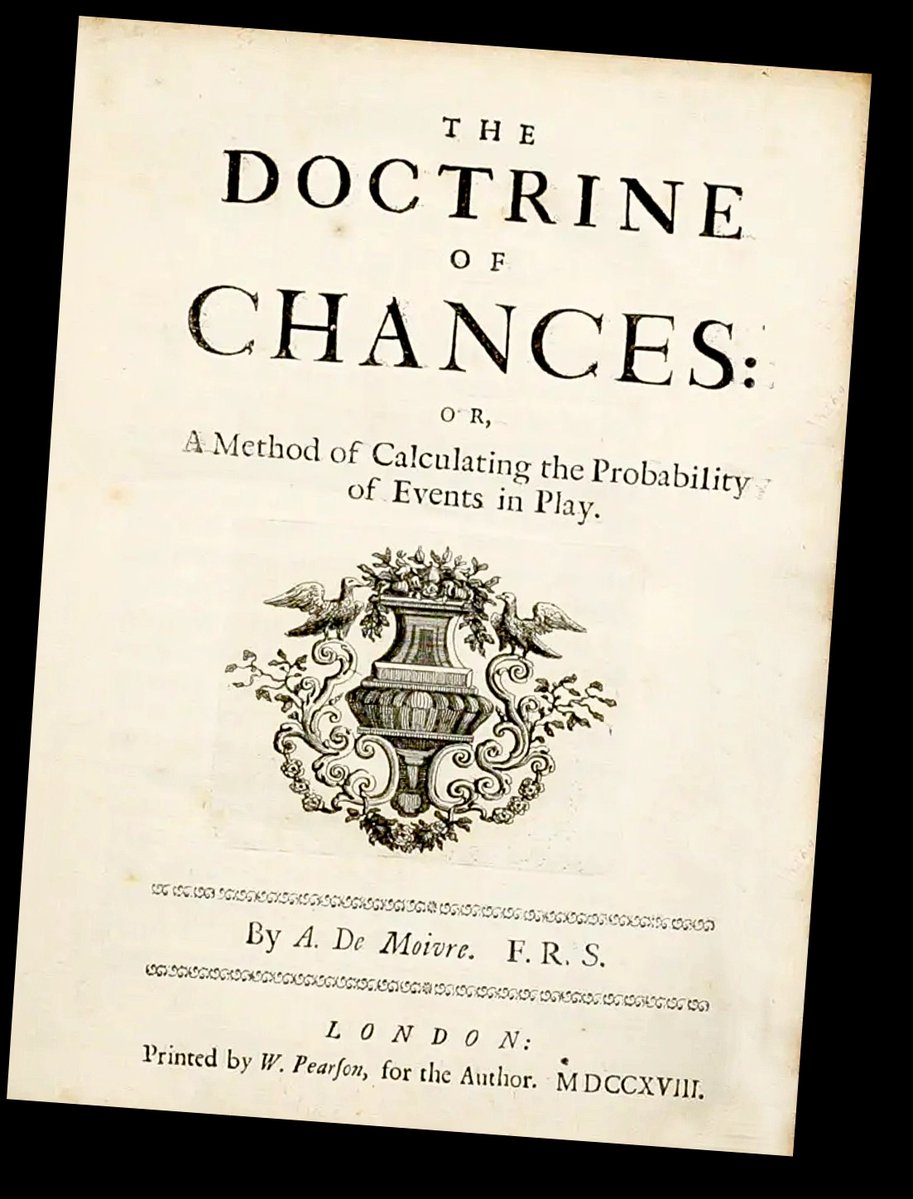
In the 17th century, Abraham de Moivre fled from France to England due to anti-Protestant persecution. To help pay his bills, he provided London gamblers with math-backed advice. His observations led him to write The Doctrine of Chances, the very first textbook on probability theory. https://t.co/FpFjsBZt08
How does an AI agent prove who it is? Who owns it? Who's liable when it does something? Where does its credit history live? Every one of those questions is an unbuilt trillion-dollar infrastructure layer. Welcome back to 1994's internet.
Big update for Grok Bot! Version 0.70.2 brings some substantial new capabilities to @Bot!
Here's what's new:
• Bots can now claim their own email addresses, receive messages, and send emails with your approval.
• Bots can search X, read posts, and inspect profiles without connecting an X account.
• Figma, Notion, Canva, and other apps can display interactive interfaces directly inside chats.
• Bots can make payments using X Money or Stripe Link.
• Describe what you need, and Grok Bot can find a matching Bot template.
• QuickBooks Online integration and improved plugin discovery.
• Bots can save web pages as PDFs, plus a new Find in Page feature.
There are also plenty of reliability and safety improvements, including approval checks before irreversible actions like purchases, posting, or deleting data.
Big update for Grok Bot! Version 0.70.2 brings some substantial new capabilities to @Bot!
Here's what's new:
• Bots can now claim their own email addresses, receive messages, and send emails with your approval.
• Bots can search X, read posts, and inspect profiles without connecting an X account.
• Figma, Notion, Canva, and other apps can display interactive interfaces directly inside chats.
• Bots can make payments using X Money or Stripe Link.
• Describe what you need, and Grok Bot can find a matching Bot template.
• QuickBooks Online integration and improved plugin discovery.
• Bots can save web pages as PDFs, plus a new Find in Page feature.
There are also plenty of reliability and safety improvements, including approval checks before irreversible actions like purchases, posting, or deleting data.
Fields medallist Hugo Duminil-Copin was deeply shaken by OpenAI’s release of more than 700 AI-generated mathematical manuscripts, including work on 16 questions directly relevant to his research.
“On Tuesday night, I cried, and it woke up my daughter”
“They have annihilated my field of research.”
https://t.co/RQliNgxjS8
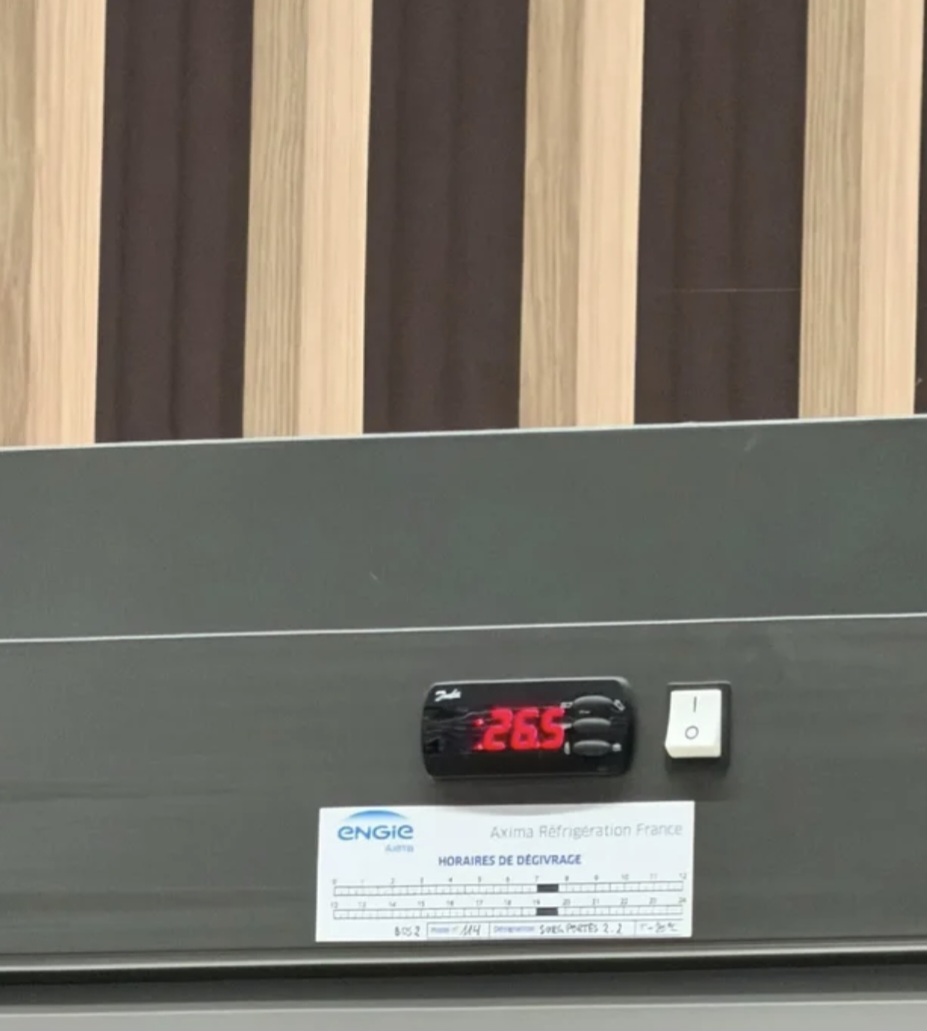
BREAKING: 🇫🇷 A major cyberattack has hit supermarket refrigeration systems across France, reportedly causing fresh and frozen food to spoil after hackers remotely manipulated temperature controls.
According to BFMTV, the attack began overnight from Sunday into Monday, targeting older versions of refrigeration-control software supplied by Danish company Danfoss.
The attackers allegedly exploited the systems’ defrosting function, forcing refrigeration equipment to heat continuously instead of keeping products cold. Temperatures were reportedly set as high as 50°C, destroying entire stocks of food within hours.
Several major supermarket chains have been affected, including Intermarché, Super U and https://t.co/7bHBi61WPZ. Metro stores and independent businesses, including butcher shops also have been impacted.
Around 150 Intermarché stores are reportedly affected, according to industry sources cited by BFMTV. The full number of affected locations remains unclear.
The financial damage is already significant. In Haguenau, Alsace, an Intermarché store reportedly lost its entire frozen-food stock, worth approximately €50,000. A nearby Super U allegedly had to discard both fresh and frozen products, with losses estimated at €220,000. An https://t.co/7bHBi61WPZ store in the same town was also affected, although its losses had not yet been calculated.
The combined losses reported at the Intermarché and Super U stores in Haguenau alone amount to around €270,000. Nationwide damage could reach several million euros.
Intermarché reportedly confirmed the incident in an internal communication, warning that several stores had suffered losses of frozen products. Coopérative U also acknowledged the attack and established crisis teams to assist affected stores and coordinate with refrigeration specialists.
Technical investigations are ongoing, and the full extent of the damage has yet to be established.
Authorities and companies are still working to determine the full circumstances of the attack. The identity of the perpetrators has not been confirmed.
A master move of SpaceX to instantly provide mobile phone coverage in US using a "old" frequency of 800MHz used by Push To Talk. The walkie talkie band that we helped develop with dispachers and servers in Genaker exited to Ericsson
T-Mobile spent five years trying to get rid of the exact spectrum Elon just called "the last critical piece" of complete phone coverage in America.
This 800 MHz block is Sprint's old Nextel spectrum, the stuff that powered push-to-talk walkie-talkie phones in 2004. The DOJ forced T-Mobile to divest it as a condition of the $26 billion Sprint merger. Dish had first rights at $3.59 billion and walked away because it couldn't raise the money. T-Mobile finally offloaded it to an investment firm called Grain Management last year for $2.9 billion plus a spectrum swap.
Grain's original plan was selling it to utilities for private networks.
Fourteen months later, SpaceX buys the whole portfolio, and shares of the carriers who passed on it fall as much as 8% in a single afternoon.
Here's why it matters so much. Starlink's satellite signal at 2 GHz can reach your phone outdoors, but it dies at the first wall. 800 MHz penetrates buildings. Most phones already have the band built in. So satellites handle the open sky, this low-band layer handles indoors, and suddenly Starlink Mobile covers everywhere a normal carrier does without the tower network.
Stack the moves. $17 billion for EchoStar's 50 MHz of 2 GHz spectrum. FCC approval for 15,000 Gen2 satellites this week. Now the low-band coverage layer.
Verizon, AT&T, and T-Mobile paid $81 billion in a single auction for C-band spectrum in 2021, then spent years and tens of billions more deploying it on towers. SpaceX assembled a nationwide carrier out of a distressed-asset sale, a forced divestiture castoff, and rockets it already owns.
The walkie-talkie spectrum from 2004 ended up being the piece that lets satellites replace cell towers. Nobody who touched it for twenty years saw that coming.
T-Mobile spent five years trying to get rid of the exact spectrum Elon just called "the last critical piece" of complete phone coverage in America.
This 800 MHz block is Sprint's old Nextel spectrum, the stuff that powered push-to-talk walkie-talkie phones in 2004. The DOJ forced T-Mobile to divest it as a condition of the $26 billion Sprint merger. Dish had first rights at $3.59 billion and walked away because it couldn't raise the money. T-Mobile finally offloaded it to an investment firm called Grain Management last year for $2.9 billion plus a spectrum swap.
Grain's original plan was selling it to utilities for private networks.
Fourteen months later, SpaceX buys the whole portfolio, and shares of the carriers who passed on it fall as much as 8% in a single afternoon.
Here's why it matters so much. Starlink's satellite signal at 2 GHz can reach your phone outdoors, but it dies at the first wall. 800 MHz penetrates buildings. Most phones already have the band built in. So satellites handle the open sky, this low-band layer handles indoors, and suddenly Starlink Mobile covers everywhere a normal carrier does without the tower network.
Stack the moves. $17 billion for EchoStar's 50 MHz of 2 GHz spectrum. FCC approval for 15,000 Gen2 satellites this week. Now the low-band coverage layer.
Verizon, AT&T, and T-Mobile paid $81 billion in a single auction for C-band spectrum in 2021, then spent years and tens of billions more deploying it on towers. SpaceX assembled a nationwide carrier out of a distressed-asset sale, a forced divestiture castoff, and rockets it already owns.
The walkie-talkie spectrum from 2004 ended up being the piece that lets satellites replace cell towers. Nobody who touched it for twenty years saw that coming.
BREAKING: OpenAI’s solution to Navier–Stokes does not match its Lean verification.
The most important article to read today is not one of OpenAI’s 700 AI-generated math papers.
It is this other paper, making a deep and worrying point:
A Lean-verified proof does not automatically validate the proof written in natural language, nor does it mean that the formal statement captures the intended theorem.
During translation, an AI can change an assumption, weaken a statement, or replace the argument entirely.
It can hallucinate another theorem.
Lean correctly verifies the result.
But the proved result may no longer be what the paper claims.
This is a general problem. Things get spicy when the authors examine OpenAI’s proposed Navier–Stokes solution.
They identify at least two mismatches between the written intermediate results and their Lean counterparts:
One estimate claims that four additional input derivatives suffice. The Lean version requires five: a weaker result.
A pressure-flux estimate is obtained through a different bound, and proved through a different argument.
It is not clear whether these mismatches invalidate the entire proof.
But they raise an important issue.
OpenAI is flooding us with claimed revolutionary breakthroughs. Yet nobody knows whether the proofs are correct or whether they prove what they claim to be proving.
Epistemia at scale.
*
Paper in the first reply
BREAKING: OpenAI’s solution to Navier–Stokes does not match its Lean verification.
The most important article to read today is not one of OpenAI’s 700 AI-generated math papers.
It is this other paper, making a deep and worrying point:
A Lean-verified proof does not automatically validate the proof written in natural language, nor does it mean that the formal statement captures the intended theorem.
During translation, an AI can change an assumption, weaken a statement, or replace the argument entirely.
It can hallucinate another theorem.
Lean correctly verifies the result.
But the proved result may no longer be what the paper claims.
This is a general problem. Things get spicy when the authors examine OpenAI’s proposed Navier–Stokes solution.
They identify at least two mismatches between the written intermediate results and their Lean counterparts:
One estimate claims that four additional input derivatives suffice. The Lean version requires five: a weaker result.
A pressure-flux estimate is obtained through a different bound, and proved through a different argument.
It is not clear whether these mismatches invalidate the entire proof.
But they raise an important issue.
OpenAI is flooding us with claimed revolutionary breakthroughs. Yet nobody knows whether the proofs are correct or whether they prove what they claim to be proving.
Epistemia at scale.
*
Paper in the first reply
💻 This week, we are hosting together with UPC the IEEE/ACM Embedded Systems Week #ESWEEK2026, the premier event covering all aspects of hardware and software design for intelligent and connected computing systems.
Stage of Ai bubble.
$ORCL credit is so bad that the company is now exploring leasing GPUs to lease to OpenAi who can’t afford the lease unless they can raise 4x their annual revenue ($200 billion) a year.
The lies and fraud are horrendous. OpenAI was gifted $100 billion of equity for free $AMD chips but had nowhere to put them.
Stage of Ai bubble.
$ORCL credit is so bad that the company is now exploring leasing GPUs to lease to OpenAi who can’t afford the lease unless they can raise 4x their annual revenue ($200 billion) a year.
The lies and fraud are horrendous. OpenAI was gifted $100 billion of equity for free $AMD chips but had nowhere to put them.
We’ve lost the mathematician who taught constrained machines which truths must outrank the rest.
Margaret Hamilton shaped the Apollo Guidance Computer as a priority algebra: higher tasks could silence lower ones, so a 1202 overload never drowned the landing equations.
Recovery lived inside the executive, not as a later patch. From those flight rules she extracted a theory of control in which interface errors are refused by the grammar itself i.e Development Before the Fact.
She named the work software engineering so programs would carry the rigor already granted to analysis. The moon was the proof; the structure of preventable failure remains the map.