Hot take:
The "follow your passion" advice has held more people back than it's helped.
I'm not passionate about cleaning houses.
I'm passionate about the freedom it gives me.
The goal is to find something that works, not something that sounds cool to people you don't even care about.
Corporate skills are useless skills.
That is why unemployed 50+ year olds can’t find a job - their skills were never useful
Two skills that capitalism rewards:
1. communication and sales
2. investing
Everything else is a made up skill that millions can do instead of you.
I interviewed a guy worth $247M on Moneywise, Onyi Odunukwe.
He started Glo Tanning, built it to 7 franchises, then sold 5 for $2.3M in 2018.
That 5 turned grew to over 100 locations he owns now (as well as 26 other businesses).
He spends $75-100k a month.
- Has a full-time driver for $60k a year.
- Has a live-in nanny for $50k a year.
- Has a house in Dallas and a house in Tampa, and is building a 3rd house now (and buying a ranch).
He said he was offered $250M for a 49% stake in Glo and turned it down.
Full episode available everywhere.
$401 million in revenue in year one.
$1.8 billion projected for this one.
Employees: two. Him and his brother.
AI wrote the code, made the ads, answered the customers.
Starting capital: $20,000.
The New York Times called it the future of business.
The future is already here, just not evenly distributed.
This is the moment when anyone with a laptop
and the will to figure it out can make money.
I think "follow your passion" is garbage advice.
Here's why:
I've started 80+ businesses. Entrepreneurship is my whole life. My hobby, my job, my family, all of it rolled into one.
I am very passionate about all this, BUT...
Most people don't know what their passion is. And the ones who think they do are usually wrong.
Passion comes from the Latin word for suffering. It literally means suffering.
So when someone tells you to follow your passion, what they should be saying is:
"go find the thing you're willing to suffer for."
Not the thing that feels amazing on a sunny Saturday when you have nowhere to be. Anyone can love that.
I'm talking about the thing where you will eat crap for two years straight and keep showing up anyway.
Where the bad days still feel better than a good day doing something else.
Here's how to find it:
1/ Go to takeout .google .com right now. Export your YouTube watch history from the last 90 days.
2/ Drop it into ChatGPT and ask:
"Show me the three obsessions hiding in here that I'd probably never want to admit to myself out loud."
3/ Then do the same thing with your Amazon order history. You can export a spreadsheet of every purchase you've ever made.
4/ Upload it and say:
"Categorize my discretionary spending and tell me what I clearly care about based on where my money is actually going."
5/ Next, text five people who know you best and ask one question: "What do I not shut up about?"
I promise the answers are going to show you a pattern. Three people will say some version of the same thing. That thing is pointing you at your obsession.
6/ Then think back to when you were 8 to 12 years old. Right before the world got its hands on you and told you what was useful and what was a waste of time.
What did you do for hours that nobody had to ask you to do?
There's almost a 0% chance that obsession completely went away.
For me, it was setting traps and catching frogs and looking for animal tracks behind my house in Logan, Utah. That went dormant for decades but it's still there.
Last thing, and this is what I really want you to remember here:
7/ Obsession isn't buried treasure you have to stumble across, It gets built.
You start with a seed of interest. Then you get a little bit good at it. That feels great. So you do more. You get better. And somewhere in there, the interest turns into obsession.
The passion follows the progress. It doesn't start the other way around.
So stop asking yourself "what do I love?"
Start asking "what am I willing to suffer for?"
Find that and you found your obsession. And that's the only one that ever actually pays.
---
Update:
After filming this and buying the domain obsessionaudit .com (I couldnt help it), I vibecoded an actual "obsession audit" that helps you figure yours out. Totally free. check it out below.
Becoming a multimillionaire at any age is easy. Here are the literal steps.
1) Move to Kansas. Get a $700 a month studio.
2) Find an online job to cover your rock-bottom lifestyle.
3) You are allowed to do 3 things. Work on your business. Read. Work out.
4) Do nothing else till you're making $50,000 a month.
The end. Do this and you'll
A) Have endless time to work on your craft.
B) Enjoy it, because your brain will have nothing else to latch onto.
This is the most surefire, near-guaranteed way to become successful. Almost no one will do it.
Most people turn 20. Get $100k in debt. Lock themselves in a "barely able to afford" lifestyle and then overload their minds with social media, TV, games, etc. Resulting in them having zero time or willpower to actually grow.
Address the root causes. Time and focus. Then it will come easy.
School convinced an entire generation that:
• Grades = intelligence
• Degrees = wealth
• Promotions = progress
• Pensions = security
Meanwhile:
• The pest control owner drives a Porsche
• The car wash guy works 3 days a week
• The laundromat owner hasn't had a boss in 10 years
• The boring business buyer retired before 40
We studied the wrong subjects.
Entrepreneurship in its purest form.
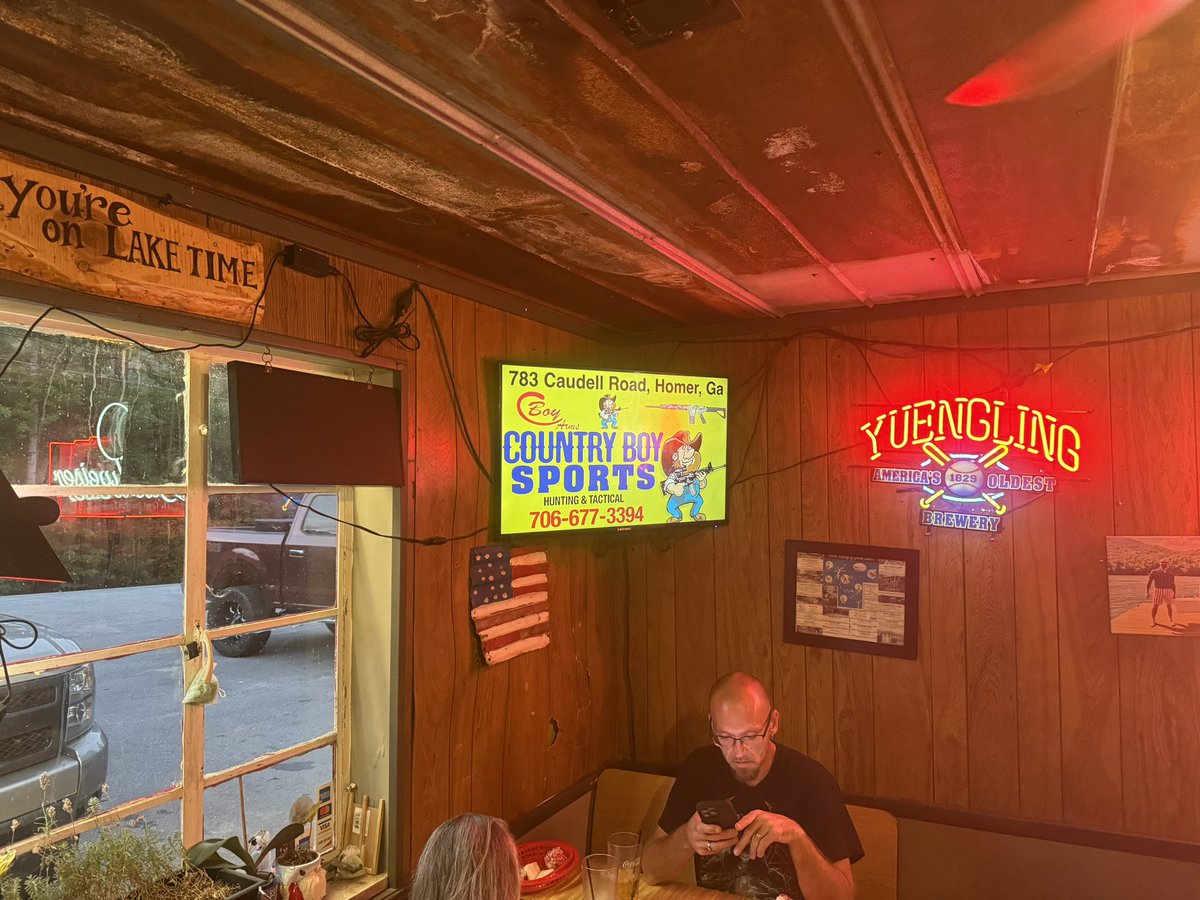
This guy has 160 TVs spread out in dive bars around north Georgia.
$10 to advertise. Over 30 ads rotating.
He makes $20,000 + per month in profit.
What a business.
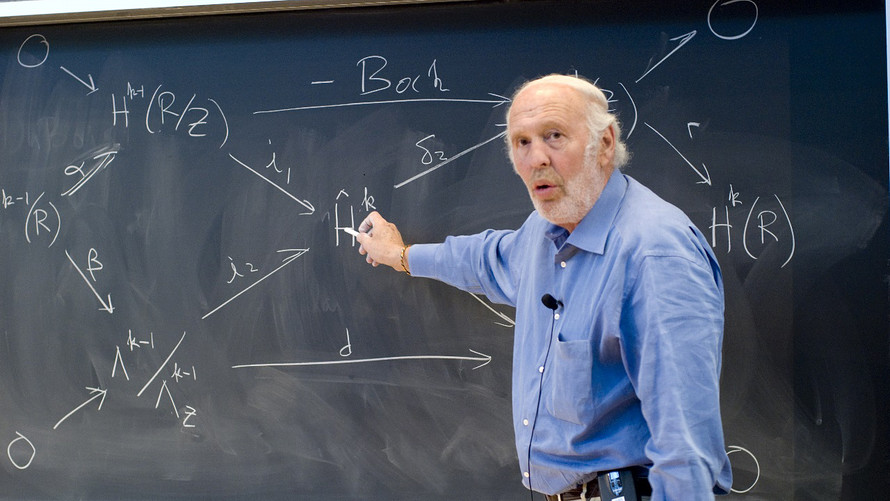
>be Jim Simons
>born 1938 in Brookline, Massachusetts
>shark eyes, warm smile, galaxy brain
>age 3, realize numbers double infinitely
>age 4, obsessed with Zeno's paradox
>parents: "what is wrong with this kid"
1950s:
>MIT at 17
>graduate in 3 years
>too easy
>Berkeley PhD in 2 years
>thesis is 20 pages
>advisor doesn't know if it's genius or insane
1964:
>join the NSA
>job: crack Soviet codes
>coldest war, hardest puzzles
>you're very good at this
1967:
>write a letter to the New York Times
>call Vietnam "a stupid war"
>NSA: "you can't do that"
>you: "just did"
>fired immediately
1968:
>become math professor at Stony Brook
>age 30, youngest department chair ever
>do actual math
>invent Chern-Simons theory
>physicists use it for decades
>you treat it like a footnote
1978:
>get bored of academia
>everyone says markets are random
>you: "what if that's bullshit"
>start trading with math
1982:
>found Renaissance Technologies
>strip mall office in Long Island
>no suits, no MBAs
>hire physicists, astronomers, codebreakers
>Wall Street experience? disqualifying
1988:
>launch Medallion Fund
>close it to outsiders almost immediately
>only employees can invest
>this matters
the method:
>find patterns humans can't see
>trade thousands of times a day
>tiny edge × massive volume × time = infinite money
>nobody knows exactly how
>employees sign insane NDAs
>secrets go to the grave
the returns:
>66% annually before fees
>39% after fees
>for 30+ years
>not a single losing year
>2008 financial crisis: +82.4%
>best track record in history
>better than Buffett, Soros, everyone
>not even close
the money:
>net worth hits $31 billion
>all from math
>no oil, no inheritance
>just patterns in the noise
tragedy:
>son Paul died in 1996 bicycle accident
>son Nicholas drowns in 2003
>two sons gone
>pour billions into autism research, math education, basic science
May 2024:
>die at 86
>never wrote a memoir
>never explained how Medallion works
>never needed credit
the codebreaker who cracked the market.
66% a year.
30 years.
the greatest investor who ever lived
and nobody knows how he did it.
Eric Schmidt says intelligence is about to decouple from us.
“The computers are now doing self-improvement.. They don’t have to listen to us anymore.”
Within six years: a mind smarter than the sum of humans -- scaled, recursive, free. We have no language for what’s coming.