I enjoyed reviewing this practical article published in #JACCadv on EKG patterns in athletes
-> Sinus Bradycardia- common in endurance athletes
-> Increased QRS voltage- more common in strength-training athletes
-> Lateral, inferolateral, or anterolateral T-wave inversion warrants further evaluation.
-> In strength-trained athletes, LV wall thickness rarely exceeds 13 mm. A diagnostic “gray zone” exists between 13 and 15 mm -> #whyCMR/ Follow up/ Remember even cardiomyopathy thickness can regress mildly too with detraining.
Link: https://t.co/iY6lIRWYZH
Glucosuria as a Marker of Adherence to Sodium-Glucose Cotransporter 2 Inhibitors and Clinical Outcomes in Real-World Practice
Glucosuria was associated with SGLT2 inhibitor adherence and, among patients prescribed SGLT2 inhibitors, is associated with reductions in risks of all-cause mortality, heart failure, and end-stage kidney disease.
@mvaduganathan@hvanspall@DrMarthaGulati
https://t.co/jH0AwLaWjL
Antagonistas del Receptor Mineralocorticoide en Insuficiencia Cardíaca. 💊🫀💢
✅️ Durante décadas, los ARM esteroideos (espironolactona y eplerenona) han sido fundamentales en el tratamiento de la IC-FEVI reducida. Sin embargo, la aparición de finerenona, un ARM no esteroideo, ha ampliado las posibilidades terapéuticas hacia pacientes con FEVI ligeramente reducida o preservada.
🔎💊 La finerenona presenta mayor selectividad por el receptor mineralocorticoide, sin los efectos antiandrogénicos asociados a espironolactona (ginecomastia). Los 3 fármacos bloquean los efectos perjudiciales de la activación mineralocorticoide: inflamación, fibrosis miocárdica, hipertrofia y remodelado cardiovascular.
📊 RALES: espironolactona redujo la mortalidad un 30% en IC-FEVIr avanzada.
📊 EPHESUS y EMPHASIS-HF: consolidaron el beneficio de eplerenona en disfunción ventricular posterior a IAM e IC-FEVIr sintomática.
📊 TOPCAT: espironolactona no redujo significativamente el desenlace primario en IC con FEVIp, aunque mostró señales de beneficio en determinados subgrupos.
📊 FINEARTS-HF: finerenona redujo un 16% los eventos de empeoramiento de IC y muerte cardiovascular en pacientes con FEVI ≥40% (RR 0.84; IC95% 0.74–0.95; p=0.007).
👨⚕️💬➡️ En IC-FEr (FEVI ≤40%), espironolactona y eplerenona continúan siendo tratamientos fundamentales. En IC con FEVI ≥40%, finerenona dispone de evidencia específica de beneficio clínico y recibió aprobación de la FDA en 2025 para esta indicación.
⚠️🧐 El inicio de un ARM exige evaluar K+ y función renal. La hiperK+ sigue siendo una limitación importante, por lo que es indispensable la vigilancia y el ajuste individualizado.
📝🆓️⤵️State-Of-The-Art Review2026
https://t.co/wlsVCgAAKk
https://t.co/YNnq8RqaaD
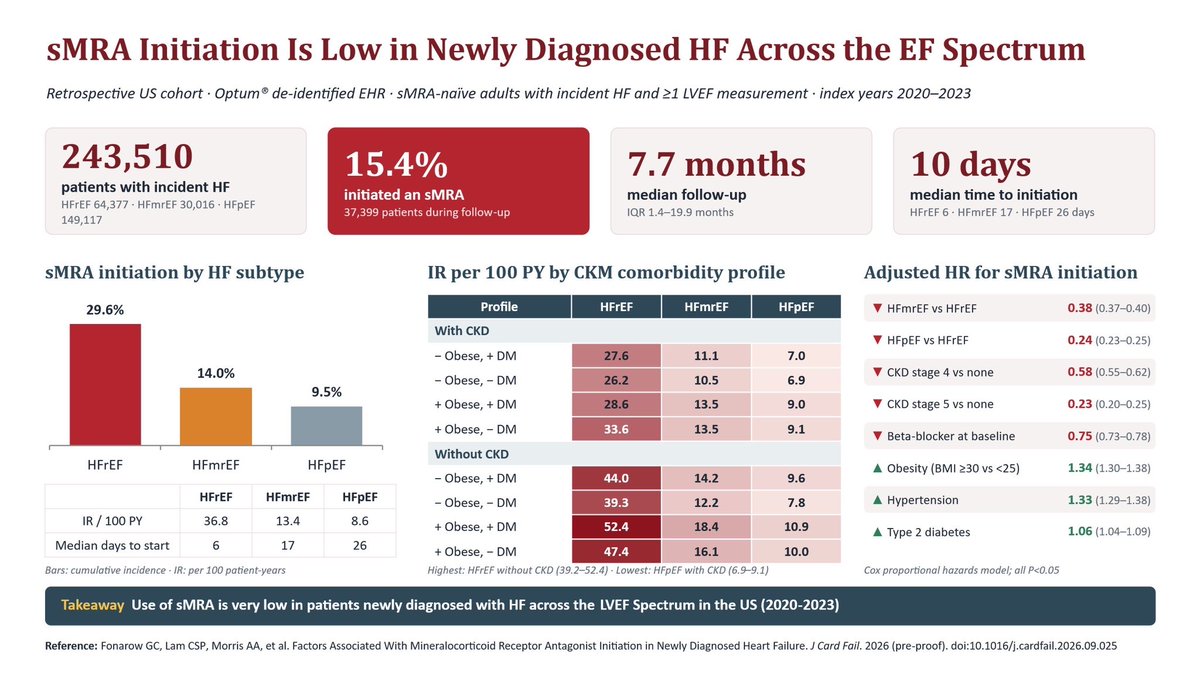
🫀 Of 243,510 patients with newly diagnosed HF:
only 15.4% started an sMRA 😳
📉 HFrEF 29.6% | HFmrEF 14.0% | HFpEF 9.5%
🩺 Lowest uptake: HFpEF, yet <1 in 3 in HFrEF
⏱️ Median 10 days to start
🔗 https://t.co/fvZlMG0RH8
@HFSA#HFSA2026
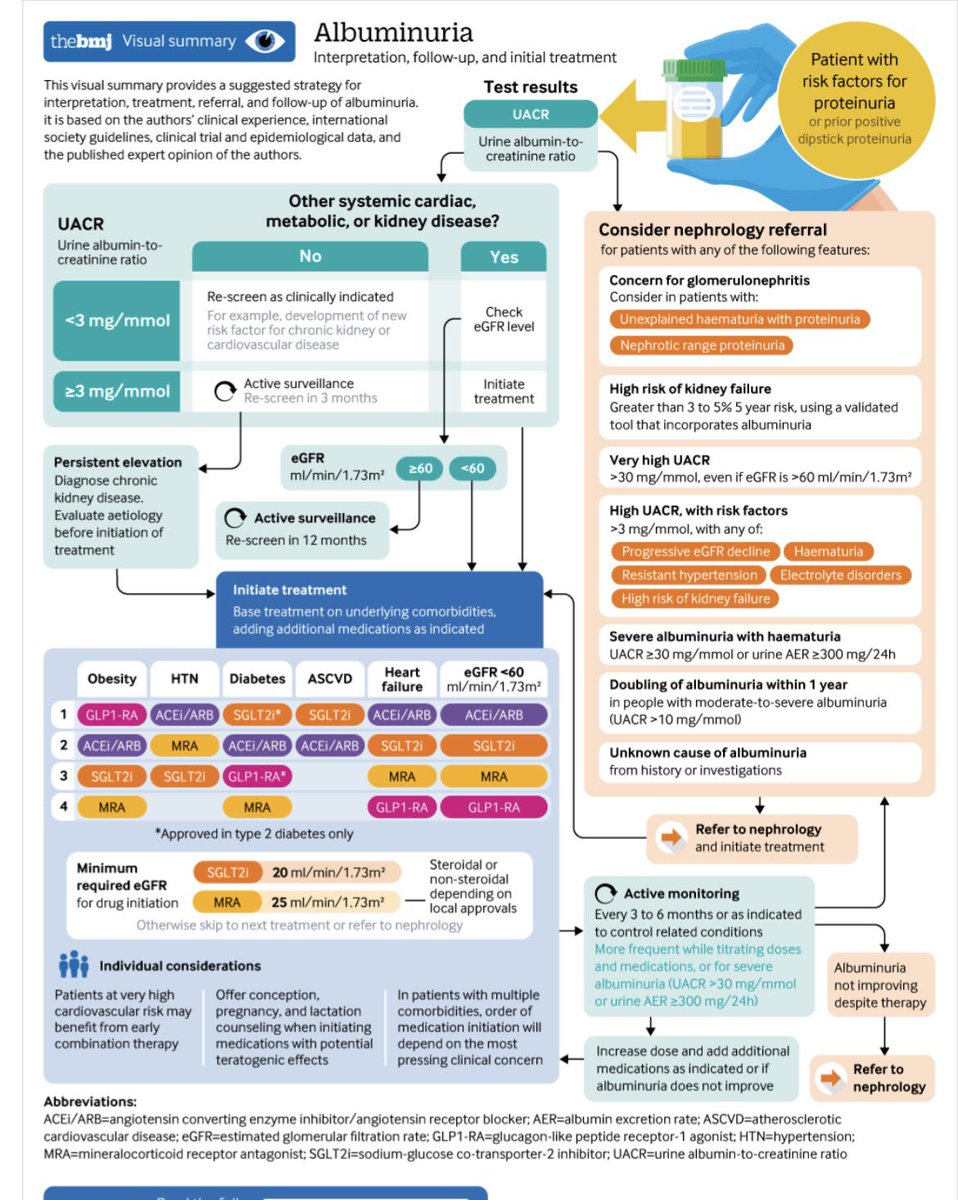
Albuminuria and heart failure
UACR AND HEART FAILURE: A CARDIORENAL WARNING SIGNAL
Albuminuria is more than a marker of kidney damage. It is an independent predictor of incident and worsening heart failure, hospitalization and mortality.
📊 Key messages:
🔹 HF risk rises progressively with increasing UACR—even at low levels of albuminuria.
🔹 Across multiple studies, albuminuria is associated with approximately 1.5- to 6-fold higher HF risk, depending on the population and UACR level.
🔹 Its prognostic value extends beyond kidney disease, including in patients with diabetes and atrial fibrillation.
🔹 UACR is a simple, accessible biomarker that can improve cardiorenal risk stratification.
💡 Clinical takeaway: Don’t wait for eGFR to decline. Measure UACR to identify patients at increased cardiovascular and HF risk—and act early.
#HeartFailure #Cardiorenal #Albuminuria #CKD #Cardiology #Nephrology #UACR #CardiovascularPrevention
@JavedButler1@mvaduganathan@gcfmd@SJGreene_md@GianluSava@HFA_President@hfcollaboratory
https://t.co/dfdjKqhXUo
Artificial intelligence in cardiovascular medicine: a practical guide for clinicians and researchers
The central challenge for contemporary cardiology is no longer whether AI can achieve high predictive performance, but how it can be translated into clinically reliable, equitable, and actionable decision support
https://t.co/e8JURXBt5Q
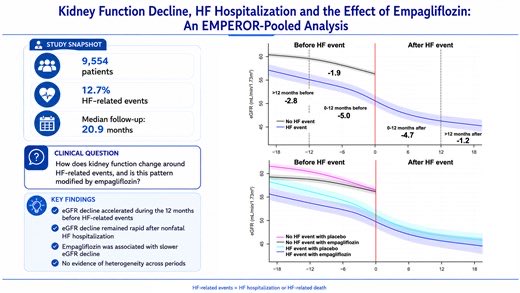
Kidney function decline, heart failure hospitalization, and the effect of empagliflozin in heart failure: an EMPEROR-pooled analysis
Across the LVEF spectrum, kidney function decline accelerated before HF-related events and remained rapid thereafter. Empagliflozin attenuated eGFR decline without evidence of heterogeneity across periods.
@hfcollaboratory@gcfmd@SJGreene_md@mvaduganathan
https://t.co/R8WTfi859B
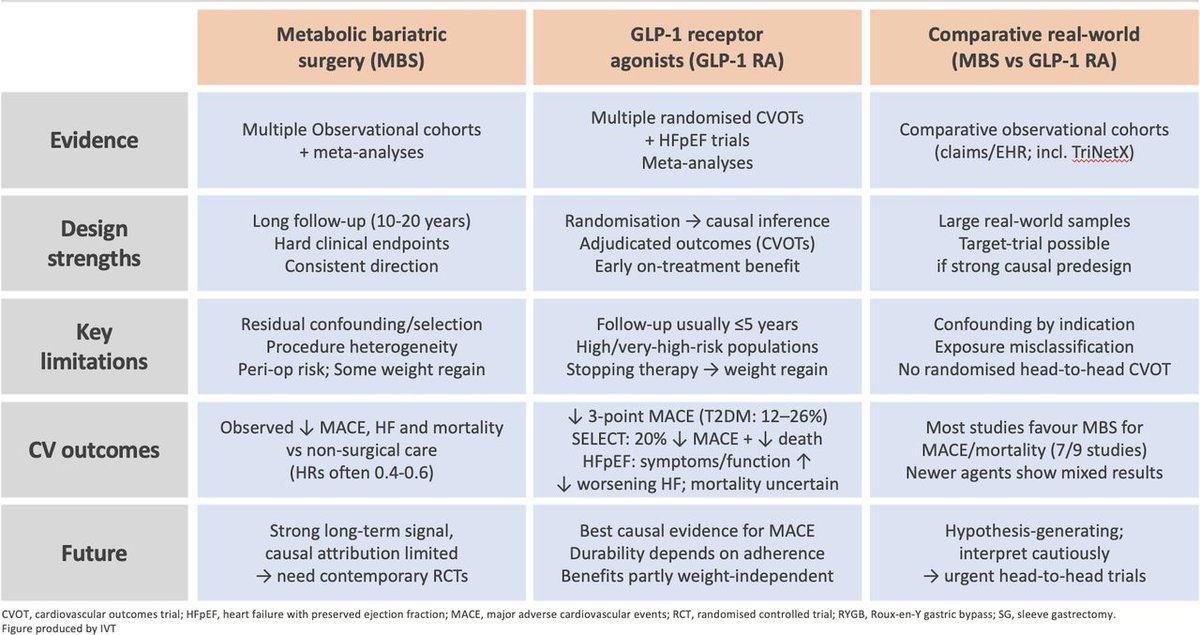
Beyond the weight: how obesity drugs and bariatric surgery are changing cardiovascular medicine - 💉 💊 🏥
Professor James Rudd is joined by Professor Carel le Roux from University College Dublin and Ulster University. They discuss the trial evidence that has emerged over the last 20 years for both bariatric surgery and the newer GLP-1 medications, focusing particularly on reductions in cardiovascular outcomes. They also discuss where the field of obesity intervention might head over the next five years and how metabolic surgery will continue to have an important role.
Paper: https://t.co/uueSVFYVHZ
Spotify: https://t.co/IhXR7kKXD7
Apple Podcasts: https://t.co/c857OOaGgE
Amazon Podcasts: https://t.co/RG0F6niNpn
♦️عوامل تؤثر على دقة نسبة الألبومين / الكرياتينين في البول ACR
و تؤثر على فلترة الكلى eGFR في تقييم وظائف الكلى
و شنو الفحص الأدق في مثل هالحالات ؟
🔺نسبة الألبومين إلى الكرياتينين في البول :
_ كتلة العضلات المنخفضة : ممكن ترفع ACR بشكل غير صحيح؛ لأن كمية الكرياتينين قليلة
_ كتلة العضلات العالية : ممكن تخفض ACR بشكل غير صحيح
_ البول المخفف أو المركز : قد يؤثر على دقة النسبة
_ ارتفاع حرارة الجسم ( الحمى ) ، التمارين الرياضية، والتهابات المسالك البولية UTI : قد تسبب ارتفاع مؤقت في ACR
🔺 فلترة الكلى eGFR :
_ قد يكون غير دقيق في حالات اختلاف كتلة العضلات، خصوصاً ضمور العضلات المرتبط بالتقدم في العمر sarcopenia
_ يتأثر كذلك في حالات تليف الكبد، السمنة، وبتر الأطراف
_ بعض الأدوية مثل تراميثوبريم Trimethoprim تقلل إفراز الكرياتينين : فتسبب ارتفاع في الكرياتينين في الدم وانخفاض في فلترة الكلى eGFR دون انخفاض حقيقي مماثل في ال GFR
_ في حالات انخفاض كتلة العضلات قد يعطي تقدير أعلى من وظيفة الكلى الحقيقية
🔺سيستين سي Cystatin C :
_ يكون أكثر فائدة لما تكون كتلة العضلات غير طبيعية، لكنه مو خالي من العوامل اللي تأثر عليه
_ قد يتأثر بـ الالتهاب، التدخين، السمنة، واضطرابات الغدة الدرقية
🔺 إذا كانت النتائج غير متوافقة مع الحالة السريرية :
_ ما نعتمد على ACR أو eGFR وحدهم
_ نعمل eGFR باستخدام Cystatin C أو المعادلات المدمجة Creatinine + Cystatin C
_ وفي الحالات التي نحتاج فيها قياس أدق لوظيفة الكلى، ممكن نعمل directly Measured GFR؛
جمع البول 24 ساعة فيُستخدم في حالات قليلة، لكنه مو شرط يكون أدق من المعادلات الحديثة
Retirada de la aspirina en la Enfermedad Coronaria. 🤔🚫💊
✨️Aquí un buen resumen de toda la evidencia sobre las estrategias de desescalada o abreviadas. 🔎📚
🔴 No retirar demasiado pronto: se debe evitar la suspensión de ASA durante los primeros 30 días [NEO-MINDSET trial].
🟢 Después de 1–3 meses, la estrategia mejor respaldada es suspender aspirina y continuar ticagrelor en monoterapia en pacientes seleccionados tras ICP [TWILIGHT, TICO y ULTIMATE-DAPT trials].
🟠 Clopidogrel no es equivalente a ticagrelor en este escenario. La monoterapia precoz con clopidogrel después de SCA tiene evidencia menos consistente; STOPDAPT-2 ACS no demostró no inferioridad. Además, hasta 1/3 de los pacientes presenta alta reactividad plaquetaria con clopidogrel (CYP2C19 loss-of-function).
🔵 Si existe indicación de ACO (por FA lo + común), este es uno de los escenarios con mayor respaldo para retirar aspirina: después del periodo inicial (1 sem - 1 mes), mantener ACO + iP2Y12 (clopidogrel, de preferencia) reduce sangrado frente a terapia triple.
📝🆓️⤵️ State-Of-The-Art Review2026 @JACCJournals 💯
https://t.co/NaA78PZxg5
https://t.co/m1yndmf03Q
Skeletal Muscle Dysfunction in Heart Failure: Mechanistic Insights and Therapeutic Implications
Exercise intolerance remains a major cause of significant QoL limitations in patients with HF.
HF-associated alterations in SkM structure and metabolism are key drivers of exercise intolerance.
HF-associated SkM dysfunction is caused by a vicious cycle of oxidative stress, inflammation, proteolysis, and mitochondrial dysfunction.
https://t.co/TgH61hAdPE
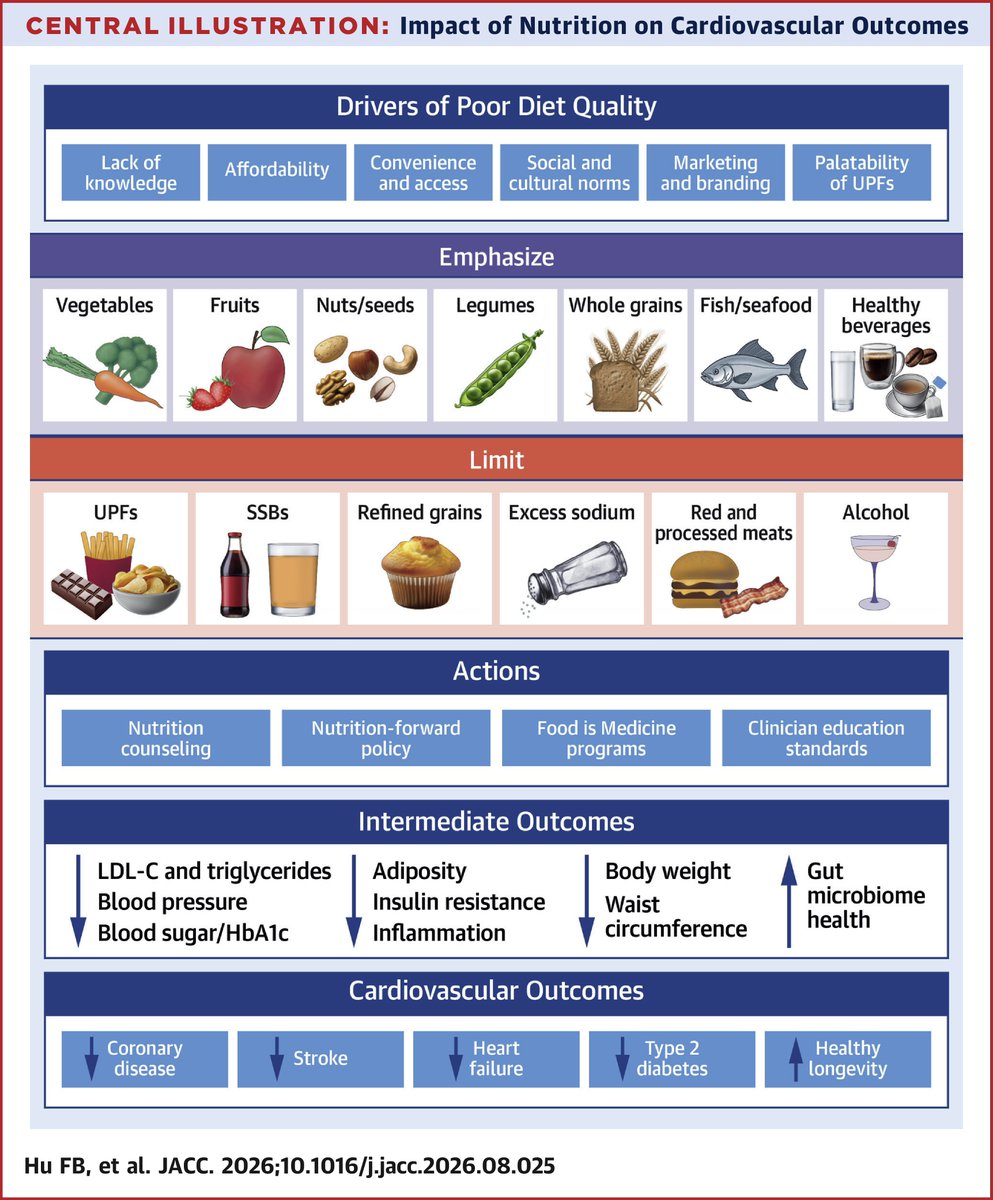
🆕 ACC Scientific Statement in #JACC:
A healthy dietary pattern matters more than any single nutrient or food for heart health. 🫀
🔗 Read more: https://t.co/fUZMN41Qyx
#cvPrev#ACCPrev@JACCJournals
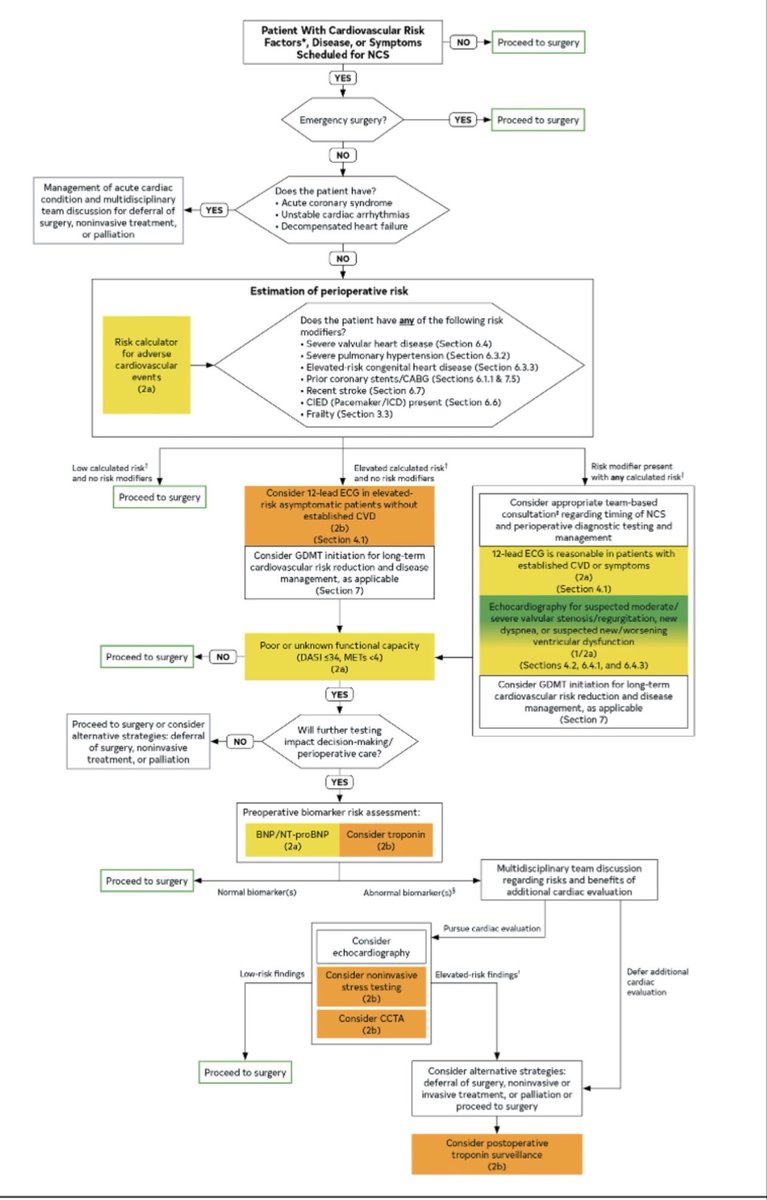
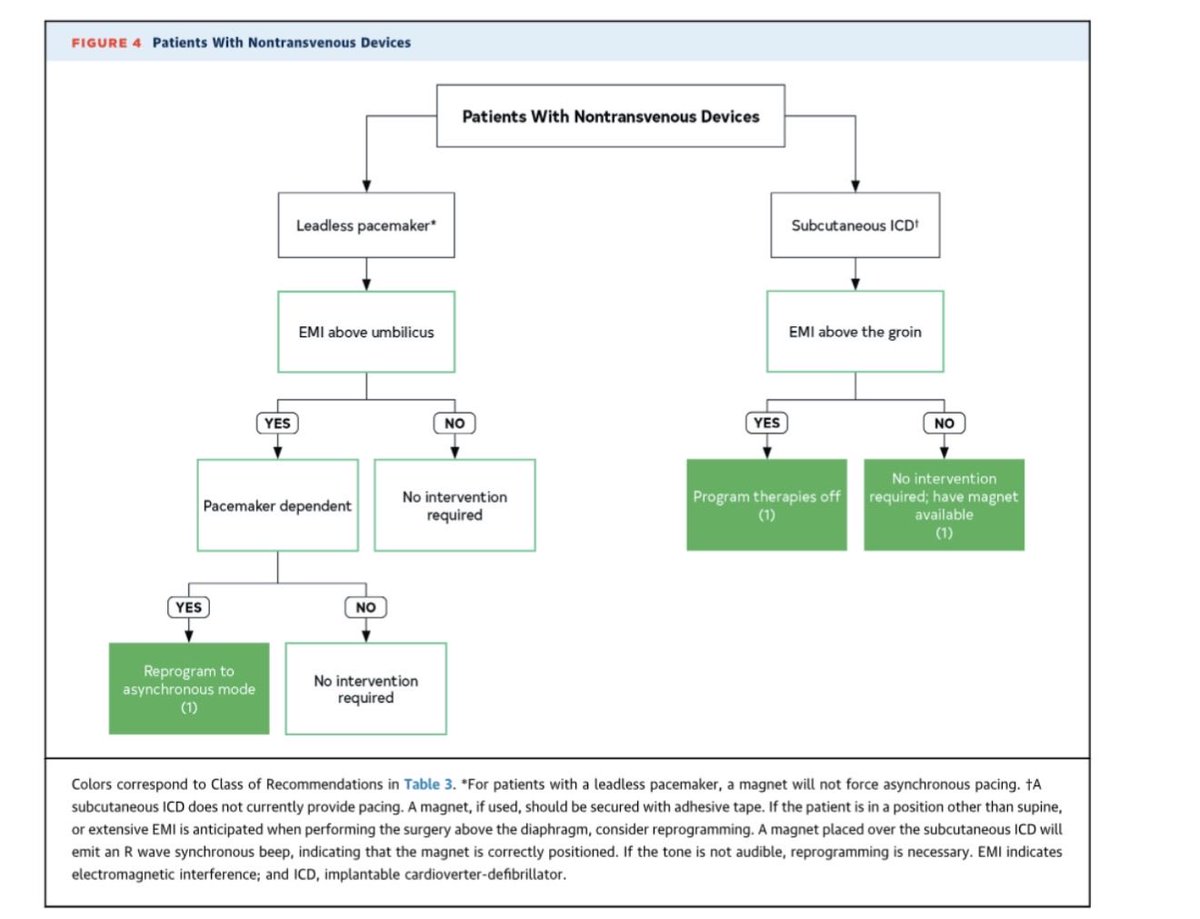
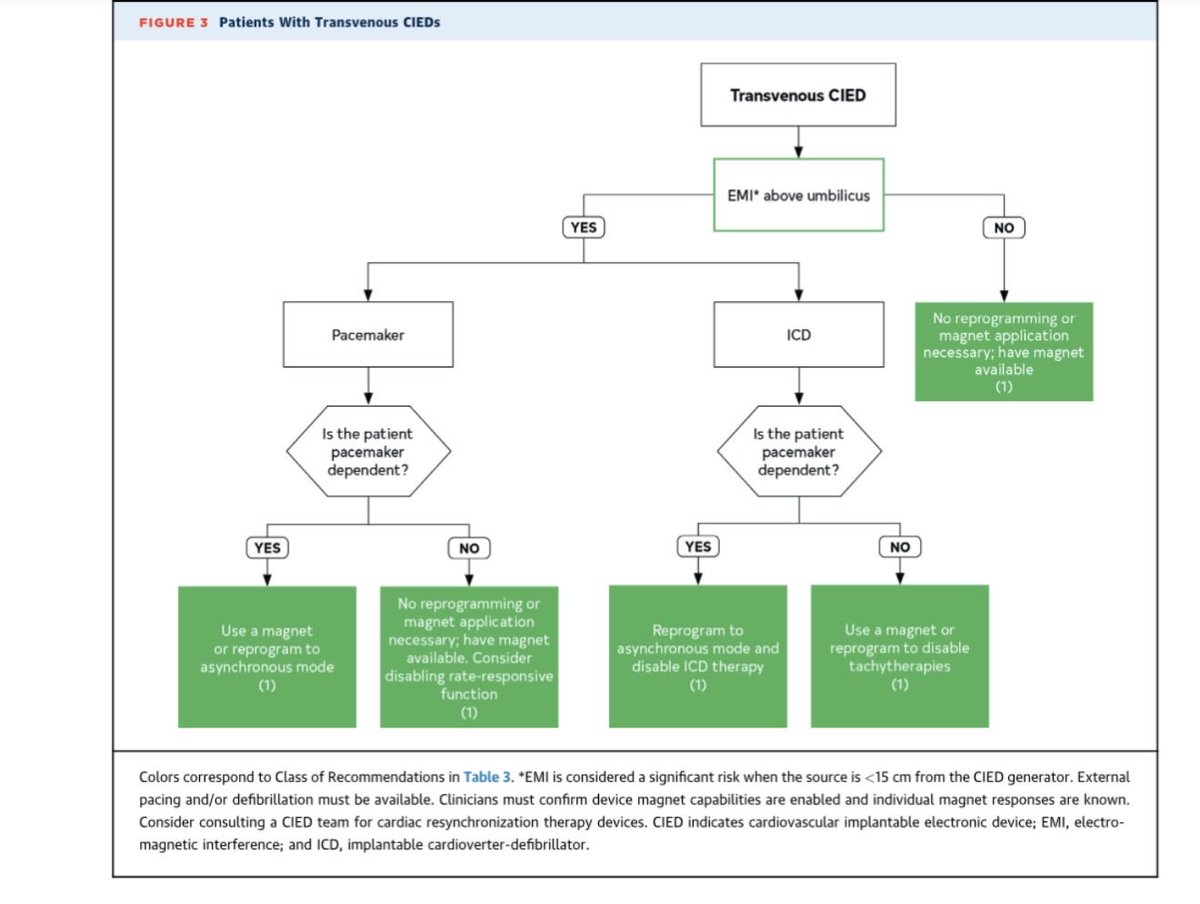
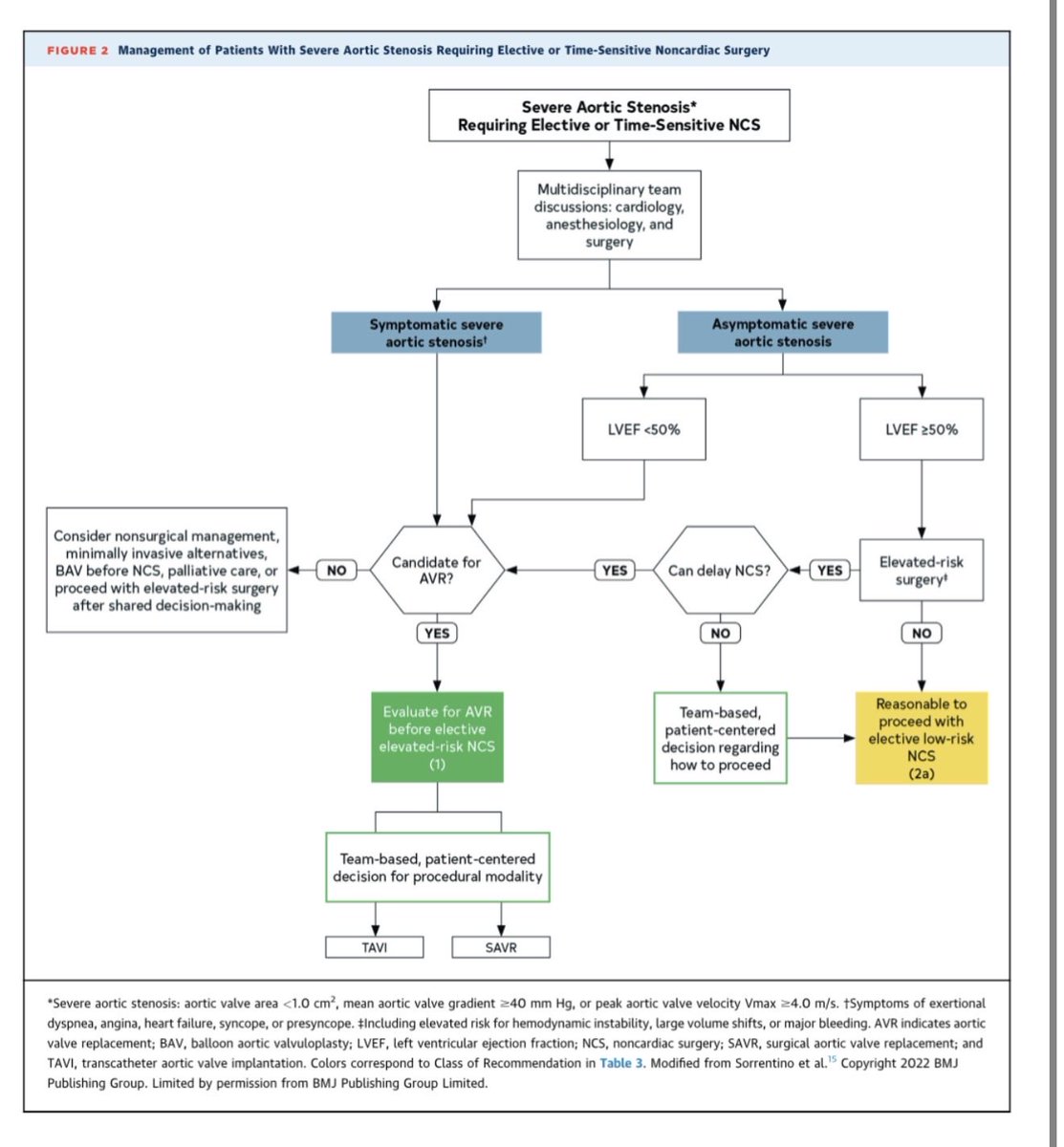
📘 2026 AHA/ACC Guideline for Perioperative Cardiovascular Management in Noncardiac Surgery
Thompson A, Fleischmann KE, Smilowitz NR, et al. | JACC 2026
Key recommendations:
🔹 Use a stepwise approach to cardiovascular risk assessment, incorporating surgical risk, functional capacity, frailty, and cardiovascular risk modifiers.
🔹 BNP/NT-proBNP is reasonable before elevated-risk surgery in selected higher-risk patients; preoperative troponin may also help refine risk.
🔹 Avoid routine stress testing. Consider it only in selected patients with poor/unknown functional capacity and elevated perioperative risk when results would change management.
🔹 Coronary revascularization should not be performed solely to reduce perioperative risk. Revascularize when otherwise clinically indicated.
🔹 Continue chronic beta-blockers. If newly indicated, initiate them sufficiently before surgery—not on the day of surgery.
🔹 Continue statins and initiate them when otherwise indicated for long-term cardiovascular risk reduction.
🔹 Stop SGLT2 inhibitors 3–4 days before surgery to reduce perioperative ketoacidosis risk.
🔹 Routine anticoagulation bridging is generally avoided; reserve it for patients at particularly high thrombotic risk.
🔹 Consider postoperative troponin surveillance after elevated-risk surgery in selected high-risk patients to detect myocardial injury after noncardiac surgery (MINS).
🔹 Emphasis throughout: avoid unnecessary testing and use multidisciplinary, patient-centered decision-making.
📄 J Am Coll Cardiol. 2026;88:1543–1643.
DOI: 10.1016/j.jacc.2026.06.017
https://t.co/Wdu4ENZzbC
#Cardiology #PerioperativeMedicine #CriticalCare #Anesthesia #Surgery #AHA #ACC









![javier20ch's tweet photo. Retirada de la aspirina en la Enfermedad Coronaria. 🤔🚫💊
✨️Aquí un buen resumen de toda la evidencia sobre las estrategias de desescalada o abreviadas. 🔎📚
🔴 No retirar demasiado pronto: se debe evitar la suspensión de ASA durante los primeros 30 días [NEO-MINDSET trial].
🟢 Después de 1–3 meses, la estrategia mejor respaldada es suspender aspirina y continuar ticagrelor en monoterapia en pacientes seleccionados tras ICP [TWILIGHT, TICO y ULTIMATE-DAPT trials].
🟠 Clopidogrel no es equivalente a ticagrelor en este escenario. La monoterapia precoz con clopidogrel después de SCA tiene evidencia menos consistente; STOPDAPT-2 ACS no demostró no inferioridad. Además, hasta 1/3 de los pacientes presenta alta reactividad plaquetaria con clopidogrel (CYP2C19 loss-of-function).
🔵 Si existe indicación de ACO (por FA lo + común), este es uno de los escenarios con mayor respaldo para retirar aspirina: después del periodo inicial (1 sem - 1 mes), mantener ACO + iP2Y12 (clopidogrel, de preferencia) reduce sangrado frente a terapia triple.
📝🆓️⤵️ State-Of-The-Art Review2026 @JACCJournals 💯
https://t.co/NaA78PZxg5
https://t.co/m1yndmf03Q](https://pbs.twimg.com/media/HTqW4euWoAA8fYW.jpg)