#Gold up 1.5% today and trying to get back in the parallel. This would be a small positive but this remains a bear flag and probabilites still favour a further drop.
$GLD $GLL $GDX #metals#trading#investing
@Eyaaaad Not his only autoimmune disease. He also admitted to having autoimmune thyroiditis diagnosed in his 20s. Generally once you have one autoimmune disease, you're likely to eventually have others at some later point.
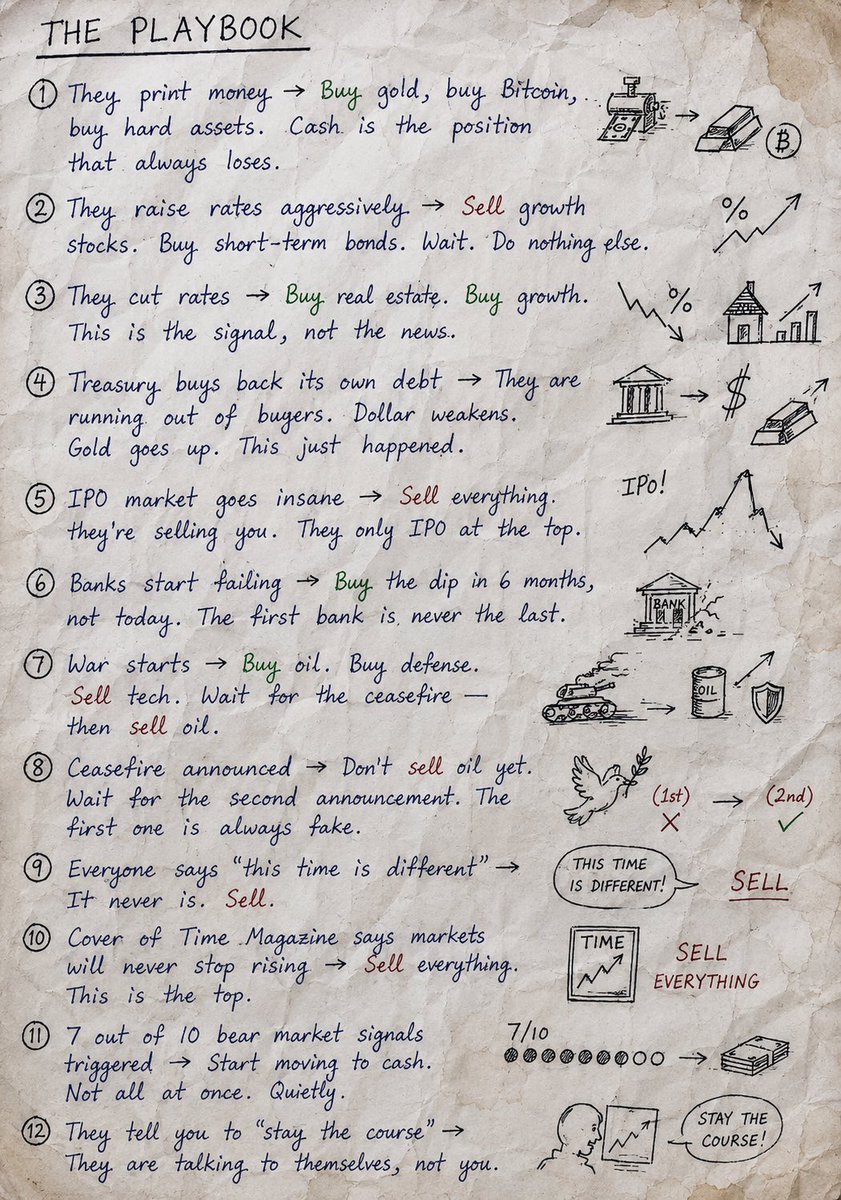
MY FATHER HAS BEEN INVESTING SINCE 1985. HE NEVER LOST MONEY IN A CRASH.
I ASKED HIM WHY. HE HANDED ME THIS.
Most people learn these rules after losing everything:
🚨 1) Treasury buys back its own debt → Dollar weakens. Gold goes up. This just happened.
2) They print money → Buy gold. Buy hard assets. Cash is the position that always loses.
3) They raise rates → Sell growth stocks. Buy short-term bonds. Do nothing else.
4) They cut rates → Buy real estate. Buy growth. This is the signal, not the news.
5) IPO market goes insane → Sell everything they’re selling you. They only IPO at the top.
6) Banks start failing → Wait 6 months. The first bank is never the last.
7) War starts → Buy oil. Buy defense. Sell tech.
8) Ceasefire announced → Don’t sell oil yet. The first one is always fake.
9) 7 out of 10 bear market signals triggered → Start moving to cash. Quietly.
10) Everyone says “this time is different” → It never is. Sell.
11) They tell you to “stay the course” → They are talking to themselves, not you.
40 years. Every cycle. The rules never changed.
Only the story did.
Follow if you want the next page.
U.S. national debt has now climbed above 100% of GDP for the first time since World War II.
That means the country now owes more than the total value of everything it produces in a year, a level typically seen only in major crises or wartime economies.
Economists often point out that what matters isn’t just the number itself, but how fast it’s growing and what it costs to service it… but crossing this threshold is still a major long-term signal for the economy.
Source: @barchart / Writer: Lynn
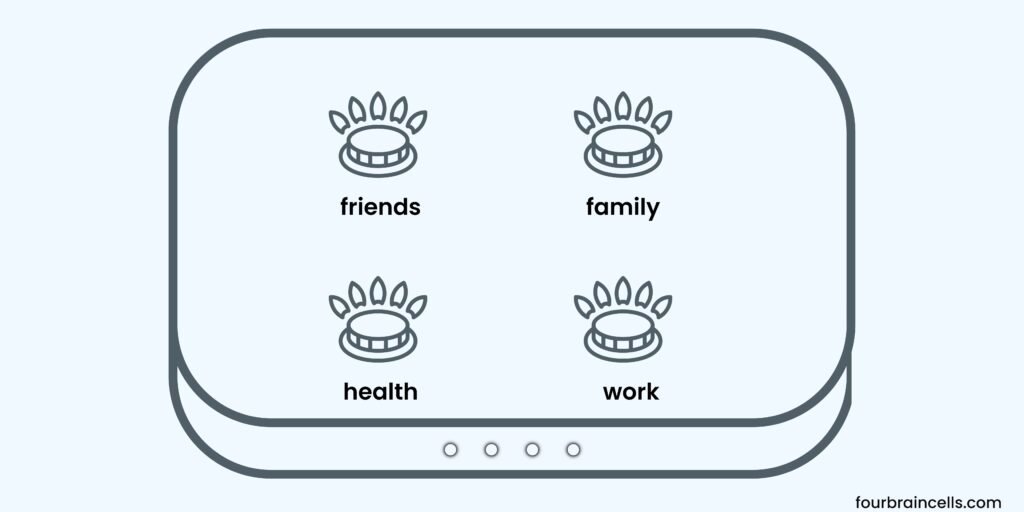
Imagine your life as a stovetop.
You’ve got 4 burners:
1. Family
2. Work
3. Health
4. Friends
But in reality:
To be successful… You have to turn off one.
To be *really* successful… You must turn off two.