Ownera is the application layer for institutional tokenization. Enabling seamless interoperability for digital asset trading & settlement. $5B+ monthly volume.
We’re excited to be hosting a breakfast briefing with @ZodiaCustody at Digital Asset Summit London.
Next month, Ownera and Zodia Custody will be hosting an exclusive social event breakfast for peers in the industry before the day’s official programme starts.
It will take place on 10th November, from 8:15am to 10:00am, within walking distance of DAS London.
Register now to attend our breakfast in Mayfair: https://t.co/UJ27yFAVly
How will tokenization change financial markets?
That’s one of the questions Anthony Woolley will be exploring at his panel at @Deloitte’s 2026 Digital Asset Conference on Thursday 22nd October.
Joined by James Smith, Myles Wright and John David Thiede, Anthony will discuss how tokenization can create value across financial and real-world assets, from deposits, stablecoins and securities to institutional and retail investment.
If you’re interested in attending, register your interest at [email protected]
Institutional tokenized collateral is moving beyond siloed use cases, but how will the market avoid fragmentation?
It was great to speak to @Genfinity about how Ownera is connecting tokenized markets to enable seamless trading at scale, including work in the U.S. Industry Sandbox.
As markets continue to grow, no single blockchain will dominate. Ownera is leading the charge with its multi-chain infrastructure, which enables digital asset trading across ledgers, blockchains and cash flows.
The future of financial markets will be multi-chain. Ownera’s abstraction layer provides the connectivity needed to help institutions unlock liquidity and adapt to these changes.
To learn more about @amibendavid’s thoughts on the future of the industry, click the link to watch his interview with Ryan S.: https://t.co/D0dPSZ1FqF
What does the future of financial markets look like?
A new report called the Convergence Imperative by @GlobalDigitalFi could legacy and digital systems converge?
@GlobalDigitalFi’s new report, the Convergence Imperative, in collaboration with @FixTrading and @Deloitte, explores the conditions needed to make tokenized systems viable at scale.
The report interviewed a number of experts, including @NBenson8221, and found that interoperability was key to ensuring traditional and tokenized infrastructure convergence.
Swipe to read key themes from the report.
Imagine two schools using completely different systems to keep their records.
When a student transfers from one school to another, sharing those records can become complicated because the schools use different systems.
Now imagine having a way for both schools to communicate without rebuilding everything from scratch.
That’s similar to the problem Ownera is solving in financial markets. 🧵
WHAT IS OWNERA BUILDING?
Ownera is building infrastructure that helps financial institutions connect, trade, and settle tokenized assets across different blockchains and traditional financial systems.
Think of stocks, bonds, and investment funds.
These assets can now exist as digital tokens, but there’s a challenge: different institutions often use different technologies, networks, and systems.
Creating a token is one thing. Making it work across different financial systems is another.
That’s where Ownera comes in.
HOW DOES OWNERA WORK?
Its core technology, FinP2P, provides an application layer that connects financial institutions, blockchains, and existing financial infrastructure.
Instead of every institution building separate connections to every other institution, Ownera helps them communicate and coordinate transactions through a shared framework.
This allows financial applications to work across multiple networks without requiring every participant to abandon their existing systems.
WHY DOES THIS MATTER?
Imagine a financial institution that wants to access tokenized assets across several blockchains.
Without the right infrastructure, connecting those networks can require complex integrations, time, and resources.
Ownera aims to reduce that complexity, making it easier for institutions to access markets, distribute assets, and coordinate transactions across different systems.
BEYOND TOKENIZATION:
Ownera is also developing the Open Collateral Network, which focuses on helping institutions move and manage tokenized collateral and cash across different networks, custodians, and market participants.
This matters because financial markets need more than digital assets. They need infrastructure that allows those assets to move and be used efficiently.
CONNECTING THE FINANCIAL WORLD:
Tokenization is changing how financial assets can be issued, held, and transferred.
But if every blockchain and financial institution operates in isolation, the industry remains fragmented.
Ownera is working to bridge those gaps.
In simple terms, if tokenization puts financial assets on digital rails, Ownera is building the connections that help those rails work together.
Because the real opportunity isn't just putting assets on-chain.
It's making tokenized finance work across the wider financial system.
Follow @OwneraIO@amibendavid
What does the future of financial markets look like?
A new report called the Convergence Imperative by @GlobalDigitalFi , in collaboration with @FIXTrading and @Deloitte interviewed industry experts, including @NBenson8221, about the evolution of the market landscape.
Experts agreed that legacy and digital systems will coexist. The question is how to manage the transition to ensure greater market efficiency and avoid fragmentation.
Swipe to learn more about the report’s hypotheses about the future of digital trading.
Tokenization is moving beyond siloed use cases and into widespread institutional adoption.
This shift was front and centre at this year’s Digital Assets Week 2026 this week, where Ownera was proud to join industry leaders in London to explore what's next for digital assets.
Ownera helped to drive the conversation, with team members leading panels throughout the week.
@NBenson8221 hosted a discussion on collateral mobility and tokenized asset production and Anthony Wolley co-moderated a roundtable with Aude Gallais from @ZodiaSolutions on deploying digital assets seamlessly and at scale. He also took part in a debate around the role of automation in innovating finance with industry hard-hitters from A-Team Insight, from A-Team Group, @Lazard Financial Services, @ApexGlobalGroup and @Archax.
@amibendavid had a fireside chat with Brian Cunningham, Global Head of Financial Networks at @Bloomberg , where both share expert insights into deploying digital assets seamlessly.
A big thank you to all those who came to Digital Assets Week.
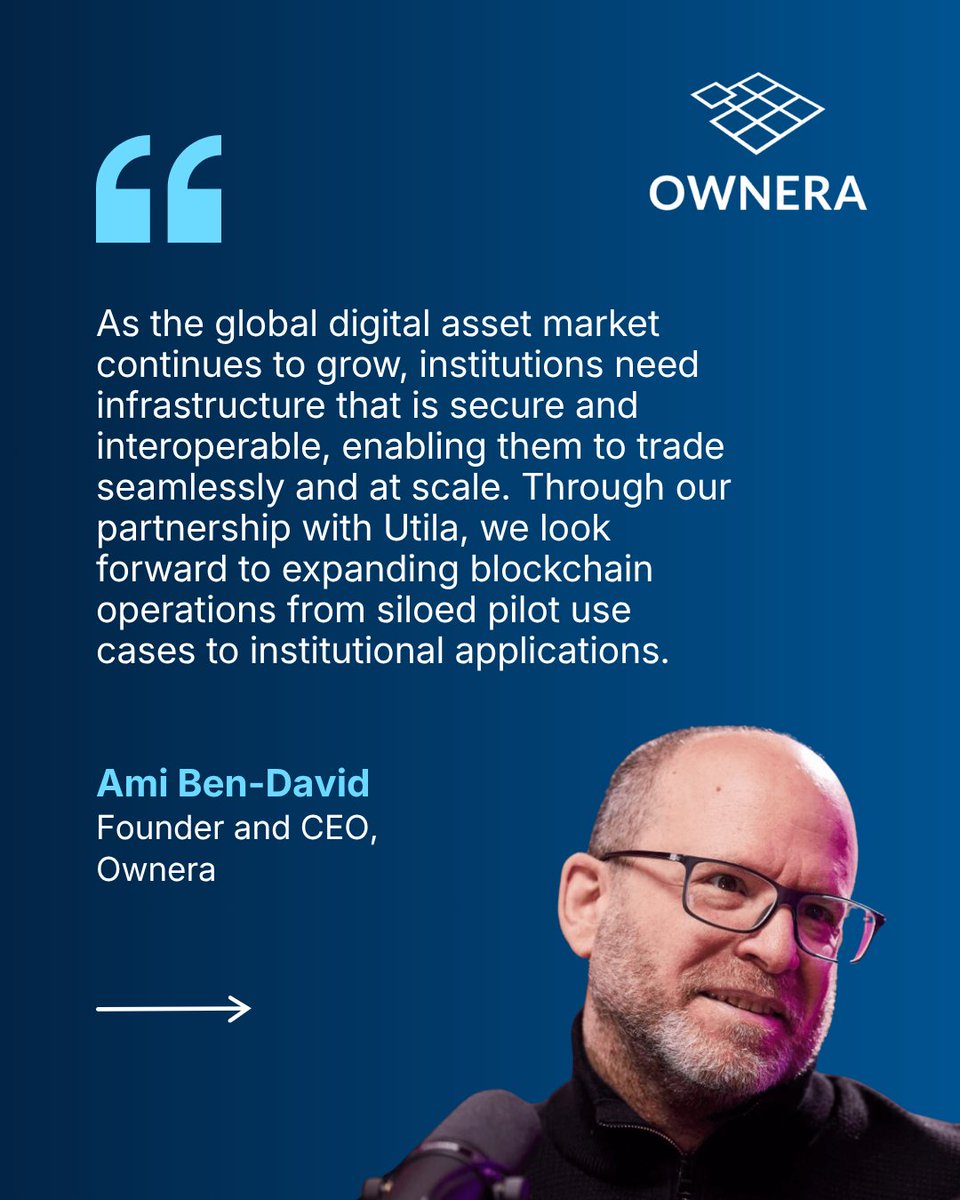
Ownera and Utila are partnering to expand the institutional digital asset ecosystem by creating pathways for broader adoption of tokenized finance solutions.
As demand for tokenized assets and blockchain-enabled financial services continues to grow, we’re partnering with @utila_io to simplify access to the digital asset capabilities financial institutions and enterprise clients need to navigate the evolving finance landscape.
By combining Ownera's FinP2P orchestration network with Utila’s secure institutional digital asset operations platform, institutions will be able to access a broader range of services spanning custody operations, wallet infrastructure, tokenized asset interoperability and institutional blockchain applications.
Swipe to read more from Ownera’s @amibendavid and Utila’s Bentzi Rabi
Tokenization is no longer a futuristic concept but is now actively reshaping securities finance and collateral management.
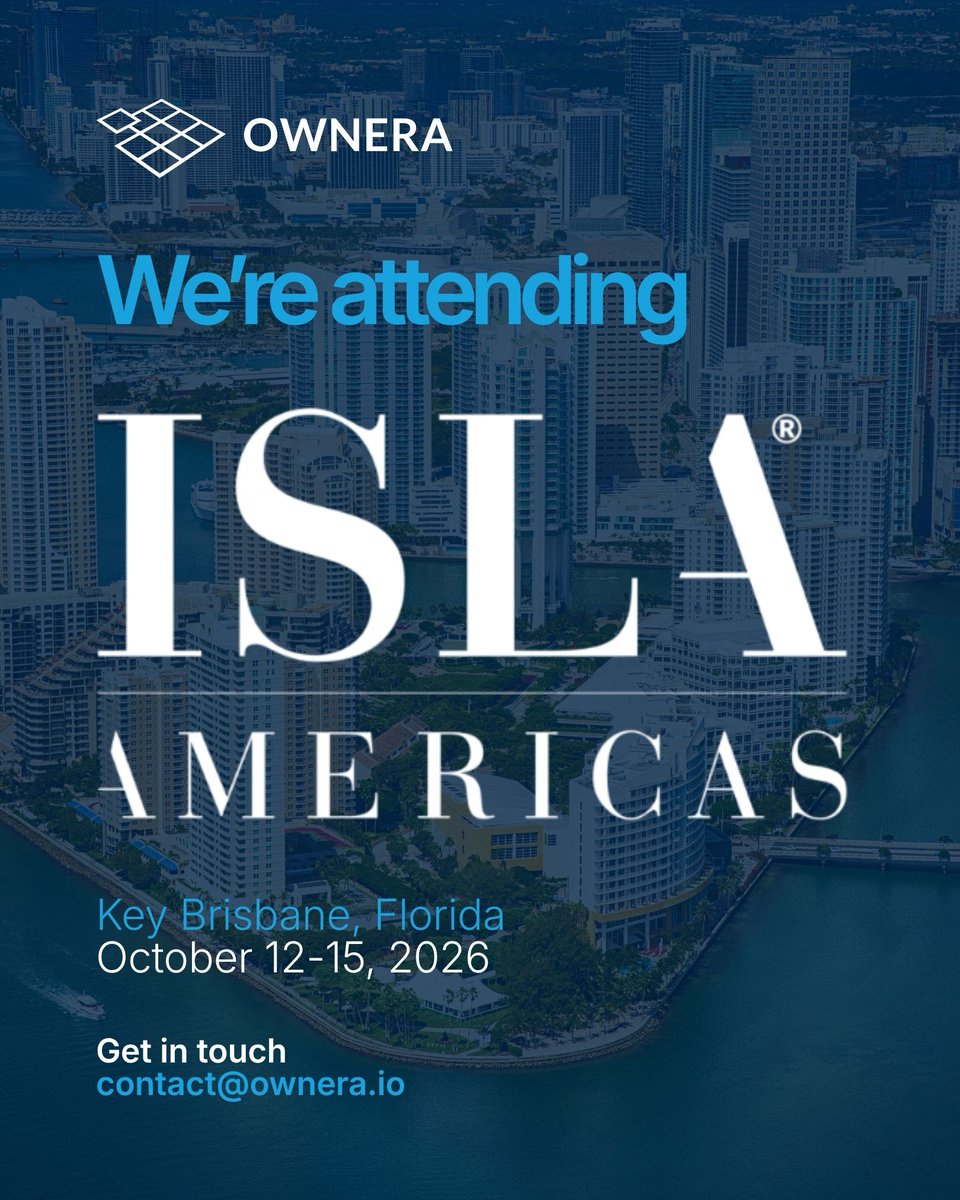
Avril Pomper and Diane Sherman will be attending ISLA Americas 3rd Annual Securities Finance & Collateral Management Conference in Florida next week, where industry experts will come together to explore the issues that are structural changes redefining the securities finance market.
Going beyond surface-level discussion, the sessions will explore how market infrastructure is evolving to improve collateral mobility and operational efficiency. Tokenization is already a reality, and will feature in conversations through real use cases, implementation challenges and best practices.
If you're attending the conference, we'd love to connect. Get in touch to arrange a meeting with the Ownera team at [email protected]
Tokenization is entering its next phase, with firms across the industry focused on turning momentum into scalable market infrastructure.
We're excited to be attending Digital Assets Week 2026 in London on 6-7 October, where leaders from across financial services will come together to discuss the opportunities and challenges of adopting digital solutions on an institutional-level, focusing on how the industry moves from experimentation to implementation.
@NBenson8221 leading a panel on 6 October at 9:50am exploring the latest developments in collateral mobility and tokenized asset production. It by will be joined by experts from @BlackRock, @BNYglobal, @EuroclearGroup and @StateStreet.
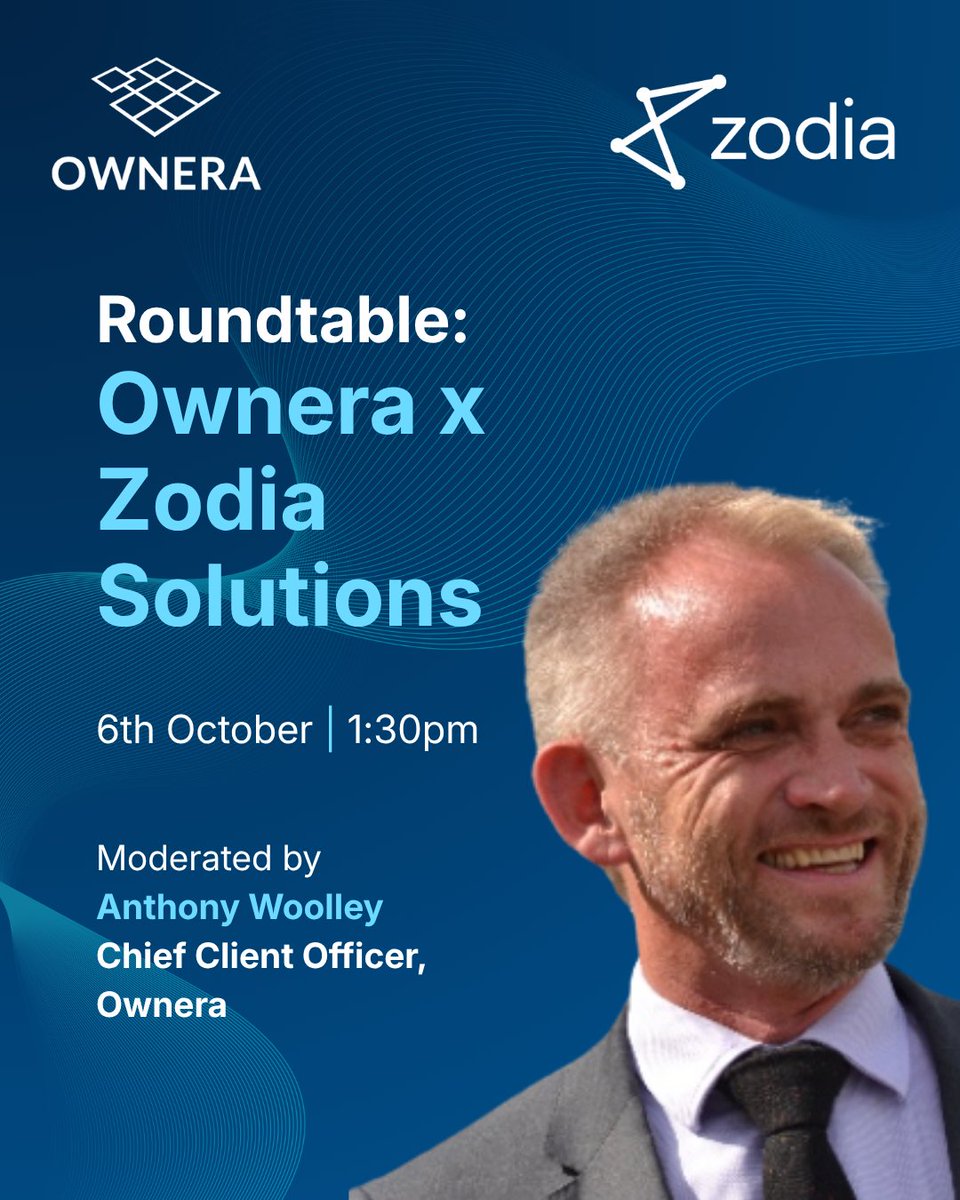
Anthony Woolley, alongside Aude Gallais from @zodia_solutions, will also moderate a senior leader roundtable discussing the systems that enable digital assets to seamlessly move from pilot to production at scale. Request to join the event on 6 October at 1:30pm here: https://t.co/PeqfUjVlWt
If you're attending the Digital Assets Week, we'd love to connect. Get in touch to arrange a meeting with the Ownera team at [email protected]
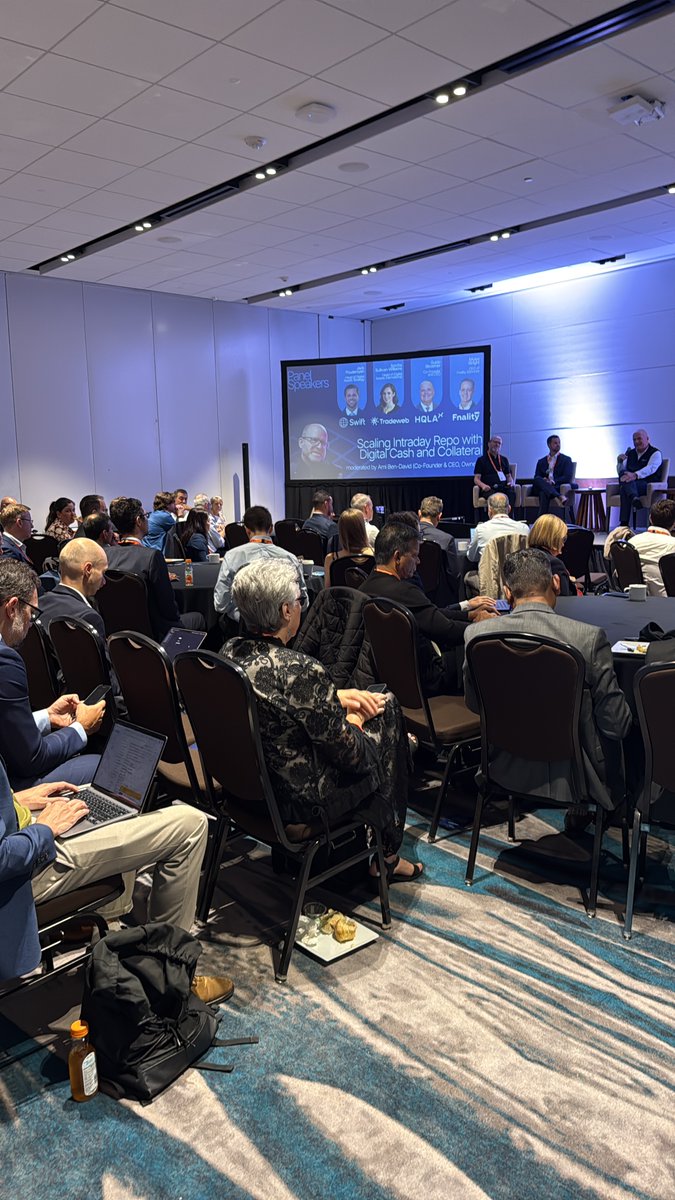
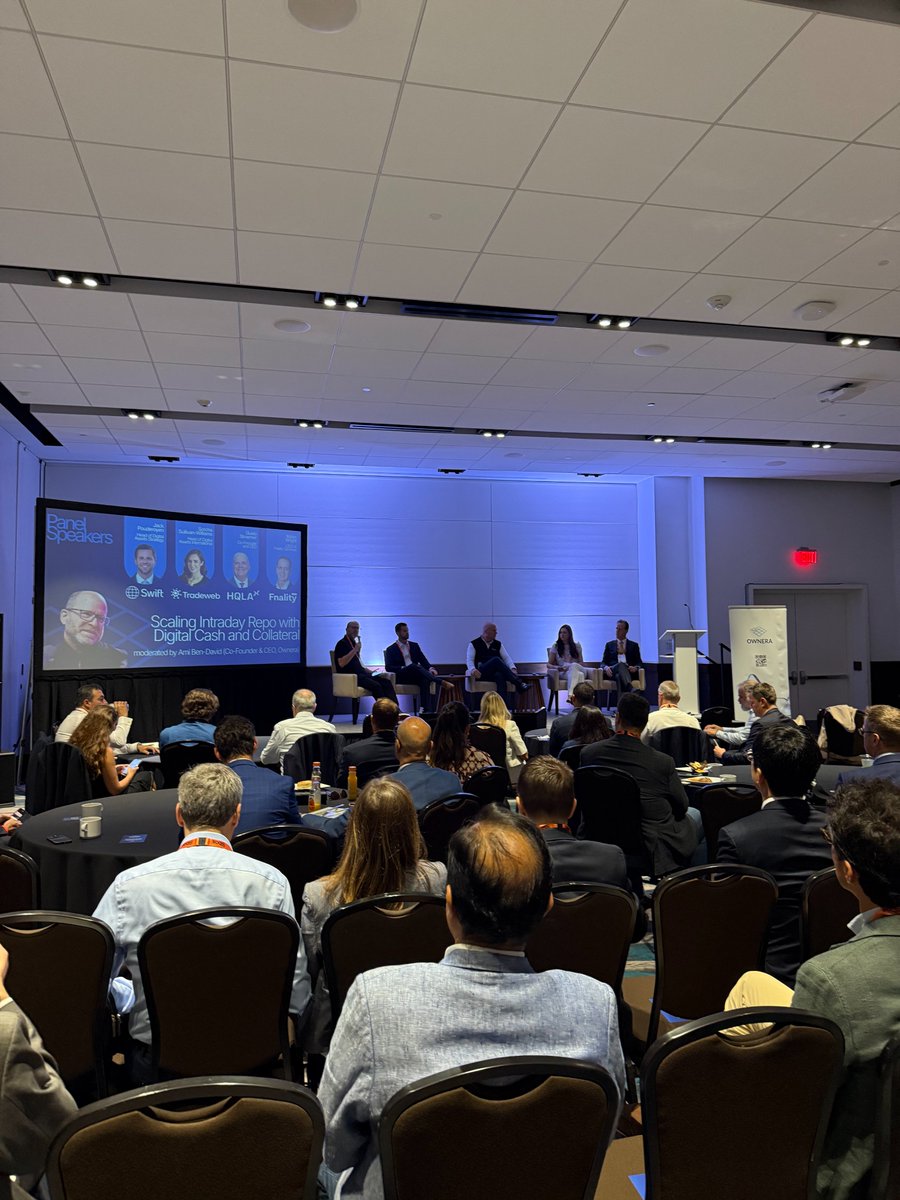
This morning at @Sibos, Ownera was proud to bring together industry leaders to discuss the future of multi-chain repo and collateral and how a Swift-based cash leg can facilitate that transition.
@amibendavid and @NBenson8221 moderated panels focusing on the technologies that enable intraday repo to scale seamlessly, from digital cash and collateral to fiat rails.
Ami Ben-David also led a conversation about how digital infrastructure and legacy systems will integrate to deploy tokenized trading across blockchains, markets, ledgers and stablecoins.
A huge thank you to @swiftcommunity, @The_DTCC, @KaikoData, HQLAx, @zodia_solutions, @Bloomberg, @StanChart, U.S. Bank, @fnality, @Tradeweb and Taurus for all sharing your expertise.
If you’re at Sibos and would like to meet in person, feel free to send us a message at [email protected]
This morning at @Sibos, Ownera was proud to bring together industry leaders to discuss the future of multi-chain repo and collateral and how a Swift-based cash leg can facilitate that transition.
@amibendavid and @NBenson8221 moderated panels focusing on the technologies that enable intraday repo to scale seamlessly, from digital cash and collateral to fiat rails.
Ami Ben-David also led a conversation about how digital infrastructure and legacy systems will integrate to deploy tokenized trading across blockchains, markets, ledgers and stablecoins.
A huge thank you to @swiftcommunity, @The_DTCC, @KaikoData, HQLAx, @zodia_solutions, @Bloomberg, @StanChart, U.S. Bank, @fnality, @Tradeweb and Taurus for all sharing your expertise.
If you’re at Sibos and would like to meet in person, feel free to send us a message at [email protected]
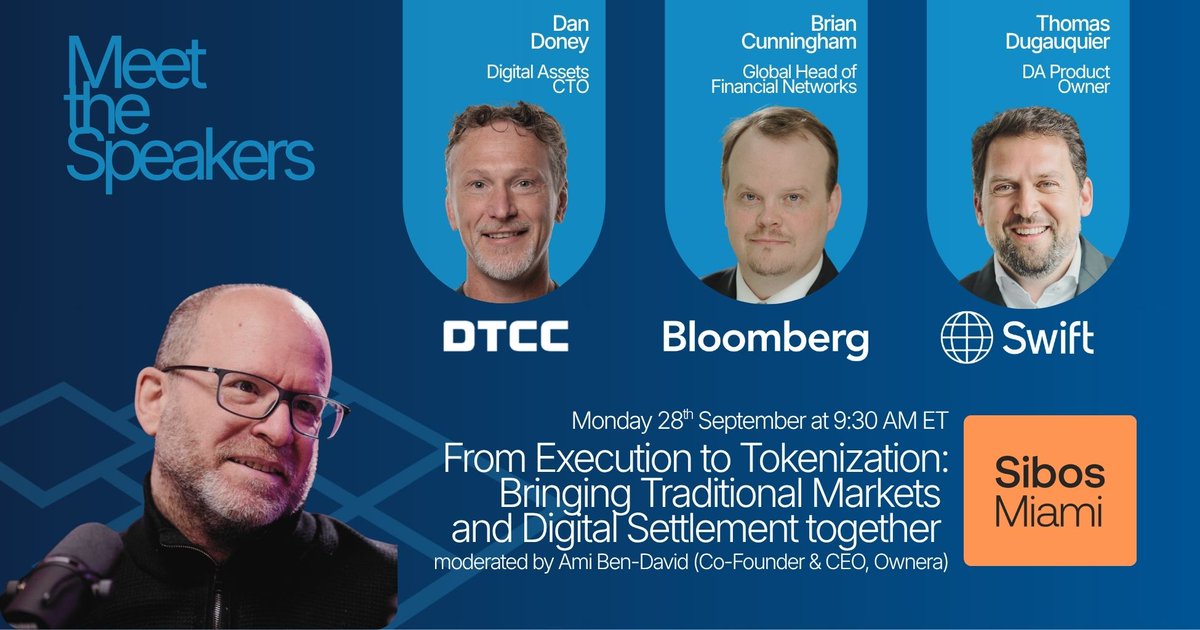
What will allow tokenized infrastructure to integrate with legacy financial systems?
@amibendavid will be moderating a panel at @Sibos Miami on Monday 28th September at 9:30 AM ET to give an insider view on the topic.
Among the industry leaders speaking are Dan Doney, Digital Assets CTO of @The_DTCC, Brian Cunningham, Global Head of Financial Networks at @Bloomberg , and Thomas Dugauquier , Head of Digital Assets Platform at @swiftcommunity.
Thank you to all those who are speaking, and we look forward to seeing you there.
Those attending our panel, or SIBOS more generally, please reach out to [email protected]
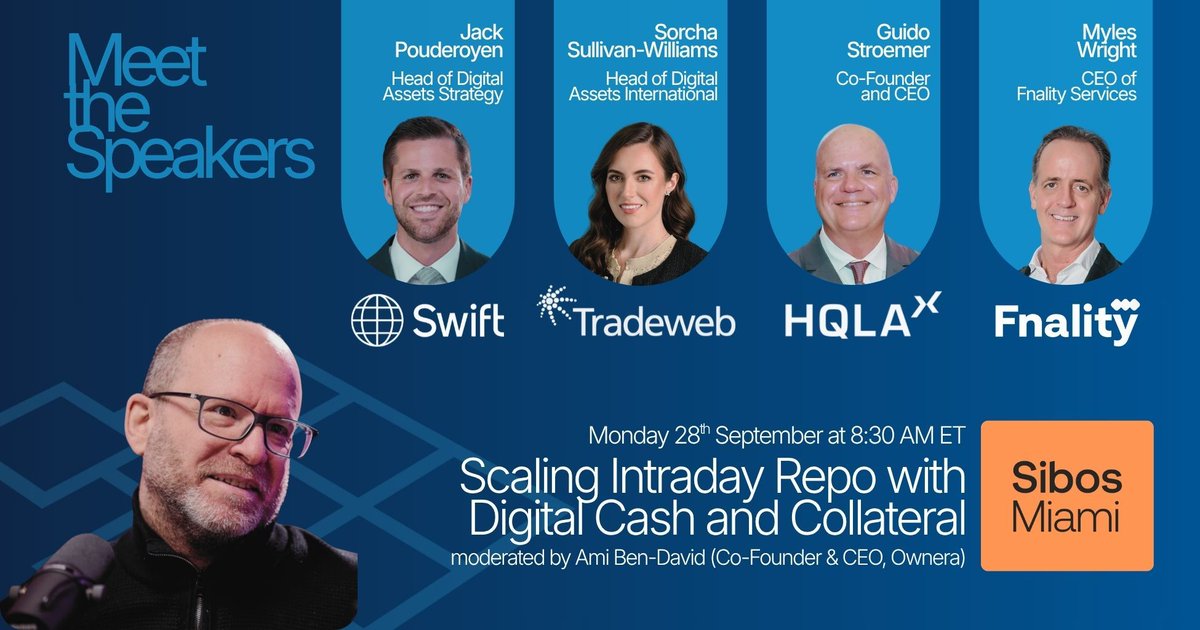
How can digital cash and collateral help deploy intraday repo at scale?
That’s the question our panel at @Sibos Miami will be helping to answer. @amibendavid, will be moderating the event, which will take place on Monday 28th September at 8:30 AM ET.
Jack Pouderoyen, Head of Digital Assets Strategy at @swiftcommunity , Sorcha Sullivan-Williams, Head of Digital Assets International at @Tradeweb , Guido Stroemer, Co-Founder and CEO of HQLAᵡ, and Myles Wright, CEO of @fnality will all be speaking. Thanks to all for participating.
If you’re thinking of attending, or want to meet in person at SIBOS, send us a message at [email protected]
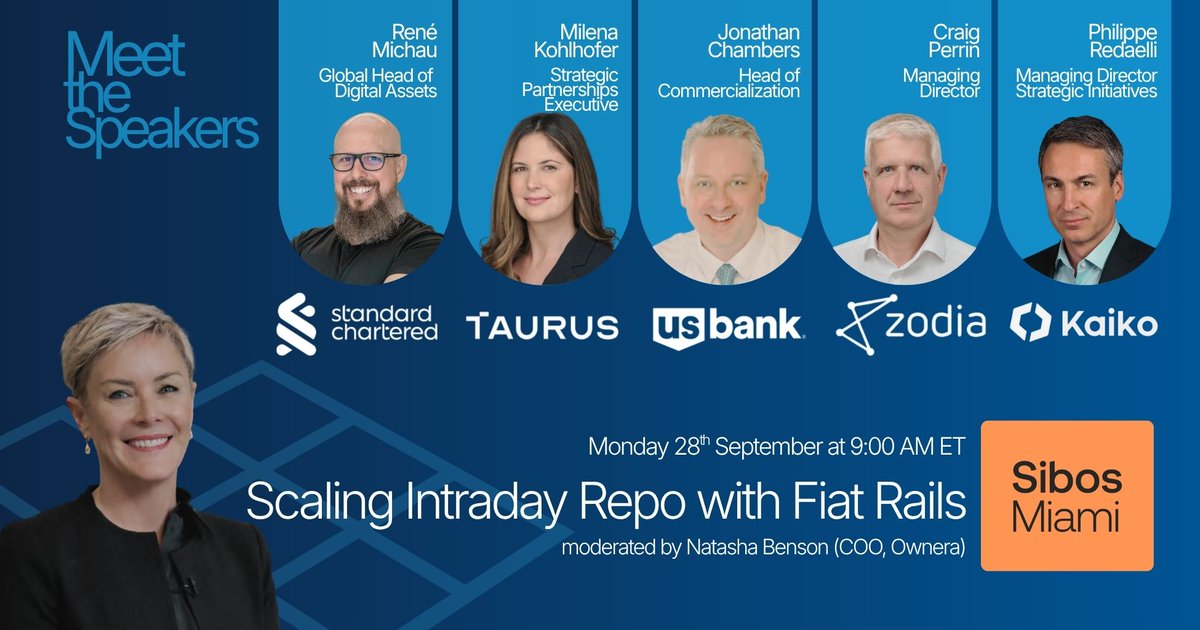
How will traditional financial infrastructure enable intraday repo to scale?
@NBenson8221 will be leading the discussion at @Sibos Miami to help answer this question on Monday 28th September at 9:00 AM ET.
Our panel will bring together industry experts, including @renemichau, Global Head of Digital Assets at @StanChart, MilenaKohlhofer, Strategic Partnerships Executive at @taurus_hq, Jon Chambers, Head of Commercialization at @usbank, @cwp_1, Managing Director of @ZodiaCustody, and @Ph_Redaelli, Managing Director Strategic Initiatives of @KaikoData.
We look forward to seeing you there.
Whether you’re joining the panel or want to speak to us in person, feel free to reach out at [email protected]
How will traditional financial infrastructure enable intraday repo to scale?
@NBenson8221 will be leading the discussion at @Sibos Miami to help answer this question on Monday 28th September at 9:00 AM ET.
Our panel will bring together industry experts, including @renemichau, Global Head of Digital Assets at @StanChart, MilenaKohlhofer, Strategic Partnerships Executive at @taurus_hq, Jon Chambers, Head of Commercialization at @usbank, @cwp_1, Managing Director of @ZodiaCustody, and @Ph_Redaelli, Managing Director Strategic Initiatives of @KaikoData.
We look forward to seeing you there.
Whether you’re joining the panel or want to speak to us in person, feel free to reach out at [email protected]
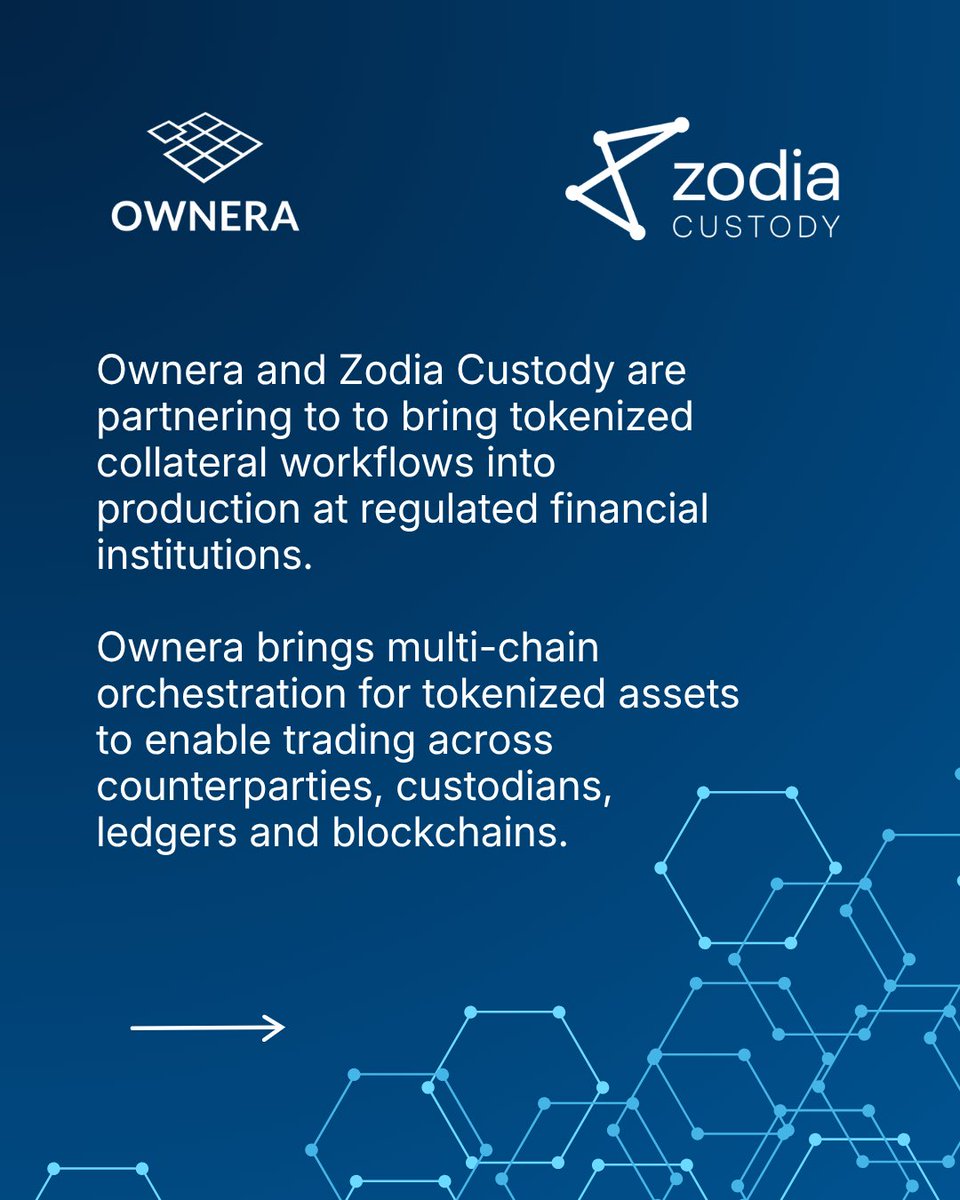
Ownera and @ZodiaCustody are partnering to combine multi-chain orchestration capabilities with compliance and risk management.
The collaboration will address the multi-chain orchestration across the systems institutions that they use, and operational controls that their own governance demands.
Swipe to read more from @NBenson8221 and @cwp_1
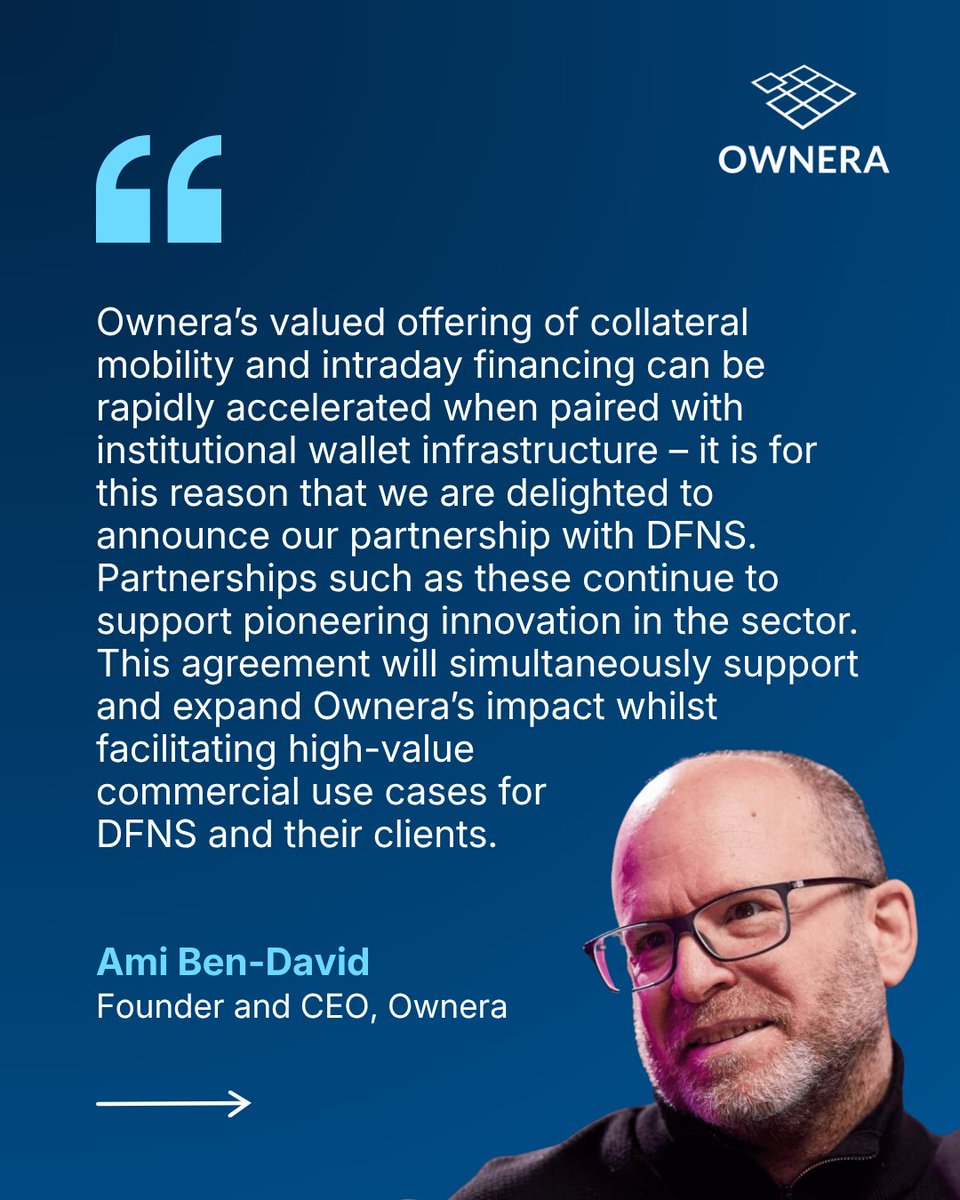
Ownera and DFNS are partnering to accelerate institutional adoption of tokenized collateral and intraday financing.
As capital markets move from tokenization pilots to production, Ownera and DFNS are working together to simplify how institutions manage and mobilize tokenized assets.
By combining Ownera's FinP2P orchestration network with DFNS' secure wallet, governance and policy controls, institutions can seamlessly move tokenized cash, funds and securities across repo, margin and collateral workflows, unlocking greater efficiency inliquidity management, collateral mobility and funding operations.
Swipe to read more from Ownera’s Ami Ben-David and DFNS’s Clarisse Hagège.