An American Boeing C-17 Globemaster III military transport aircraft unexpectedly landed at Moscow’s Vnukovo Airport this morning, according to Flightradar24.
The aircraft departed from Camp Springs, Maryland, the service’s data show. Joint Base Andrews is located there, where U.S. presidential aircraft are based.
The reason for the U.S. military aircraft's visit to Moscow remains unknown. This may indicate non-public contacts or negotiations.
Another useful interview with Deputy Chief of Ukraine’s Defense Intelligence Major General Vadym Skibitskyi. Some highlights:
-Russia increased ballistic missile production by suspending production of Kinzhal and Kh-32, both of which have accuracy problems (greater than 30 meter deviation).
-"Another example is Russia’s planned production of strike drones for August this year – Geran-1, Geran-2, Geran-3, Geran-4, Geran-5, Garpiya, Gerbera, Gerbera kamikaze and Gerbera seeker drones – 11,000 units in total."
-"In July, they slightly reduced the intensity of their drone strikes and cut production as they reconfigure their manufacturing capacity, with a focus on turbojet-powered Geran-4 and Geran-5 drones. In one of their recent attacks, turbojet-powered drones already accounted for 50% of the total. We now need different interceptors capable of matching their speed, or short-range air defense systems."
-"According to estimates by Ukraine's Defense Intelligence, July ranked second after February in the number of Kh-101, Kalibr and Kh-32 cruise missiles launched. In February, the Russians launched 157 such missiles at us, while in July they launched 153."
-"As for ballistic and hypersonic missiles – the 9M723 missiles used by the Iskander-M system, the RM-48U missiles launched from S-400 systems, and Zircon missiles – the enemy launched 198 of them in July. That is the highest figure this year."
-"In the first seven months of this year, they had already produced 33 Zircon missiles, according to data as of August 3. The same applies to Onyx missiles: as of August 3, they had produced 60 units."
-"Overall, across the main types of missile weapons, Russia is currently exceeding its monthly production targets by 110-120%. According to intelligence, Russia’s July production target for Kh-101 missiles was met at 140%, for Kalibr missiles at 111%, and for Kh-35 cruise missiles at 200%.
-"Russia’s August production target for Kh-101 missiles is 72 units. The target was the same in July, but they produced more – 87 missiles. For the 3M14 Kalibr, the August target is 26 units. The July target was also 26, but they produced 29."
-"According to military intelligence, as of August 5, the stockpile allocated to the Russian military grouping stood at around 130 9M723 missiles. The planned monthly production rate is 60 units. However, in July, they produced 65 instead of the planned 60."
-"They are not really drawing down their stockpiles. Almost everything being used now is coming straight off the production line. The only exception is the Kalibr missiles - most of them are currently being allocated to other Russian fleets, since all new Russian warships and submarines are equipped with these systems. In effect, those missiles are going into reserve stockpiles. In addition, our interception rate for Kalibr missiles is nearly 100% when air-defense missiles are available."
-The recent Kn-23 missile launch missed its target by 15km.
-Regarding the S-400's RM-48U missile, "the enemy has established production of this missile: the August target is about 40 units, while its estimated stockpile is 400 units."
-Regarding the Rassvet system, "In March 2026, Russia had already placed 16 satellites into low Earth orbit. More launches will follow to create a constellation of 292 satellites by 2027 and expand it to 924 satellites by 2035."
https://t.co/QYFCaZeuXG
South Korea has flat out refused to provide weapons to Ukraine, including defensive weapons such as missile interceptors.
The South Korean government says legislation forbids it – without acknowledging the legislation can be changed if it had moral integrity and political will.
@WarMonitor3 How about Russia is at war with Ukraine and still does business with many countries and holds a permanent seat at the UNs security’s council?! That’s worse. North Korea doesn’t do business with anyone, anyway, basically
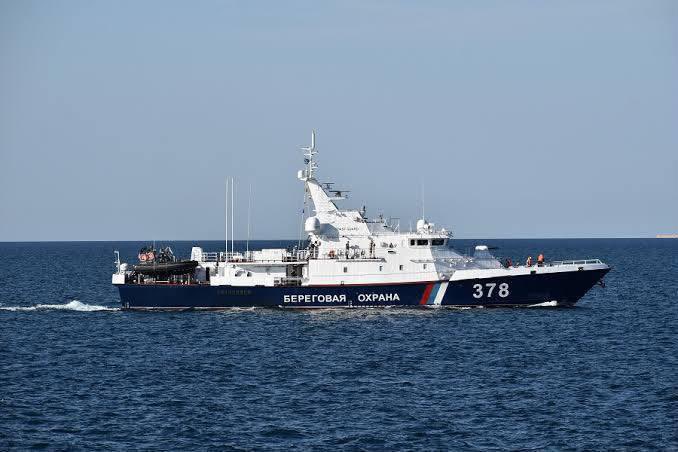
❗️The SBU, together with the Defense Forces of Ukraine, successfully attacked the Yaroslavl Oil Refinery (“Slavneft – YANOS”) at a distance of over 700 km from the border, as well as FSB Coast Guard ships in Kerch. At the plant, which has a capacity of nearly 15 million tons of oil per year, at least six explosions occurred, fires broke out, four oil tanks were damaged (two of which are burning), and the key units ELOU-1 and AVT-3 were damaged. In the port of Kerch, two Project 10410 patrol ships (“Balaklava” and “Kerch”) were damaged.
Saudi Arabia's message to Washington is becoming increasingly clear. It echoes the warning delivered by Defense Minister Prince Khalid bin Salman during his visit to Washington last week: if the United States launches major strikes against Iran's energy infrastructure, Saudi Arabia and the Gulf states will likely bear the immediate consequences.
Tehran has already signaled what it would target across the Gulf if President Trump follows through on his threats. From Riyadh's perspective, the timing could hardly be worse. With tensions rising again with the Houthis, the last thing Saudi Arabia wants is a broader regional confrontation with Iran.
This also highlights a broader strategic reality. The war has strengthened Iran's deterrence vis-à-vis the Gulf states. For Gulf leaders, preserving regional stability has become a higher priority than pursuing a decisive confrontation with Tehran.
At the same time, the core dispute remains unresolved. There is still no agreement over the future of the Strait of Hormuz, and Iran shows no indication that it is willing to compromise on what it views as its role there. As long as that issue remains unsettled, there is no obvious diplomatic off-ramp.
So far, Iran's strategy of increasing pressure on the Gulf state, treating them as the weakest link in Washington's regional coalitio, appears to be producing results.
The focus is shifting back to quiet diplomacy between Oman and Iran, as both sides explore whether a compromise over the Strait of Hormuz is still possible. But regardless of what emerges from those talks, the key decision will once again rest with Washington.
If an agreement is reached, will the Trump administration be prepared to accept it? If not, will it ultimately decide that military escalation is the only remaining option?
President Trump's hesitation also suggests that the administration itself is far from convinced that a broader military campaign would weaken Iran or compel it to concede. That uncertainty helps explain why, despite repeated threats, diplomacy continues to be the preferred path.
Ultimately, Washington still appears to view a negotiated outcome as preferable to a conflict whose costs and consequences remain highly unpredictable.
#iran
@klausholetschek Wenn’s so schlimm, dann verbieten. Dass der Fiskus sich an der Sucht finanziell ergötzt, ist ziemlich mies. Und sogenannte Lenkungssteuern sind eh ein Hoax, da hier überhaupt nicht von der Sucht „weggelenkt“ wird.
Trumps ceasefire is in shambles again. A failed peace in Gaza, Congo, Ukraine and now Iran is making him look weak again. He’s simply scared of truly punishing Iran and will tell Bibi in private to not strike back against #Iran.
The recent attacks on Romania show yet again how incapable NATO is of showing a proper response against RF. The eastern flank is under constant attack and shows that air defense is crucial against Russias hybrid attacks. #Romania needs to up its air defense capabilities. #nato
The grooming of Orban's regime as a Trojan horse inside the EU and NATO is no longer speculative: it's now evidence-based, confirmed by leaked Budapest-Moscow communications. Agentstvo reports that roughly half of all Russian embassy staff maintain ties to intelligence services:
Taking a sober view of the situation, it is important to distinguish between two domains -the industrial and the battlefield. Rheinmetall is unquestionably a large company that produces effective weapons systems that actually work on the battlefield. This is a fact that does not require emotional amplification or denial.
However, the statement by Rheinmetall’s CEO, Armin Papperger, about Ukrainian drones goes beyond professional analysis and shifts into the realm of dismissiveness. In essence, it sounds like someone from the manufacturing sector explaining to those who are actually fighting what counts as innovation and what does not. These are different domains of expertise. It would be just as strange if a frontline soldier started explaining to the CEO of Rheinmetall how to properly build a defense industry.
The issue is not criticism itself -it is necessary. The issue is the way it is presented, which resembles rhetoric more than analysis. In times like these, one would expect a higher level of professional restraint, but reality is different, and such statements require a response.
Substantively, the claim that Ukrainian drones lack innovation is too narrow. It reduces innovation solely to the complexity of the product. Historically, that approach does not hold. There was nothing “extraordinary” about combining two wheels, a frame, and a handlebar -yet it became a breakthrough that changed mobility.
The same applies to conventional weapons systems. The 120 mm caliber existed long before Rheinmetall, yet the company introduced a major advancement by developing a smoothbore system that became a global standard. Tanks, IFVs, and air defense systems are not inventions of a single company or era -they are the result of continuous modification, adaptation, and improvement. Rheinmetall operates exactly in this space, and that is entirely valid. But then the same logic should apply to other segments as well.
Would it really make sense today to argue that something is “not innovative” simply because it is a modification of an existing principle? In the case of Rheinmetall, we see a large company, but we do not see it facing the realities of frontline combat against one of the largest military powers among nuclear-armed states. These are different levels of experience and different grounds for judgment.
Ukrainian drones are not a revolution at the level of physics or materials. But they are a revolution at the level of application, scaling, and adaptability. That is what defines their role in modern warfare. They have become a tool that systematically changes the balance on the battlefield.
The historical parallel is clear. The army of Genghis Khan did not invent the recurve bow as a concept, but it brought its use to a level that provided a strategic advantage and enabled the conquest of vast territories. Would it make sense to dismiss that as “non-innovative” simply because it was based on an existing principle?
In Ukraine’s case, we see a similar process. Low-cost strike drones, including interceptor drones, are shaping a new way of warfare. The effectiveness of countering enemy UAVs at a scale that covers a large country is not a theoretical discussion -it is an empirical result.
It is also important to understand that no weapon is a game changer on its own. The decisive factor is the person using it, their tactics, and their ability to adapt. That is what separates battlefield experience from a purely industrial perspective.
It is also worth recalling Rheinmetall’s own history. In 1919, the company was forced to produce locomotives, office machines, and agricultural equipment. Was that considered innovation at the time? Or did it look like improvised or low-tier production in the eyes of others? And could those efforts have been dismissed in the same way Ukrainian solutions are being dismissed today?
I am writing this because the opinion of Rheinmetall’s CEO carries weight and influences the perception of foreign companies, investors, policymakers, and national leaders. Such statements can contribute to a distorted understanding of the effectiveness and potential of Ukrainian manufacturers, and thus affect decisions regarding cooperation.
In my view, those who invest in Ukrainian manufacturers are thinking strategically. The notion that this is “simple” or “nothing complex” is a form of devaluation rooted in a backward-looking perspective. And those who remain focused on the past tend not to withstand competition in the market.
As examples of those already shaping this field and proving its effectiveness in practice: @ukrspecsystems, @skyeton_inc, @airlogixio, Aerodrone, Fire Point, @tafindustriesua, @vyriydrone , @wilendhornets, @generalcherry, Skyfall, as well as many other Ukrainian drone manufacturers.
Ukraine's latest strikes on two Russian refineries matter more than they appear — and not because of the gasoline.
Energy expert Mykhailo Honchar explains the full picture.
The Kirishi plant near St. Petersburg produces virtually all grades of jet fuel for Russian combat aircraft, plus naval fuel for the Baltic and Northern fleets.
The Yaroslavl plant is Russia's leading producer of specialized military oils — for T-90M tank engines, Buk and Tor air defense hydraulics, Ka-52 helicopter gearboxes, and turboprop engines of the Tu-95MS strategic bomber.
🔗 https://t.co/OPki96q8Tp
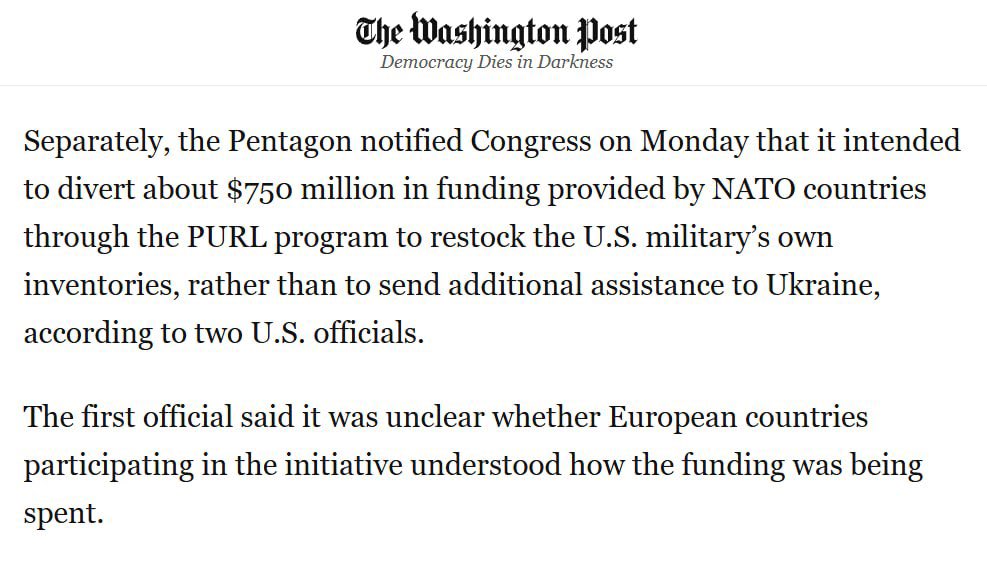
I mean, how the hell is this even legal?
Was it part of the contract that the seller is entitled to say “screw you and the money you've paid us, we're talking these weapons for ourselves”?
Rheinmetall CEO confirms my reporting. All stockpiles in Europe, the Mideast, and US are basically empty. Cannibalization of INDOPACOM Arsenal, which began a little bit last week, will begin in earnest.
It will take years, if ever, to recover. Moscow and Beijing know this.
Impressive dropped payload, yet the US and Israel are in need of tackling the support base of Iran if they want to change the regime. Dropping vasts amounts of bombs/missiles doesn’t out regimes, as numerous example show.
Israel says the Air Force has dropped over 6,500 bombs on Iran since the war began.
According to the IDF, fighter jets have carried out 2,500 sorties across 150 strike waves.
The military says it is expanding attacks on regime targets in Tehran and weapons production sites across Iran, including facilities used to manufacture missiles and launchers, as the war enters a new phase.
In this footage, Israeli Air Force aircraft identified a truck carrying a defense system of the Iranian terror regime in the Hauran sector. It was attempting to transport the system to another sector in Iran.
The Iranian defense system was destroyed.
The IDF plans to continue operations in Iran for weeks, and potentially longer if necessary.
This suggests to me that the drone which struck RAF Akrotiri in Cyprus a short while ago may not have been launched by Iran, but possibly by Hezbollah in Lebanon.
@shanaka86 BS. Iranian Regime won’t be around much longer, and the threat will vanish. UAE is still much safer than Europe or the USA. People will still flock to work in the UAE.