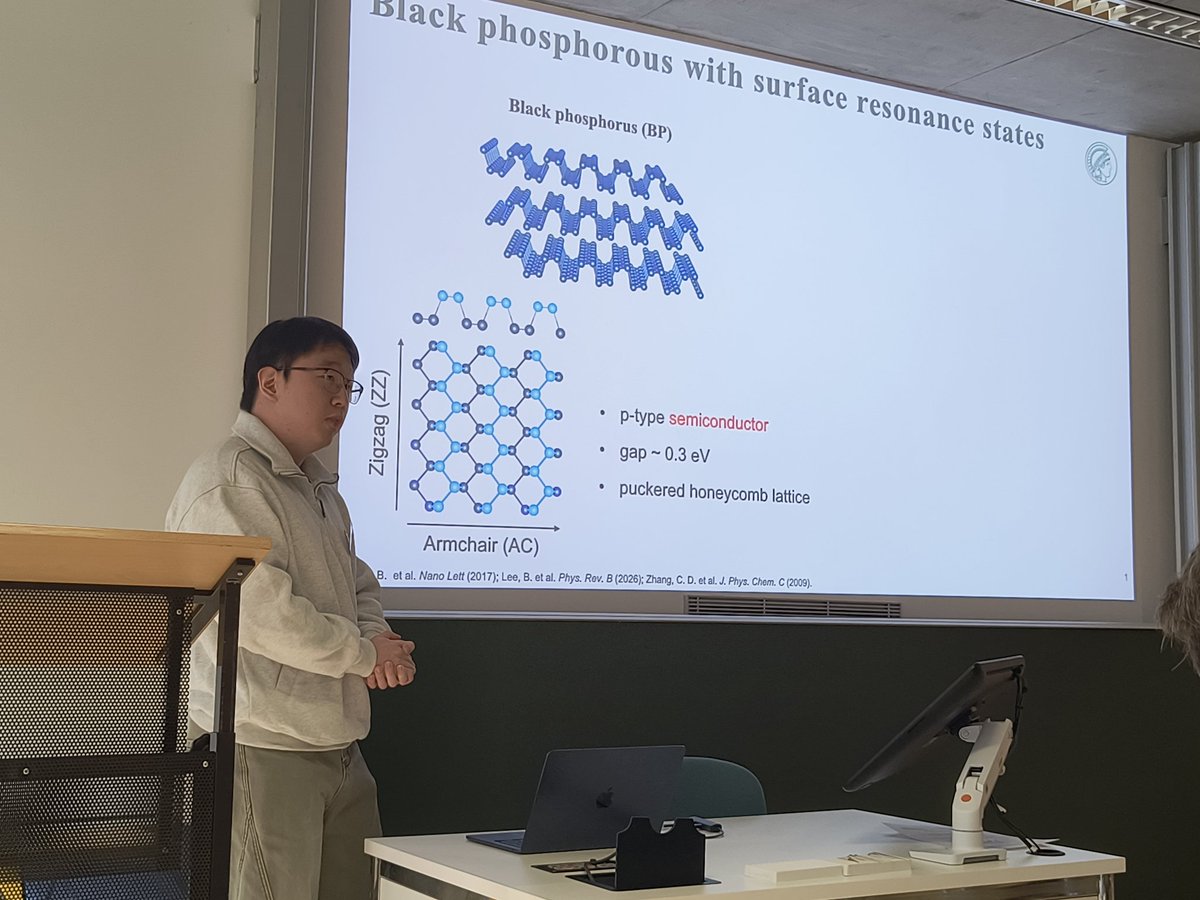
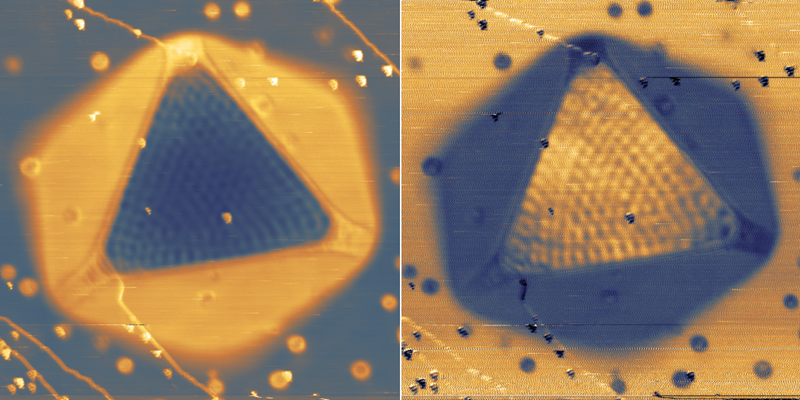
Check out our Perspective article on Journal of Physics: Condensed Matter. We propose a new playground—surface of black phosphorus—for investigating the interplay between localization, electronic reconstruction, and electronic correlation.
https://t.co/d4r18DpEN3
Apply Now to the Max Planck-Weizmann Joint Postdoctoral Program in the fields of:
• Life Sciences • Chemistry • Physics • Earth Science • Math • Computer Science
Includes a fully funded four-year position, split equally between the two institutions >>Apply Now to the Max Planck-Weizmann Joint Postdoctoral Program in the fields of:
• Life Sciences • Chemistry • Physics • Earth Science • Math • Computer Science
Includes a fully funded four-year position, split equally between the two institutions >>Apply Now to the Max Planck-Weizmann Joint Postdoctoral Program in the fields of:
• Life Sciences • Chemistry • Physics • Earth Science • Math • Computer Science
Includes a fully funded four-year position, split equally between the two institutions >>Apply Now to the Max Planck-Weizmann Joint Postdoctoral Program in the fields of:
• Life Sciences • Chemistry • Physics • Earth Science • Math • Computer Science
Includes a fully funded four-year position, split equally between the two institutions >>Apply Now to the Max Planck-Weizmann Joint Postdoctoral Program in the fields of:
• Life Sciences • Chemistry • Physics • Earth Science • Math • Computer Science
Includes a fully funded four-year position, split equally between the two institutions >>Apply Now to the Max Planck-Weizmann Joint Postdoctoral Program in the fields of:
• Life Sciences • Chemistry • Physics • Earth Science • Math • Computer Science
Includes a fully funded four-year position, split equally between the two institutions >>
🚀 QuAI 2027 is coming!
The Quantum & AI Summit + Expo lands in San Sebastián, Spain, on 19–22 (2027), bringing together Qtechnologies, AI, advanced materials, industry & innovation.
Pre-register via the official QuAI website.
#QuAI2027#QuantumAI#AI#QuantumComputing#DeepTech
Jacky and Souvik are attending the annual SuperC summer workshop this week in the gorgeous #Azores, learning the frontier in discovering new high-temperature superconductors and joining deep discussions about pathways to increase the critical temperature toward room temperature.
Fresh air, deep conversations, and a reset in the heart of #SaxonSwitzerland 🌲⛰️
Grateful for an inspiring group retreat of the Department of Topological Quantum Chemistry this week — a perfect mix of reflection, connection, and adventure.
Excited to share our new paper! We developed a way to directly probe how single electrons move in tiny nanoscale structures, revealing how subtle material differences control electron flow. A step toward better single-electron and quantum devices. https://t.co/e7PJ2wqxJX
Special issue “Dimensional Frontiers: Physics and Applications of 2D Quantum Materials” in Quantum Frontiers welcomes cutting-edge work on graphene, TMDs, van der Waals heterostructures, quantum transport, spin-orbit coupling, moiré physics, and beyond. https://t.co/E3Cyd5XStT
Ever wondered what STM is really imaging in TMD materials?
Our new paper in @NaturePhysics shows that the answer is tied to band topology, and in particular to the existence of obstructed atomic bands:
https://t.co/Jn5FRGQlRK
@ERC_Research@DIPCehu & @CFMdonostia
Calling for your paper for the special collection on 2D Quantum Materials! I'm honored to be serving as the collection's Guest Editor and eager to read your submission. Learn more about the collection and how to contribute: https://t.co/e4z05MnBHB
#CallForPapers@springer1842
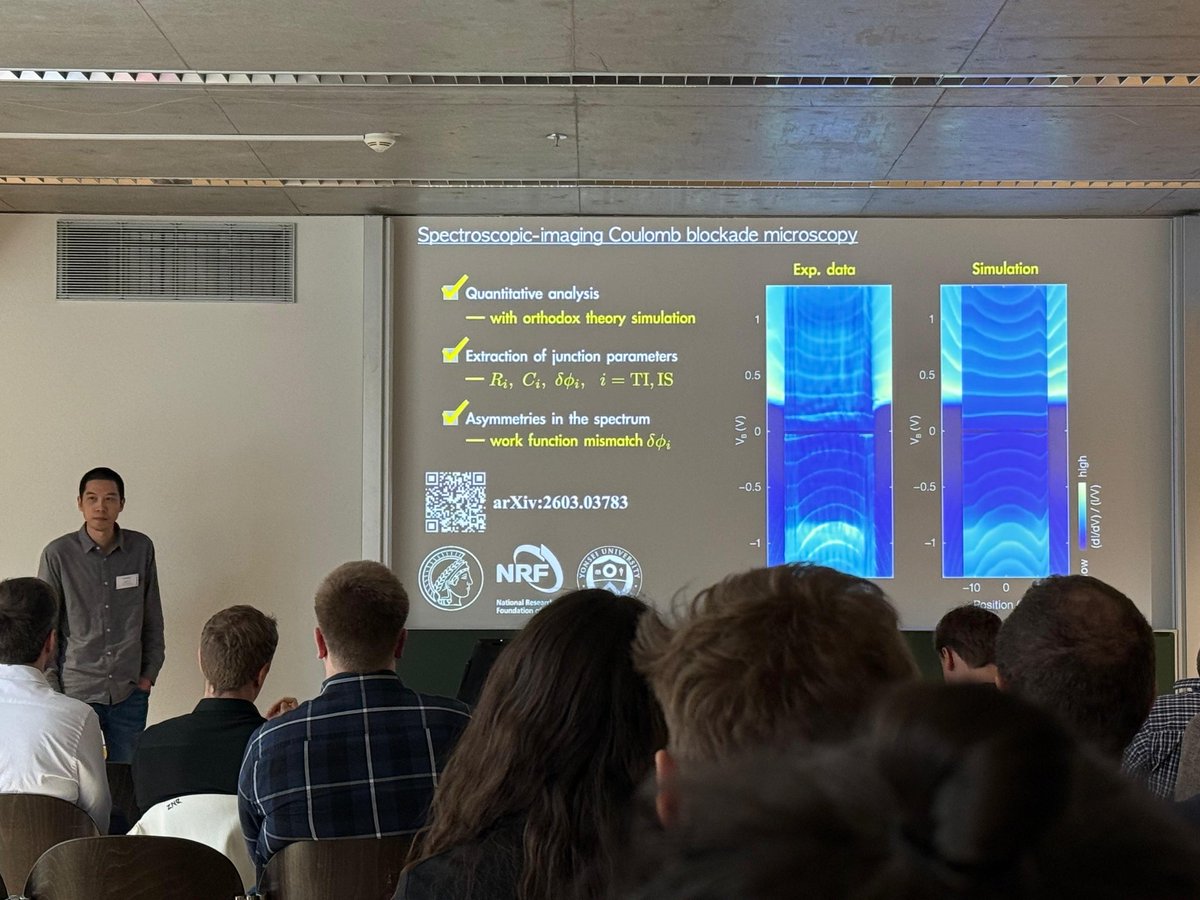
Yesterday was a busy day for our group: Jacky gave a talk about Coulomb blockade spectroscopy; Souvik presented his previous PhD work on topological superconductivity; Shamarita showed a poster with our fresh new data on misfit superconductors. Enjoy the rest of the conference!
Today Dongming gives a talk at #DPG spring meeting in Dresden about our new results on arXiv. All our group members will present works this week. Stay tuned!
Our new preprint online: https://t.co/oG3C2pspuY
We have identified a field-tunable surface resonance—partially detached electronic states on the surface, which dominate the screening of external electric field—an effect must be considered in the design of semiconducting devices.
Research by Prof. Doohee Cho at Yonsei University in Korea, a Unisoku STM user (USM1200), has been published in Nano Letters. Congratulations!
#MottInsulator#USM1200
https://t.co/fikYpmK5Df
Takeaway message: Due to the interband coupling, and when the two distinct coherence peaks cannot be resolved, the weak modulation of
the coherence peak energy
can be misinterpreted in other works as a modulation of the superconducting
gap in the sense of a pair density wave.
Most superconductors have more than one energy band where electrons can pair up to flow without resistance. Scattering off crystal defects enables electrons to jump between bands, frustrating the study of multi-band superconductivity—until now. https://t.co/Ho3ZnYxFYU
We are very glad to have Souvik Das joining our group as a postdoc starting this month. Souvik just finished his PhD under the supervision of Prof. Stuart Parkin at MPI for Microstructure Physics. He will work on MBE growth and characterization of new superconducting films.
Our new preprint is online! https://t.co/tp3z8QGKey
We observe anomalous charge modulations near surface impurities. This local symmetry-broken phase appears to arise from a subtle interplay between non-local impurity potentials, quantum geometry, and enhanced local correlations.
Our new preprint is online! https://t.co/tp3z8QGKey
We observe anomalous charge modulations near surface impurities. This local symmetry-broken phase appears to arise from a subtle interplay between non-local impurity potentials, quantum geometry, and enhanced local correlations.
New PhD position: we are looking for an enthusiastic student to explore the uncharted territory of chiral superconductors, and to control their chirality by ultrafast laser pulses, in collaboration with Prof. Stefan Kaiser at TU Dresden. Apply now: https://t.co/DOe4BuO3Fg