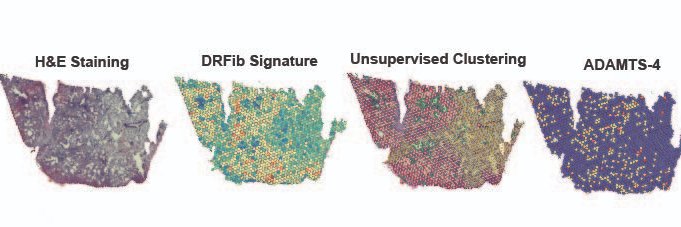
TCR repertoire dream: decoding immune status by sequencing TCRs. Problems: 1) Need paired TCRab chains 2) Interesting T cell clones are often VERY small. Our solution: TIRTL-seq 🐢Deep, quantitative, & affordable paired TCR repertoire sequencing. 🧵 https://t.co/n90d3DLZHV (1/11)
@DannyTheZebra@mtaibbi I agree that shows an interest in generating such a virus but there’s no evidence they did it, what the original source virus was or what furin site they would use (from my reading the one proposed is not the one in sars2). That said, I don’t say it’s impossible, we don’t know
@mtaibbi Regardless I’m skeptical the data accessibly exist to resolve any of the three likely hypotheses (natural spillover or the two lab leak routes).
@mtaibbi It’s important to distinguish two types of lab leak hypotheses: 1) natural virus isolate was being studied and error caused human infection from 2) virus was engineered, gained virulence, error caused human infection. If it’s a lab leak 1 is much more likely than 2.
Thrilled to post thread re: new single-cell lineage of mouse embryo reconstructed w/ DNA Typewriter. One animal, zygote to late organogenesis (E13.5). Tree has 1,340,794 transcriptionally profiled, annotated tips (cells), 1,142,588 dated internal nodes, rooted at zygote
1/n
@BenjaminGVincen@itchdoctor agree with Ben's points, these things should be incentivized and also agree with future rewards/benefits if you've successfully optimized a product that could translate, but still think it should be a separate pot of money.
@BenjaminGVincen@itchdoctor Don't mean to minimize the risk at all, but risk is relative. I do think we should be providing all kinds of incentives to bridge the valley of death, but not sure that should come from the same pot as regular grant money.
@LocasaleLab This is a two wrongs make a right argument. What’s your alternative system? I’m not saying the current one is perfect but getting even more arbitrary doesn’t seem to be a constructive solution.
@alex_v_friman@sciencey274807@LocasaleLab With study section you get comments and critiques. Thus far it seems the vetoes have not provided an explanation. It doesn’t need to be long it just wokld be more efficient if people understood the why
I couldn’t be prouder to announce that @tanmana_mitra’s thesis work identifying how metabolic demand drives terminal T cell exhaustion is out today in @ImmunityCP : https://t.co/KyE1YTarXp
@ProfLowande Agree, but I think this is a choice at large institutions. They could design processes to have efficient flows through single individuals with decision-making power, but the incentives tend to favor admin bloat. It's why institutions that successfully resist this are gems.
Our work with @andolive85’s lab is now live @J_Immunol in which we demonstrate alveolar macrophage are potent inducers of the type I interferon response
@bethanyshondark I genuinely like a lot of your writing but if bad people are bad how do you keep defending trump? Because you do it quite often. It’s okay if the bad people win?
The rock that wiped out the dinosaurs was about six miles across, taller than Mount Everest, moving at 45,000 miles an hour. It hit shallow sea off what is now Mexico at 60 degrees, which a 2020 Imperial College London study found was close to the deadliest angle possible.
The steep angle mattered more than the size. Coming in at 60 degrees threw the most rock and gas high into the sky, where wind could spread it around the world. And the target was the worst it could have picked, shallow seafloor made of sulfur-rich rock. The impact turned that rock to vapor and threw billions of tons of sulfur into the air.
The blast, equal to billions of Hiroshima bombs, was only the start. As the debris thrown into space fell back to Earth, friction turned each piece into a glowing hot pellet. For up to an hour, the sky over much of the planet glowed like the inside of an oven set to broil. Anything caught in the open cooked. The only land animals with a real chance were the ones that could hide underground or underwater.
At a site in North Dakota, nearly 2,000 miles from the crater, scientists found fish buried with tiny beads of impact glass still stuck in their gills. Those fish died within an hour of the strike, killed by a wave that sloshed out of an inland sea when the ground heaved.
What finished the dinosaurs came slower. The sulfur and dust wrapped around the whole planet and blocked out the sun, and with the light gone the warmth went too, dropping global temperatures by several degrees and keeping them down for years, in some models more than a decade. Plants need sunlight to make food, so in the dark they died. The plant-eaters starved. Then the animals that hunted them starved as well, and the loss climbed up the food chain until about three quarters of every species on Earth was gone.
Here is the part the joke gets right. Birds are dinosaurs. They split off from small meat-eating dinosaurs more than 150 million years ago and lived alongside the giant ones for over 100 million years. Most birds died in the disaster too, including every last one that still had teeth. The ones that made it were small, ground-living birds with beaks that could crack open seeds, and seeds can sit buried in the soil for years, waiting out a disaster.
Those few survivors became every bird alive today, more than 10,000 species. The pigeon outside your window is a dinosaur whose family lived through the single worst day this planet has ever had.