Mural nodules and prevalence of high-grade dysplasia in branch duct intraductal papillary mucinous neoplasm of the pancreas undergoing resection
➡️ https://t.co/el5D002fos
In this cohort of mural module within BD-IPMN, we thoroughly examined the location of HGD/IC relative to the mural module, finding that 45% of HGD/IC cases were distant from the mural module
Although mural module is a strong predictor of HGD, our results indicate that malignancy is not always located within or near the mural module
For such patients, local ablation of the mural module or the affected secondary duct offers limited benefit compared to pancreatic resection, especially in those fit for surgery
Work by Diane Lorenzo, Lina Aguilera Munoz, Anne-Laure Vedie, Frédéric Prat, Safi Dokmak, Alain Sauvanet, Frédérique Maire, Louis de Mestier, Pauline Copin, Marco Dioguardi Burgio, Anne Couvelard, Cécile Haumaitre, Jérôme Cros, Vinciane Rebours
#SoMe4Surgery #MedTwitter #SurgEd #Surgery @RCPSGTrainees @aecirujanos@SEIQuirurgica@iss_sic #MedicalTechniques @BJSAcademy@young_bjs@BJSOpen@des_winter@evanscolorectal@robhinchliffe1@bplwijn@MalinASund@nfmkok@TejedorPat@paulo_sutt@PVaughanShaw@JJEarnshaw@juliomayol@ksoreide #some4hpb #some4tpl @DPCG_official@pancreatitis_nl@PancreasClub #PancreasClub2023 #PancreaticCancer #Pancreatitis #HCC @PanCAN #PanCANawareness @EurPancClub@P_C_E_@dice_europe #PancreaticCancer #cholangiocarcinoma
Almost all leading AI chatbots show signs of cognitive decline, finds #ChristmasBMJ study.
The findings challenge the assumption that AI will soon replace human doctors.
Includes an interactive #BMJInfographic showing the findings
https://t.co/tsukBlTo2E
The Value of Textbook Outcome in Benchmarking Pancreatoduodenectomy for Nonfunctioning Pancreatic Neuroendocrine Tumors @AnnSurgOncol https://t.co/q63U1jfBDp
To our friends, colleagues and members celebrating today, Merry Christmas.
Our festive card features a fallow deer, inspired by the beautifully illustrated plate by A. Bell in Georges Buffon's Natural History, General and Particular (London, 1791), from our own library.
Cancer survivors are growing in number. In the US, nearly half of survivors have lived 10 or more years after diagnosis, while 19% have lived 20 or more years. The prevalence of long-term survivors is expected to increase through 2040. https://t.co/nzjl6sIFE4 #CancerSurvivorship
Το Πανεπιστήμιο Αθηνών γιόρτασε τα Χριστούγεννα με ένα σύνολο πολιτιστικών εκδηλώσεων υψηλού επιπέδου, που έβαλαν στο πνεύμα των εορτών τα μικρά αλλά και τα μεγαλύτερα μέλη της πανεπιστημιακής κοινότητας.
https://t.co/QtcSL5uc9o
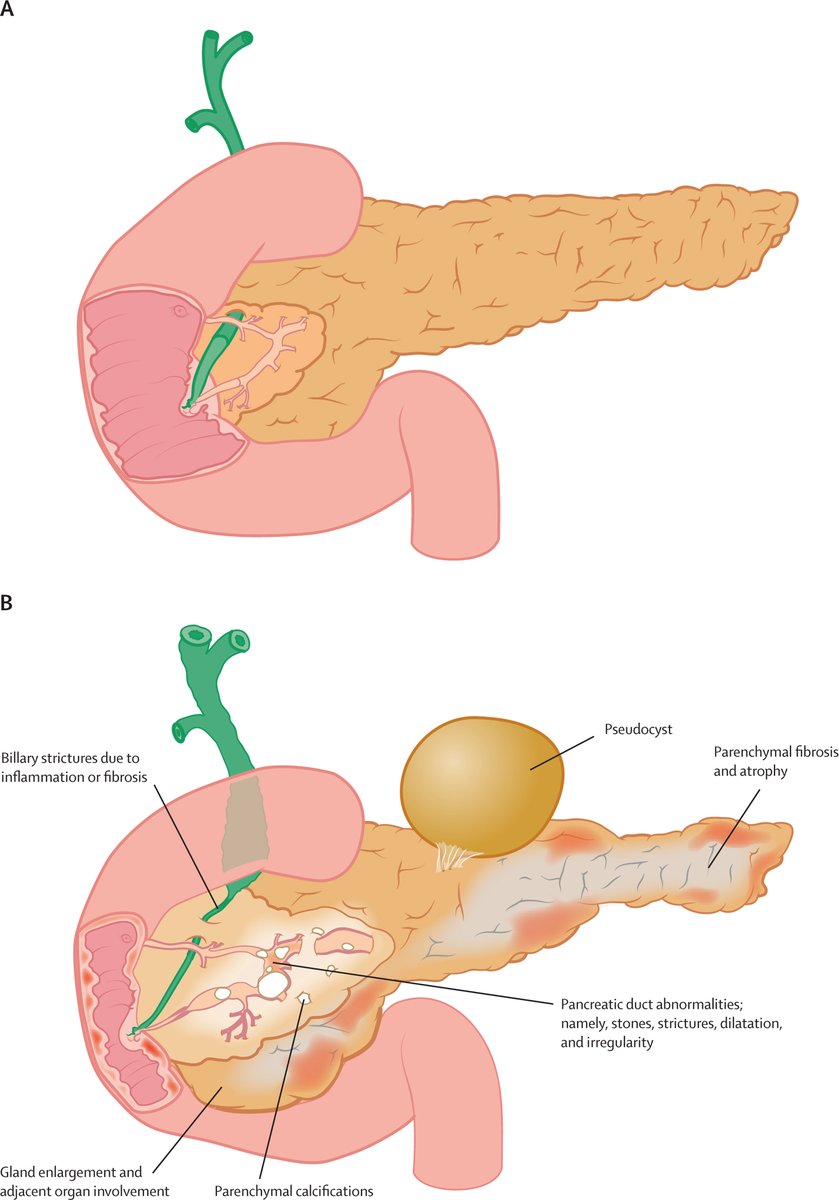
Chronic pancreatitis is a progressive fibroinflammatory disease primarily caused by a complex interplay of environmental & genetic risk factors.
A Seminar summarises current evidence on chronic pancreatitis, & discusses key areas for future research: https://t.co/4nXakinVoI
Most viewed in the last 7 days from @JAMASurgery:
Routine cholangiography was associated with decreased odds of both major and minor bile duct injuries (BDI), as well as increased intraoperative recognition of major BDI when it occurred.
https://t.co/94Cm6PBCZP
Dr Miki Scaravaglio talks through her proof-of-principle study findings for use of whole-exome sequencing to aid the diagnosis of people with adult-onset cholestatic liver disease.
Watch the interview from The Liver Meeting 2024 now.
⭐️HPB Journal Highlight ⭐️Patel et al: In this series, neoadjuvant chemo (NACT) was not associated with a ⬇️rate of rapid recurrence of pancreatic cancer after surgery. Biology drives outcomes. 🔗https://t.co/WMQRwjRRsj
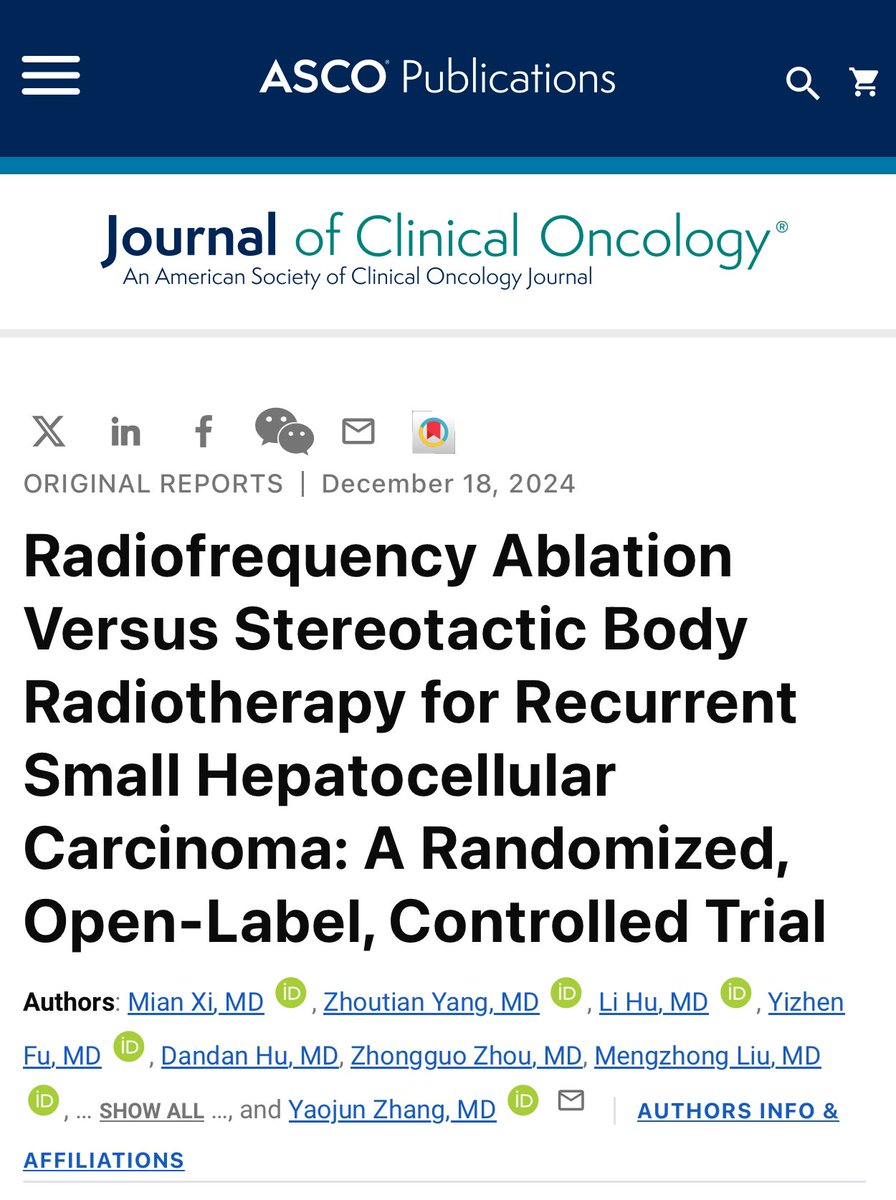
🎙 Randomized Trial 🚨: SBRT vs. RFA for Recurrent Small HCC—Is It Time to Rethink Local Treatment? @OncoAlert
🔬 Study Highlights:
📌 Phase III trial, 166 👥 with recurrent HCC (≤5 cm, single lesion).
📌 Randomized to RFA (n=83) or SBRT (n=83)
Key Outcomes:
✅ Local progression-free survival (LPFS):
•2-year LPFS: 92.7% (SBRT)🏆 vs. 75.8% (RFA) (HR: 0.45, p=0.014).
✅ Progression-free survival (PFS):
•Median PFS: 37.6 months (SBRT) vs. 27.6 months (RFA) (p=0.19).👌
✅ Overall survival (OS):
•2-year OS: 97.6% (SBRT) vs. 93.9% (RFA) (p=0.83).👌
✅ Safety: Comparable acute and late adverse events.👍
📣 Implications for Practice:
SBRT demonstrated ⬆️ local control while maintaining similar safety and OS compared to RFA.
🧬 Molecular testing for IPMN 🍇 !?
All you need to know in this stellar ✨ lecture from @PancPathologist@UPMCPathology 🇺🇸
🎁 A Christmas present to all of us IPMN lovers... with some days in advance... enjoy!
https://t.co/TetJYihT2w