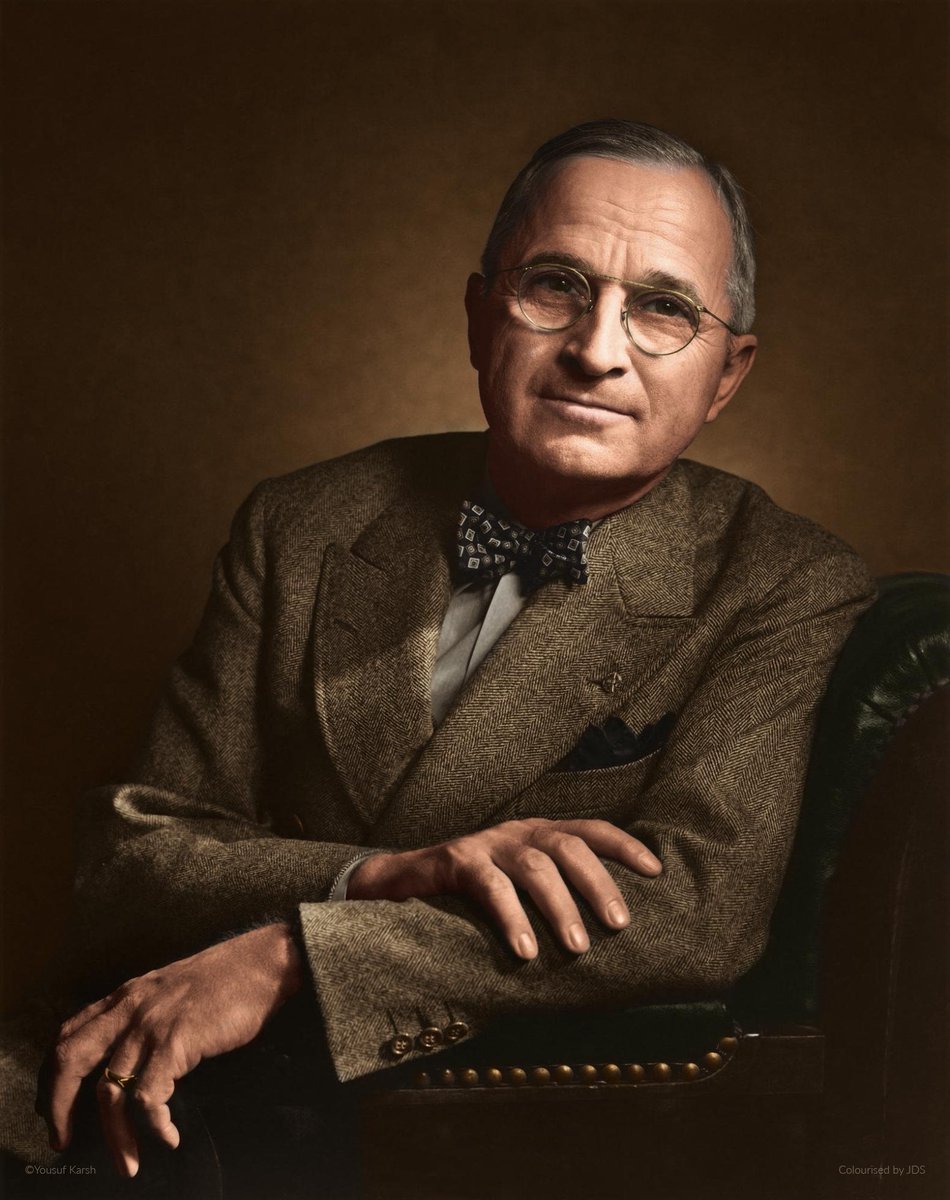
On the morning of January 20, 1953, Harry S. Truman completed his presidency and walked out of the White House. He had no motorcade. He had no government office to move into. He had no staff. He had no pension.
The Former Presidents Act, which would later provide salaries and offices to retired American presidents, did not yet exist. He had, in the way of regular income, an army pension from his service as a captain of field artillery in the First World War. The figure was one hundred and twelve dollars and fifty-six cents a month. He boarded a train at Union Station with his wife. He went home to Independence, Missouri.
Truman's approval rating, at the end of his presidency, was approximately thirty-two percent — among the lowest exit ratings of any modern American president. The Washington press, which had been hostile to him for most of his second term, treated his departure as a relief. The general assessment, both inside the city he was leaving and in much of the country, was that the Truman presidency had been a failure.
He went home and lived the way the country had told him to live.
He bought a Chrysler that summer. He and Bess got into the car themselves. They drove from Independence to Washington, then to New York, then back. A former president of the United States was filling his own gas tank at roadside stations, signing autographs for the truck drivers who recognised him.
The Pennsylvania state police pulled him over for driving too slowly. He answered his own phone in Independence. He responded personally to thousands of letters from people who wrote to him. He walked the streets of his hometown every morning at a pace fast enough that the reporters who attempted to follow him sometimes had to jog to keep up.
He did not write bitter memoirs. He did not give interviews attacking his successor. He did not, in any visible way, attempt to rehabilitate his own legacy. He simply continued, in Independence, Missouri, to be the same person he had been before the presidency.
While he was doing this, the things he had done as president began, very slowly, to look different from how the country had judged them at the time.
He had signed Executive Order 9981 in 1948, ending racial segregation in the United States armed forces — a step he had taken over the explicit opposition of substantial parts of the American military establishment and the Southern wing of his own party, on the grounds that he had decided it was the right thing to do.
He had committed the United States, through the Truman Doctrine and the Marshall Plan, to actively contesting Soviet expansion in postwar Europe and to underwriting the reconstruction of the Western European countries that had been destroyed in the Second World War.
The Western Europe that exists today — the long arc of peace and democratic stability that has held across that continent for more than seventy years — exists in significant part because Truman, in the late nineteen-forties, decided that the United States was going to pay to rebuild it.
He had also, in November of 1945, become the first president of the United States to formally propose to Congress a system of national health insurance.
The proposal had been savaged. The American Medical Association had denounced it, in language that became standard for the period, as socialised medicine. The conservative coalition in Congress had buried it. Truman had reintroduced it. It had been buried again. By the time he left office in 1953, the failure to pass any version of the national health insurance plan was, in Truman's own subsequent description, one of the most personally bitter defeats of his presidency.
He went home anyway. He walked the streets of Independence. The years passed.
On the thirtieth of July, 1965, twenty years after Truman had first asked Congress to pass a national health insurance plan, President Lyndon B. Johnson did something American presidents had not previously done at the signing of major legislation. He did not sign the bill in Washington. He did not stage the ceremony in the Rose Garden or the Oval Office or any of the standard locations the executive branch typically used for these events.
Instead, he flew Air Force One to Kansas City, drove to Independence, Missouri, and signed the bill in the auditorium of the Harry S. Truman Presidential Library.
The bill was the Social Security Amendments of 1965. It created Medicare and Medicaid.
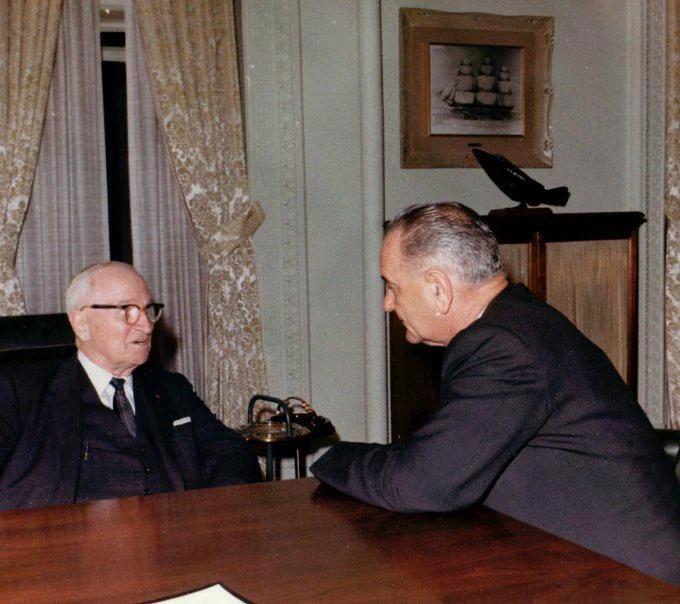
Truman, then eighty-one, sat next to Johnson at the signing table. When Johnson rose to speak, he looked at the former president seated beside him and said, in the recorded opening lines of his remarks that day:
"The people of the United States love and voted for Harry Truman, not because he gave them hell — but because he gave them hope."
Johnson then signed the bill into law and handed the signing pens to Truman and Bess. He described Truman, in the speech that day, as the real daddy of Medicare.
Six months later, in January of 1966, Johnson returned to the Truman Library for a separate ceremony. He brought with him the first two Medicare cards that had been issued by the United States government. The first card was assigned to Harry S. Truman. The second was assigned to Bess W. Truman. Johnson handed them to the couple personally.
The man who had been told, twelve years earlier, that the work was wasted had received the legal evidence that the work had not been wasted. It had simply needed to wait.
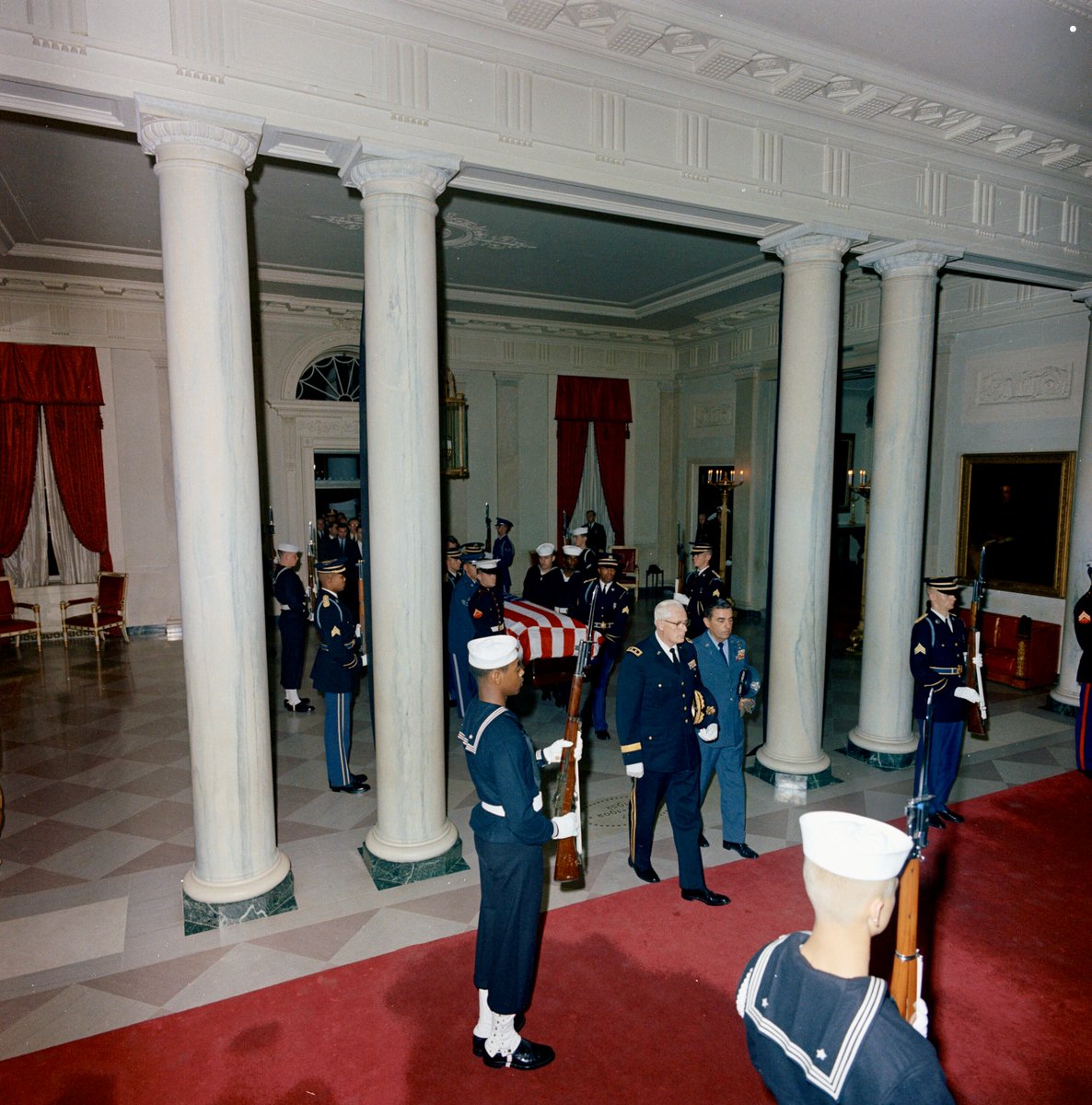
Truman lived for another six and a half years after that. He died on December 26, 1972. He was eighty-eight years old. The most recent surveys of professional American historians rank him, depending on the methodology, somewhere between the sixth and the ninth most effective president in the country's history.
He had not been a different person at the end of his life than he had been when he took office. He had not campaigned for the rehabilitation of his own reputation. He had not softened his record to win approval. He had simply stayed, after his presidency, in the small Missouri town he had come from, and let the work he had done continue to mean what it had meant when he had done it.
History has a long memory.
It had taken, in his case, about twenty years for it to begin to catch up.
Harry Truman got pulled over by a state trooper five months after leaving the White House.
In 1953, former presidents had no Secret Service protection. So Harry and Bess packed their new Chrysler and drove from Missouri to the East Coast and back. No agents. No staff. Just the two of them.
Bess had one rule: no faster than 55.
On July 5, Harry was obeying it, poking along in the passing lane of the Pennsylvania Turnpike with a line of cars stacked up behind him.
Trooper Manley Stampler pulled alongside and waved him over.
Then he saw who was behind the wheel.
He gave the former president a short lecture on turnpike safety and let him go without a ticket.
Before he walked away, Bess leaned over: “Don’t worry, Trooper, I’ll watch him.”
Harry later told reporters the trooper only pulled him over to shake his hand.
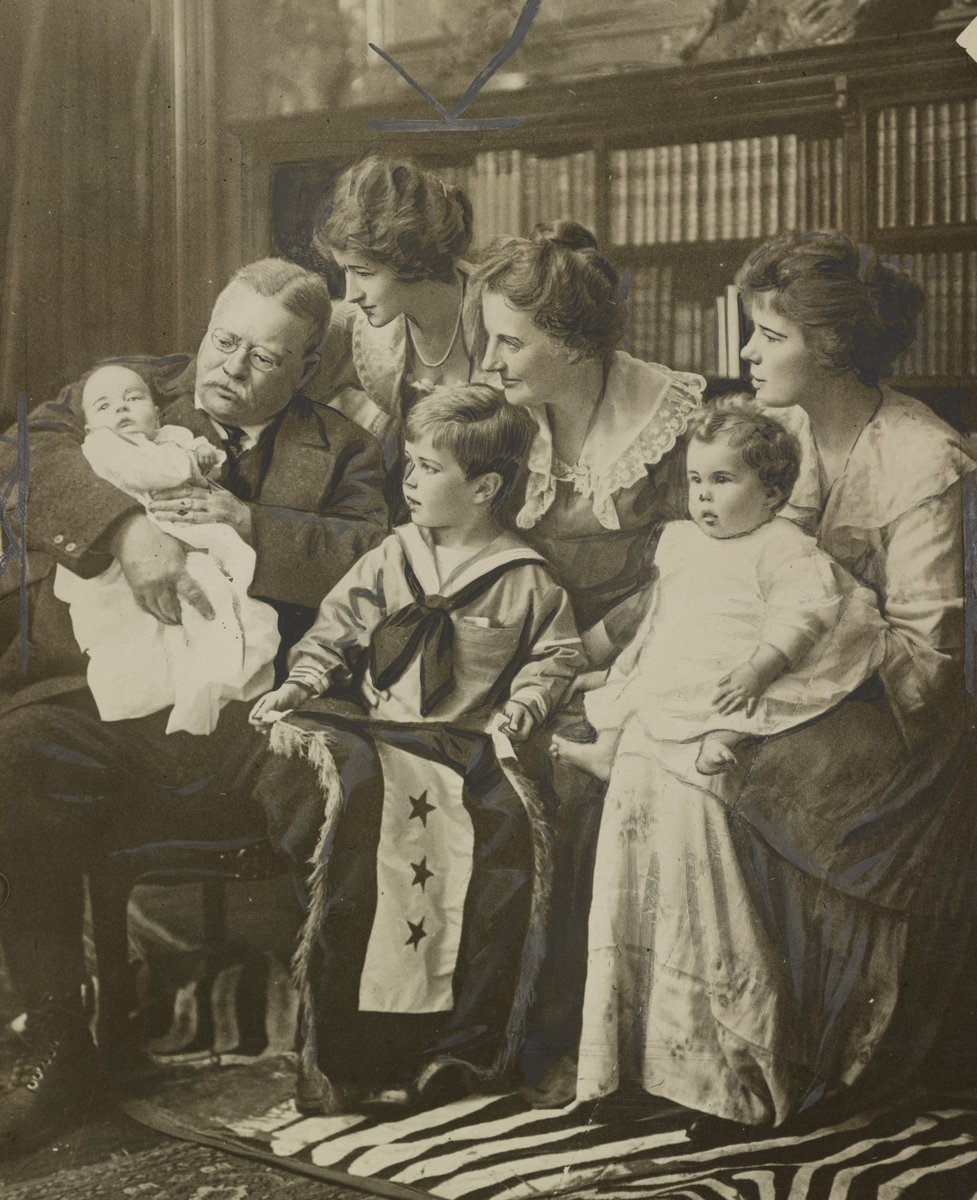
#OTD 11 Nov 1918. Armistice Day. Theodore Roosevelt, whose son Quentin was killed in France that July, returns to Roosevelt Hospital in severe pain. For most of six weeks, Edith lives in the room next to his.
https://t.co/WWtFlTEQGG
This holiday season, give a gift that lasts all year!
Join the "Sock of the Month Club" to receive a new pair of George H.W. Bush-themed socks monthly.
12-month annual subscriptions are available for $180
Call 979-862-2874 or click the link in our bio to sign up!
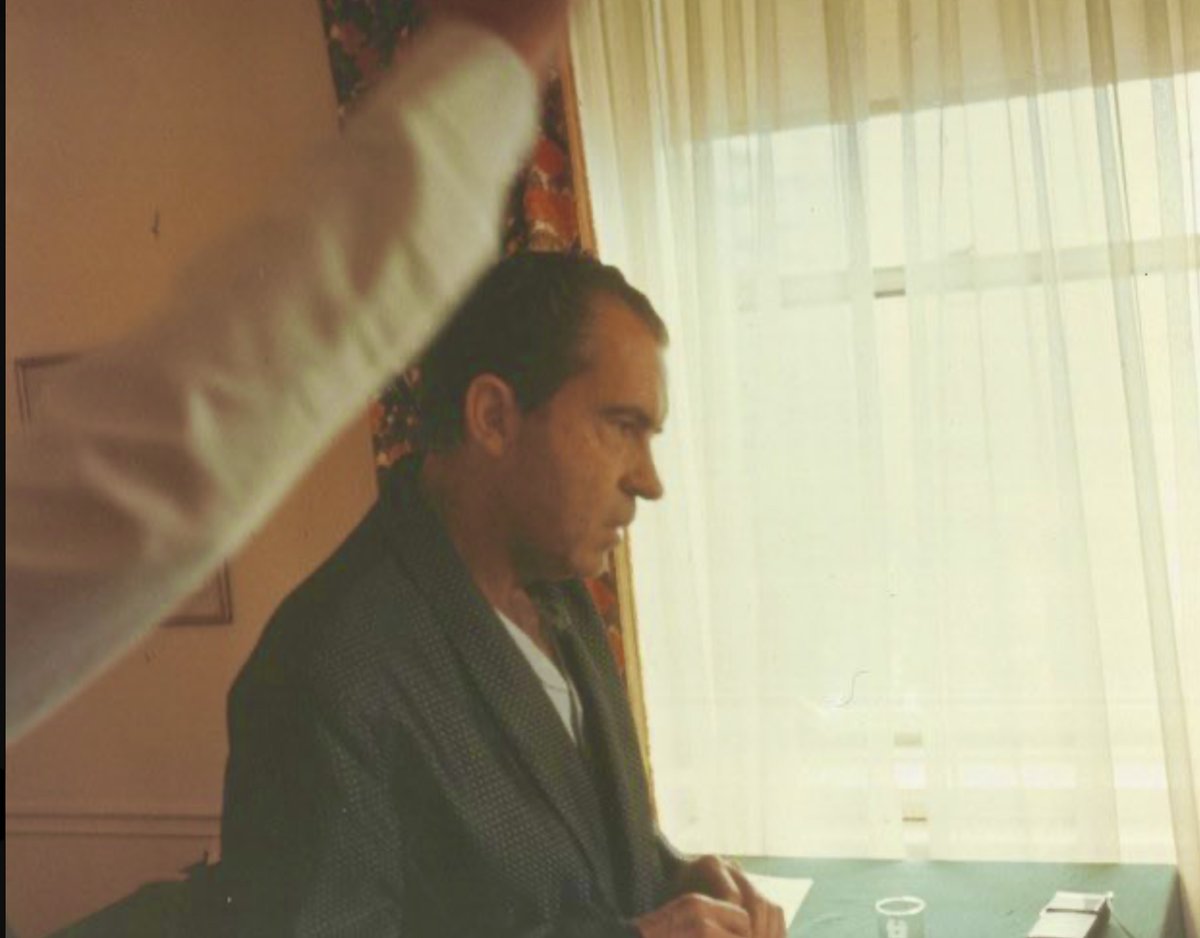
On morning after election, this week 1968, Richard Nixon, in robe, learns from TV that he has been elected President, this week 1968. Arm belongs to aide John Ehrlichman. (Photographed by aide Dwight Chapin.)
Two months before he became president, Harry Truman got in big trouble with his wife over this photo.
February 10, 1945. Truman was vice president. He stopped by the National Press Club canteen, where hundreds of servicemen were being entertained and sat down at the upright piano to play.
Actress Lauren Bacall was there too. She was 20 and had just hit it big in To Have and Have Not. Her press agent told her to climb on top of the piano. The photographers took it from there.
Truman looked like he was having a great time but Bess Truman certainly did not. She told him he should not play piano in public anymore.
Their grandson later admitted all the women in the family hated the photo.
Two months after it was taken, Truman was president. Bacall married Humphrey Bogart that spring.
The piano is still at the Press Club, in a room now called the Truman Lounge.
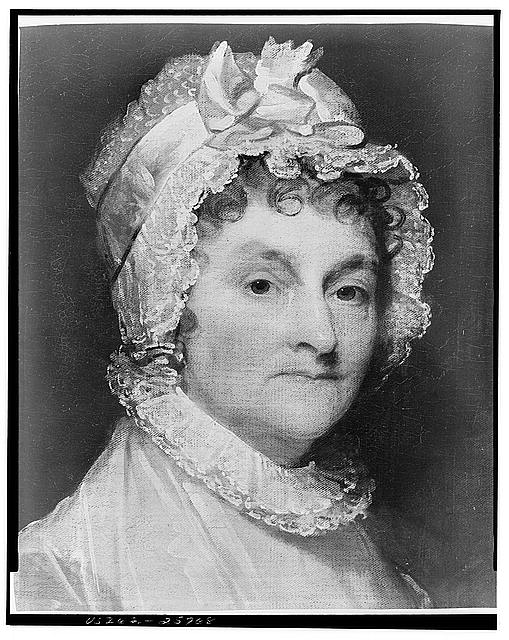
OTD in 1818, Abigail Adams passed away from typhoid fever in her bedroom at her home, Peacefield, in Quincy, Massachusetts. She was first interred in Hancock Cemetery and later removed in April 1828 for internment in the newly built crypt under United First Parish Church, across the street from the cemetery.
Eight days before she died, John Adams, in a letter written to his longtime friend, Thomas Jefferson, wrote on the subject of his wife's health, “The dear partner of my Life for fifty-four Years as a Wife and for many Years more as a Lover now lyes in extremis, forbidden to Speak or be Spoken to. If human Life is a Bubble, no matter how Soon it breaks.” On Monday, October 26, as John sat at his wife’s bedside, grief stricken, Abigail mustered the strength to speak, telling him she was dying and if it was Heaven’s will to take her, she was ready. Her son Thomas stated she was conscious to the last breath.
For her funeral services-I don't have the exact date, either Oct. 31 or Nov. 1-she lay in repose in a room in the downstairs of her home where family and friends gathered for the funeral service. After the funeral, a procession escorted Abigail’s coffin to Hancock Meeting House for a memorial service; Adams, 82 years of age with his walking stick in hand, followed behind the horse wagon conveying his wife’s coffin. The funeral was a major affair for the sleepy hamlet of Quincy and a sizeable crowd was on hand made up of locals from Boston and surrounding hamlets to witness the proceedings. Among the procession was Governor John Brooks, Lt. Governor William Phillips Jr., and Harvard President John Kirkland, all of whom served as pallbearers.
November 18, 1818, in response to her death, Jefferson wrote to Adams. Jefferson's words were heartfelt, moving, and timely. He wrote, “The public papers, my dear friend, announce the fatal event of which your letter of October the 20th had given me ominous foreboding. Tried myself in the school of affliction, by the loss of every form of connection which can rive the human heart, I know well, and feel what you have lost, what you have suffered, are suffering, and have yet to endure. The same trials have taught me that for ills so immeasurable, time and silence are the only medicine. I will not, therefore, by useless condolences, open afresh the sluices of your grief, nor, although mingling sincerely my tears with yours, will I say a word more where words are vain, but that it is of some comfort to us both that the time is not very distant at which we are to deposit in the same casement our sorrows and suffering bodies, and to ascend in essence to an ecstatic meeting with the friends we have loved and lost, and whom we shall still love and never lose again. God bless you, and support you under your heavy affliction.”